
To find a jewelry manufacturer, start by defining your product type, materials, target cost, order quantity, and production requirements. Then compare potential suppliers through B2B marketplaces, trade shows, referrals, and direct factory research. Before choosing a manufacturing partner, verify its production capabilities, MOQ, sample process, quality control, and delivery arrangements.
This guide is designed for fashion jewelry brands developing private label collections, clothing brands sourcing coordinated accessories, and promotional gift companies developing branded jewelry projects. It explains how to identify suitable manufacturers, compare production terms, and evaluate suppliers before committing to bulk orders.
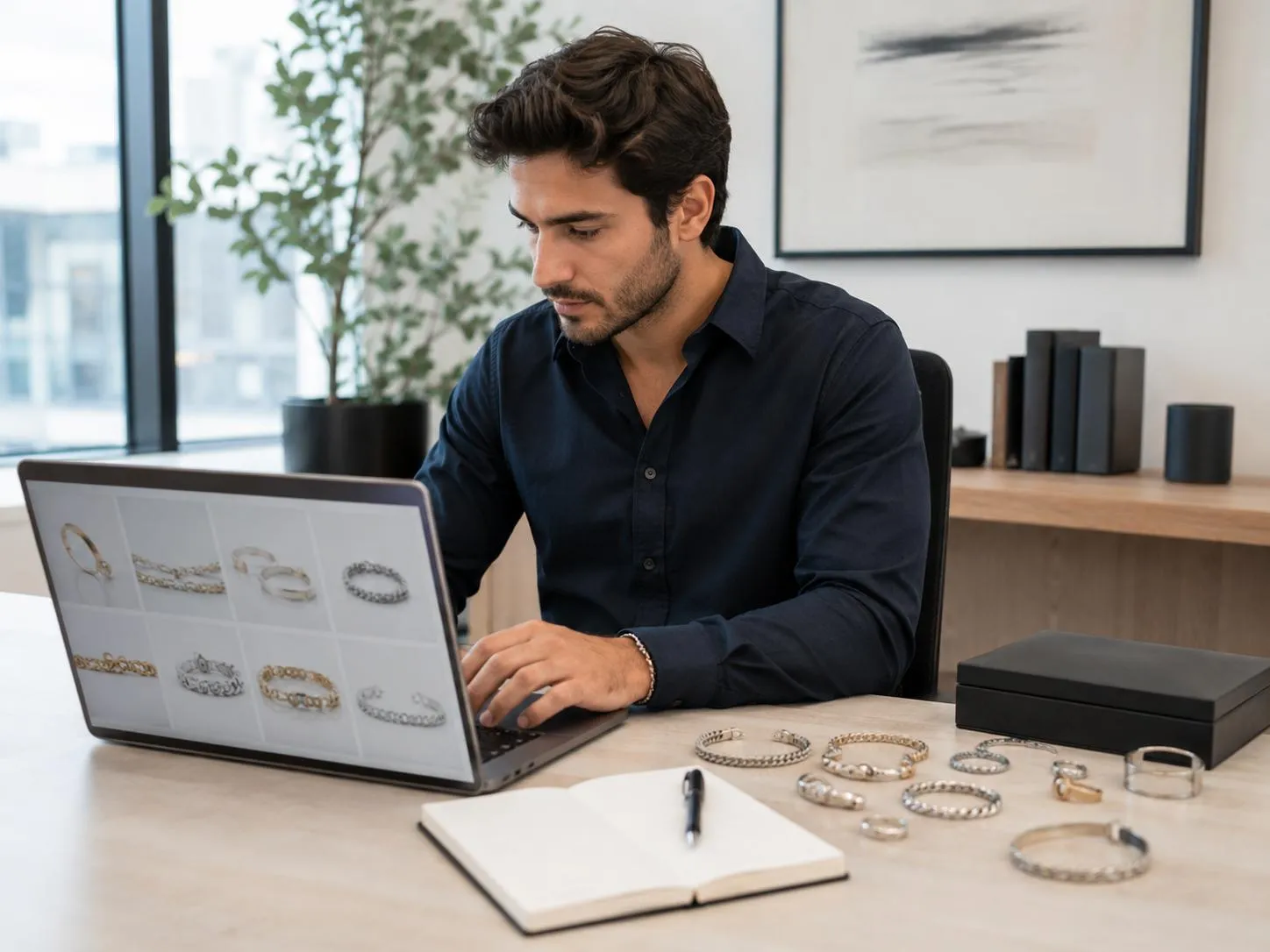
To find a jewelry manufacturer, first define your material, budget, and order size. Then search B2B marketplaces, trade shows, and referrals. Always pick a direct factory over a trader. Check certs, MOQ, lead time, and samples before you commit. A low-MOQ partner with full test reports is the safest choice for a new brand.
The factory you pick can make or break your brand. A great one protects your quality, price, and launch date. A poor one brings delays, defects, and lost trust. Yet many founders rush this step and pay for it later. This guide shows you how to find a jewelry manufacturer the smart way. You will learn where to search, how to spot a real factory, and what to check before you place an order.
Where Do You Start When Looking for a Factory?
Start with your own plan, not a search bar. Know your material, your budget, and your order size first. Then decide whether your project requires OEM or ODM jewelry manufacturing. OEM means they make your design. ODM means they help you design it. Clear needs make it far easier to find a jewelry manufacturer that fits your brand.
Where Can You Find Jewelry Manufacturers?
There are a few proven places to search, and each one has pros and cons. Use more than one to widen your options:
- B2B marketplaces: Sites like Alibaba and Made-in-China list many factories.
- Trade shows: Events let you meet makers and see samples in person.
- Google search: Look for a “custom jewelry manufacturer” plus your metal type.
- Referrals: Ask other brands who they trust and why.
- Sourcing agents: They can match you with vetted factories for a fee.
| Channel | Main Advantage | What Buyers Need to Verify |
|---|---|---|
| B2B Marketplaces | Quickly compare multiple suppliers | Factory identity, production capacity, real product cases |
| Google Search | Find specialized manufacturers | Website content, factory information, materials & craftsmanship capabilities |
| Trade Shows | Directly view samples and communicate | Product quality, technical capability, future cooperation terms |
| Industry Referrals | Gain actual cooperation experience | Referrer’s cooperation duration, delivery performance, quality issues |
| Sourcing Agents | Assist in finding and coordinating suppliers | Agency relationship, fees, actual factory responsibility |
Do not rely on a single sourcing channel when looking for a jewelry manufacturer. Build a shortlist from several sources, then compare each candidate using the same product requirements, sample standards, MOQ, and quality expectations. A supplier’s online profile is only a starting point; actual production capability should be verified before placing an order.
If you are specifically considering China, manufacturing regions such as Guangdong have established jewelry and metal-accessory supply chains. See our guide to finding a jewelry manufacturer in Guangdong, China.
How to Verify a Jewelry Factory vs. a Trading Company
A jewelry manufacturer and a trading company can both support B2B orders, but their production responsibilities may differ. A direct manufacturer may provide closer access to production planning, technical evaluation, and quality control, while a trading company may coordinate multiple factories and product categories.
Instead of relying only on a supplier’s business description, ask which processes are completed in-house and which are outsourced. Request a factory video tour, review production samples, and confirm who manages quality inspections, tooling, delivery, and after-sales responsibilities.
For custom jewelry projects, the most important factor is not simply whether a supplier calls itself a factory, but whether it can demonstrate the capabilities and accountability your project requires.
Read more about why jewelry brands work directly with factories.
How to Compare Local and Overseas Jewelry Manufacturers
Both can work, so weigh your goals first. Local factories are close and easy to visit. But they often cost more and ask for higher MOQs. Overseas factories, like those in China, offer lower costs and more scale. Many also hold global certs like SEDEX and SGS. The trick is to vet an overseas factory well, just as you would a local one. Strong proof matters more than the spot on the map.
How to Evaluate a Jewelry Manufacturing Partner
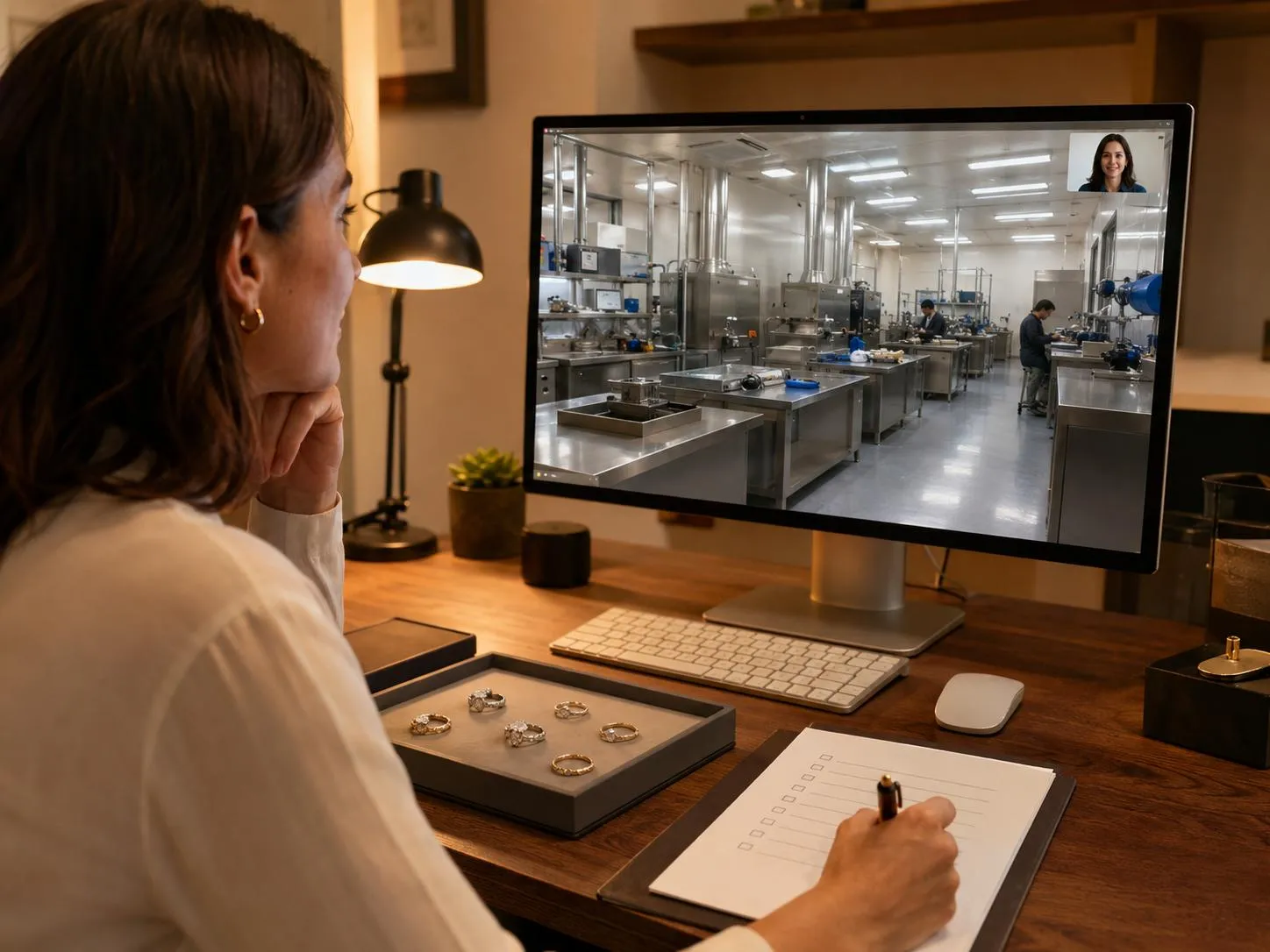
The right jewelry manufacturing partner does more than make products. They protect your quality, your timeline, and your brand. Check these points before you commit:
- Certs and audits: SEDEX, SGS, and ISO show safe, fair work.
- Material grade: Confirm 316L steel, not cheap metal.
- MOQ: A low MOQ jewelry manufacturer lets you test with less risk.
- Lead time: Ask for a clear, written date.
- Samples: Always order a sample before a full run.
- Reports: Ask for REACH and US Prop 65 test results.
- Quality control: Ask how materials, production, finished products, dimensions, functions, and performance are inspected. A documented jewelry manufacturer quality control process is more useful than a general promise of “good quality.”
| Evaluation Criteria | What Buyers Need to Confirm |
|---|---|
| Manufacturing Capability | Whether the manufacturer has the required materials, processes, and product development capabilities. |
| Material Verification | Material grades, composition, and relevant test documentation. |
| Sample Development | Whether sampling, revisions, and sample re-approval are supported. |
| Quality Control | Inspection procedures for incoming materials, production, surface finishing, assembly, and final products. |
| Production Capacity | Lead times, production capacity, and the ability to handle repeat orders. |
| Communication | Whether technical documents, quotations, design changes, and issue handling are clearly communicated. |
| Compliance | Whether audit documents and test reports are relevant to the actual products and target markets. |
A reliable jewelry manufacturing partner should be able to explain how quality is controlled throughout production, not just provide a general quality guarantee. Ask for the inspection criteria, approved sample requirements, material documentation, and available test reports relevant to your product and target market. For handmade or mixed-process jewelry, also clarify which operations are completed by hand, which are machine-controlled, and how consistency is maintained across bulk orders.
What Questions Should You Ask First?
A few sharp questions reveal a lot about a factory. Ask these before you sign anything:
- What is your MOQ and lead time?
- Can you share recent test reports?
- Do you offer both OEM and ODM services?
- Can I see two or three brand references?
- What is your average defect rate?
What Red Flags Should You Avoid?
Some signs mean you should walk away. Watch out for these:
- No certs or test reports on hand
- Very slow or unclear replies
- Prices that seem too good to be true
- No samples before a big order
- Pressure to pay large sums up front
How Much Does It Cost to Work With a Factory?
Cost depends on a few clear factors. Larger orders lower your price per piece. Custom shapes and tooling add to the first bill. Samples and molds may carry a small fee, too. Always ask for a full price breakdown up front. This stops surprise costs later in the deal.
How Long Does the Sourcing Process Take?
Sourcing takes time, so plan ahead. Research and outreach can take a week or two. Samples often add two to three weeks. Then production runs on the factory’s lead time. With Haosen, mass production takes about 25 days. Build this whole timeline into your product launch plan from day one.
What MOQ Should You Expect from a Jewelry Manufacturer?
Minimum order quantity (MOQ) is one of the first details to compare when choosing a jewelry manufacturer. However, MOQ is not always the same across different products or suppliers. It may depend on the base material, design complexity, manufacturing process, plating colors, tooling, and packaging requirements.
When comparing jewelry factory MOQs, confirm whether the quantity is calculated per design, per color, or per order. Also ask whether samples, molds, custom components, and packaging have separate minimum requirements.
For applicable regular jewelry designs, 96Jewelry offers a starting MOQ of 30 pieces per design. More complex structures or special production requirements may require a different quantity.
| MOQ Item | What Buyers Need to Confirm |
|---|---|
| MOQ per Design | Minimum quantity required for each design |
| MOQ per Color | Whether separate minimum order quantities are required for different colors |
| Sample Quantity | Whether single-piece sampling is supported |
| Mold & Tooling | Whether mold costs need to be paid separately |
| Custom Components | Whether special accessories have their own MOQ |
| Packaging MOQ | Whether customized packaging has an additional minimum order quantity |
Why Brands Choose Haosen?
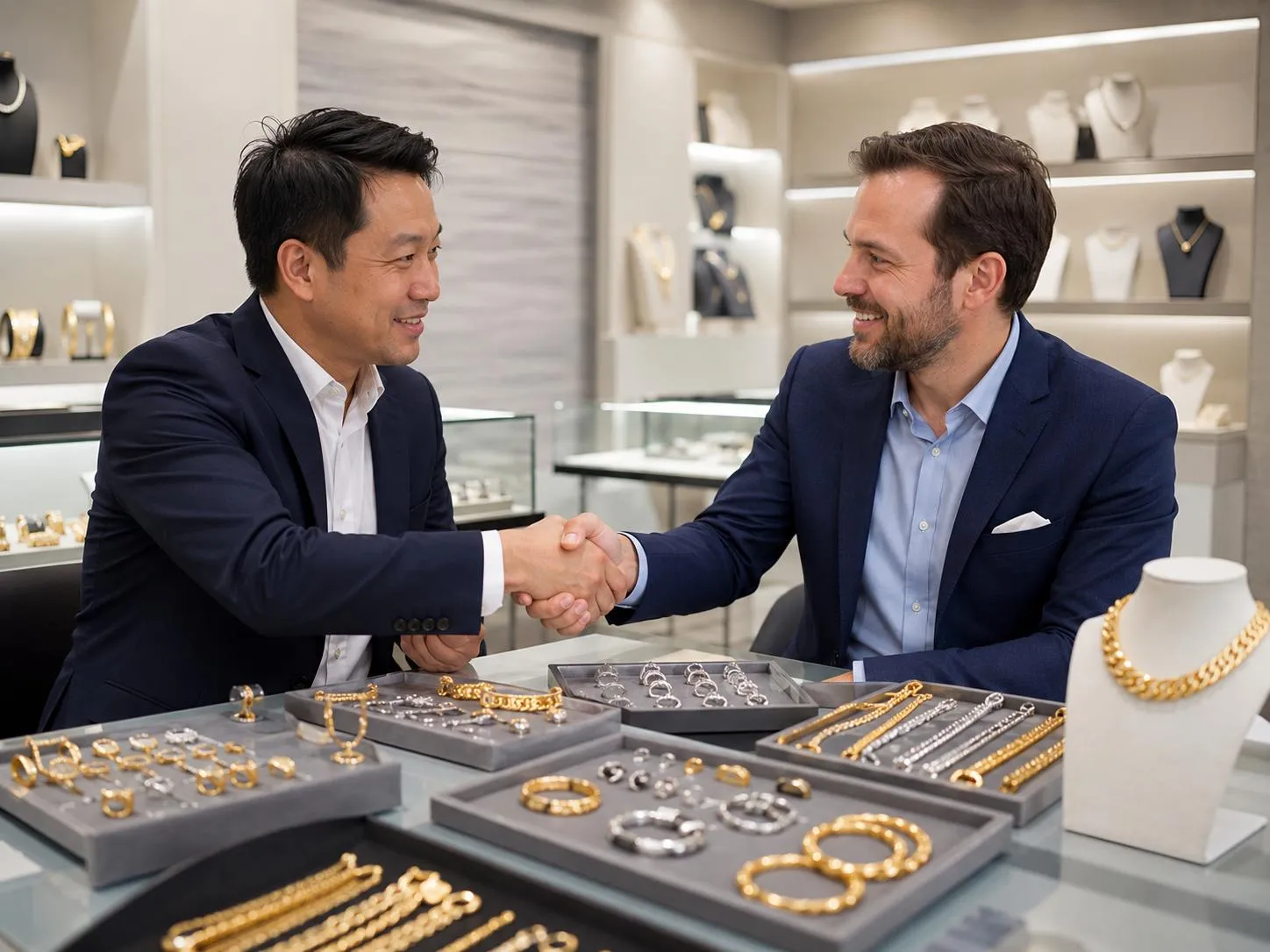
Haosen is a direct factory with 16 years of experience in jewelry making. We are SEDEX-checked and share SGS and REACH reports with every order. Our low MOQ and 25-day lead time make it easy to start. We also run a US showroom, so support stays close to home. Over 200 brands trust us, from new startups to big retail stores. You can see our proof and request a quote from us at any time.
Conclusion
Learning how to find a jewelry manufacturer is about more than a quick search. Define your needs, search smart, and check every claim with proof. Always pick a direct factory over a trader. A low-MOQ partner with strong test reports is the safest start for a new brand. Haosen has helped brands launch and grow for 16 years. Get a free quote today and start with a small, low-risk sample order.
Frequently Asked Questions
1. How do I find a jewelry manufacturer?
Define your material, budget, and order size first. Then search B2B sites, trade shows, and referrals. Always vet each factory with samples and reports.
2. What is the difference between a factory and a trader?
A factory makes the jewelry and controls the price. A trader buys from a factory and resells it at a markup, with less control.
3. What MOQ should a new brand look for?
A low MOQ, such as 30 to 120 pieces, is best. It lets you test designs and reorder without tying up your cash.
4. What should I ask a jewelry manufacturer?
Ask about MOQ, lead time, test reports, OEM and ODM options, references, and defect rate before you commit.
5. How do I avoid a bad supplier?
Avoid sellers with no certs, slow replies, or no samples. Always check test reports and order a sample before a full run.
6. Where can I find jewelry manufacturers for a small brand?
Small jewelry brands can search through B2B marketplaces, Google, trade shows, industry referrals, and direct factory websites. Compare suppliers based on their product capabilities, MOQ, sample services, quality control, and communication before choosing a manufacturing partner.
7. How do I compare MOQ between jewelry manufacturers?
Author

Industry trend analysis and researches fashion jewelry market data.