
Certificate Number
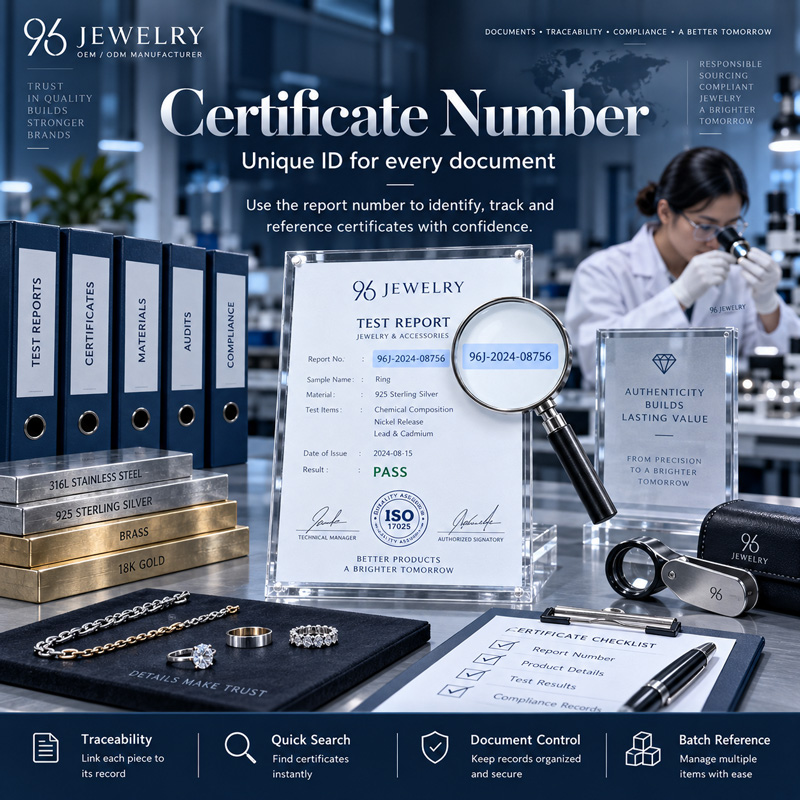
A Unique Reference for Every Document
A certificate or test report should have a unique identification number.
This number helps buyers:
- Identify the exact document
- Match reports with materials or products
- Communicate clearly with the manufacturer
- Search official verification systems when available
- Maintain purchasing and compliance records
What to Check
Before using a certificate, confirm that the report number shown on the document matches the information provided by the supplier.
Typical labels may include:
- Certificate No.
- Report No.
- Test Report No.
- Reference No.
Why It Matters
A certificate number provides a clear reference point for traceability.
Without a report number, it becomes more difficult to confirm whether a document is authentic, current or relevant to a particular product..
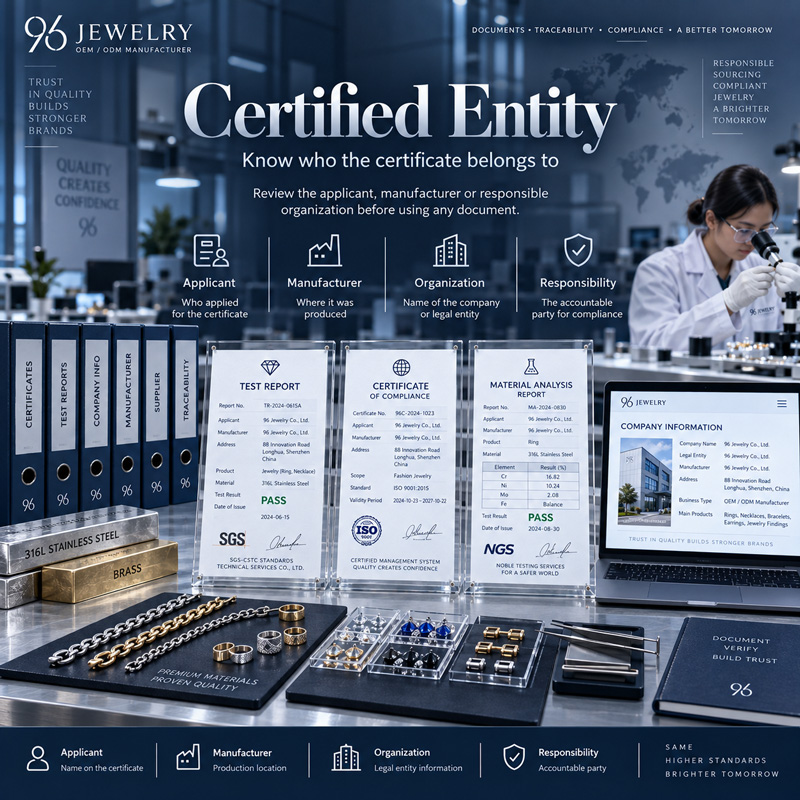
Certified Entity
Know Who the Certificate Belongs To
A certificate should clearly identify the company, manufacturer, applicant or organization connected to the document.
Depending on the type of document, the certified entity may be listed as:
- Applicant
- Manufacturer
- Supplier
- Factory
- Legal entity
- Certificate holder
What Buyers Should Check
Confirm that the company name on the certificate matches the business you are working with.
Pay attention to:
- Company name
- Legal entity name
- Manufacturing location
- Registered address
- Applicant name
Why It Matters
A valid certificate belonging to another company does not automatically verify the supplier you are evaluating.
The certified entity should therefore be reviewed together with the certificate number and scope.
Issuing Authority
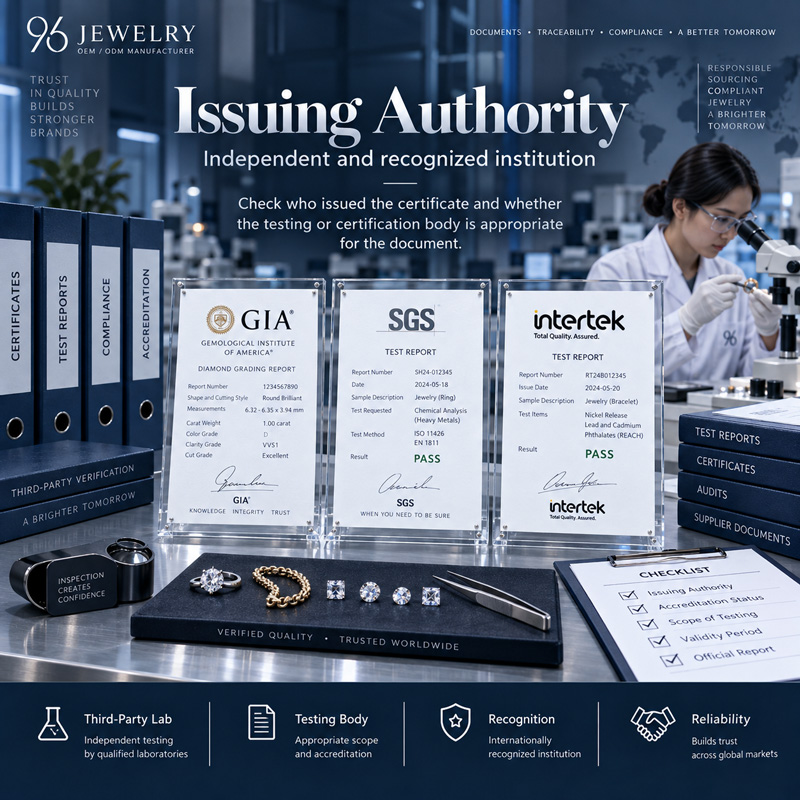
Check Who Issued the Certificate or Test Report
Certificates and test reports may be issued by:
- Independent laboratories
- Testing organizations
- Certification bodies
- Inspection companies
- Industry certification organizations
The issuing authority should be appropriate for the type of verification being provided.
Examples of Third-Party Testing
Depending on the product or material, third-party testing may cover:
- Material composition
- Nickel release
- Heavy metals
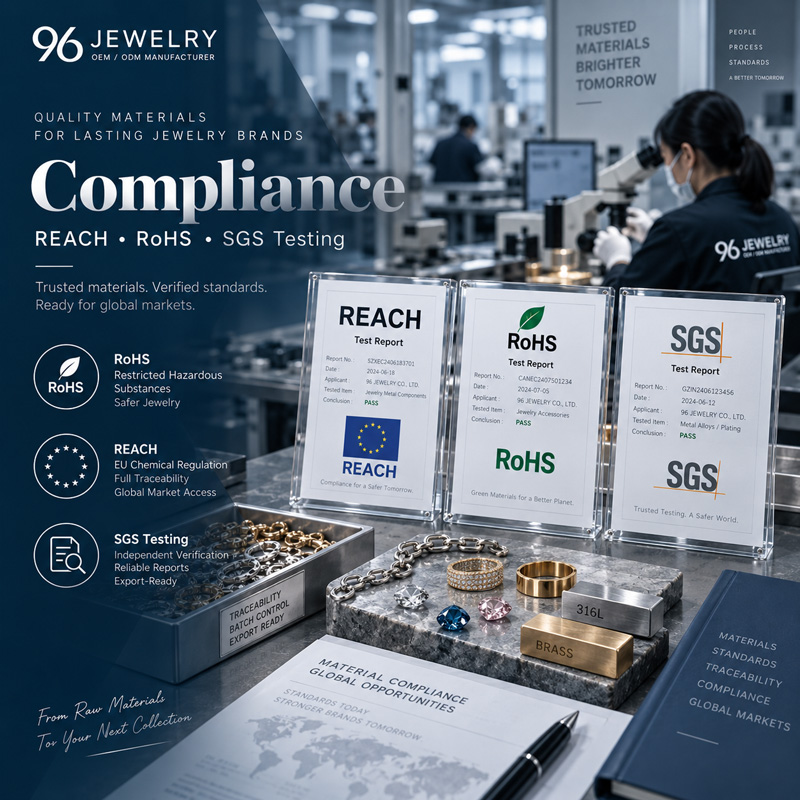
- REACH-related requirements
- RoHS-related requirements
- Surface performance
- Corrosion resistance
What to Check
Review:
- Name of the testing or certification body
- Report scope
- Testing method
- Laboratory information
- Accreditation information, where applicable
Why It Matters
A document is more useful when buyers can understand who performed the assessment and what was actually tested.
Key Message
The issuing body should match the purpose and scope of the document.
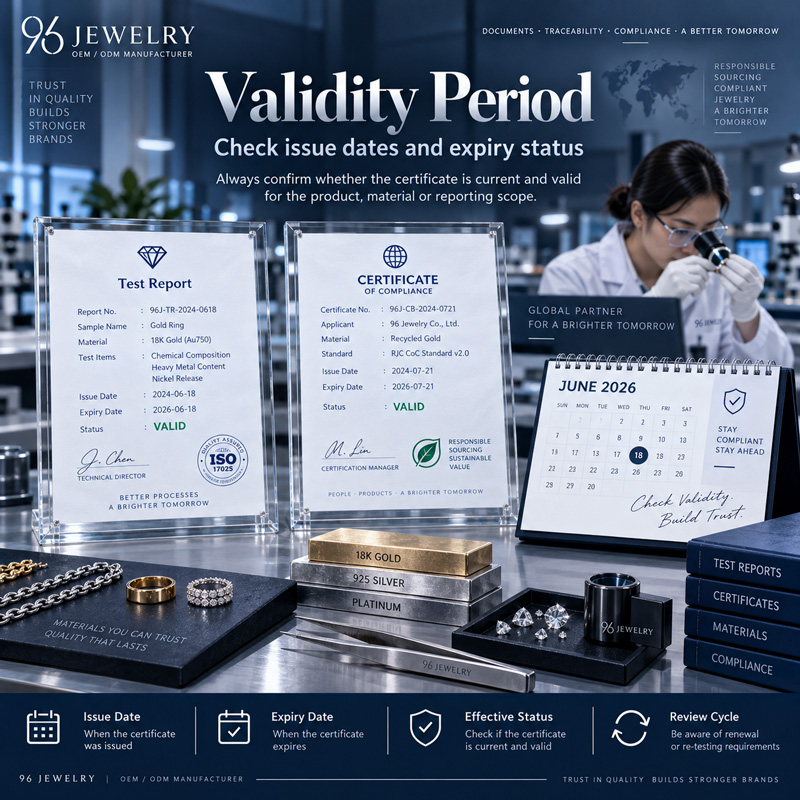
Validity Period
Confirm That the Document Is Still Current
Some certificates remain valid only for a defined period.
Others are test reports that reflect the condition of a specific material, product or batch at the time of testing.
Buyers should therefore check:
- Issue date
- Expiry date
- Validity period
- Renewal requirements
- Retesting requirements
Important Distinction
A certificate may have an explicit expiry date.
A test report may not technically “expire,” but it may become less relevant when:
- Material specifications change
- Suppliers change
- Production processes change
- Regulations are updated
- New testing is required by the customer
Our Recommendation
Always review the document date together with the specific product and current project requirements.
Verification Method
Check and Confirm Authenticity
Where verification is available, buyers should confirm documents through the issuing organization or its official verification system.
Common verification methods include:
Certificate Number Search
Enter the certificate or report number into the issuer’s official verification system.
QR Code
Some reports include a QR code that links to verification information.
Official Website
Certain certification bodies maintain searchable public databases.
Issuer Confirmation
For documents without online verification, buyers may contact the issuing body directly.
Supplier Documentation
Supporting information may also include:
- Original PDF reports
- Material certificates
- Testing records
- Supplier declarations
- Batch information
Important
Official issuer records should take priority when confirming document authenticity.
Key Message
Verify through the original issuing source whenever possible.
Certification Review Process
How We Organize Certification Information
For relevant materials and products, our team organizes available documentation so buyers can review the key information more efficiently.
Identify the Document
Check certificate or report number.
Confirm the Entity
Review the company or manufacturer listed.
Review the Issuer
Identify the laboratory or certification organization.
Check the Date
Confirm issue date, validity period or relevance to the current production.
Verify
Use the available official verification method.
What Certification Documents May Cover
Different documents serve different purposes.
Depending on the material, product and customer requirements, documentation may include:
Material Testing
- Stainless steel composition
- Brass composition
- Metal alloy analysis
- Material identification
Product Safety
- Nickel release
- Heavy metal content
- Restricted substances
Chemical Compliance
- REACH-related testing
- RoHS-related testing
Performance Testing
- Salt spray testing
- Corrosion resistance
- Surface coating performance
- Plating-related testing
Supply Chain Documents
Depending on the project, supporting documents may also relate to:
- Leather sourcing
- Recycled materials
- Packaging materials
- Supplier certification
Certificates Are Only Part of Quality Management
Documentation Should Support — Not Replace — Manufacturing Control
Certificates and test reports are important, but they represent only one part of product quality management.
For jewelry manufacturing, buyers should also consider:
- Incoming material inspection
- In-process quality control
- Finished product inspection
- Product testing
- Traceability
- Corrective action
- Production consistency
That is why certification information should be reviewed together with the factory’s overall quality control system.
Material & Compliance Support
Different Markets May Require Different Documents
Testing and documentation requirements can vary according to:
- Product type
- Material
- Skin contact
- Target market
- Customer specifications
Before production, buyers can share their target market or required standards with our team.
We can then evaluate which available documents or additional testing may be relevant to the project.
Need Certification or Testing Information for Your Jewelry Project?
Tell us the product, material and target market for your project.
Our team can help you review the available material information, testing documents and manufacturing requirements before production.