

This article introduces eight forms of brass raw materials used in jewelry manufacturing, focusing on how they are supplied.
These are not eight different brass alloy grades, but different supply forms within the same material system. The choice of material form depends on the geometry of the jewelry component, the forming process, and the production volume. For a broader comparison of metals used in jewelry production, explore our jewelry manufacturing materials guide
| Raw Material Form | Typical Manufacturing Processes | Jewelry Applications |
|---|---|---|
Brass Ingots & Casting Granules |
Melting, casting |
Three-dimensional pendants, rings |
Brass Sheets & Plates |
Cutting, stamping, bending |
Flat pendants, tags, earrings |
Brass Strips & Coils |
Progressive stamping |
Small components for repeated mass production |
Brass Rods & Bars |
CNC machining, drilling |
Clasps, beads, small fittings |
Brass Wire & Fine Brass Wire |
Wire coiling, wire forming |
Chain links, hoops, jump rings, fine decorative details |
Brass Tubes |
Cutting, tube bending |
Hollow bangles, earrings |
Brass Profiles |
Drawing, forming, CNC machining |
Components with special cross-sections |
Brass Powder |
Metal Injection Molding (MIM) |
Complex small precision components, emerging jewelry applications |
1. Brass Ingots & Casting Granules
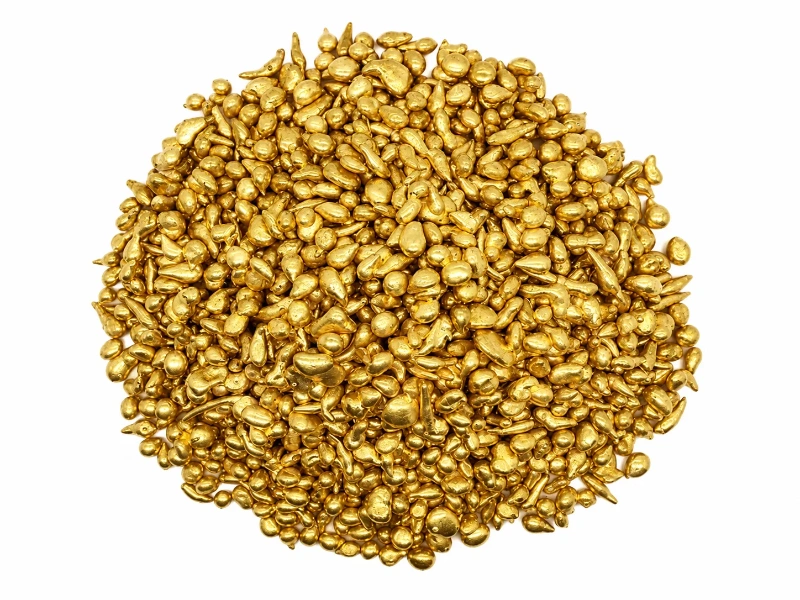
Brass ingots, metal shot, and granulated brass are raw materials used for melting and casting. Instead of being directly stamped or bent, these materials are first melted and then poured into molds, where they cool and solidify into jewelry components.
These materials are suitable for producing three-dimensional pendants, rings, curved decorative elements, and other shapes that are difficult to manufacture from flat metal stock. Investment casting, also known as lost-wax casting, is one of the common manufacturing methods.
2. Brass Sheets & Plates
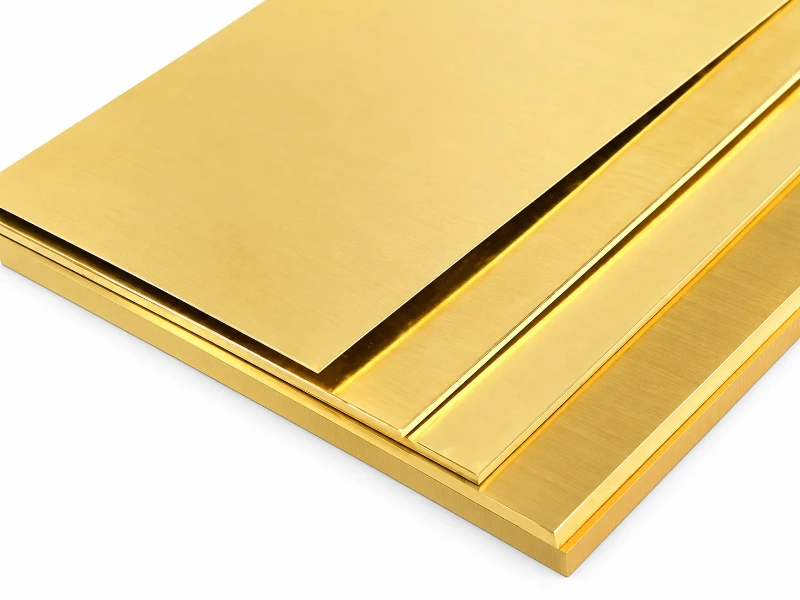
Brass sheets and plates are flat metal stock produced through rolling and are typically supplied in specified thicknesses. They are suitable for manufacturing processes such as stamping, laser cutting, etching, embossing, and bending.
In jewelry manufacturing, brass sheets are commonly used for tags, flat pendants, lightweight earrings, geometric components, and other relatively flat designs.
Their main advantage lies in producing jewelry with flat structures and large, smooth surfaces. For example, a custom brass necklace may combine a stamped or laser-cut sheet-metal pendant with separately manufactured chain and clasp components.
3. Brass Strips & Coils
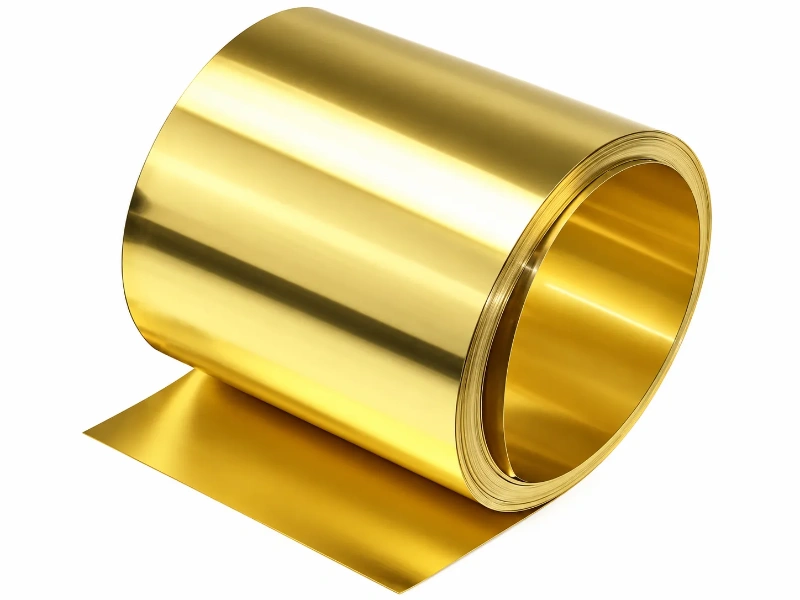
Brass strips are relatively narrow, flat metal stock that can be supplied in coils. When supplied in coil form, the material can be continuously fed into processing equipment for repeated manufacturing operations.
These materials are commonly suitable for producing consistent small components through progressive die stamping, including connector plates, tags, and decorative jewelry findings.
Compared with individually cut brass sheets, coil-fed production can improve manufacturing efficiency when the tooling investment and order volume justify the initial setup costs.
Brass strips and coils are particularly suitable for small components with stable order volumes that require continuous production.
4. Brass Rods & Bars
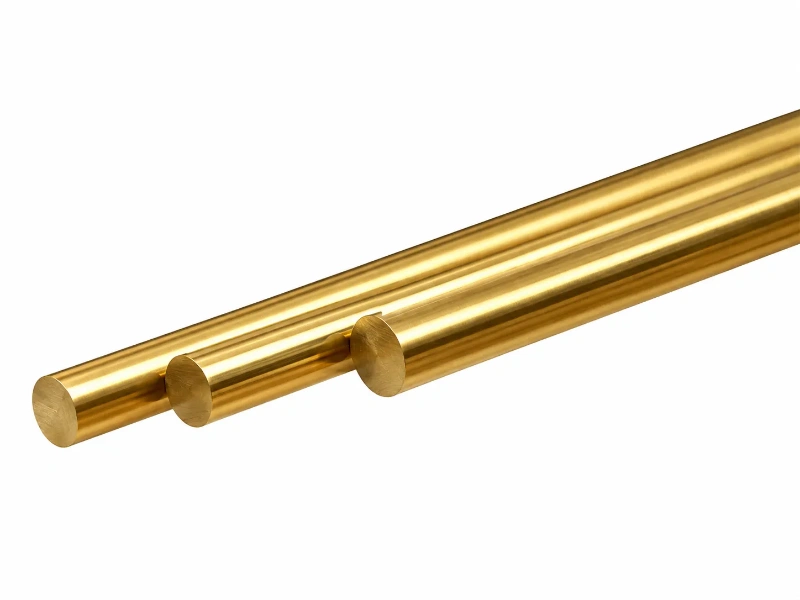
Brass rods and bars are solid metal stock available in different cross-sectional shapes, including round, square, and hexagonal forms. They are suitable for turning, milling, and drilling operations.
In jewelry manufacturing, brass rods and bars can be machined into beads, precision clasps, spacers, threaded components, and other small jewelry hardware requiring controlled dimensions.
CNC machining is particularly suitable when components require precise mating surfaces or contain localized features that are difficult to achieve through stamping.
The main characteristic of brass rods and bars is their ability to be machined into small, dimensionally accurate components from solid metal stock.
5. Brass Wire & Fine Brass Wire
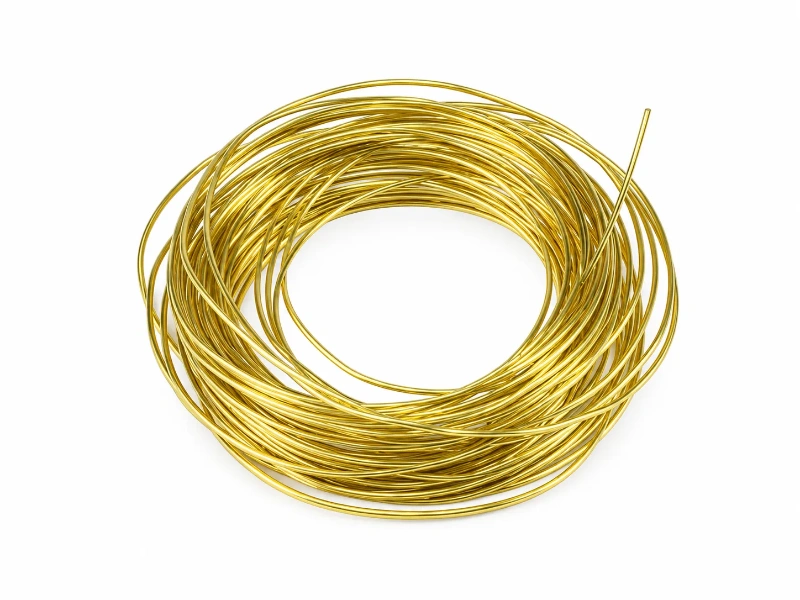
Brass wire and fine brass wire are commonly supplied in coils or straight lengths. They can be formed into hoop earrings, jump rings, chain links, and small decorative loops. Round cross-sections are the most common, although other cross-sectional shapes may also be considered for special designs. For a broader comparison of chain structures and materials, see our metal chain material selection guide
The terms “wire” and “fine wire” are often used interchangeably in everyday descriptions. In practice, the distinction mainly relates to diameter and intended application.
Thicker brass wire is generally used for structural components, chain links, and hoop earrings that need to withstand a certain amount of tension. Finer brass wire is more commonly used for wire wrapping, weaving, delicate connections, and decorative details.
Through coiling and bending processes, both thicker and finer brass wires can be formed into repeated jewelry components. For these products, the quality of the joint or closure is often just as important as the wire itself.
When selecting brass wire, it is important to confirm the wire diameter, material temper, bending radius, and joining requirements.
Material springback affects the final bent shape. If a jump ring has an insufficient wire diameter or a poorly secured closure, it may open under tension.
Welding, soldering, and mechanical closure methods must also be compatible with the component structure and subsequent surface-finishing processes.
6. Brass Tubes
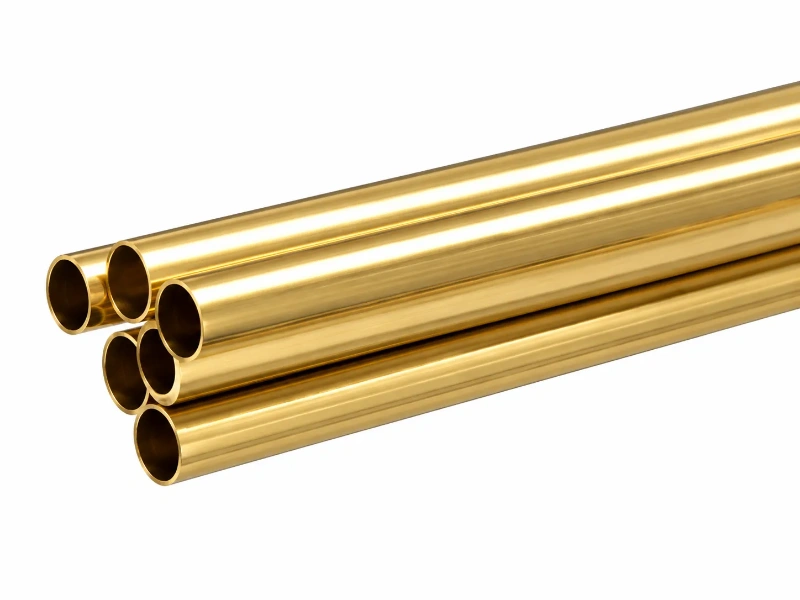
Brass tubes are hollow metal stock used to manufacture tubular earrings, lightweight bangles, beads, and curved decorative components.
Compared with solid stock of similar external dimensions, brass tubes may require less metal. However, their structures must still withstand cutting, bending, and joining operations.
Brass tubes are particularly useful when a jewelry design requires a larger visual volume without the weight of solid metal stock.
They are commonly used in structures such as custom brass bracelets and bangles.
When selecting brass tubes, important considerations include the outer diameter, wall thickness, and bending radius.
An excessively tight bending radius may cause the tube’s cross-section to flatten or wrinkle during forming.
7. Brass Profiles
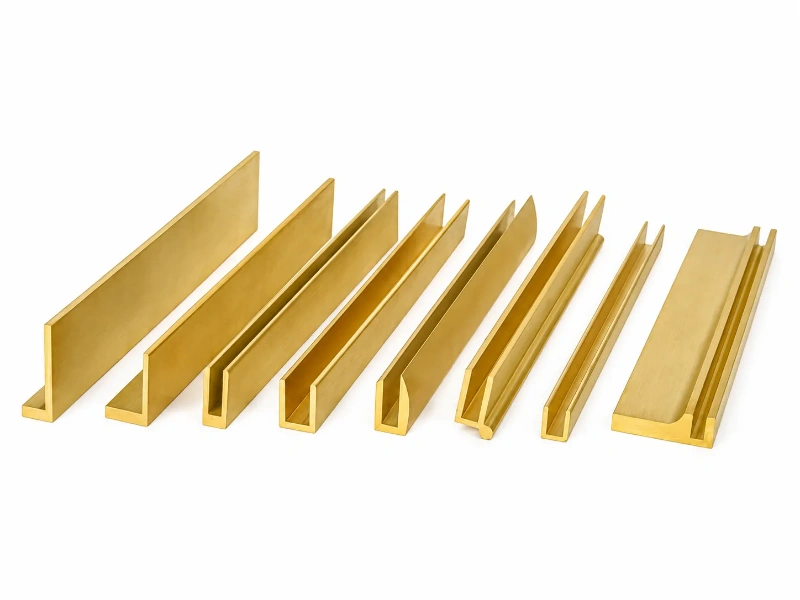
Brass profiles are metal stock with nonstandard cross-sectional shapes, such as channels or custom decorative sections.
Depending on the alloy and geometric requirements, these materials can be produced through drawing, extrusion, or subsequent machining processes.
Brass profiles may be useful when certain specialized jewelry fittings require repeated production and the cross-sectional shape itself serves a structural or decorative function.
They are considered specialty raw materials rather than standard stock commonly used in jewelry manufacturing.
Buyers should confirm the cross-sectional drawings, achievable dimensional tolerances, required tooling, and minimum order quantities with the manufacturer.
For small-batch or one-off custom components, machining from existing brass rods or plates may be simpler than developing custom brass profiles.
8. Brass Powder for Metal Injection Molding (MIM)
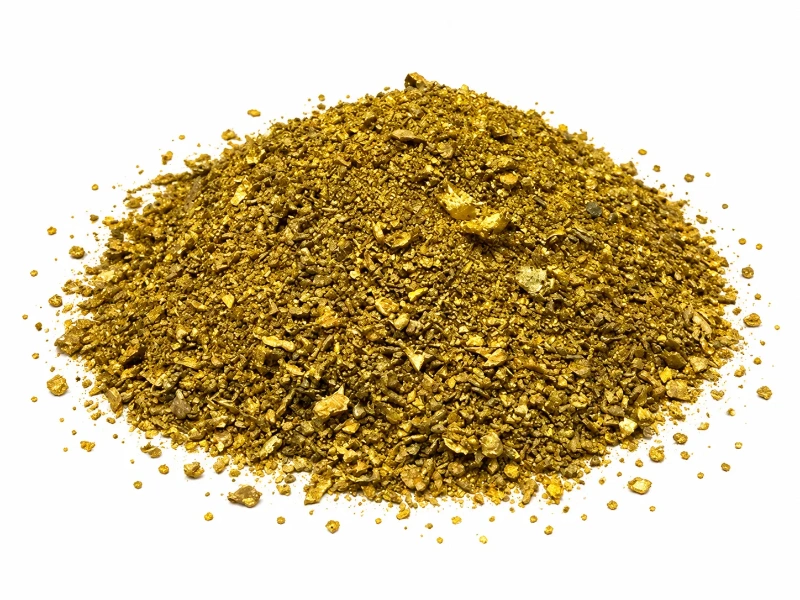
Brass powder consists of fine spherical or nearly spherical copper-zinc alloy particles, typically ranging from a few micrometers to approximately 100 micrometers in particle size.
Unlike conventional brass stock, brass powder cannot be directly bent or stamped. Instead, it is used in Metal Injection Molding (MIM).
The MIM process involves mixing brass powder with a binder to produce a moldable feedstock. The mixture is then injected into a mold to form a “green part,” which subsequently undergoes debinding and sintering to produce the final metal component.
This process is suitable for mass-producing small components with complex geometries. It allows intricate shapes to be formed in a single molding operation, reducing the amount of subsequent machining required.
At present, brass powder used in MIM is primarily associated with industrial precision components. Its application in jewelry manufacturing is still being developed, particularly for luxury jewelry with demanding surface-appearance requirements.
The potential advantage of MIM lies in its ability to form complex geometries that are difficult to manufacture using conventional stamping or CNC machining, making it suitable for medium- to high-volume production.
When selecting brass powder for MIM, important factors include particle size, sphericity, oxygen content, and compatibility with the intended MIM process.
Because brass contains a relatively high proportion of zinc, zinc evaporation during sintering presents additional challenges for process control.
Conclusion
The choice of brass raw material form depends on the geometry of the jewelry component, the forming process, and the production volume.
Flat components are generally suited to brass sheets and plates, while brass strips and coils are preferable for repeated production of small parts. Casting feedstock is suitable for three-dimensional designs, and brass wire and fine wire are used for loops, links, and delicate decorative details.
Brass tubes are suitable for hollow, lightweight structures, while rods and bars are commonly used for solid precision components. Brass profiles serve designs requiring special cross-sections, whereas brass powder represents the potential of emerging manufacturing technologies such as MIM in jewelry production.
If you are evaluating material options for a custom design, explore our custom brass jewelry manufacturing services to discuss suitable materials and production methods.