
As an OEM/ODM jewelry manufacturer with 16 years of experience and SEDEX ethical audit certification, Haosen Jewelry understands that selecting the right manufacturing process is the foundation of product quality. This guide provides a comprehensive technical comparison of six core 316L stainless steel jewelry manufacturing processes.
316L stainless steel—commonly marketed as “titanium steel” in some jewelry markets, although it is technically stainless steel rather than titanium—is prized for its corrosion resistance, hypoallergenic properties, and durability. However, the choice of manufacturing process directly impacts product quality, cost, and potential failure modes such as surface porosity, stone loss, or plating adhesion issues.
Haosen Jewelry has maintained annual SEDEX audits since 2012, holds SGS factory certification, and ensures all materials comply with EU REACH and California Proposition 65 standards. Our vertically integrated production combines multiple forming processes with end-to-end quality control—including EDXRF spectrometers for material analysis and 72-hour salt spray testing for finish durability.
Lost Wax Casting (Precision Casting)
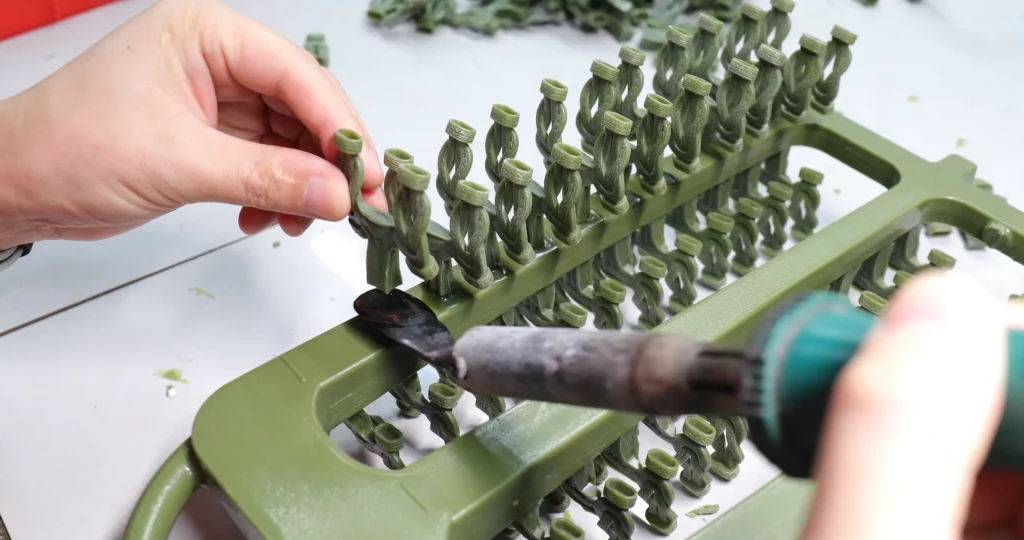
- Best Application: Suitable for low- to medium-volume production and high-complexity 3D jewelry designs
- Cost Structure: Low mold cost; high material utilization
- Haosen Quality Control: Optimized gating system design + 100% visual inspectionto ensure casting density
Technical Insight: Lost Wax Casting enables intricate shapes but risks shrinkage porosity and gas holes that appear as pinholes after polishing. These surface defects severely compromise PVD plating adhesion, causing premature peeling. Our QC team conducts full inspection of raw castings to reject surface-proximate defects before finishing.
Metal Injection Molding (MIM)
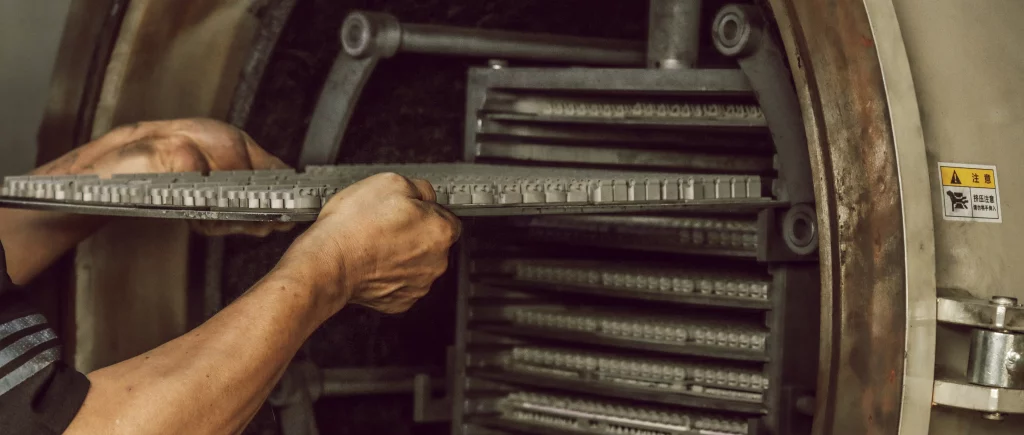
- Best Application: High-volume (>5,000 pieces), high-complexity small parts
- Cost Structure: High mold investment; extremely low per-piece cost at scale
- Haosen Quality Control: CMM measurementfor critical dimensions (stone seats, threads) with CPK ≥ 1.33 per batch
Technical Insight: MIM produces precision components for earring posts, threaded closures, and intricate settings. However, sintering shrinkage instability can cause dimensional drift. MIM 316L typically achieves density ≥7.80 g/cm³, tensile strength around 500–550 MPa, and hardness in the range of 120–180 HV depending on processing requirements. Compared with wrought 316L, MIM parts generally have different mechanical characteristics due to residual porosity. Additional treatments such as HIP may be used when higher density and mechanical performance are required.
Selective Laser Melting (SLM) 3D Printing
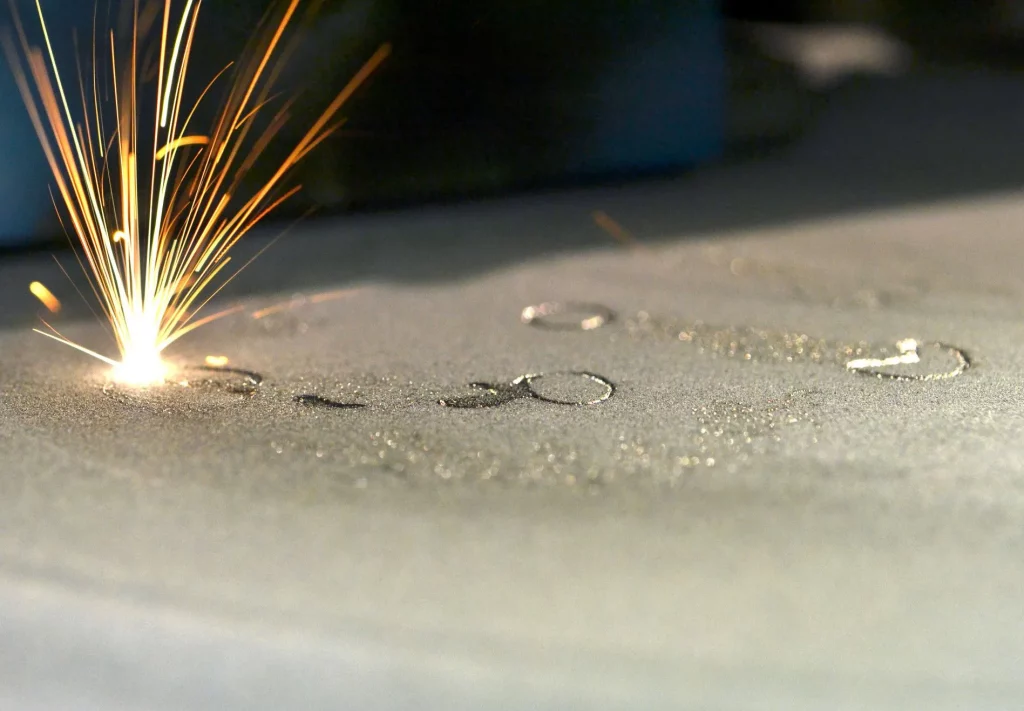
- Best Application: Very small quantities (<10 pieces); extreme complexity (hollow/lattice structures)
- Cost Structure: No mold cost; high material and machine-hour expenses
- Haosen Quality Control: 15mm polishing allowance+ mandatory electrolyte plasma polishing post-treatment
Technical Insight: SLM enables the production of complex stainless steel jewelry structures that are difficult to manufacture using traditional methods. However, as-printed surfaces typically have relatively high roughness (commonly around Ra 10–30 μm, depending on machine parameters and printing conditions) and require additional finishing processes, such as polishing or surface treatment, to achieve a jewelry-grade appearance. Proper post-processing is essential before applying decorative finishes such as PVD coating.
Stamping
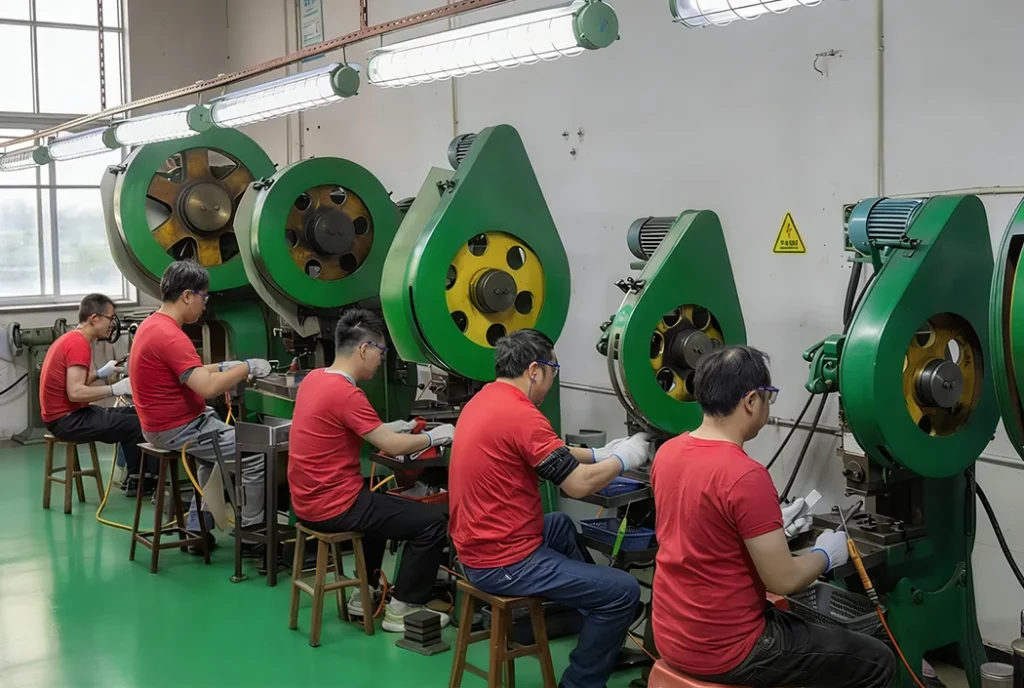
- Best Application: High-volume (>500 pieces); low-complexity flat/thin-walled designs (pendants, bracelets)
- Cost Structure: High mold cost; extremely low per-piece cost
- Haosen Quality Control: Tumbling deburring+ 100% manual edge smoothness inspection
Technical Insight: Stamping offers exceptional efficiency but produces sharp burrs at cut edges that can scratch skin or clothing. Our process includes secondary tumbling to remove micro-burrs, followed by manual inspection for edge smoothness.
CNC Machining
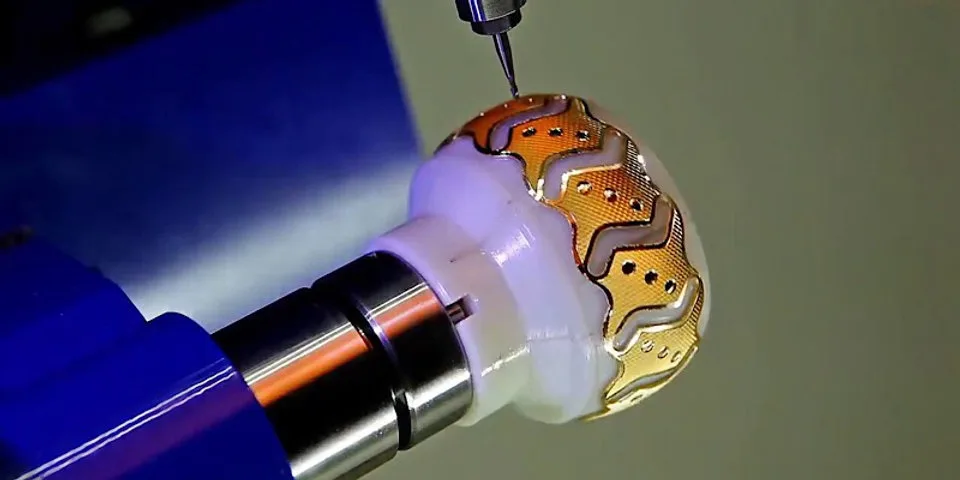
- Best Application: Small batches (<30 pieces); medium-high complexity thick-walled/3D parts; precision stone setting
- Cost Structure: High material waste; machining time >50% of total cost
- Haosen Quality Control: Tool compensation every 20 pieces+ in-process measurement for critical dimensions
Technical Insight: CNC machining provides excellent dimensional accuracy and surface consistency, making it suitable for components that require precise fitting, such as stone-setting bases, threaded parts, and structural connections. Depending on equipment, material, and design requirements, CNC tolerances can typically reach the level of several hundredths of a millimeter.
Laser Cutting
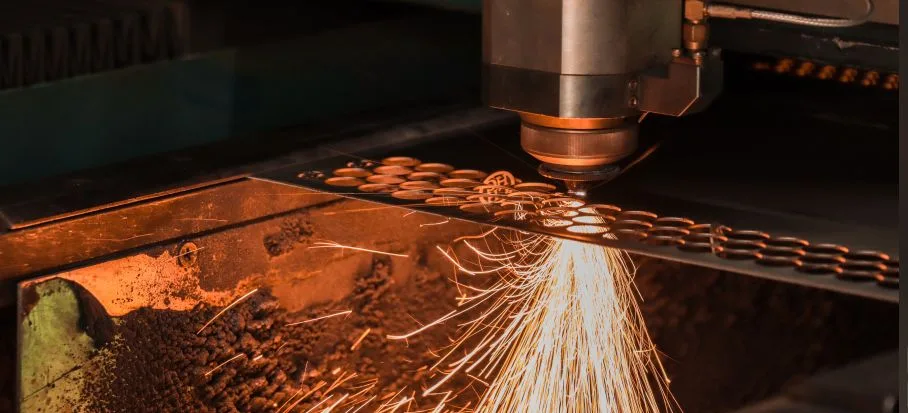
- Best Application: No quantity limit; low-complexity flat jewelry components
- Cost Structure: No mold cost; low machining hours
- Haosen Quality Control: Fixed cutting speed parameterscalibrated by material thickness
Technical Insight: Laser cutting offers flexibility for flat patterns and prototypes. Quality depends on parameter optimization—excessive speed creates molten burrs. We maintain standardized speed/power settings for each material gauge to ensure clean edges.
Conclusion: Integrated Manufacturing with Quality Assurance
At Haosen Jewelry, we don’t view these processes as isolated options. Our vertically integrated approach combines the right forming method with surface finishing solutions—including PVD vacuum plating (0.03μm standard, 0.05-0.1μm for premium custom pieces), electroplating, and enamel filling.
With a dedicated 8–12–person QC team maintaining a <1% defect rate, monthly production capacity exceeding 100,000 units, and 98% on-time delivery, we provide reliable OEM/ODM solutions for global brands. Our US showroom in San Diego offers local support for sample verification and meetings, bridging the gap between Chinese manufacturing efficiency and US service convenience.
Contact Haosen Jewelry to discuss your next 316L stainless steel jewelry project—from concept to compliant, high-quality production.
Author

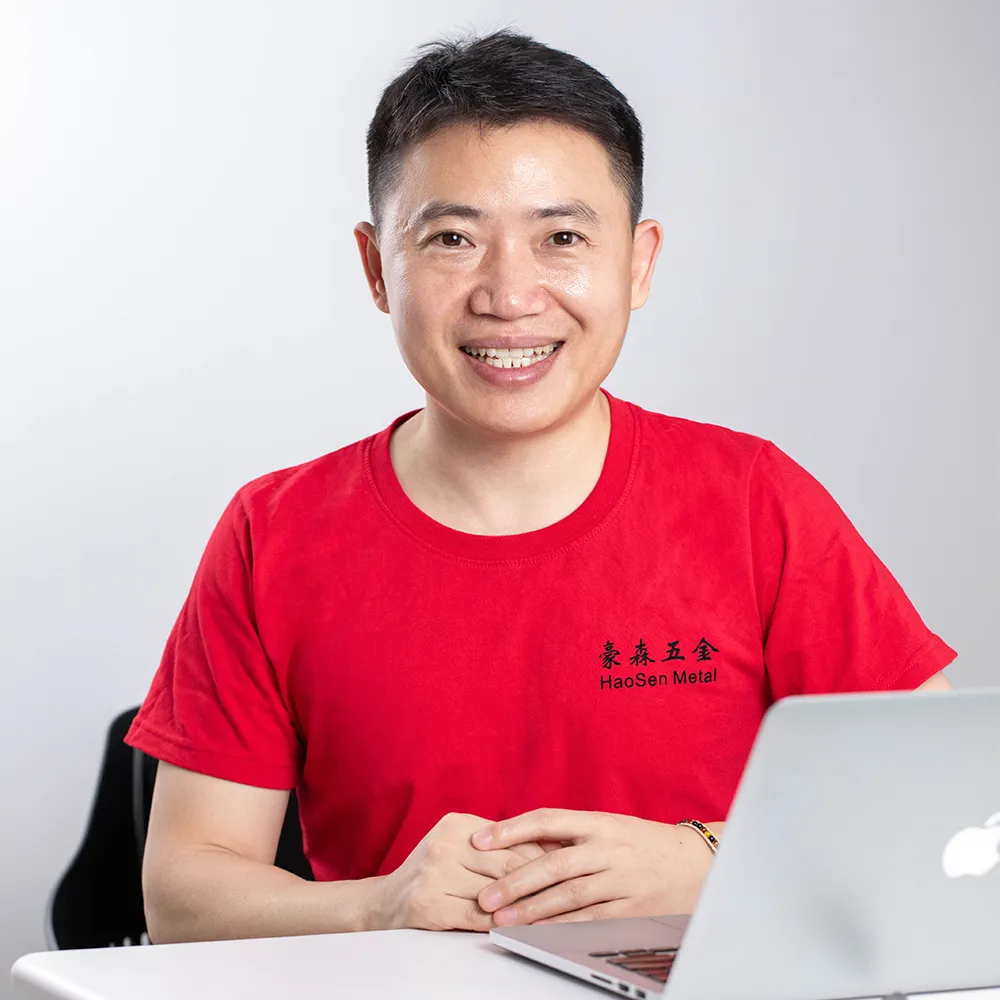
Ertian Jiang (Jasper) is the founder of Haosen Metal Jewelry. Since the age of 26, he has combined deep roots in traditional craftsmanship with a sharp vision for the market to build the foundation of the company’s excellence.
Ertian Jiang started on the ground floor as a craftsman, specializing in semi-precious stones (agate, mother of pearl, tiger’s eye) and manual inlaying—perfecting how to fit natural stones into metal bases without gaps or glue failure. He also worked on the front lines of sales, speaking face-to-face with buyers and listening to their frustrations about fallen stones and fading colors.