

Conclusion
Both 14k and 18k PVD gold plated finishes can grow your brand. The 14k tone is light, modern, and trending fast in the US. The 18k tone is rich, classic, and luxurious. Both are gold-color finishes, not solid gold, but they both last for many years on steel. Pick the tone that fits your buyer, or offer both to widen your reach. Whichever you choose, a durable finish keeps returns low and protects your margin. Haosen has applied PVD gold finishes for global brands for 16 years. Get a free quote today and ask for your free tone samples now.
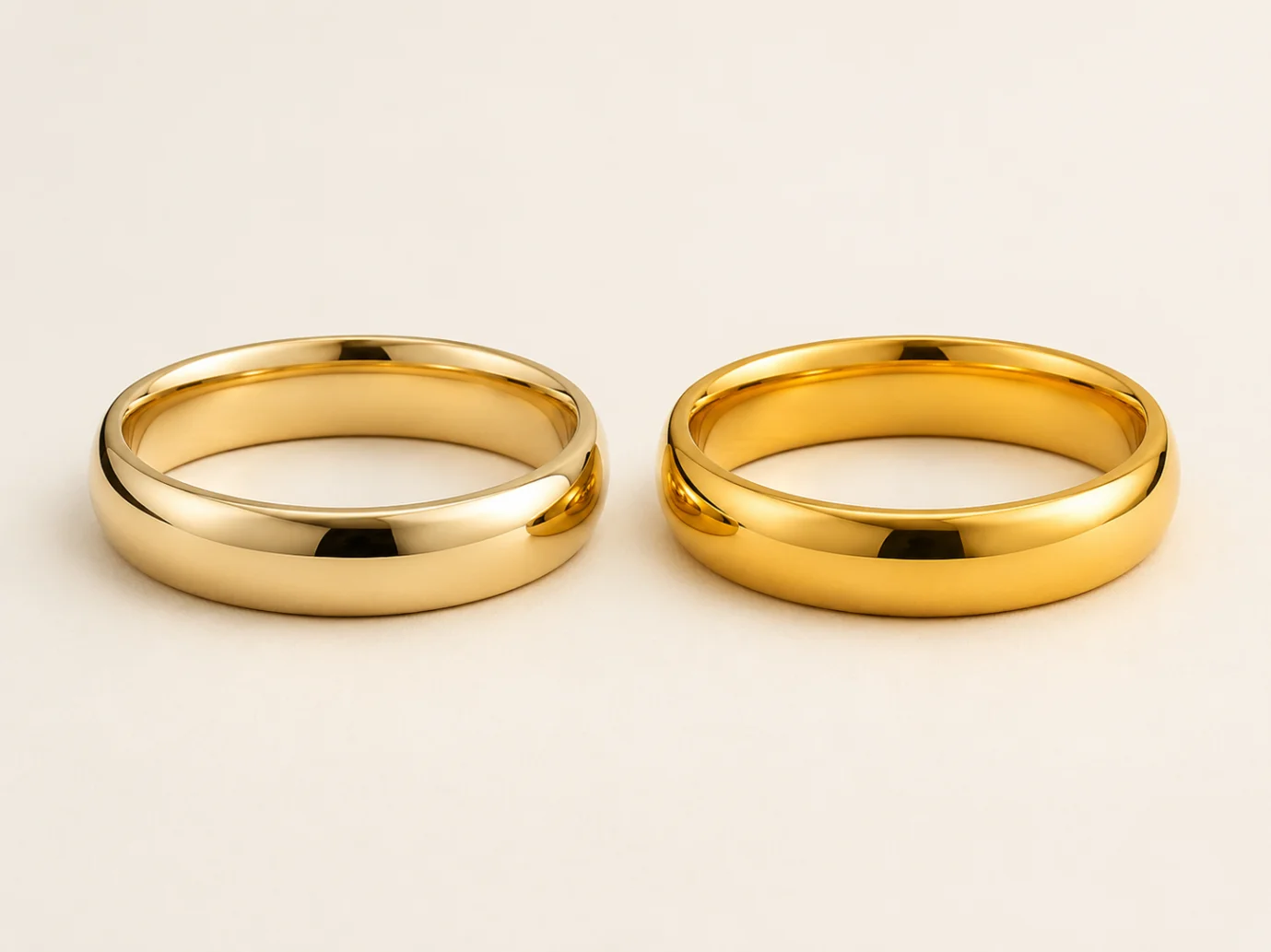
PVD gold plated jewelry is steel coated with a lasting gold color. The two top tones are 14k and 18k. The 14k tone is light, cool, and trending fast in the US. The 18k tone is rich, warm, and classic. Both are gold-color finishes, not solid gold, and both last for years on steel.
Gold tone is a wider choice than most brands think. It shapes how your pieces look, feel, and sell. Right now, two tones lead the US market: 14k and 18k. Each one speaks to a different buyer. This guide compares PVD gold plated finishes in both tones. You will learn how they differ, why 14k is trending, and which one fits your brand best.
What Is PVD Gold Plating?
PVD gold plated jewelry is steel coated with a gold color in a vacuum. The process bonds a hard, thin finish onto the metal. It gives a rich gold look that lasts far longer than normal plating. Unlike cheap plating, it does not flake or fade fast, which means fewer returns for your brand. The same process works for gold, rose gold, and many other tones. For the full process and exact specs, see our PVD coating technical guide.
Is PVD Gold Plating Real Gold?
Yes, quality PVD gold uses real gold. The vacuum process bonds a thin layer of real gold onto the steel. The typical industry layer is very thin, around 0.03 microns. Haosen goes further, starting at 0.06 microns and up to 1 micron. A thicker real-gold layer means a richer color that lasts longer. But it is still a plating, not solid gold. So label it honestly as real-gold PVD plating. The FTC jewelry guides explain how to describe gold finishes in the US.
14k vs 18k Gold: What Is the Difference in Tone?
In a PVD finish, the numbers point to gold color, not gold weight. Here is how the two tones look:
- 14k tone: Lighter and cooler. A subtle, modern gold that feels everyday.
- 18k tone: Richer and warmer. A deep, classic gold that feels luxury.
Both look premium on steel. The right one depends on your brand style.
Why Is 14k Gold PVD Trending in the US?
14k gold PVD plating is rising fast with US buyers. The softer tone suits daily, stackable styles, and it pairs well with silver and white metals. It also flatters more skin tones than deep yellow gold. Younger buyers love its clean, low-key look. For brands, this trend opens a wide, modern market that is still growing. Stacking and layering styles drive much of this demand, since a softer tone mixes well with other pieces.
14k vs 18k PVD: The Quick Comparison
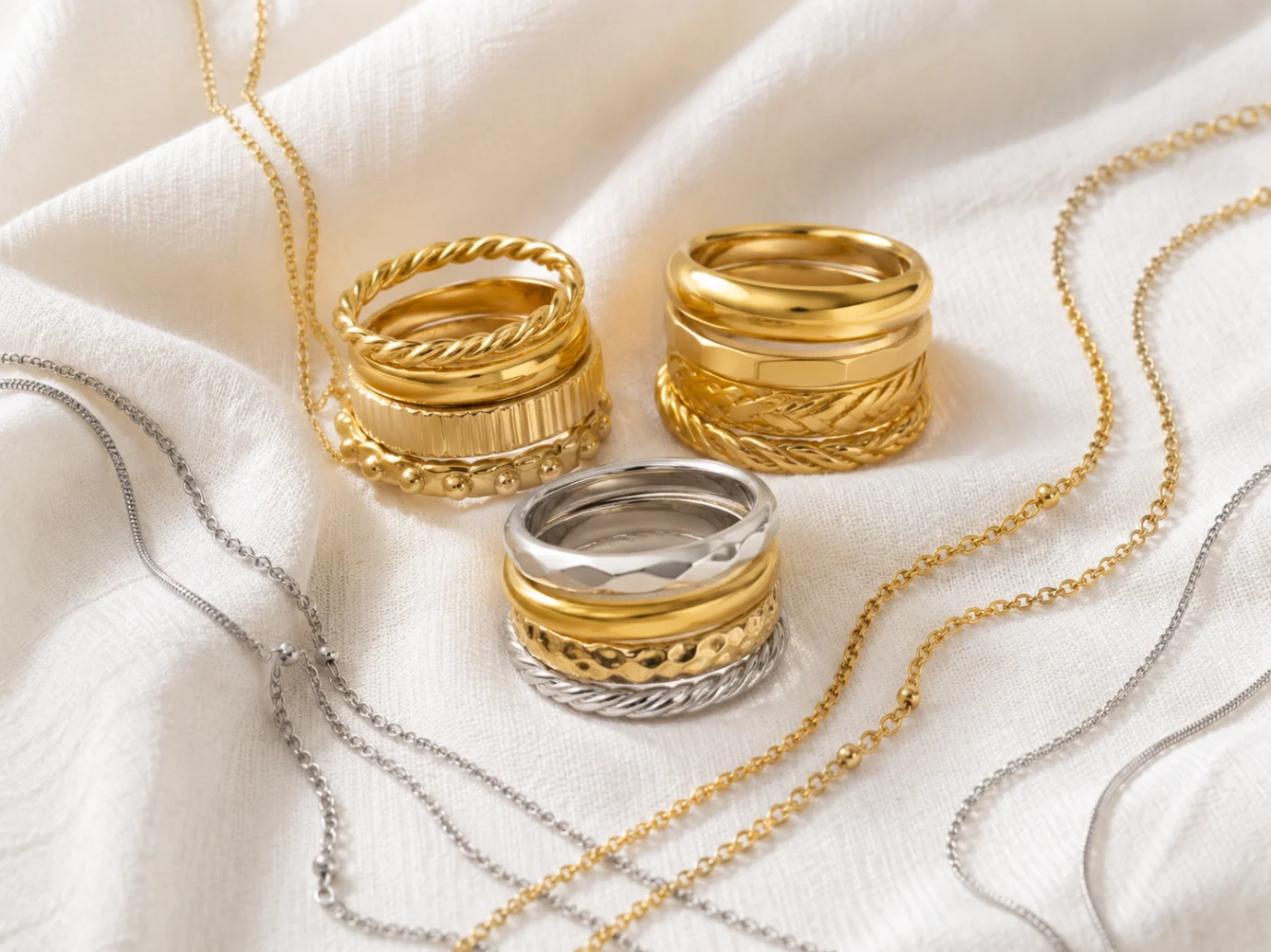
Both tones sell well, but to different buyers. The table below shows the split.
| Feature | 14k Gold PVD | 18k Gold PVD |
|---|---|---|
Tone |
Light, cool |
Rich, warm |
Feel |
Modern, everyday |
Classic, luxury |
Pairs with |
Silver, white metals |
Bold gold pieces |
Best market |
Gen Z, minimal, daily |
Statement, high-end |
US trend |
Rising fast |
Steady, classic |
Which Gold Tone Should Your Brand Choose?
Match the tone to your brand and buyer. Use this simple guide:
- Modern or minimal brand: The 14k tone fits clean, daily styles.
- Luxury or statement brand: The 18k tone gives a rich, bold look.
- Wide range: Offer both, and you cover more buyers.
Quality PVD gold jewelry holds its tone for years either way, so you can sell either shade with confidence.
What Other PVD Gold Tones Can Brands Offer?
Gold is not the only PVD color you can choose. Brands can pick a wide range of lasting tones from the same process. Popular options include rose gold, champagne gold, and black. Two-tone looks are also possible on a single piece. This lets you build a full collection from one steel base, so you get more styles without a higher metal cost. Ask your factory for a tone chart to see the full range.
How Durable Is PVD Gold Plating?
Very tough. PVD bonds the color deep into the steel, so it resists scratches, sweat, and water far better than plating. This is why PVD coated stainless steel jewelry is the top pick for daily-wear lines. For the exact test data and process steps, see our 4-step PVD process guide.
Is PVD Gold Better Than Gold Plating for Steel?
For steel lines, PVD gold is the smarter pick. Normal gold plating is thin and wears off with daily use. PVD bonds a hard color that holds up far longer, so pieces keep their shine through years of wear. This means fewer returns and stronger reviews. To compare every gold finish side by side, see our guide on gold vermeil vs plated vs PVD.
How Do You Order the Right Gold Tone?
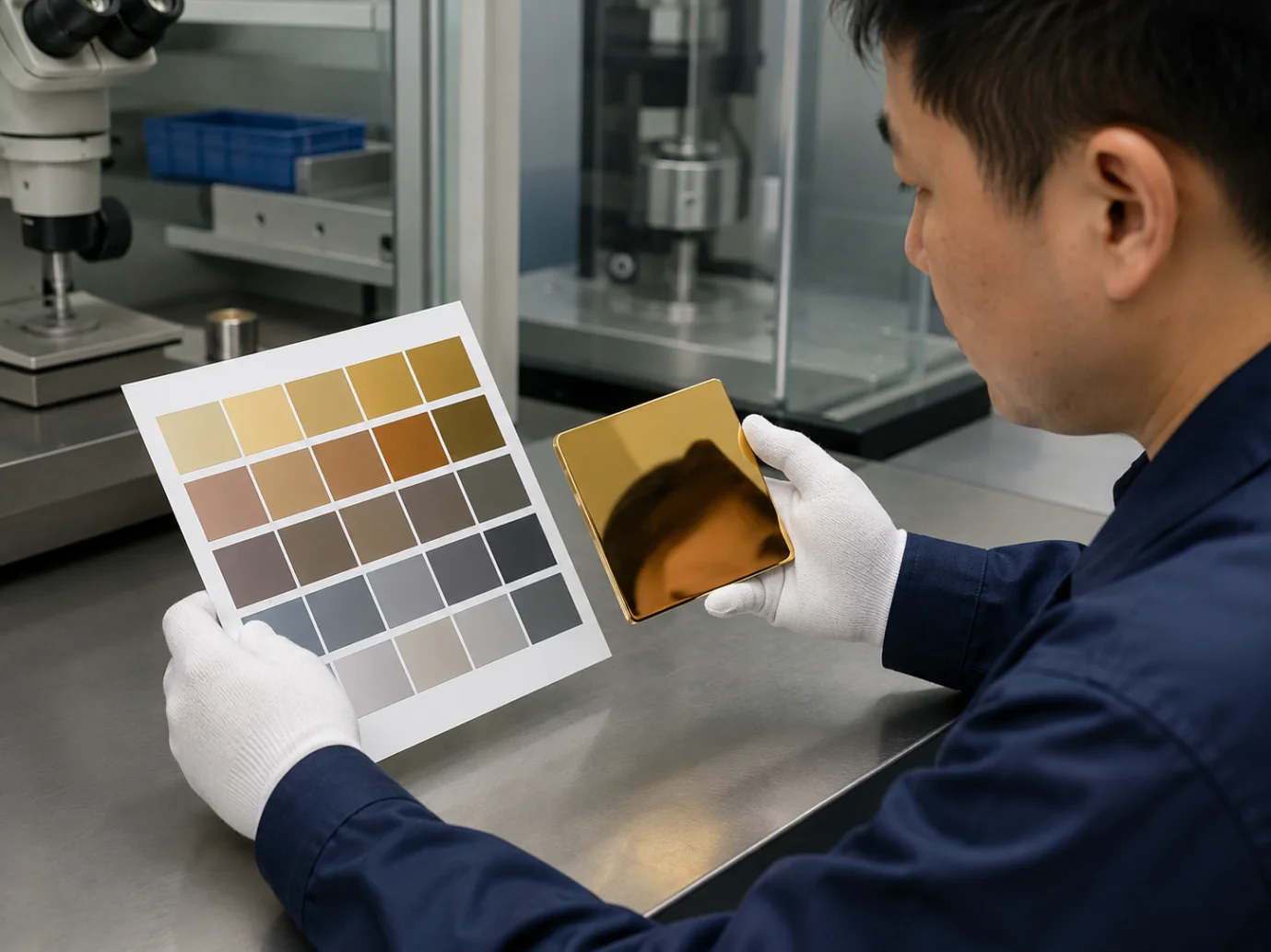
Color must be exact across every batch. Send a master sample of your target tone. A good factory then matches it with digital color checks. They confirm the shade on each run. Always ask for a pre-production sample so you can approve the tone before the full order. This one step stops costly color mismatches across a large bulk run.
Frequently Asked Questions
Is PVD gold plated jewelry real gold?
Yes, the coating layer is real gold, but the jewelry is not solid gold. It has a stainless steel base with a real gold PVD coating that gives it a 14k or 18k gold look and helps the finish last longer.
Is 14k or 18k gold PVD better?
Neither is better. 14k is a lighter, modern tone. 18k is a richer, classic tone. The best one fits your brand style.
Does PVD gold plating fade?
It resists fading far better than normal plating. The color bonds deep into the steel, so it stays bright for years.
Why is 14k gold trending in the US?
Its softer, cooler tone suits daily, stackable styles. It pairs with silver and flatters more skin tones than deep gold.
Can you match my exact gold tone?
Yes. Send a master sample, and a good factory matches it with digital color checks on every batch.
Author

Industry trend analysis and researches fashion jewelry market data.