

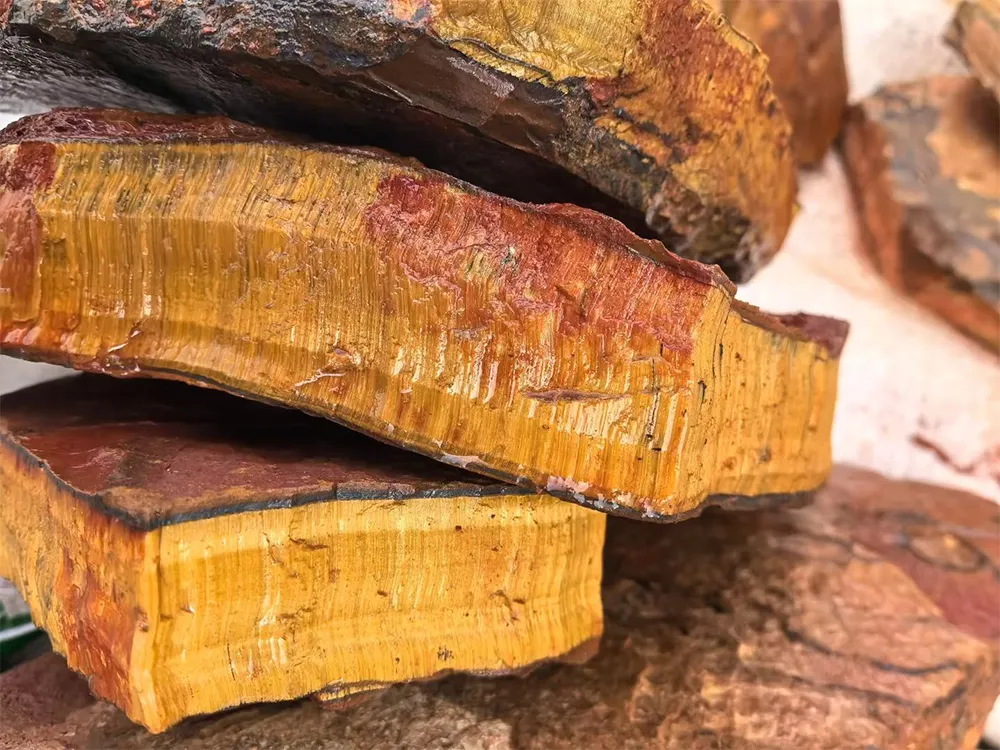
Tiger eye is an ancient and captivating gemstone, named for its silky luster and the flowing “eye line” that shifts as you turn it. In the fashion jewelry industry, it carries auspicious meanings of prosperity and courage while pairing effortlessly with stainless steel and everyday outfits. This article covers everything about tiger eye — from its origins and meaning to how it pairs with different metals and complements a range of fashion styles.
What Is Tiger Eye?
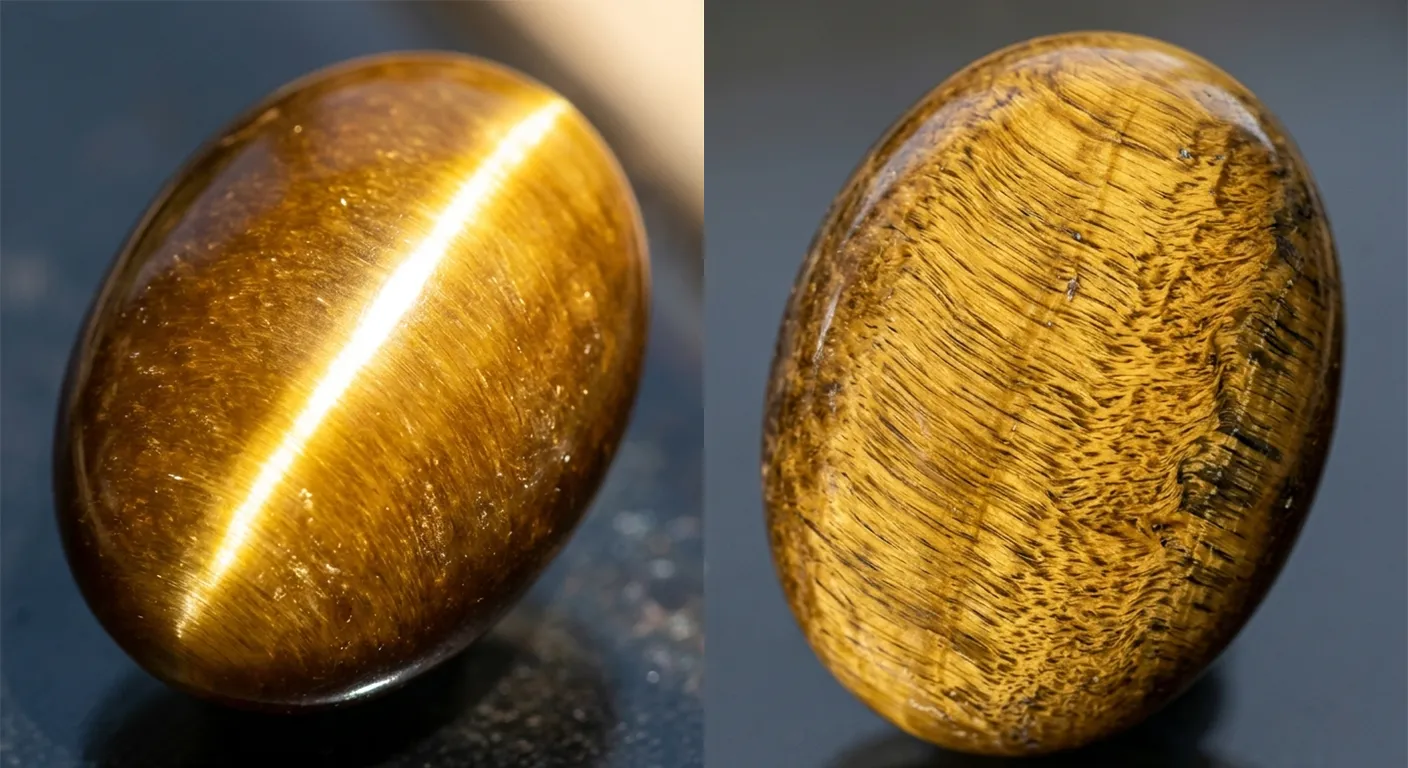
Tiger eye (also known as tiger’s eye) is a variety of quartz in the chalcedony family. Geologically, silica gradually replaced the fibrous structure of crocidolite (blue asbestos), preserving the fibrous texture and forming a unique chatoyancy effect — as you rotate the gemstone, a bright band of light moves across its surface, like a tiger’s eye gleaming in the dark. With a Mohs hardness of about 7, it is well-suited for everyday wear.
What Does Tiger Eye Symbolize?
Tiger eye carries meanings on both a spiritual level and a practical, everyday-wear level:
- Wealth & Career Success: In both Eastern and Western cultures, tiger eye is believed to attract wealth and career luck — especially favored by entrepreneurs, sales professionals, and those who need drive and momentum in the workplace.
- Courage & Confidence: Known as the “Stone of Courage,” it helps the hesitant and indecisive build confidence and overcome fear.
- Everyday Fashion: As a high-hardness, visually striking gemstone, tiger eye is widely used in bracelets, necklaces, earrings, rings, and even bag charms for daily adornment.
- Energy Healing (Spiritual): Some enthusiasts believe tiger eye can balance the solar plexus chakra, enhancing self-worth and personal empowerment.

Why Is Tiger Eye So Popular in Fashion Jewelry?
The popularity of tiger eye is no accident — here are five key reasons:
- Versatile & Aesthetic: The golden-brown palette pairs well with virtually all skin tones and outfits, season after season.
- Meaningful Appeal: In-demand symbolism like wealth attraction, protection, and courage — these are enduring psychological motivators that keep consumers buying.
- Great Value: Compared to lapis lazuli, malachite, and other gemstones, tiger eye offers excellent quality at an accessible price point, making it ideal for the mass market.
- Unisex Appeal: Yellow and blue tiger eye can be designed into gender-neutral jewelry that appeals to both men and women.
- High-End Validation: Luxury brands like Van Cleef & Arpels and Bvlgari frequently feature tiger eye, elevating its status in the fashion world.
Types of Tiger Eye (by Color)
| Type | Color Characteristics | Common Uses |
|---|---|---|
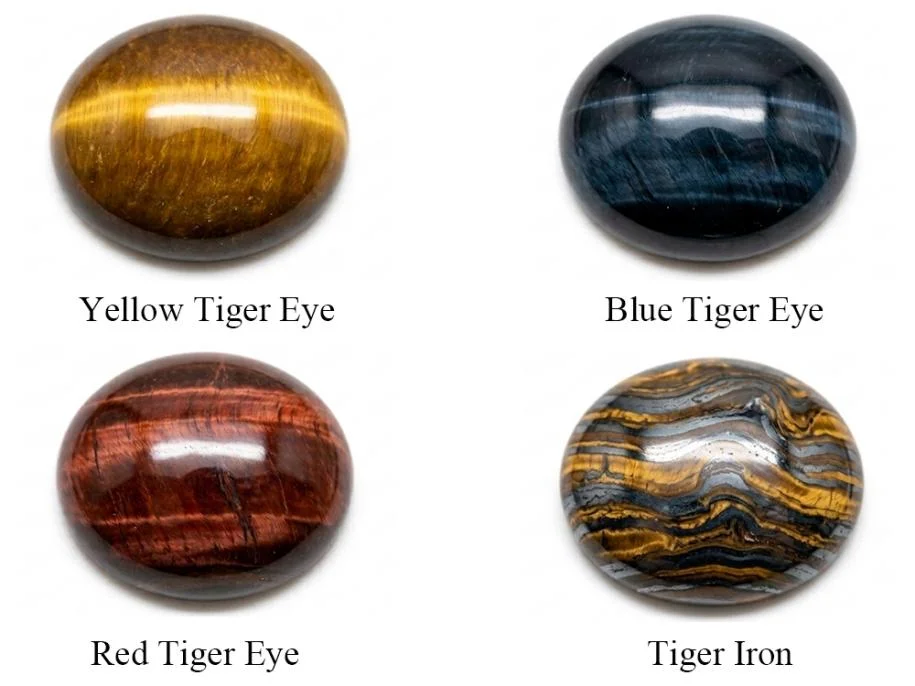
Yellow Tiger Eye |
Golden brown to yellowish brown; classic tiger stripe |
Bracelets, pendants, men’s rings |
Blue Tiger Eye (Hawk’s Eye) |
Grayish-blue to blue-gray; cool metallic sheen |
High-end jewelry, minimalist styles |
Red Tiger Eye |
Reddish-brown to russet |
Vintage earrings, long necklaces |
Tiger Iron |
Interbanded golden tiger eye, red jasper, and metallic black hematite |
Statement rings, vintage cufflinks, men’s retro jewelry |
The color range of natural yellow tiger eye cabochons spans from light honey to deep brown — this is a normal variation and does not affect the signature chatoyancy effect.
What Types of Jewelry Can Tiger Eye Be Used For?
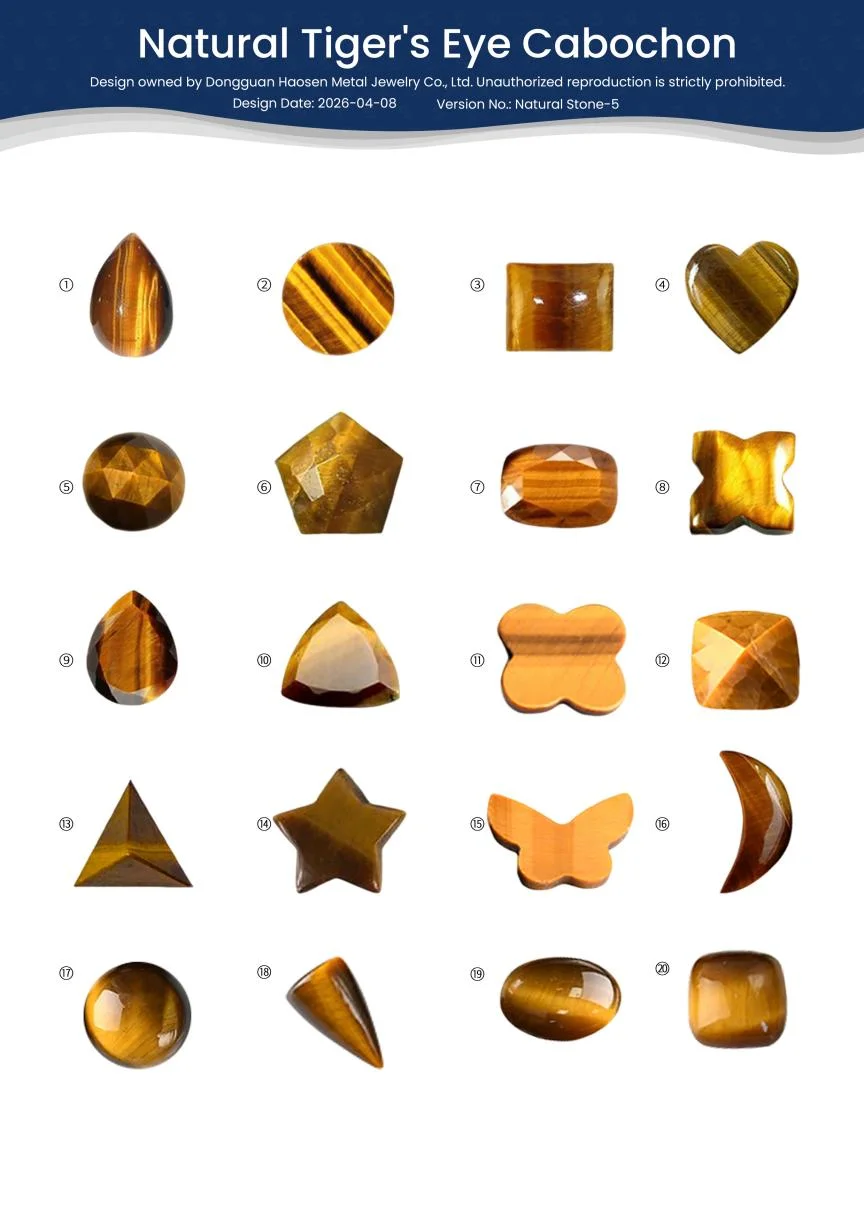
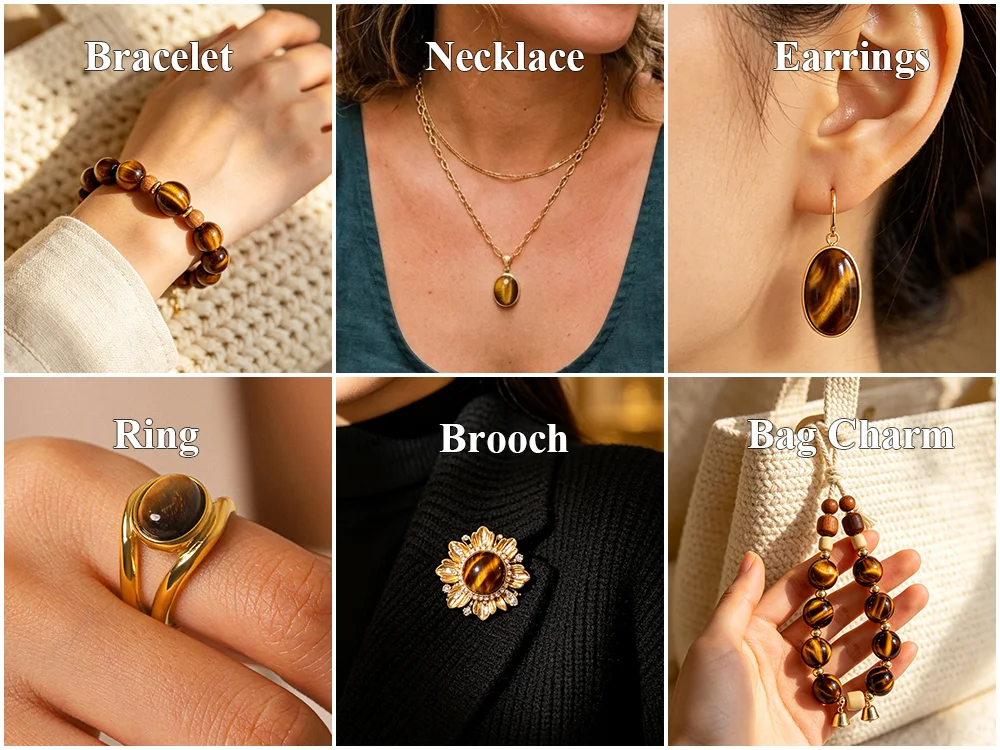
Tiger eye is processed into a wide variety of forms, covering virtually every jewelry category:
- Bracelets & Beaded Strands: The hottest category — can be worn solo or stacked. Common bead diameters range from 6–12 mm.
- Necklaces & Pendants: Cabochon or teardrop pendants best showcase the chatoyancy effect.
- Earrings: Small rounds or square studs, lightweight and flattering across a wide range of skin tones.
- Rings: Men’s rings often use rectangular cabochons; women’s rings may feature clusters of small tiger eye stones.
- Brooches & Lapel Pins: Carved into animal motifs like tigers or eagles for a vintage, refined look.
- Hair Accessories & Bag Charms: Small tiger eye beads are increasingly strung into hair chains or hung on handbags.
- DIY Loose Beads: Tiny 2–4 mm beads paired with stainless steel findings for DIY jewelry makers.
For brands and wholesalers, 96Jewelry supports custom design, OEM, and ODM services for tiger eye jewelry covering all categories listed above. Minimum order quantities start as low as 30 pieces per design, with mass production turnaround of approximately 25 days — a one-stop solution from stone selection and design to finished products.
How to Style Tiger Eye with Stainless Steel Jewelry
Stainless steel is cool, hard, and durable — pairing it with tiger eye creates a visual balance of “strength and softness.” Browse our stainless steel jewelry collection for more pairing inspiration:
| Style | Tiger Eye Choice | Stainless Steel(SS) Finish | Recommended Piece |
|---|---|---|---|
Industrial / Techwear |
Blue tiger eye (gray-blue) |
Matte / Brushed |
SS Cuban chain + blue tiger eye pendant |
Light Luxury / Office |
Yellow tiger eye (golden brown) |
Mirror Polish |
SS slim bangle with spaced yellow tiger eye beads |
Architectural / Structural |
Multi-color or round tiger eye |
Open-frame setting |
SS cage pendant encasing tiger eye |
Couple / Unisex Rings |
Rectangular yellow tiger eye |
Plain SS bezel |
Minimalist ring, tiger eye centered |
⚠️ Care Reminder: 96Jewelry uses PVD (Physical Vapor Deposition) plating on all stainless steel components — standard thickness 0.03μm, with custom options up to 0.1μm. PVD gold plating typically lasts 1–3+ years under normal wear, significantly more durable than traditional electroplating. tiger eye has a hardness of 7 on the Mohs scale, so normal contact with stainless steel settings will not cause scratching. Avoid heavy impacts and clean with a soft cloth and plain water.
How to Select Quality Tiger Eye
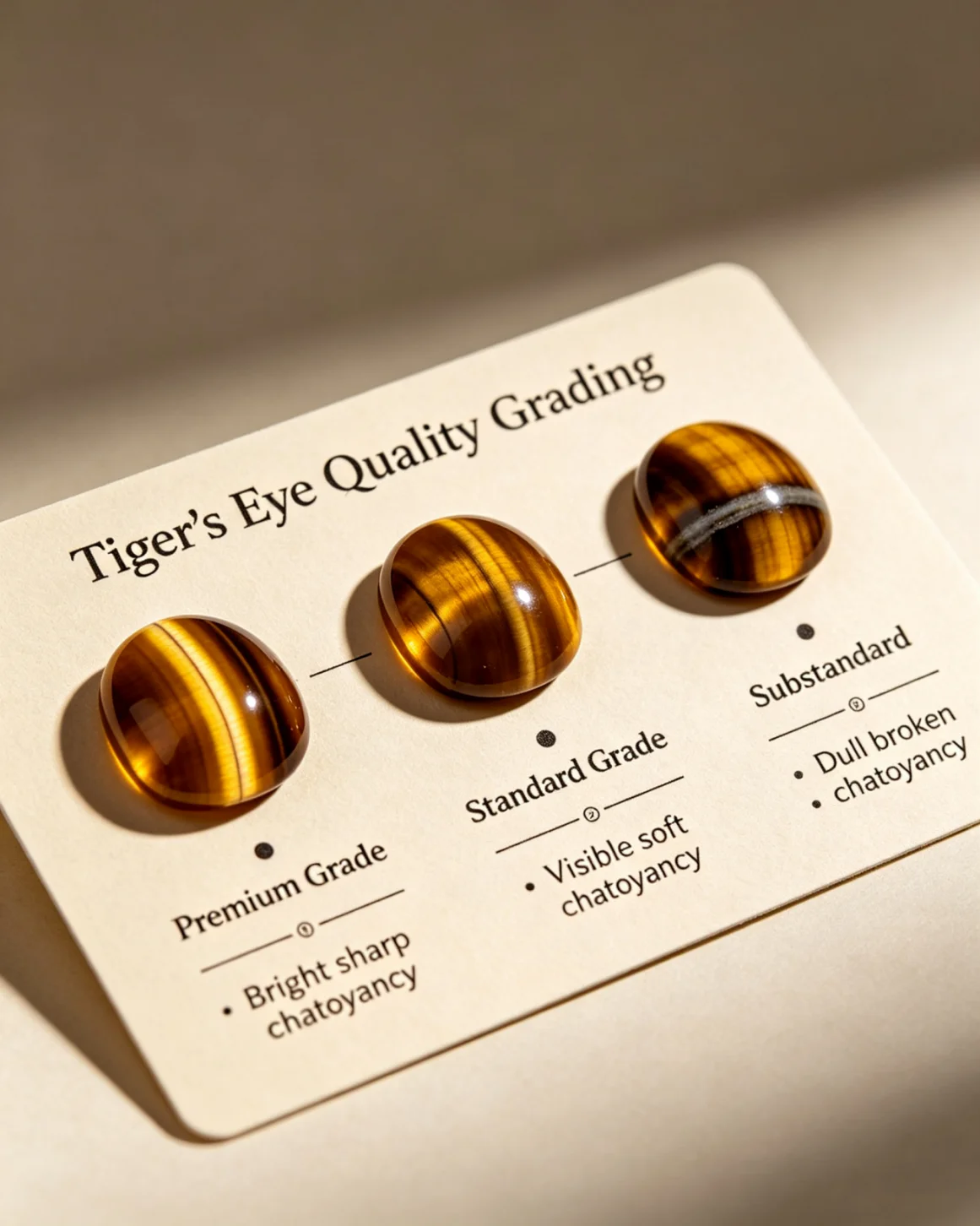
For brands and wholesalers sourcing tiger eye in bulk, here are the key quality indicators to evaluate:
- Chatoyancy Intensity: This is the core value indicator for tiger eye. When rotating the stone, the light band should be bright, the edges sharp, and the movement smooth. Prioritize raw stones with clear, unbroken chatoyant lines.
- Color Uniformity: High-quality tiger eye has even color distribution without obvious spotting or irregular color streaking. Yellow tiger eye with high golden-brown saturation is preferred; blue tiger eye (hawk’s eye) with pure gray-blue is prized. Slight natural color variation is normal, but excessive inconsistency within a batch can affect finished product uniformity.
- Surface Integrity: Inspect rough material for cracks, pits, or excessive dark inclusions. High-quality cabochons should be smooth and flawless. For bead materials, also check borehole uniformity and roundness.
- Origin & Traceability: South African and Australian tiger eye are well recognized in the international market. 96Jewelry maintains long-term partnerships with multiple quality mining regions, providing clients with a stable, traceable supply of raw materials.
- Natural vs. Dyed: Natural yellow and blue tiger eye are color-stable and will not fade. Some red tiger eye on the market is dyed — clarify whether natural color is required before purchasing, and choose a reputable supplier who can guarantee natural color.
Conclusion
Tiger eye continues to captivate the global fashion scene with its rich history, unique chatoyancy, and profound symbolism. Whether you are a jewelry designer seeking a harmonious contrast with metallic settings or a retailer expanding your product lines, this gemstone offers unmatched versatility and lasting appeal. By understanding its characteristics and choosing a reliable partner like 96Jewelry, you can easily harness the power of this remarkable material to create standout collections that sell.
Frequently Asked Questions (FAQ)
Q1: Can tiger eye get wet? Can I wear it in the shower?
Brief contact with clean water (such as hand washing or light rain) is fine, but wearing it in the shower or while swimming is not recommended. Hot water and chemicals from shower gels and shampoos can gradually dull the stone’s surface. Additionally, while stainless steel fittings are water-resistant, prolonged moisture may affect the lifespan of components like spring clasps.
Q2: Does tiger eye need cleansing or recharging?
From an energy perspective, some users cleanse their tiger eye once a month using moonlight, a selenite cluster, or briefly running water. From a physical maintenance standpoint, regular wiping with a soft cloth is sufficient. Avoid prolonged sun exposure, high heat, and ultrasonic cleaners.
Q3: Is tiger eye a genuine natural gemstone?
Yes. Tiger eye is a naturally formed quartz-based gemstone belonging to the chalcedony family. It forms when silica replaces crocidolite fibers, creating its distinctive chatoyancy. While imitations exist on the market (such as glass or plastic), authentic tiger eye is 100% natural.
Q4: Is tiger eye expensive?
Compared to precious gemstones like ruby and emerald, tiger eye falls into the mid-to-low price range for natural gemstones, offering excellent value. A standard-quality tiger eye bracelet typically ranges from $10 to $100 USD; high-quality blue tiger eye or pieces with exceptionally strong chatoyancy can exceed $200 USD. Overall, it is an ideal choice for fashion jewelry — beautiful yet affordable.
Q5: Which is better — yellow or blue tiger eye?
There is no absolute “better” — it depends on personal preference and styling needs. Yellow tiger eye is more classic and warm, with stronger wealth-attraction symbolism. Blue tiger eye (hawk’s eye) is rarer, with a cool, neutral aesthetic. Both are natural gemstones; blue tiger eye is generally priced slightly higher.
Q6: Should I wear a tiger eye bracelet on the left or right hand?
According to traditional energy and chakra theory: wear on the left hand to attract wealth and positive energy (receiving); wear on the right hand to ward off negativity and ill intentions (expelling). If you don’t follow these practices, either hand is fine.
Q7: What's the difference between tiger eye and obsidian?
Tiger eye is a quartz-based stone with chatoyancy, primarily associated with wealth and courage. Obsidian is a natural volcanic glass with sharp fractures, primarily associated with protection and absorbing negative energy. The two can be worn together, but avoid knocking them against each other.
Q8: Who should avoid wearing tiger eye?
From an energy perspective, tiger eye is strong and active — people who are easily agitated, impulsive, or hot-tempered are advised against prolonged wear, as it may amplify these tendencies. Pregnant women and those with severe insomnia should pause use if discomfort occurs. From a physical perspective, those with metal allergies should check the setting material. Of course, if you feel fine while wearing it, there are no strict contraindications.
Q9: Does tiger eye fade?
Natural yellow and blue tiger eye will not fade. However, dyed red tiger eye may lighten with prolonged sun exposure or chemical contact. When purchasing, choose a reputable supplier and request a “natural color” guarantee.
Q10: Who is tiger eye a good gift for?
It’s suitable for entrepreneurs, office workers (wealth attraction), people preparing for exams or interviews (confidence boost), friends who enjoy gender-neutral style jewelry, or as a thoughtful birthday gift for anyone who appreciates natural stone jewelry.
Q11: What is the spiritual meaning of tiger eye?
On a metaphysical level, tiger eye is believed to activate the solar plexus chakra (located in the stomach area), enhancing personal power, willpower, and self-worth. Known as the “Stone of Insight,” it helps the wearer see things clearly and overcome self-doubt and fear. It embodies the courage and focus of the tiger, guiding people to pursue goals with calm determination.
Author

Industry trend analysis and researches fashion jewelry market data.