
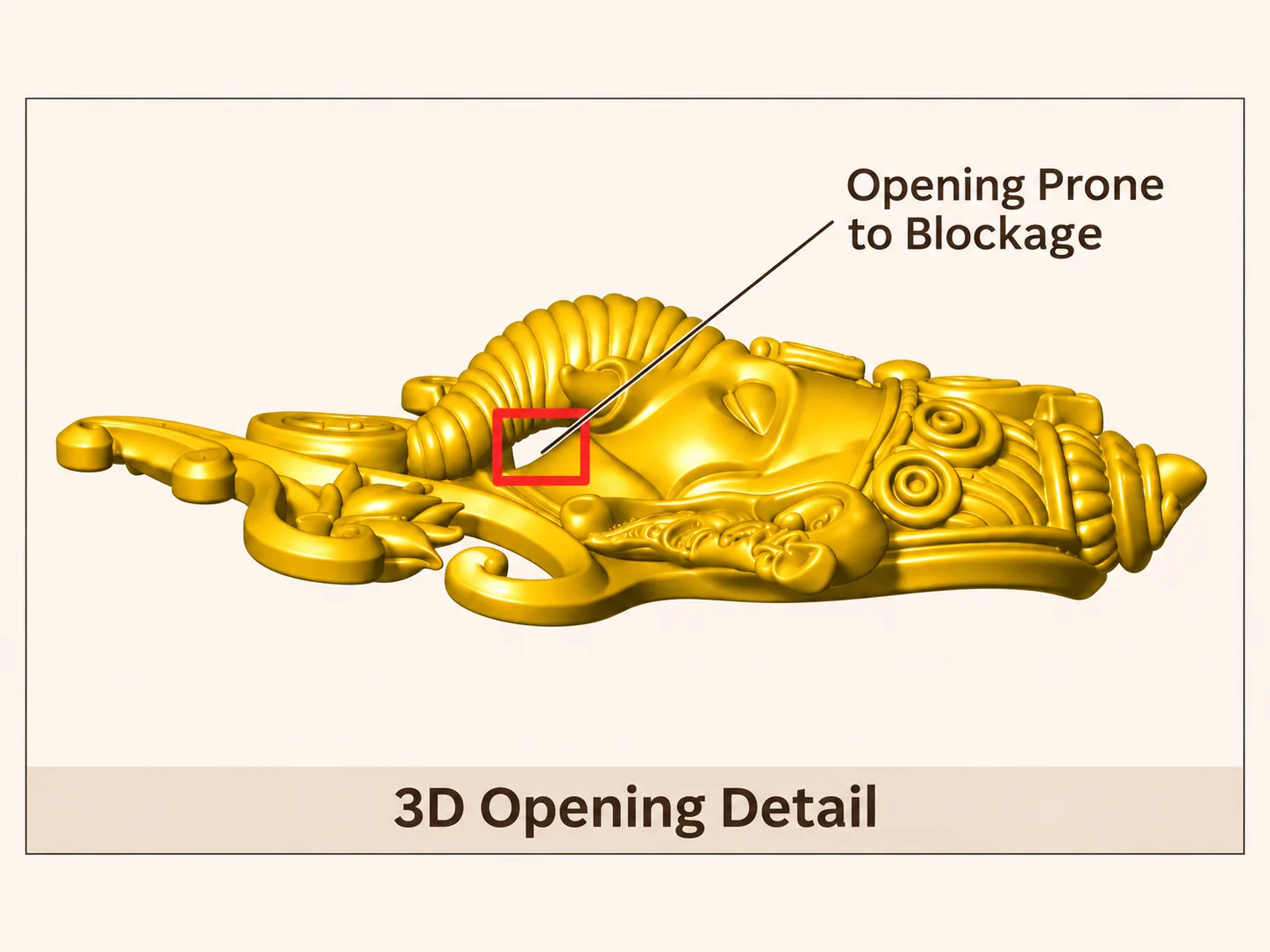
A client in India found 96Jewelry through Google and sent us an AI-generated image of a Hindu deity pendant. They wanted the figure made in stainless steel, with an initial run of 60 pieces per design. We agreed on a relief design and sent the client a 3D model for approval. On screen, the openings in the motif were easy to see. In the first casting, some of those openings had closed up, and parts of the fine metalwork had broken away.
From an AI reference to an approved metal sample, with openwork revisions confirmed by the client. Order quantity: 60 pieces per design.
When reviewing a custom pendant with fine openwork, a jewelry brand needs to check more than the approved 3D appearance. In this project, we found closed openings and small sections of fine metalwork that had broken away in the first stainless steel casting. These problems had not been apparent in the model. The next decision was which changes the client could accept before we made another sample.
A client in India found 96Jewelry through Google and sent us an AI-generated image of a Hindu deity pendant. They wanted a custom stainless steel pendant, with an initial order of 60 pieces per design. We agreed on a relief design and prepared a 3D model for approval.
This project follows the move from a visual reference to a metal sample, and the client’s decision to accept a specific change to the openwork before production.
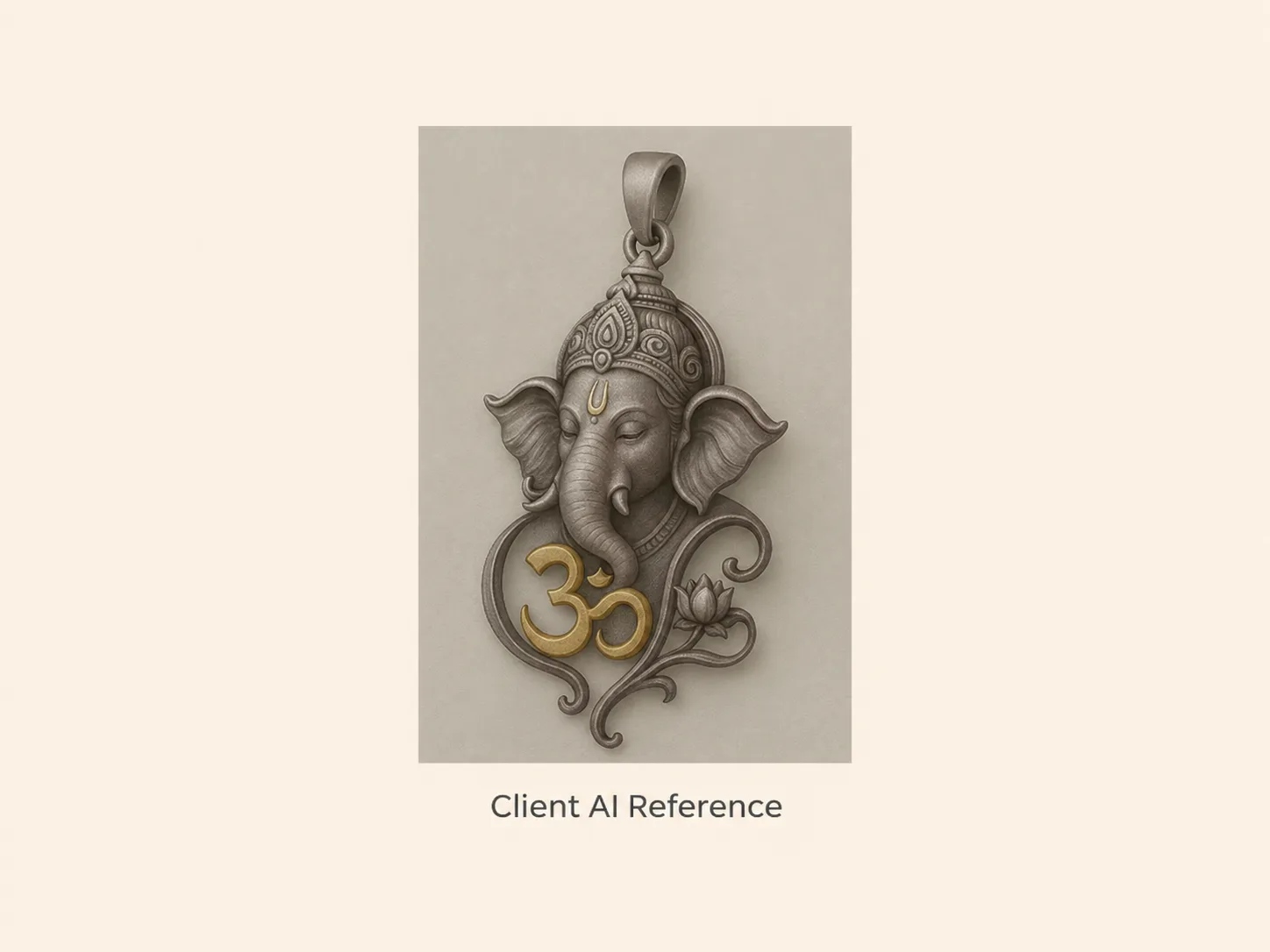
From AI Reference to 3D Model
We quoted $120 for modeling and tooling on this project. Most of that charge covered translating the client’s image into a three-dimensional model. The image showed the intended appearance from the front; the model also needed to define the relief depth and the metal connections around the openings.
We used lost-wax casting to develop the stainless steel pendant from the approved 3D design. The client reviewed the model before we moved on to the wax pattern and metal sampling. The $120 fee and order quantity described here apply to this project; a different design requires its own review and quotation.
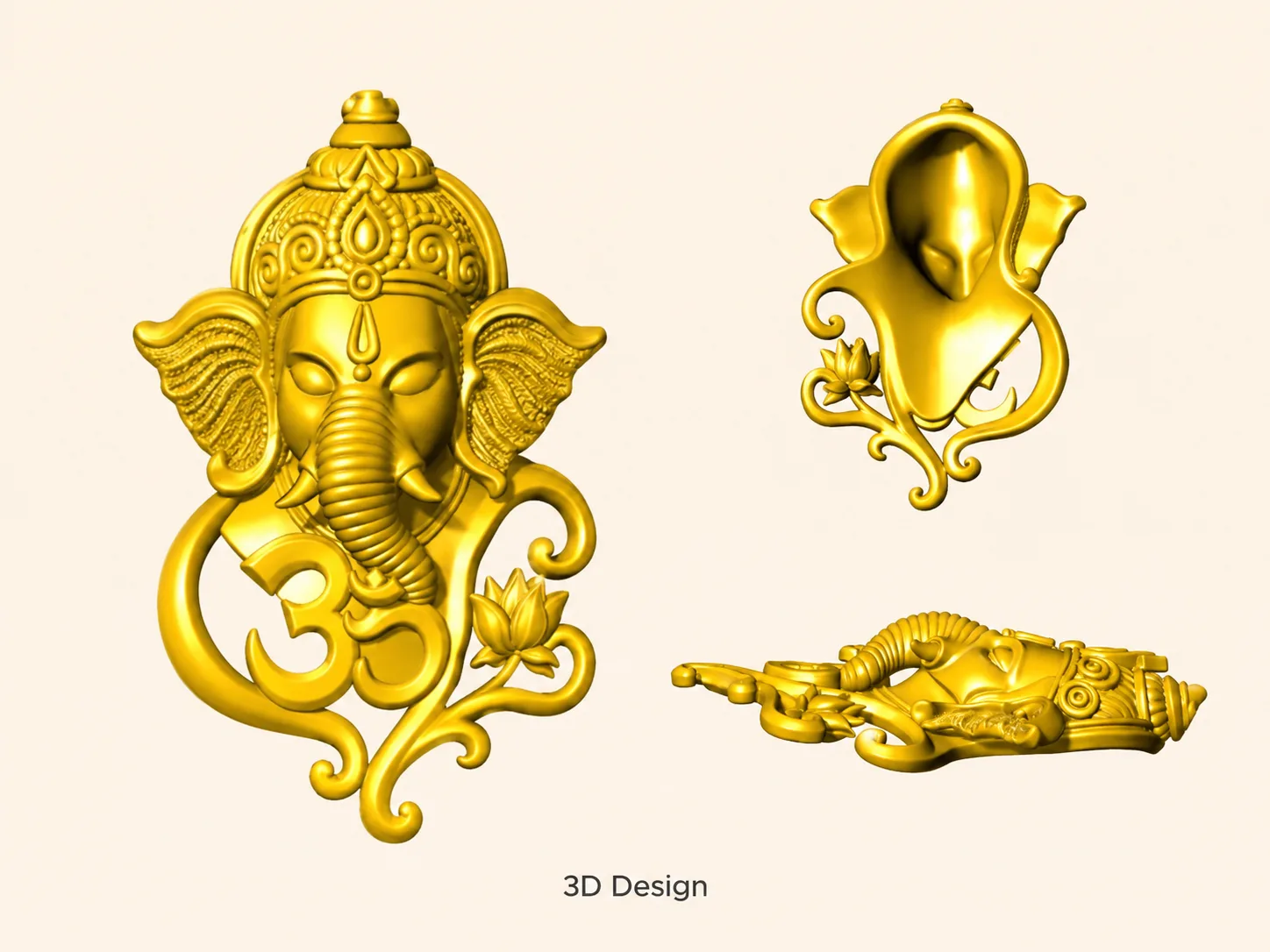
From Model to First Metal Sample
In jewelry prototyping, a digital design and a metal sample serve different purposes. The 3D model allowed the client to review the relief design. The wax pattern was the next physical stage in the casting process. The first unfinished metal sample showed how the details had reproduced in stainless steel.
| Stage | Timing on this project | Purpose |
|---|---|---|
| 3D modeling | Within 3 days of receiving the deposit | Prepare a relief model for client review. |
| Wax pattern | Within 2 days of model approval | Prepare the physical pattern for casting. |
| First metal sample | Within 7 days of starting the casting stage | Inspect the unfinished metal before polishing or plating. |
These are separate stage records from this order, rather than a general lead-time promise. They do not include a confirmed schedule for the complete project.
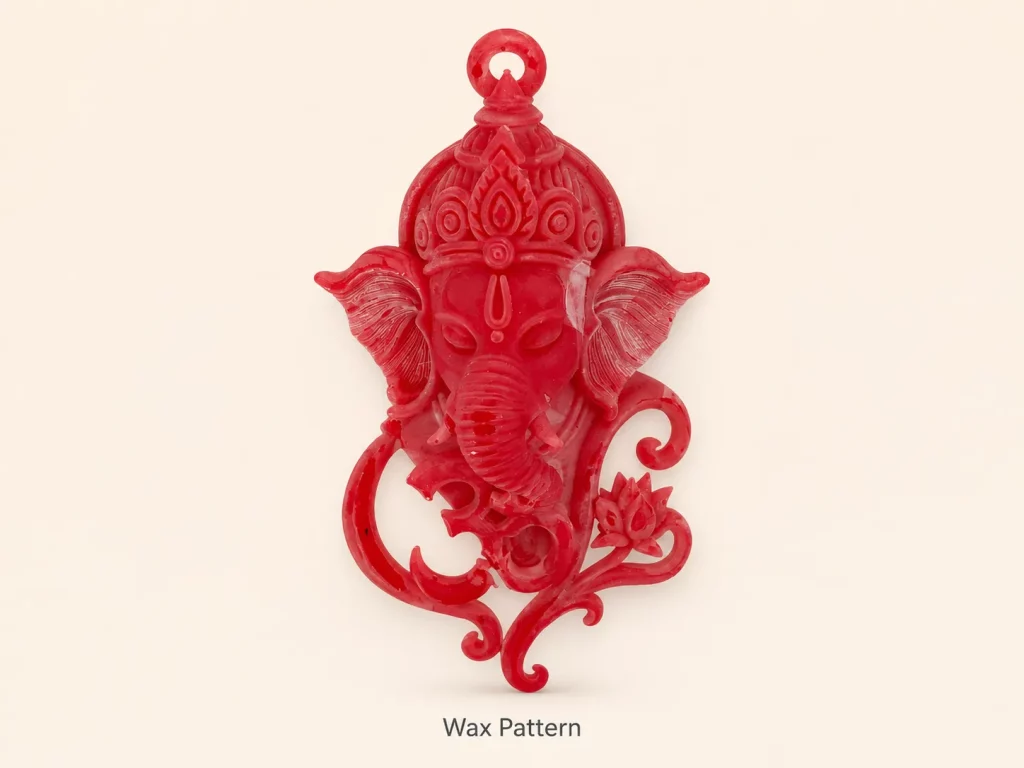
Reviewing the Openwork Revision
What the First Jewelry Casting Revealed
In the first unfinished casting, metal bridged some gaps that were intended to remain open. Elsewhere, small sections of the fine metalwork had come away. Both defects changed the outline of the motif and were visible before surface finishing.
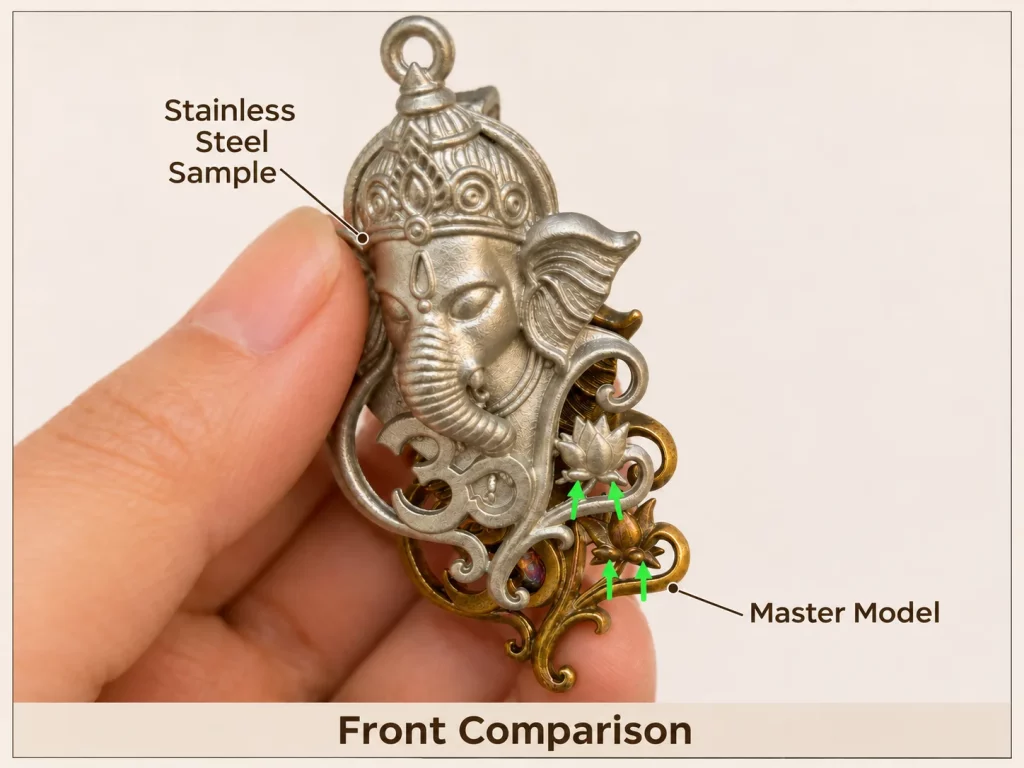
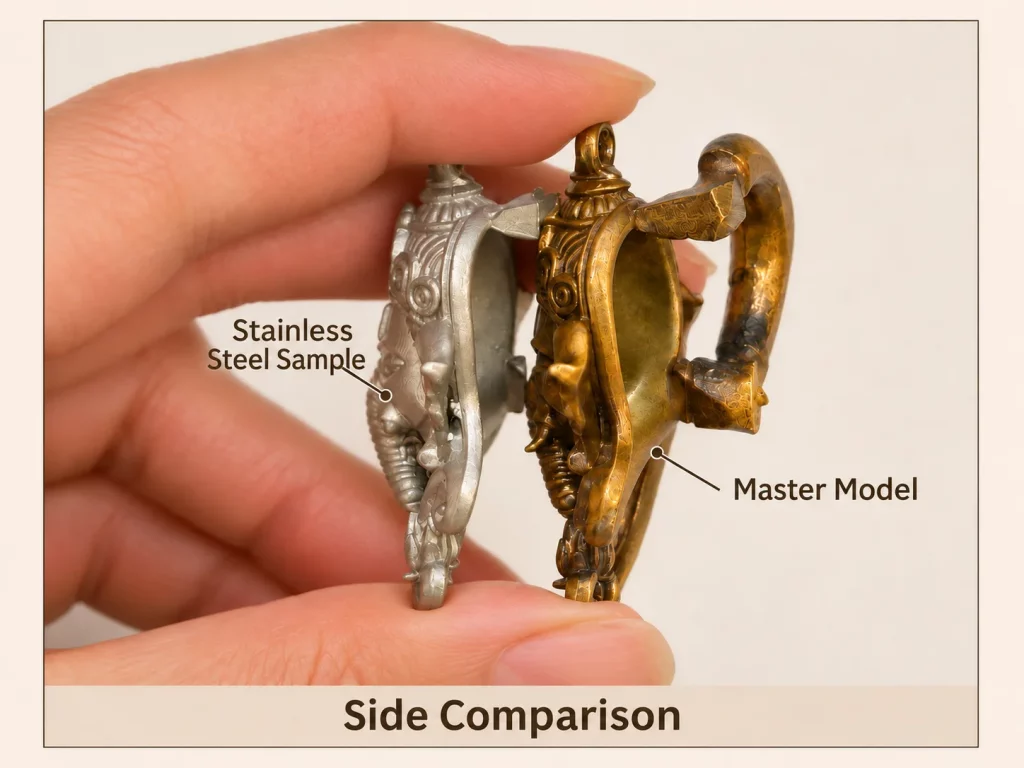
The Design Change Approved by the Client
The proposed revision replaced the affected open areas with solid metal. These changes altered the appearance of the motif. We explained the visual changes to the client and obtained approval before updating the tooling. The client therefore reviewed a design trade-off: selected openings would become solid metal.
After the client agreed to the revision, we updated the tooling and produced a second metal sample. We reviewed that sample, then completed polishing, plating, and production and delivered the pendants.
Defining the Details That Must Be Preserved
If you are developing a pendant from an AI image, mark the features that must remain in the physical piece. A dark area in the reference could represent a through-opening, a recess, or a shadow. A note such as “this opening must go all the way through” gives the modeler a clearer requirement.
Separate essential design features from areas where adjustments are acceptable. The model establishes the proposed appearance; the metal sample provides a separate opportunity to review how those features have reproduced. Any change to an essential motif detail should return to the client for confirmation.
Developing a pendant from an AI reference? Send your image, intended dimensions, preferred material and finish, and quantity per design. Mark the details that must remain unchanged so we can review your requirements before quoting.
Request a Pendant Design Review
Explore our custom jewelry manufacturing services.
Related case study: turning an AI jewelry design into a production-ready pendant.
FAQS
Can you develop a pendant from an AI image
Yes. In this project, we used an AI image as the visual reference and created a 3D model for review. The reference still needed dimensions and construction decisions before sampling.
Can I order 60 pieces of a custom design
This project was completed at 60 pieces per design. For a new project, send the design and quantity for review so we can confirm the production requirements.
Does approving a 3D model replace metal sample approval?
No. The model establishes the proposed design, while a metal sample shows how its details reproduce in the actual material. In this project, closed openings and small sections of the fine metalwork that had broken away became apparent in the first casting after the model had been approved.
Will you change the openwork without the client’s approval?
In this project, we explained that filling selected openings would change the appearance of the motif and obtained the client’s approval before revising the tooling. For your design, mark the features that must remain unchanged so any proposed adjustments can be discussed.
What did the $120 development fee include?
For this project, the $120 fee covered modeling and tooling, with most of the charge relating to translating the AI reference into a three-dimensional model. This was a project-specific quotation; a different design requires its own review.
Author

Ertian Jiang (Jasper) is the founder of Haosen Metal Jewelry. Since the age of 26, he has combined deep roots in traditional craftsmanship with a sharp vision for the market to build the foundation of the company’s excellence.
Ertian Jiang started on the ground floor as a craftsman, specializing in semi-precious stones (agate, mother of pearl, tiger’s eye) and manual inlaying—perfecting how to fit natural stones into metal bases without gaps or glue failure. He also worked on the front lines of sales, speaking face-to-face with buyers and listening to their frustrations about fallen stones and fading colors.