

A large ring face can be central to a collection’s visual identity. If the ring feels too heavy, reducing the visible dimensions may undermine that design. This development example explores another choice: keep the top profile and change the underside.
The brief is a brass signet-style statement ring with an approximately 18 mm face, a rounded raised top and no centre stone. The preferred route is an open-back structure. This is a development-stage review of the trade-offs and sample checks, not a completed production or cost-saving result.
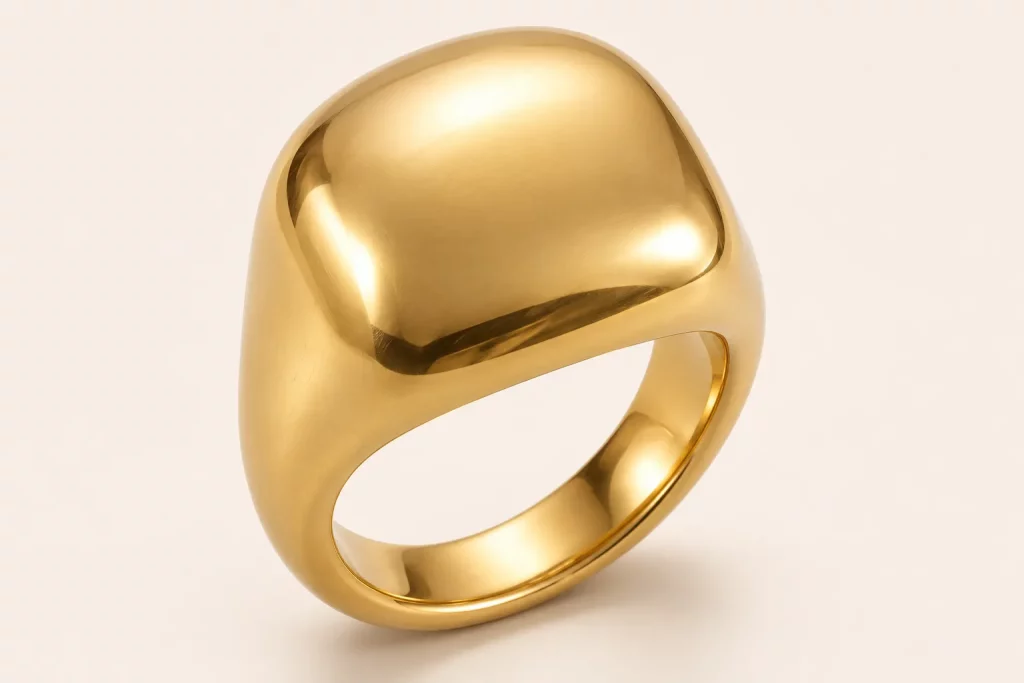
What did the original design need to achieve?
The original solid CAD model indicated a brass weight above 25 g. This was a design estimate, not a recorded finished-sample measurement. The brand wanted a lighter feel without flattening the dome or narrowing the face.
The commercial brief also set a target purchase price at approximately 70% of the original solid-design quotation. That figure was a negotiation and development target, not a verified saving. A valid comparison would need the same order quantity, size breakdown, plating specification and quotation basis.
For brands evaluating a similar project, our custom brass ring manufacturing page explains the broader customization options and information needed for an enquiry.
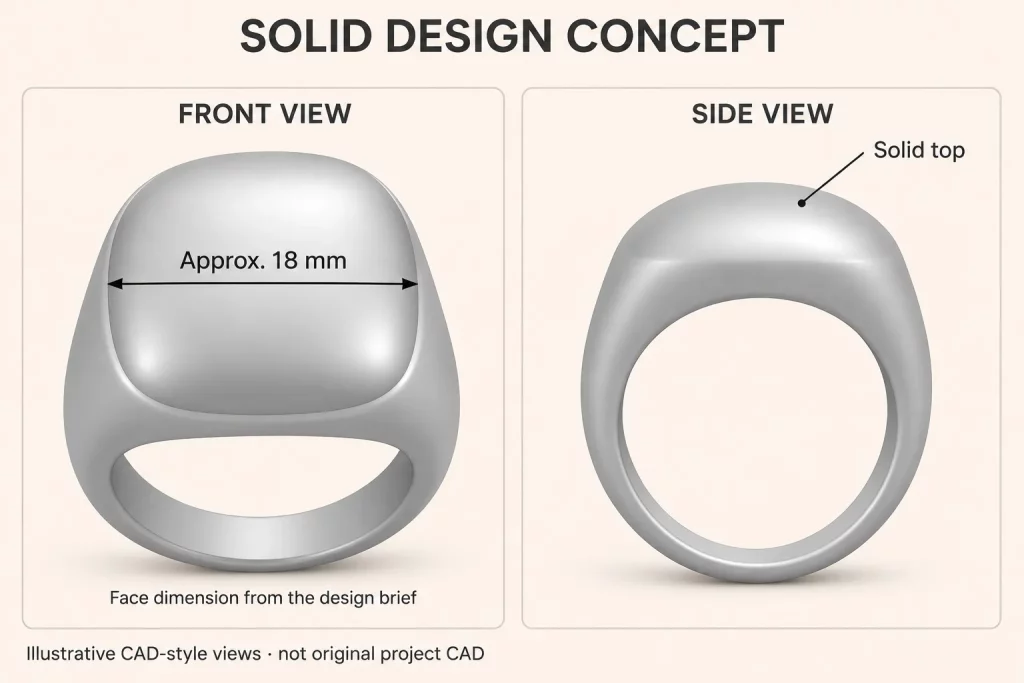
Why was a lighter structure considered?
A raised, heavy top makes weight distribution worth reviewing alongside total weight. Fit also matters: a loose ring may turn even after material is removed. Compare samples in the intended size and record the fitting conditions before attributing an improvement to the redesign.
The thick top section also needs a casting and finishing review. Removing material changes the structure and access for cleaning; it does not automatically eliminate casting defects or make the ring easier to finish.
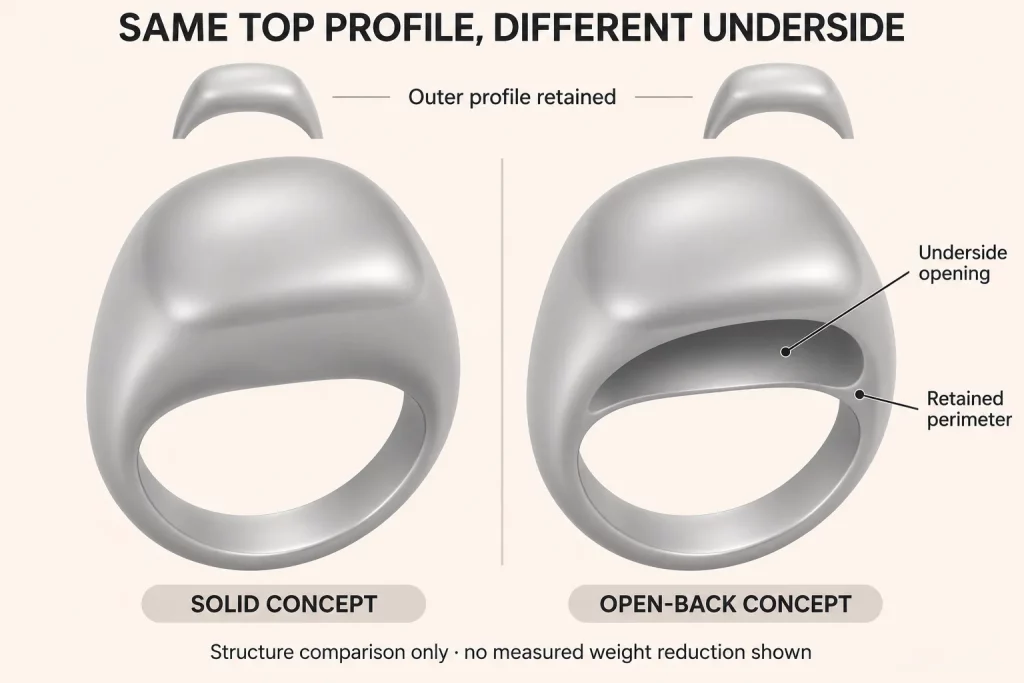
Which structures were compared?
| Option | Reason for considering it | Trade-off in this project |
|---|---|---|
| Keep the solid design | Preserve the existing model and avoid added assembly. | Did not address the reported heavy feel. |
| Cast separate parts and join them | Create an internal cavity while retaining an enclosed appearance. | Added joining, seam finishing and inspection work. |
| Open the underside of the top | Remove internal material while keeping the visible top profile. | Left a visible underside cavity requiring controlled edges and internal finishing. |
For this brief, the open-back option is the preferred route because it preserves the visible top without adding a joined shell. The brand must accept the exposed underside and approve its appearance and contact edges. The options are trade-offs, not a universal cost ranking.
For background on the casting stages involved, see our lost-wax casting process guide.
How was the open-back design developed?
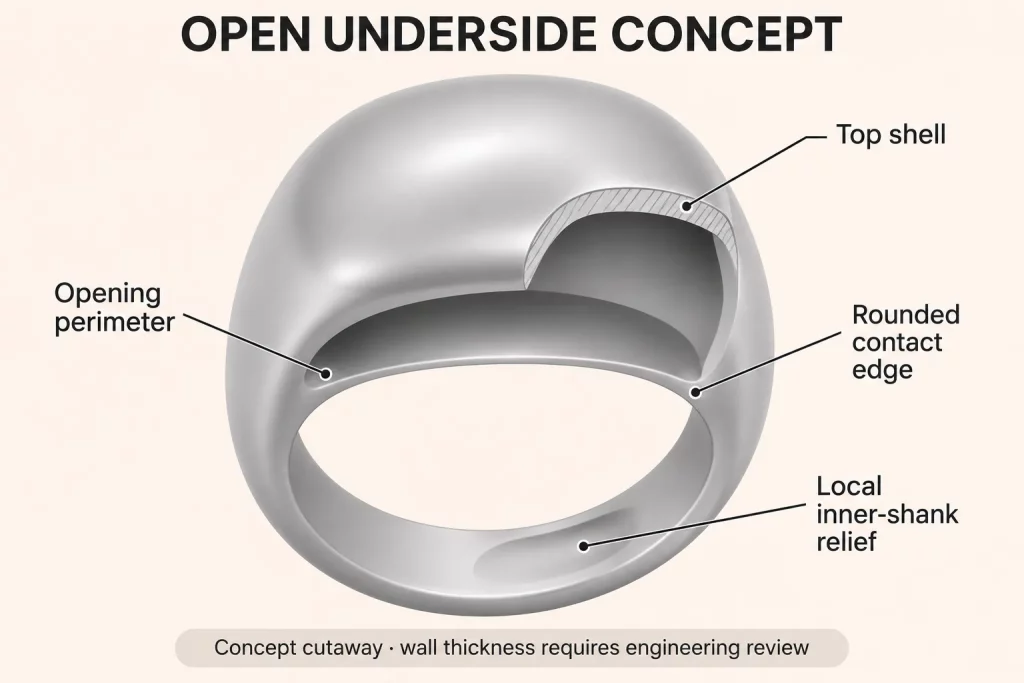
The proposed design removes material beneath the raised face while retaining the outer profile and a perimeter around the opening. The target finished weight is 14–16 g. That target guides sampling; it is not a scale reading or a comfort standard.
Local relief inside the shank is another proposed area of material removal. Review it together with the top, shoulders and transitions rather than treating it as a separate cure for rotation.
Wall thickness was treated as a project-specific engineering detail. The top shell, perimeter, shank and connecting transitions needed their own review. No universal minimum thickness is claimed here, and a single nominal dimension cannot replace inspection of the finished structure.
Why did lower weight not guarantee a matching price reduction?
Reducing brass volume changed only one part of the cost. The open underside also needed internal cleaning, accessible finishing and careful treatment of its perimeter. Any additional work had to be included in the revised quotation.
The relevant comparison was therefore the complete manufacturing cost under matching order conditions. Tooling and development charges should be separated from the unit price, and the finish and size mix should remain the same. A lighter CAD model alone could not demonstrate that the 30% price-reduction target had been achieved.
The decision to continue with an open-back sample can therefore precede the final price decision. Confirm the manufacturing route and compare quotations on the same basis before deciding whether the purchase-price target is achievable.
What must the next sample confirm?
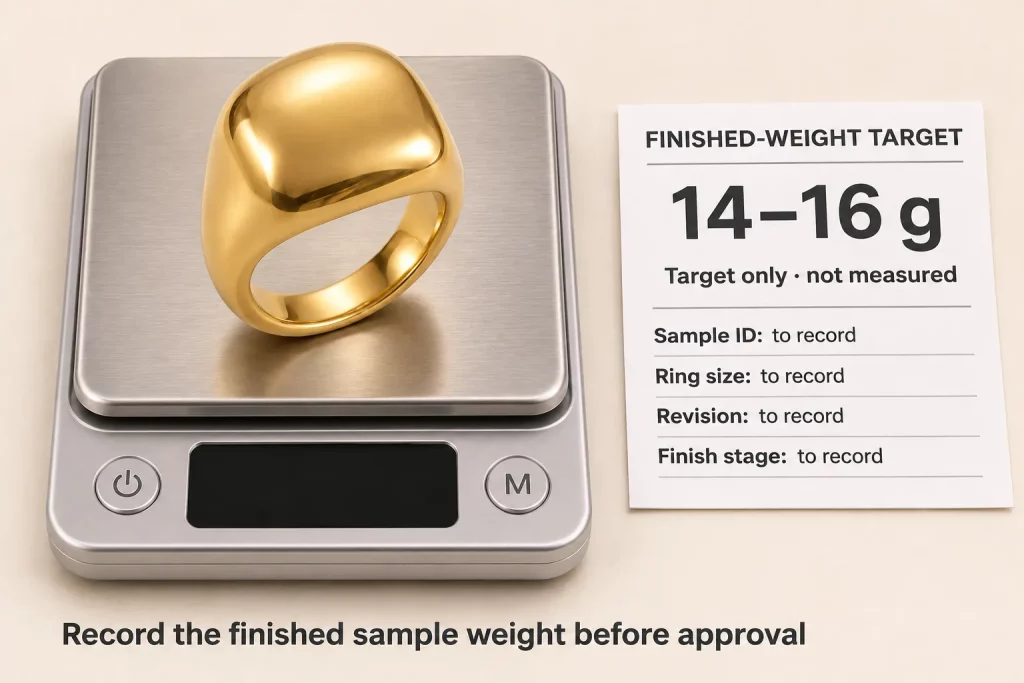
Weigh the finished sample and record its size, revision and finish. Compare it with the 14–16 g target and review fit using the intended size. A CAD estimate and a target cannot establish the actual reduction; that comparison requires measured samples on a consistent basis.
| Check | Development item | Follow-up required |
|---|---|---|
| Weight and fit | Record finished weight and fit against the agreed target; approval remains pending. | Retain the scale reading, ring size and fitting record. |
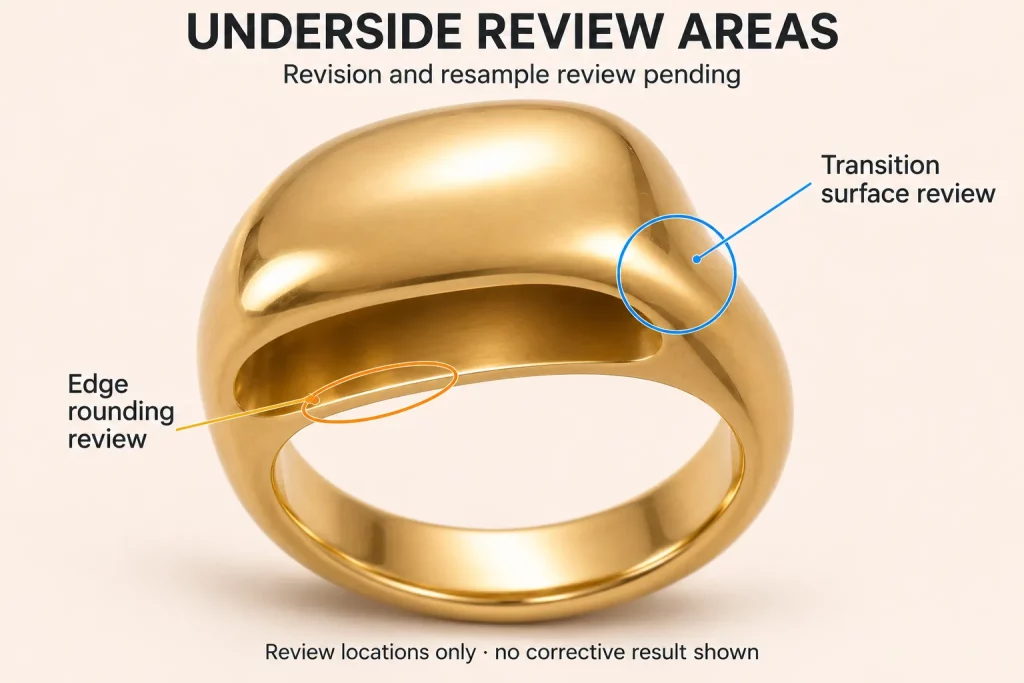
| Underside edge | Needed additional rounding. | Revise the edge treatment and review the next sample. |
| Local surface condition | A small indication appeared near a thinned transition. | Identify the defect and cause; verify corrective action on a new sample. |
The development feedback flags an underside edge needing further rounding and a local surface indication near a thinned transition. Both remain follow-up items. A mark becoming less visible after polishing is not proof that its cause has been corrected; review the cause and verify the revision on a subsequent sample.
The current decision is to continue evaluating the structure, with edge treatment and the local surface issue still open. Production approval should follow the completed sample review. Our jewelry quality control process explains the role of inspection and corrective-action records.
What should a brand take from this project?
The useful decision was to preserve the visible design while allowing the underside to change. That gave the team a practical route to evaluate weight reduction without promising that less metal would automatically mean a proportionate price saving.
A comparable project should identify which surfaces must remain unchanged, whether an open underside is acceptable, and what the target weight and purchasing conditions are. The final structure then needs to be judged through the sample, not only through a CAD view.
Planning a custom brass statement ring?
Send 96Jewelry your design or reference images, face dimensions, ring sizes, order quantity, plating requirements and target purchase price. Include a target weight or a comfortable reference ring if available. Mark the surfaces that must remain unchanged and tell us whether an open underside is acceptable.
We can review the structure and discuss suitable options for sampling. If you do not yet have a weight target, the review can start with the design and your intended wearing experience.
Author

Ertian Jiang (Jasper) is the founder of Haosen Metal Jewelry. Since the age of 26, he has combined deep roots in traditional craftsmanship with a sharp vision for the market to build the foundation of the company’s excellence.
Ertian Jiang started on the ground floor as a craftsman, specializing in semi-precious stones (agate, mother of pearl, tiger’s eye) and manual inlaying—perfecting how to fit natural stones into metal bases without gaps or glue failure. He also worked on the front lines of sales, speaking face-to-face with buyers and listening to their frustrations about fallen stones and fading colors.