

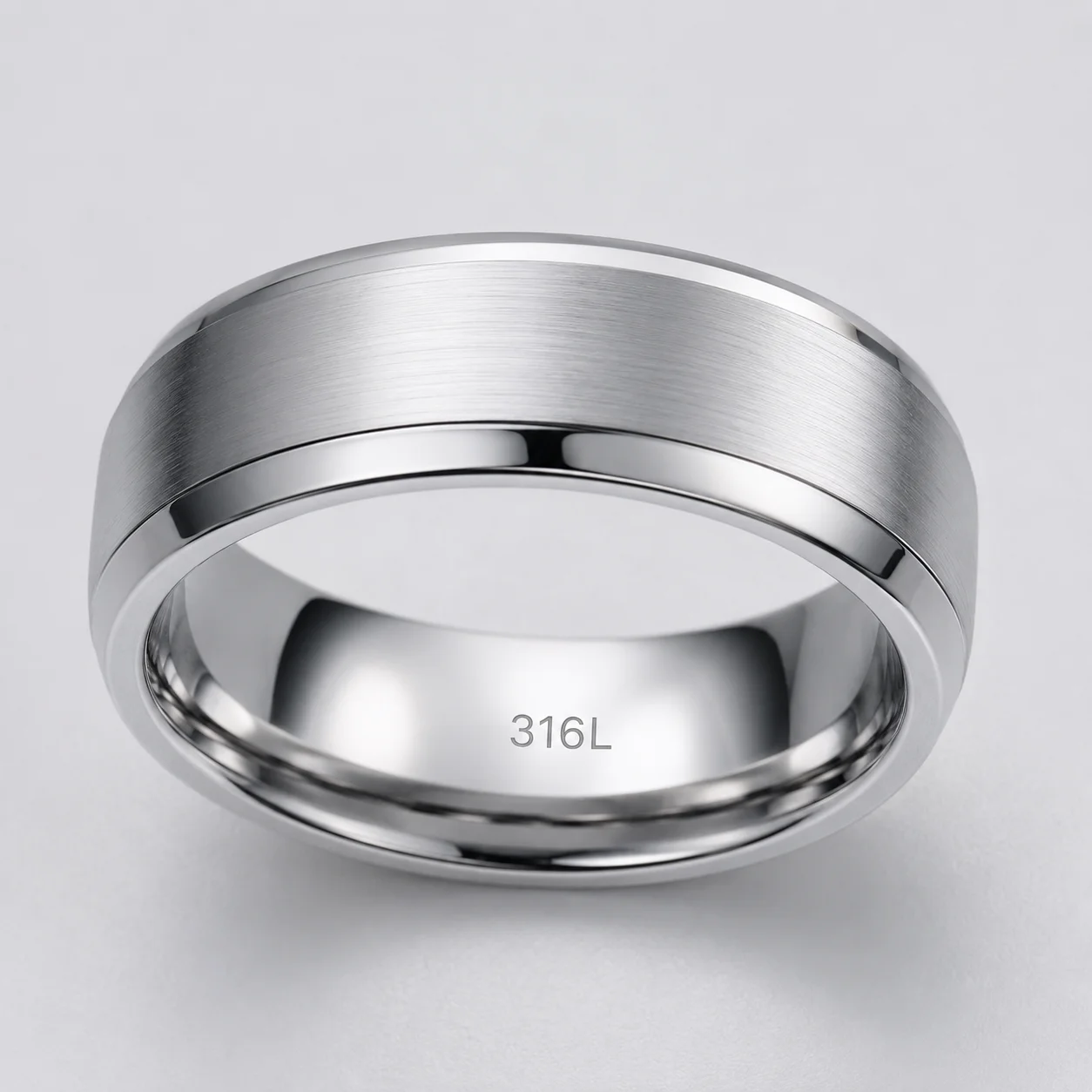
In 304 vs 316L stainless steel, the big difference is one extra metal. 316L adds molybdenum, which boosts rust and sweat resistance. So 316L is safer on skin and better for daily wear. 304 is cheaper and fine for short-term fashion. For lasting, skin-safe pieces, 316L is the smart pick.
"Stainless steel" is not just one metal. There are many grades, and the grade you pick matters a lot. The two most common in jewelry are 304 and 316L. They look the same, but they perform in very different ways. This guide breaks down the 304 vs 316l stainless steel choice. You will learn how they differ, which lasts longer, and which grade fits your brand.
What Is the Difference Between 304 and 316L Steel?
Both are types of stainless steel. The key gap is what is inside them. 316L adds a metal called molybdenum. This extra metal fights rust and sweat far better. It also holds nickel tighter against the skin. So, in 304 vs 316l stainless steel, 316L is the tougher, safer grade.
What Is 304 Stainless Steel?
304 is the most common stainless steel. You find it in sinks, pots, and tools. It is strong, shiny, and low in cost. For jewelry, it works for budget or short-term pieces. But it is less able to resist sweat and salt. Over time, that can lead to spots or wear. It is still a fine choice for low-cost trend pieces.
What Is 316L Stainless Steel?
316L is the top grade for jewelry. It adds molybdenum for better rust and sweat resistance. The "L" means low carbon, which helps it last. This is the same surgical grade stainless steel used in medical tools. 316L stainless steel jewelry stays bright and skin-safe for years. It costs a bit more, but the quality shows.
304 vs 316L Stainless Steel: The Full Comparison
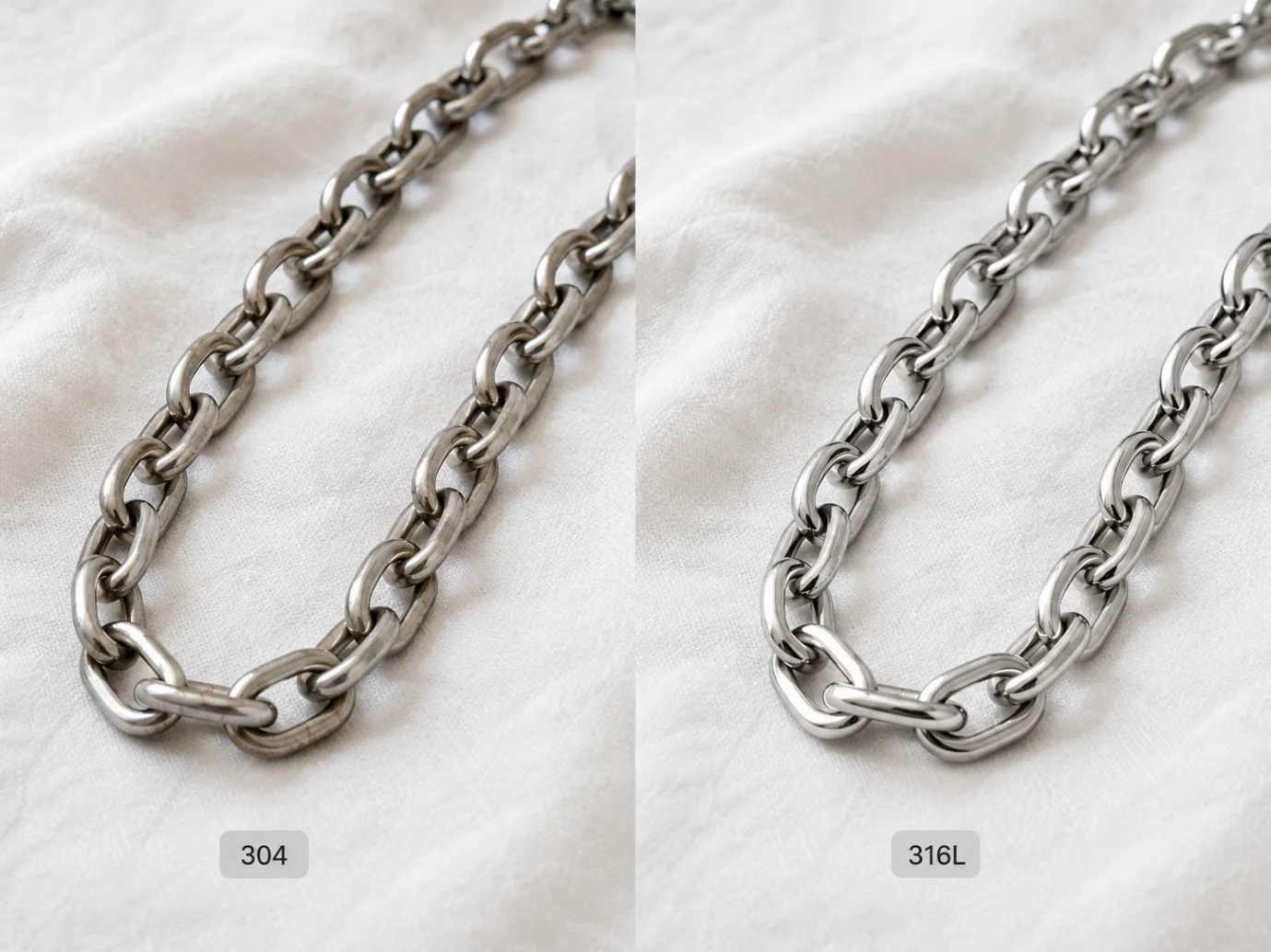
Each grade fits a different brand and budget. The table shows the 304 vs 316l stainless steel trade-offs.
| Feature | 304 Steel | 316L Steel |
|---|---|---|
Key metal |
Chromium, nickel |
Adds molybdenum |
Rust resistance |
Good |
Excellent |
Sweat and salt |
Fair |
Strong |
Skin safety |
Good |
Best |
Cost |
Lower |
Higher |
Best for |
Budget fashion |
Daily-wear retail |
Is There a Big Price Gap Between 304 and 316L?
316L costs a little more than 304. The extra metal and tighter quality drive the price up. But the gap is often small on a per-piece basis. 316L lasts far longer, so it can cost less over time. Fewer returns and refunds also protect your margin. A premium grade can even let you charge more at retail. For most brands, the small extra cost is well worth it.
Can You Add a Gold PVD Finish to Both Grades?
Yes, both grades can take a PVD finish. PVD adds gold, rose gold, or black tones that last. But the base grade still matters under the color. A 316L base keeps the piece safe and strong for years. So pair a quality PVD finish with 316L for the best result. This gives a gold look that truly lasts on daily-wear pieces. To learn how PVD works, see our PVD coating guide.
Which Grade Resists Tarnish Better?
316L wins on tarnish and rust. The extra metal blocks sweat and water damage. This makes it a true anti tarnish choice for daily wear. 304 can still spot or dull in salty or wet use. To learn more, see our guide on whether stainless steel jewelry tarnishes. You can also read grade facts from the British Stainless Steel Association.
Which Grade Is Safer for Skin?
Both grades are fairly skin-safe. But 316L is the safer of the two. It holds its nickel tighter, so less reaches the skin. This makes it better for sensitive buyers. For more, see our guide on hypoallergenic stainless steel jewelry. The Nickel Institute shares more on how these grades behave.
Which Grade Should Your Brand Use?
Match the grade to your product and price:
- Daily-wear or premium lines: Choose 316L for the best quality.
- Budget or trend pieces: 304 can work for a lower cost.
- Sensitive-skin or waterproof claims: Always use 316L.
Most retail brands pick 316L for its safe, lasting feel. It also makes your quality claims easy to prove.
How Do You Make Sure You Get Real 316L?

Some suppliers sell 304 as 316L to cut costs. Protect your brand with a few simple checks:
- Ask for the grade in writing on the order.
- Request a material test report for each batch.
- Work with an audited stainless steel jewelry manufacturer.
A trusted factory will share test reports with no fuss.
How Can You Test the Grade Yourself?
You cannot always tell the grade by eye. A few checks can help, but lab proof is best. Here is what works and what does not:
- A magnet test is not reliable, since both grades can be slightly magnetic.
- A simple acid test can hint at the grade, but it is not exact.
- A lab test shows the true metal content for sure.
- The factory’s material report is the safest proof of all.
Never trust a grade claim without a report behind it.
Why Brands Choose Haosen?
Haosen uses real 316L steel in every piece. We never swap in a cheaper grade. We are SEDEX-checked and share SGS and material reports with each order. Our low MOQ from 30 to 120 pieces suits brands of all sizes. Browse our stainless steel jewelry to see the quality for yourself.
Conclusion
In 304 vs 316L stainless steel, the right pick depends on your goal. 316L adds molybdenum for better rust, sweat, and skin safety. It is the top choice for daily wear and premium lines. 304 is cheaper and fine for short-term fashion. For lasting, skin-safe pieces, choose 316L and back it with reports. Haosen has built true 316L jewelry for global brands for 16 years. Get a free quote today and request a material report.
Frequently Asked Questions
What is the difference between 304 and 316L stainless steel?
316L adds a metal called molybdenum. This boosts rust and sweat resistance. It also holds nickel tighter, so it is safer on the skin.
Is 316L better than 304 for jewelry?
Yes, for most uses. 316L resists tarnish and sweat better and is gentler on skin. 304 is cheaper but less durable.
Is 304 stainless steel safe for jewelry?
It is fairly safe and works for budget pieces. But 316L is the safer, longer-lasting choice for daily wear.
Is 316L stainless steel anti-tarnish?
Yes. It’s extra metal blocks sweat and water damage, so it resists tarnish far better than 304.
How do I know if jewelry is real 316L?
Ask for the grade in writing and a material test report. A trusted factory shares these for every batch.
Author

Ertian Jiang (Jasper) is the founder of Haosen Metal Jewelry. Since the age of 26, he has combined deep roots in traditional craftsmanship with a sharp vision for the market to build the foundation of the company’s excellence.
Ertian Jiang started on the ground floor as a craftsman, specializing in semi-precious stones (agate, mother of pearl, tiger’s eye) and manual inlaying—perfecting how to fit natural stones into metal bases without gaps or glue failure. He also worked on the front lines of sales, speaking face-to-face with buyers and listening to their frustrations about fallen stones and fading colors.