

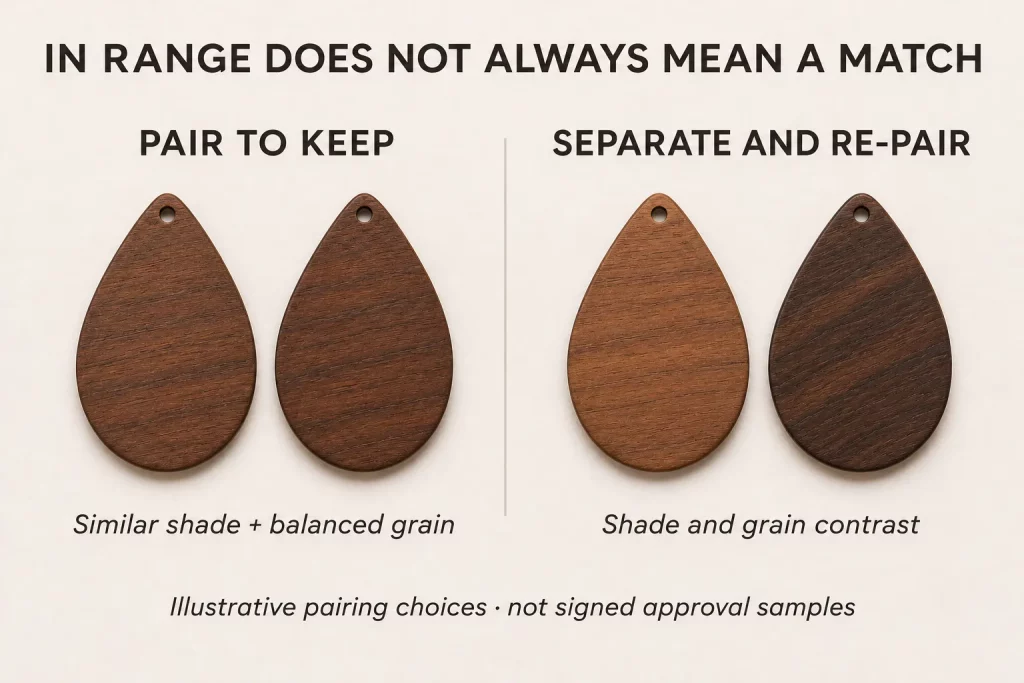
A buyer can approve a light wooden drop and a dark one, then reject the two when they arrive as a pair. Each piece falls within the agreed color range. The mismatch appears only when someone holds the earrings side by side. A wood specification for earrings needs to answer two questions: which pieces belong in the collection, and which two belong together?
Which finished wood sample suits the design?
Start with the smallest detail that needs to stay visible. In the wood and stainless steel mountain earrings, a narrow strip of wood defines a mountain face. View candidate wood samples beside the intended steel finish at actual earring size. A grain line that looks attractive on a large board may cross the entire slope on a small drop.
Ask the supplier to identify the species and any stain or finish on each candidate. A dark reference photograph gives the supplier a color direction. A labeled, finished sample also records the surface sheen and grain visibility the buyer selected.
How do you set a batch range and a pairing rule?
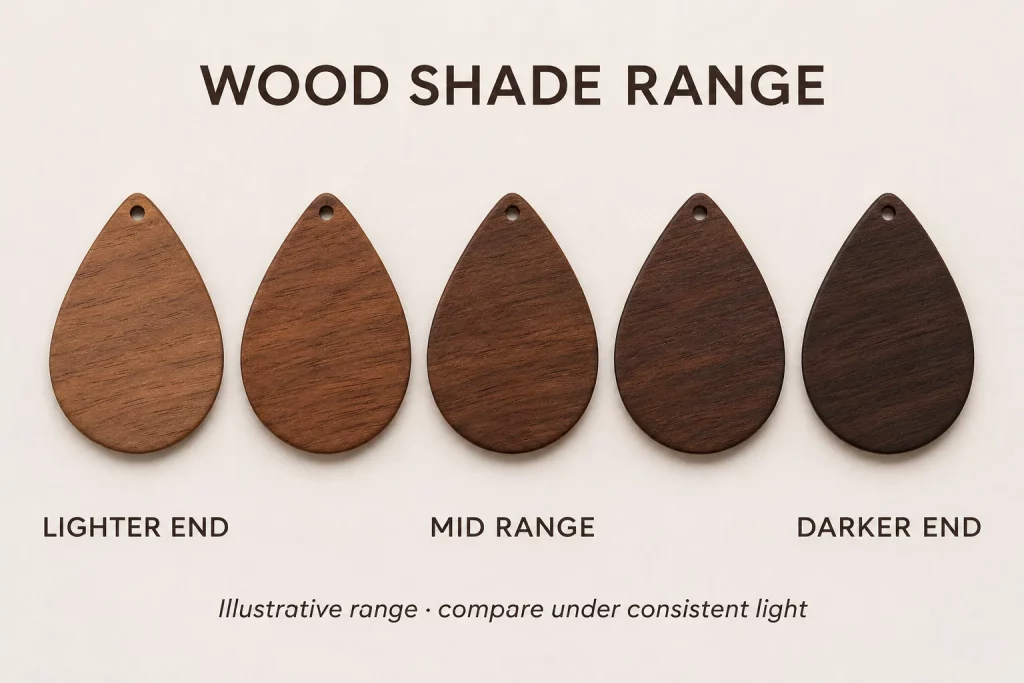
Keep the physical samples with the order record. At the packing bench, an approved example of a pair gives the person matching drops a more useful reference than a single color swatch.
What should you ask about moisture and finish?
Wood exchanges moisture with the surrounding air, and dimensional changes vary with the wood and the direction of its grain. A finish can slow moisture exchange. The finished sample still needs to be evaluated for its intended use. Ask the supplier which finish was applied and what care instructions the brand can substantiate for that combination.
If the design includes a metal insert, share the selected wood and finish when comparing metal attachment options. For a new collection, send 96Jewelry a finished tone reference and a photograph of the greatest left-to-right variation you would accept in a retail pair.
Author

Ertian Jiang (Jasper) is the founder of Haosen Metal Jewelry. Since the age of 26, he has combined deep roots in traditional craftsmanship with a sharp vision for the market to build the foundation of the company’s excellence.
Ertian Jiang started on the ground floor as a craftsman, specializing in semi-precious stones (agate, mother of pearl, tiger’s eye) and manual inlaying—perfecting how to fit natural stones into metal bases without gaps or glue failure. He also worked on the front lines of sales, speaking face-to-face with buyers and listening to their frustrations about fallen stones and fading colors.