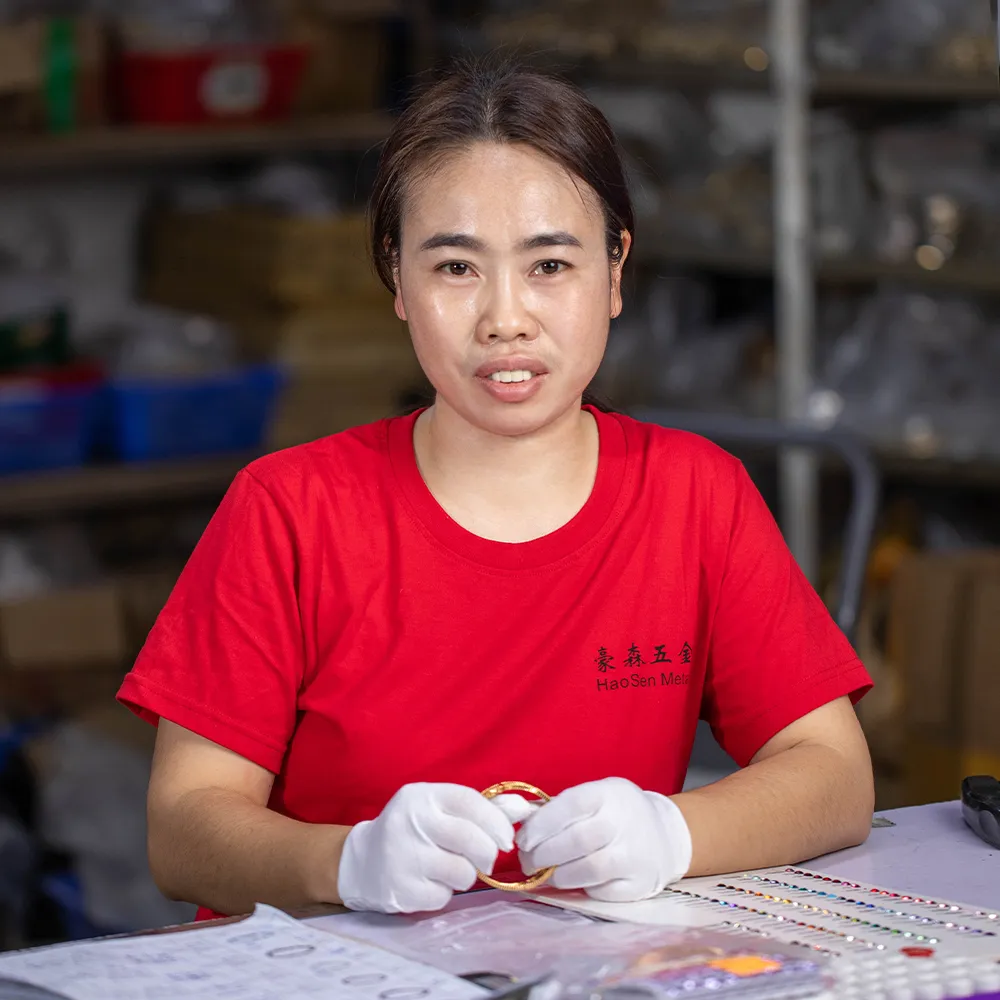

For leather jewelry buyers, the key issue is not only how the material looks and feels, but whether its source, chemical compliance, traceability, and production consistency can be verified. LWG-audited leather can provide structured evidence about tannery environmental management and supply-chain controls, while finished jewelry projects still require separate checks for leather type, colorfastness, restricted substances, metal components, assembly quality, and batch consistency.
“Before coming to Haosen Jewelry, we had already switched suppliers three times. Either their leather environmental documentation was incomplete, or the product’s sweat colorfastness failed to meet standards. Then we saw that LWG Gold certificate—No. JIA103—and that’s when things really started to change.”
These were the words spoken to me by a procurement manager from a jewelry brand in Europe. His brand focuses on sustainable men’s leather accessories, yet he had long struggled to find a supplier who could simultaneously provide complete compliance documentation (LWG, REACH, traceability records). After contacting our company—Haosen Jewelry, we submitted materials regarding leather traceability: the LWG Gold certificate, REACH test report, and SEDEX factory annual audit documents, and customized a fully traceable leather bracelet and leather wallet chain for him.
All the leather we use comes from a tannery that has passed the latest version 7.2.4 audit of the Leather Working Group (LWG) and has been awarded Gold certification (valid until September 12, 2026)—Jiangxi Xiongyi Leather Industry Co., Ltd. As a top-tier LWG gold certified tannery, they ensure the highest standards in the global tanning industry regarding chemical management, environmental management, traceability, social responsibility, and corporate governance.
For brands seeking a sustainable leather jewelry supplier B2B, LWG Gold certification is one of the most important reference indicators when screening suppliers. This article will systematically explain what is LWG gold certified leather jewelry for you, providing a detailed interpretation of the contents of this LWG Gold test report, the background of the certification body, and how it brings tangible value to your jewelry products in terms of compliance, environmental protection, and supply chain transparency. A Frequently Asked Questions section is also included at the end to help you quickly grasp the key significance of LWG Gold for B2B procurement.
What is the Leather Working Group?
The Leather Working Group (LWG) was established in 2005, co-founded by international brands such as Nike, IKEA, Timberland, Clarks, and New Balance. It is the world’s leading leather sustainability auditing body. The LWG does not issue simple “membership certificates.” Instead, it conducts on-site audits, rigorously scoring tanneries across multiple dimensions—water usage, energy consumption, chemical management, waste disposal, traceability, health and safety, etc.—and grants different levels of certification based on these results.
Why is Gold Certification So Important?
The LWG certification system holds significant influence within the leather industry. According to LWG official data, over 2,000 factories worldwide have undergone LWG audits, covering more than 60 countries and regions, with approximately 39% of global finished leather production evaluated and certified against LWG standards. This means that achieving LWG certification itself is a form of industry recognition—and Gold is the highest honor within this system.
The LWG’s rating system uses a “weakest link” principle: the audit covers 13 key scoring items, including water usage, energy consumption, chemical management, wastewater treatment, and traceability, each with an independent passing score threshold. According to the official scoring standards published by the LWG, Gold requires a score of no less than 85 in all key items; Silver, no less than 75; Bronze, no less than 65; and Audit Pass, 50-64. For Gold, the factory must achieve a score of 85 or above in every single key item—if it falls short in just one area, the overall rating is downgraded to Silver. This means a Gold-rated tannery leaves no room for “weak spots”; every environmental and management indicator must be world-class. Simultaneously, the LWG audit requires tanneries to conduct key tests in an ISO 17025-accredited laboratory, ensuring the authenticity and reliability of chemical management and restricted substances data. This aligns closely with United Nations Sustainable Development Goal 12 (Responsible Consumption and Production).
Certification is only one part of material selection. Buyers should also compare full-grain cowhide vs. microfiber leather based on texture, consistency, durability, maintenance, and target positioning.
Certification is valid for two years, after which the factory must undergo a re-audit to maintain its certified status, ensuring sustained performance at the Gold standard level.
| Rating Level | Score Required | Validity Period |
|---|---|---|
Gold |
85-100% |
2 years |
Silver |
75-84% |
2 years |
Bronze |
65-74% |
2 years |
Audit Pass |
50-64% |
2 years |
The Leather We Use: LWG Gold Certified, Traceable Quality
In August 2024, our core leather supplier underwent an LWG Version 7.2.4 Tannery Audit, with an audit category of Category D (from wet-blue/pelt to finished leather), and ultimately achieved a Gold rating. Operating as an officially audited LWG gold-rated tannery, they provide complete regulatory compliance data and full process transparency, as detailed in the summary table below:
| Item | Content |
|---|---|
Factory Name |
Jiangxi Xiongyi Leather Industry Co., Ltd. |
Factory Address |
MaoPing Second Leather Industrial Park, Yongxin County, Ji’an City, Jiangxi Province, China |
LWG Unique ID |
JIA103 |
Audit Standard Version |
LWG Leather Manufacturer Audit Standard Version 7.2.4 |
Audit Category |
Category D (from wet-blue/pelt to finished leather) |
Rating |
Gold |
Audit Date |
August 11, 2024 |
Valid Until |
September 12, 2026 |
Auditor |
Robert Sheng-Tsai Yu |
(Source: LWG Gold Certificate)
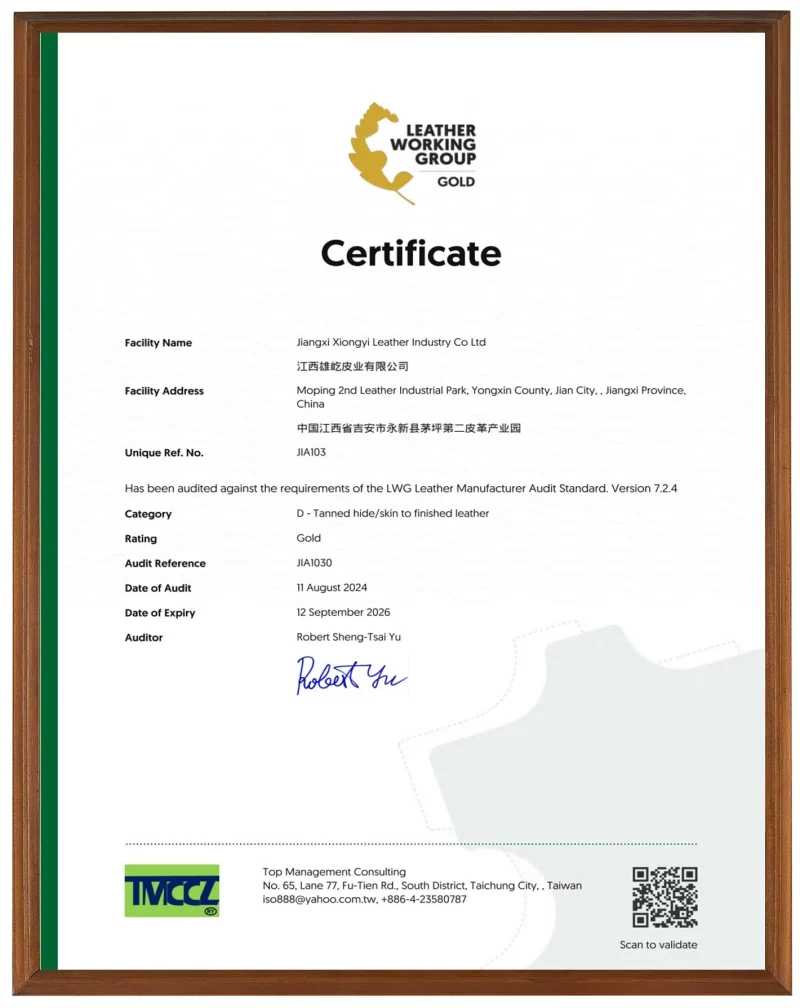
This certificate is valid for two years. Jiangxi Xiongyi not only passed the rigorous on-site audit but also holds a patented leather exhaust gas treatment device (Patent No. CN213965754U) and is designated as a key environmental supervision unit by the Ji’an City government, with its compliant operations backed by government endorsement.
In-depth Interpretation of Traceability (ESG Compliance Value):
| Traceability | Percentage |
|---|---|
Physical Traceability |
0% |
Documentary Traceability |
77.17% |
Group Traceability |
0% |
Regional Traceability |
0% |
Non-traceable |
22.83% |
(Source: LWG Gold Certificate)
According to the LWG audit report, our leather supplier achieves 77.17% in “Documentary Traceability,” and 22.83% is “Non-traceable.” It is important to clarify: As a Category D tannery (starting from wet-blue/pelt to finished leather), its processing begins with pre-treated semi-finished materials. The LWG’s “Non-traceable” score primarily reflects the completeness of information recording at the raw material stage and does not represent a compliance defect in the finished leather. In fact, this factory has continuously maintained valid LWG certification since November 23, 2019. Its supply chain management system has been continuously optimized over many years and represents one of the more mature and standardized practices in the industry.
For brands, this level of transparency is precisely a powerful tool for complying with the EU’s Corporate Sustainability Due Diligence Directive (CSDDD). The CSDDD requires brands to conduct due diligence on environmental and human rights risks within their supply chains and to disclose this information publicly. Using leather with a complete LWG audit trail helps your brand directly demonstrate that you have reasonably identified and managed risks in the upstream tanning stage, thereby forming a traceable evidence chain in your ESG reports.
What Does LWG Gold Leather Mean for a Jewelry Manufacturer?
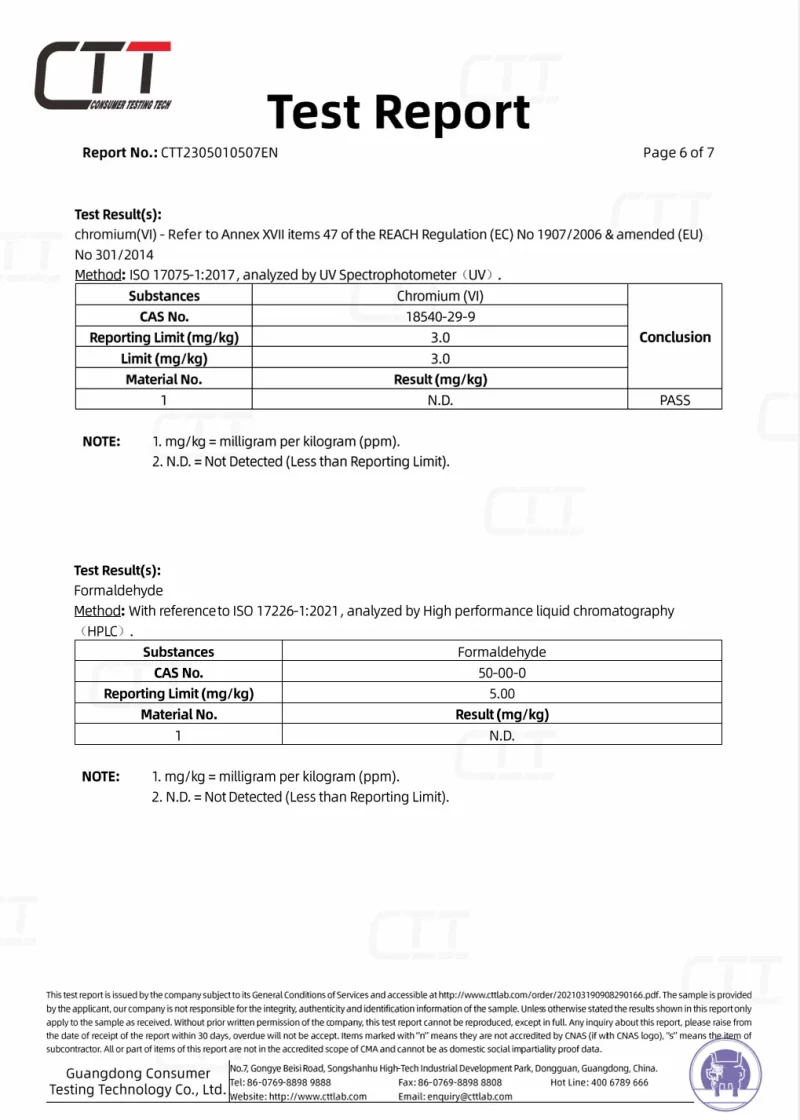
- Meeting Regulatory Requirements in EU & US Markets:The LWG Gold standard requires tanneries to provide test reports from ISO 17025-accredited laboratories, strictly limiting substances such as heavy metals, formaldehyde, and hexavalent chromium. All our finished products are sent to SGS for testing based on REACH and California Proposition 65 standards. For example, the EU REACH Annex XVII limit for hexavalent chromium (Cr VI) is 3 mg/kg; our measured values are N.D. (Not Detected). The formaldehyde limit is 5 mg/kg; our measured values are N.D.—far exceeding standard requirements. This ensures your REACH compliant leather jewelry can clear customs smoothly and be sold in markets such as the EU, USA, and Canada.
- Complete Supply Chain Traceability:Each batch of LWG Gold leather has traceability records from raw material to finished leather. For brands concerned about leather jewelry supply chain traceability compliance, when your brand needs to respond to ESG (Environmental, Social, Governance) questionnaires or provide supplier compliance documentation, we can provide the complete LWG certificate, audit ID, and traceability files, and can assist you in meeting the due diligence requirements of emerging regulations such as the CSDDD.
- Reduced Environmental Footprint, Enhanced Brand Image:Gold-rated tanneries achieve industry-leading standards in water consumption, energy use, wastewater treatment, solid waste, and exhaust emissions. Choosing a sustainable leather jewelry supplier that uses such leather helps your brand convey a message of “sustainable fashion” in your marketing, attracting environmentally conscious consumers. At the same time, brands can proactively learn about the leather bracelet discoloration natural patina guide to turn the natural color-changing characteristics of leather into a product story rather than after-sales complaints.
- Long-Term, Stable Supply Quality: Our supplier maintains continuous LWG Gold certification, has made long-term, standardized investments in environmental protection and production management, and possesses the stable supply capacity to handle large-scale orders. For customers concerned about what is minimum order quantity for custom leather jewelry, we can flexibly negotiate minimum order quantities based on project needs, reducing your supply chain risk.
From Raw Hide to Finished Product: Haosen Jewelry's Flexible Customization Process
We understand that B2B procurement focuses not only on the source of raw materials but also on the consistency of quality control from raw hide to the final product. Below is the full lifecycle process we have established for our brand partners:
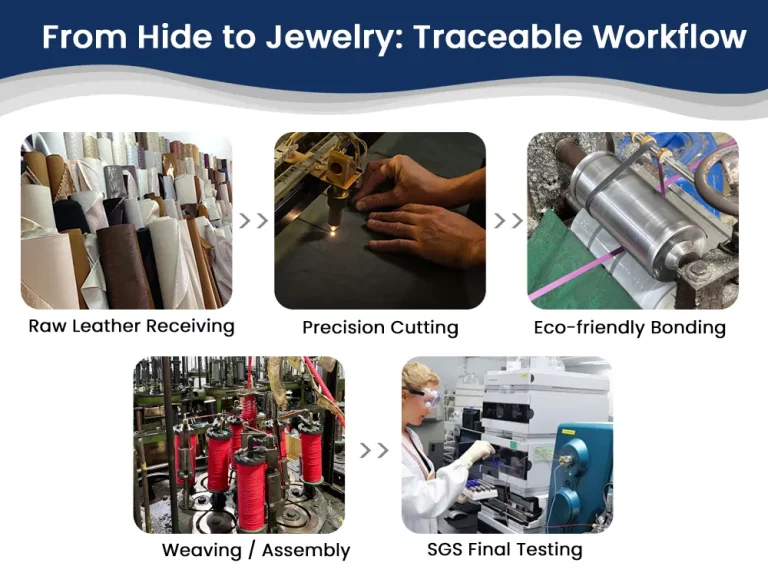
- LWG Gold Raw Hide Receiving:Verify certificate ID and batch traceability documents.
- Precision Cutting:High-precision cutting dies to minimize leather waste.
- Eco-friendly Adhesive Bonding:Adhesives comply with the Manufacturing Restricted Substances List (MRSL).
- Weaving/Metal Assembly:Metal components use PVD plating for sweat and wear resistance.
- Final SGS Spot Check: Finished products undergo batch-by-batch spot checks, issuing compliance reports.
These leather-specific checks should be managed within a broader jewelry quality control process covering incoming materials, in-process inspection, finished-product checks, and performance testing.
What Can You Make with LWG Gold Leather? — Our Leather Jewelry Product Series
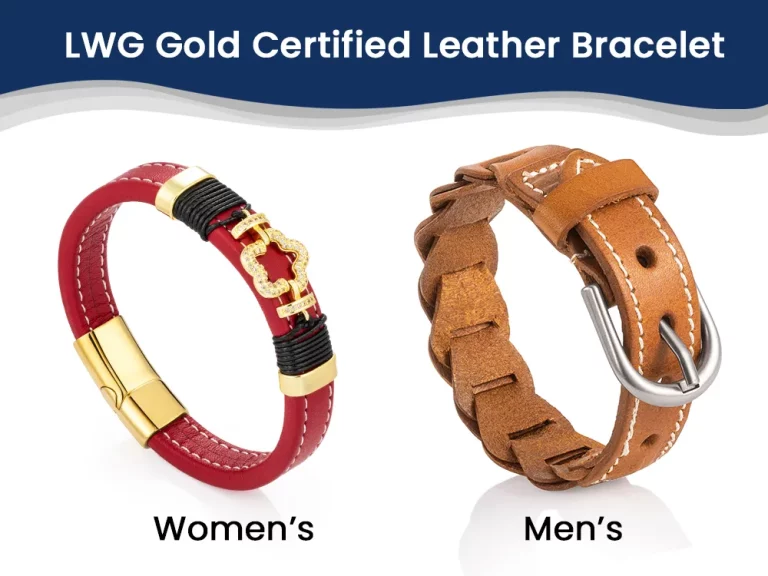
LWG Gold certified leather, from raw hide to finished product, has complete traceability for every batch. We process it into the following six categories of best-selling products, all supporting OEM/ODM customization. As a custom leather bracelet manufacturer with LWG certification, our product line covers a diverse range of styles:
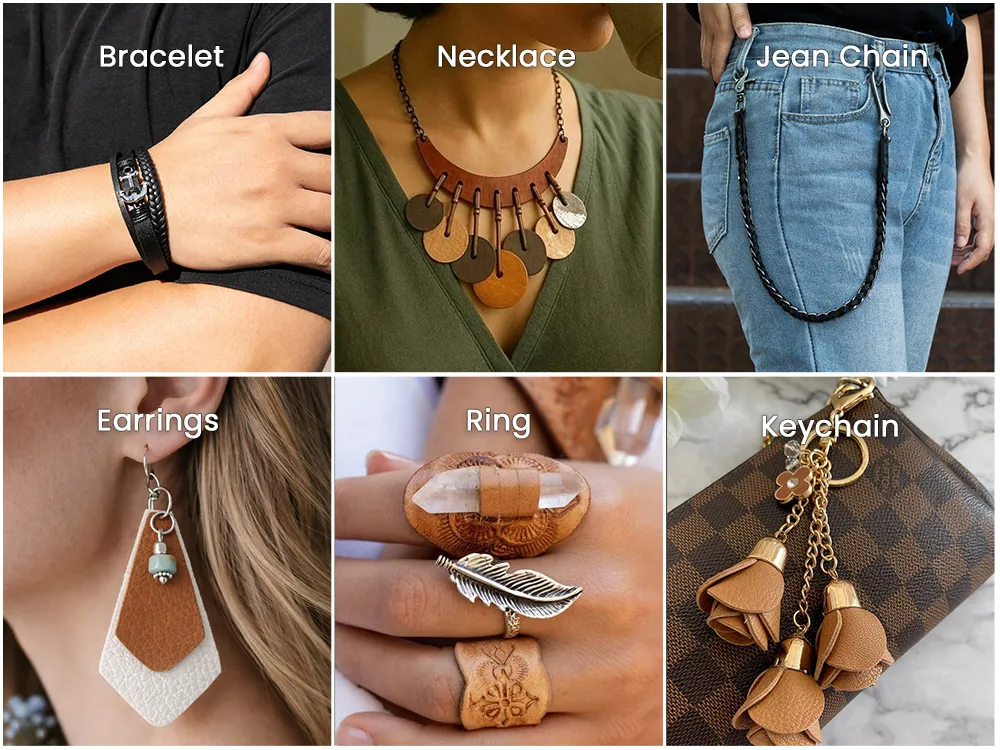
| Product Category | Typical Styles | Applications |
|---|---|---|
Leather Bracelets (Men & Women) |
Braided leather cord, magnetic clasp, metal splicing |
Daily wear, casual, gifts, stacking |
Leather Cuffs |
Wide embossed cuff, rivet decoration, braided style |
Statement, rock & roll, streetwear |
Leather Necklaces / Chokers |
Leather cord pendant, braided choker |
Bohemian, vintage |
Leather Wallet Chains |
Braided leather cord + metal chain, leather-wrapped chain, punk rivet chain, minimalist single chain |
Jeans/workwear, streetwear brands, rock/gothic style |
Leather Earrings / Rings |
Geometric leather piece earrings, leather cord wrapped ring |
Light luxury, daily wear, niche design |
Leather Keychains / Accessories |
Mini leather tag, key chain |
Branded giveaways, accessories |
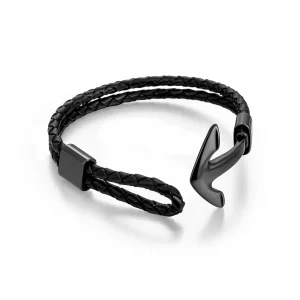
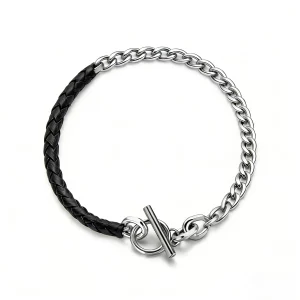
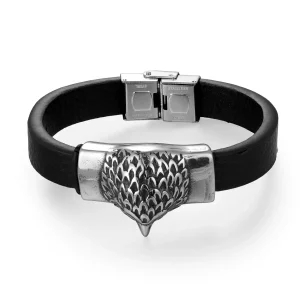
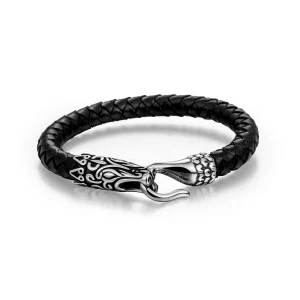
For projects focused on sizing flexibility, clasp structure, edge finishing, and leather assembly, see our adjustable leather bracelet manufacturing guide.
Leather Selection Guide: Braided Leather Color Chart vs. Raw Material Leather Color Card
To help you more precisely select the leather that suits your design needs, Haosen Jewelry offers two types of color charts. If you are looking for a leather cord color chart for jewelry making, the following comparison will help you make the right choice:
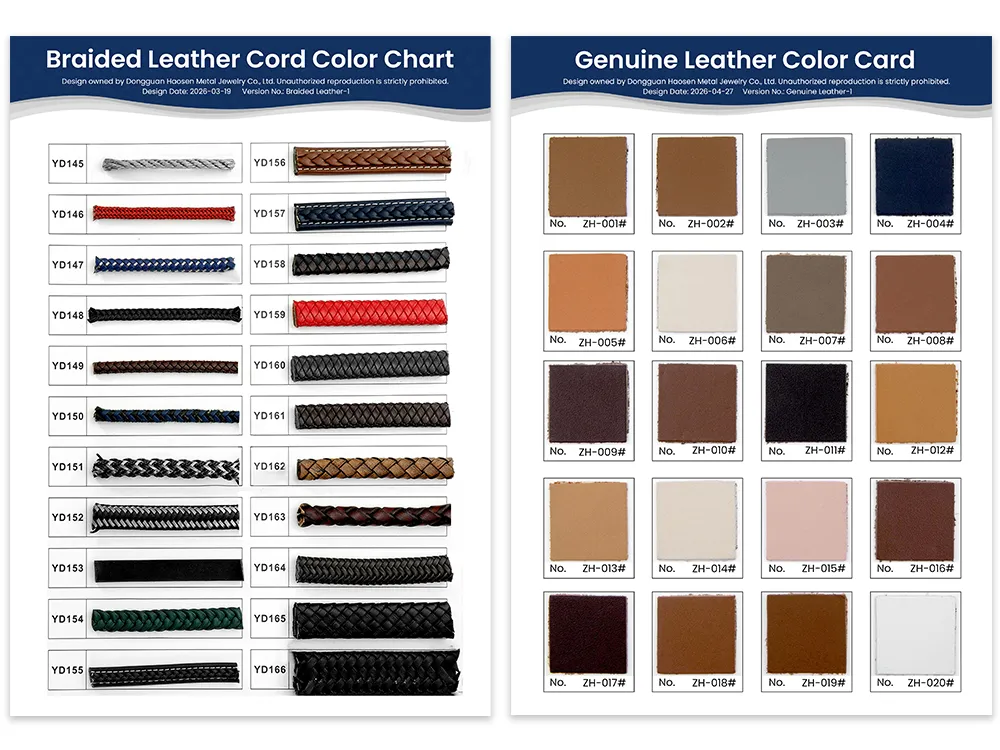
| Comparison Aspect | Braided Leather Color Chart | Raw Leather Color Card |
|---|---|---|
Presentation Form |
Finished leather cut, polished, oiled, and made into cord/strip form |
Unprocessed whole natural hide or A4-sized piece of leather, retaining the original grain |
Suitable Products |
Leather bracelets, leather necklaces, leather wallet chains (braided style), leather cord bracelets |
Leather cuffs (wide style), leather wallet chains (belt style), leather keychains, brand leather tags |
What You Can See |
The colour, sheen, and hand-feel of the final product (already processed) |
The original texture of the leather (e.g., full grain, crazy horse, embossed), natural pores, thickness, softness |
Applicable Scenario |
You have already decided to use “leather cord/strip” processing and want to directly match the finished look. |
You are still selecting the type of leather (e.g., calfskin vs. crazy horse vs. nubuck) or need large leather areas (width > 2 cm). |
Custom Color Available |
Yes, supports custom dyeing with Pantone color codes. |
Yes, but dyeing feasibility depends on the leather type (natural leather dyeing is affected by the original hide). |
Sweat Colorfastness (ISO 105-E04) |
≥ Grade 4 |
≥ Grade 4 |
Hexavalent Chromium (Cr VI) |
N.D. (REACH limit: 3 mg/kg) |
N.D. (REACH limit: 3 mg/kg) |
Formaldehyde |
N.D. (REACH limit: 5 mg/kg) |
N.D. (REACH limit: 5 mg/kg) |
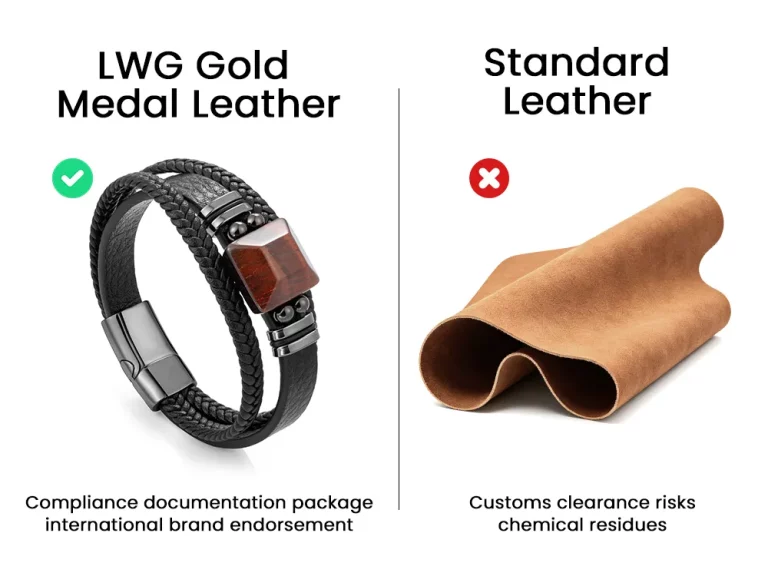
Business Decision Support: LWG Gold Leather vs. Regular Market Leather Risk Comparison Table
| Aspect | Regular Market Leather | Haosen Jewelry LWG Gold Leather |
|---|---|---|
Environmental Compliance |
Fragmented environmental documents, high customs clearance risk |
Complete compliance package (LWG certificate, REACH report, SEDEX audit report) |
Chemical Residues |
Prone to excessive heavy metals or hexavalent chromium |
Strictly enforces MRSL (Manufacturing Restricted Substances List), tested batch by batch |
Brand Endorsement |
Unable to pass major brand ESG audits |
Meets the same supply chain standards as 2,000+ international brands |
Long-term Cost |
Potential recall risks and brand reputation damage |
Premium is manageable; reduces after-sales costs through high quality |
Haosen Jewelry's Quality Commitment: More Than Just Leather
We apply the same stringent standards to our own production processes as we do to our suppliers:
- SEDEX Social Responsibility Audit: Passed consecutively for 16 years (2009-2025).
- SGS Certification: Gold Supplier on Alibaba, full-process quality control.
- Material Compliance Testing: All raw materials and finished products are tested by third-party labs according to EU REACHand US California Proposition 65.
Therefore, when you choose custom leather accessories from Haosen Jewelry (bracelets, cuffs, necklaces, wallet chains, men’s accessories, etc.), you receive not just a design but a complete compliance documentation package, including the LWG Gold certificate, REACH reports, SEDEX audit reports, and more.
Conclusion
In the world of B2B fashion jewelry going global, transparency equals trust. By disclosing the LWG Gold test report of our supplier, Haosen Jewelry lets you know clearly: your leather jewelry comes from a globally leading eco-friendly tannery. More crucially, we not only provide leather, but also the complete end-to-end capabilities to transform it into jewelry. Whether you desire a simple leather cord bracelet, a vintage leather cuff, or a leather accessory imprinted with your brand’s identity, we can bring your vision to life using LWG Gold leather, complete with a full set of compliance documents for Western markets.
Looking for Fashion Jewelry Made with Sustainable Certified Leather?
Whether you want to design leather bracelets, cuffs, men's accessories, or require OEM/ODM custom jewelry that fully complies with EU and US market regulations, we possess an LWG Gold certified leather supply chain, full REACH and California Proposition 65 testing capabilities, and 16 years of SEDEX social responsibility audit experience to turn your designs into reality safely and responsibly.
Contact UsGlossary
| Abbreviation | English Full Name |
|---|---|
LWG |
Leather Working Group |
REACH |
Registration, Evaluation, Authorization and Restriction of Chemicals |
SEDEX |
Suppliers Ethical Data Exchange |
MRSL |
Manufacturing Restricted Substances List |
RSL |
Restricted Substances List |
CSDDD |
Corporate Sustainability Due Diligence Directive |
ESG |
Environmental, Social and Governance |
ISO 17025 |
International Organization for Standardization 17025 |
SMETA |
Sedex Members Ethical Trade Audit |
FAQs
For general information about MOQ, samples, lead times, materials, testing, payment, and order terms, visit our custom jewelry ordering FAQ.
Q1: How long is an LWG Gold certificate valid for? What happens when it expires?
An LWG Gold rating is valid for two years. Jiangxi Xiongyi’s certificate is valid from August 11, 2024, to September 12, 2026. Before expiry, the factory needs to undergo a re-audit to extend its certification. Haosen Jewelry continuously monitors its suppliers’ certification status to ensure the leather you use is always within its validity period.
Q2: Is LWG certification equivalent to REACH compliance?
Not exactly, but it is highly related. LWG audits require tanneries to have a chemical management system in place and to provide lab reports complying with regulations like REACH. Factories achieving LWG Gold typically produce leather that already meets REACH restrictions on hazardous substances. However, Haosen Jewelry still conducts additional REACH and California Proposition 65 spot checks on finished products for double assurance.
Q3: Can you provide a copy of the LWG certificate or the audit report?
Yes. For officially cooperating OEM/ODM clients, we can provide Jiangxi Xiongyi’s LWG Gold Certificate (including unique ID JIA103) and related compliance files after signing a Non-Disclosure Agreement (NDA). Please contact our sales team for more information.
Q4: Is LWG Gold leather more expensive than regular leather?
There is typically a premium, as Gold-rated tanneries invest more significantly in environmental treatment systems, chemical management, and testing. However, for brands exporting to Europe or North America, using uncertified leather carries hidden costs like customs holds, product recalls, or brand reputational damage, which often far outweigh the premium for certified leather. Haosen Jewelry minimizes this price difference through long-term strategic partnerships and bulk sourcing, providing you with a cost-effective compliance solution.
Q5: Do you only use Jiangxi Xiongyi leather? Are there other suppliers?
Jiangxi Xiongyi is one of our core leather suppliers, especially for high-quality finished leather jewelry. Additionally, we may use leather from other LWG Silver or Gold certified tanneries depending on product requirements. All leather suppliers must pass our internal audits and annual REACH spot checks.
Q6: How can I verify the authenticity of the LWG certificate?
You can search on the LWG official website’s “Search Certified Suppliers” page using the certificate number (JIA103) or factory name. LWG publicly lists the basic information of all valid certified suppliers.
Related Leather Jewelry & Material Guides
- Full Grain Cowhide vs. High Density Microfiber: Which Material to Choose for Your Jewelry Brand
- Leather Jewelry Discoloration: Defect or Feature?
- What Makes an Adjustable Leather Bracelet Worth Sourcing?
- Jewelry Quality Control Process
- 316L Stainless Steel Bar SGS RoHS Test Report – February 4, 2026
- 316L Stainless Steel Bar Nickel Release SGS Test Report – September 29, 2024
- 11mm Copper Rod Heavy Metal Test Report – January 7, 2026
- 16mm Copper Rod Heavy Metal Test Report – March 17, 2026
- Packaging Supplier GRS 4.0 Scope Certificate Review – April 7, 2026
Author

Arranges third-party lab testing (SGS/RoHS) and 100% Final Quality Control.