

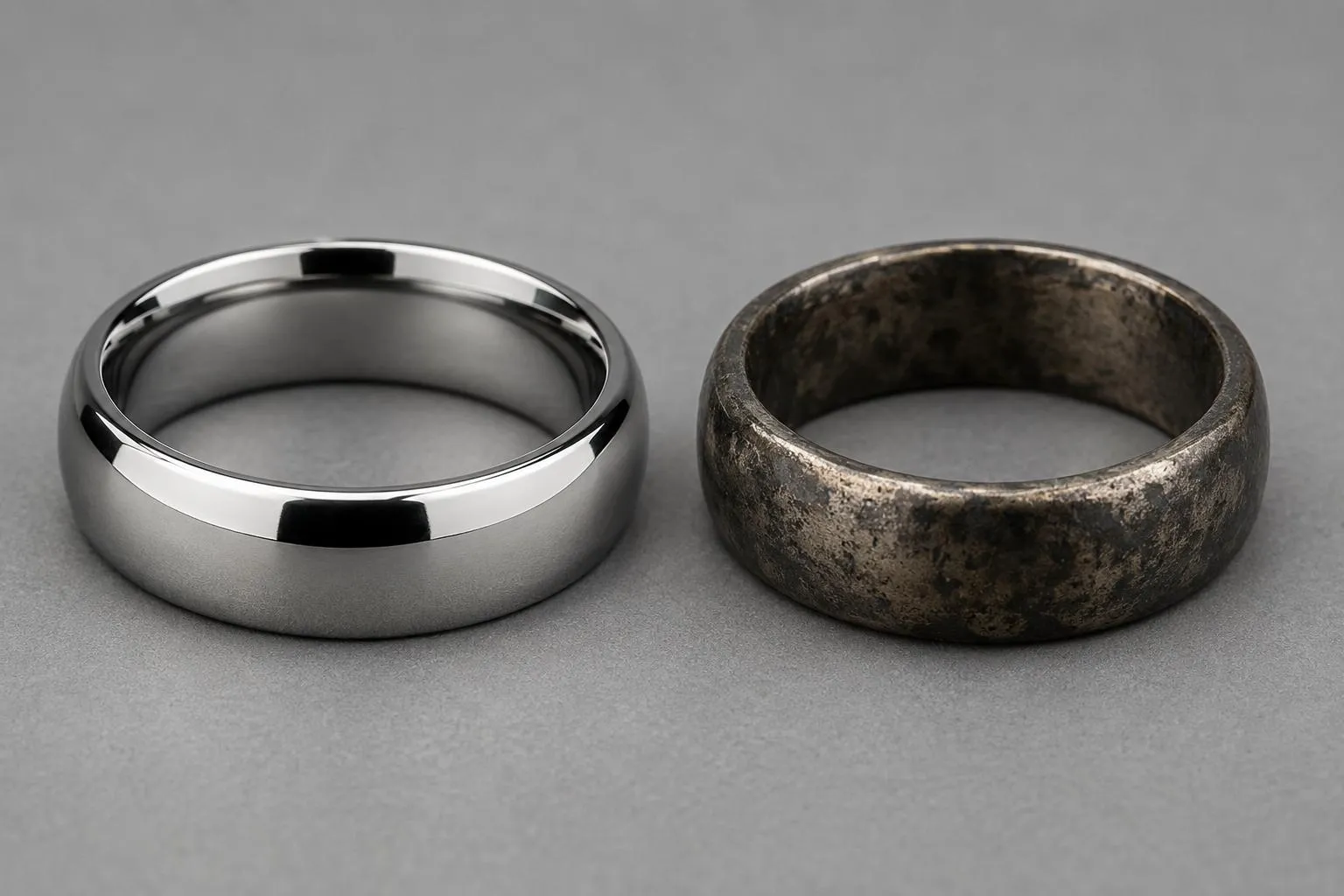
It resists tarnish far better than silver, brass, or gold plating. It is not fully tarnish-proof, but quality 316L grade can stay bright for years. Harsh chemicals or low-grade steel cause most problems. For brands, 316L plus a PVD finish means fewer returns and a true tarnish-free claim.
Tarnish is a silent brand killer. A ring looks great in the photos. Then it dulls or spots after a few weeks. The buyer leaves a bad review and asks for a refund. A small material choice can save you thousands in refunds.
So many brands now ask one key question before they order: Does stainless steel tarnish? Does stainless steel jewelry tarnish in daily wear? The short answer is that it resists tarnish very well. But the grade and finish still matter a lot. This guide shows you why it resists tarnish, what can still dull it, and how to keep your stainless steel jewelry bright.
Does Stainless Steel Tarnish?
Does stainless steel tarnish? In most cases, no. Tarnish is a slow change in color or shine. It happens when metal reacts with air or sweat. Quality steel resists this far better than silver or brass. Cheap, low-grade steel can still dull over time. But good 316L grade stays bright for years with basic care. Most buyers will never see real tarnish on a quality piece.
Why Does Stainless Steel Resist Tarnish?
Stainless steel has chromium in it. The chromium makes a thin shield layer on the surface. This layer blocks air and water from the metal below. If you scratch it, the layer heals itself. This is the same reason stainless steel does not rust. Silver has no shield like this. That is why silver turns black, and steel does not.
What Can Still Make Stainless Steel Dull?
Tarnish on steel is rare, but it is not impossible. A few daily habits raise the risk. Watch out for these:
- Harsh chemicals: bleach, chlorine, and strong cleaners can attack the surface.
- Salt and sweat: heavy salt or sweat can leave spots if you do not wipe them off.
- Rough handling: deep scratches can break the shield layer.
- Low-grade steel: cheap steel reacts faster. This is why grade matters most.
- Worn coating: if a plated or PVD color wears off, the look can change.
Will Stainless Steel Tarnish Over Time?
Will stainless steel tarnish after years of wear? Good 316L steel can stay bright for a very long time. Daily wear is fine. Water, sweat, and showers are fine too. Only harsh chemicals or damage speed up dulling. For a longer shelf life, choose 316L stainless steel jewelry over cheaper grades.
Do Gold and PVD Stainless Steel Pieces Tarnish?
Gold-tone steel raises a common worry. Buyers fear the gold color will fade or tarnish. With cheap plating, it can. Thin plating wears off and shows the dull steel below. A PVD finish is very different. PVD bonds the color deep into the metal. It does not flake or tarnish like plating. A quality PVD piece holds its gold or rose gold tone for years. So the finish you pick matters as much as the steel grade. Always ask your factory for the coating type before you order.
How Do You Clean Stainless Steel Jewelry?
Cleaning steel is quick and easy. You do not need special tools. Most pieces clean up in a few minutes at home. Follow these simple steps:
- Mix a few drops of mild soap with warm water.
- Soak the piece for a few minutes.
- Wipe it gently with a soft cloth.
- Rinse it with clean water, then dry it fully before storage.
Skip strong cleaners and rough pads. They can scratch the surface. For brands, a small care card in the box keeps buyers happy and lowers returns.
Stainless Steel vs Silver vs Brass: Which Tarnishes?
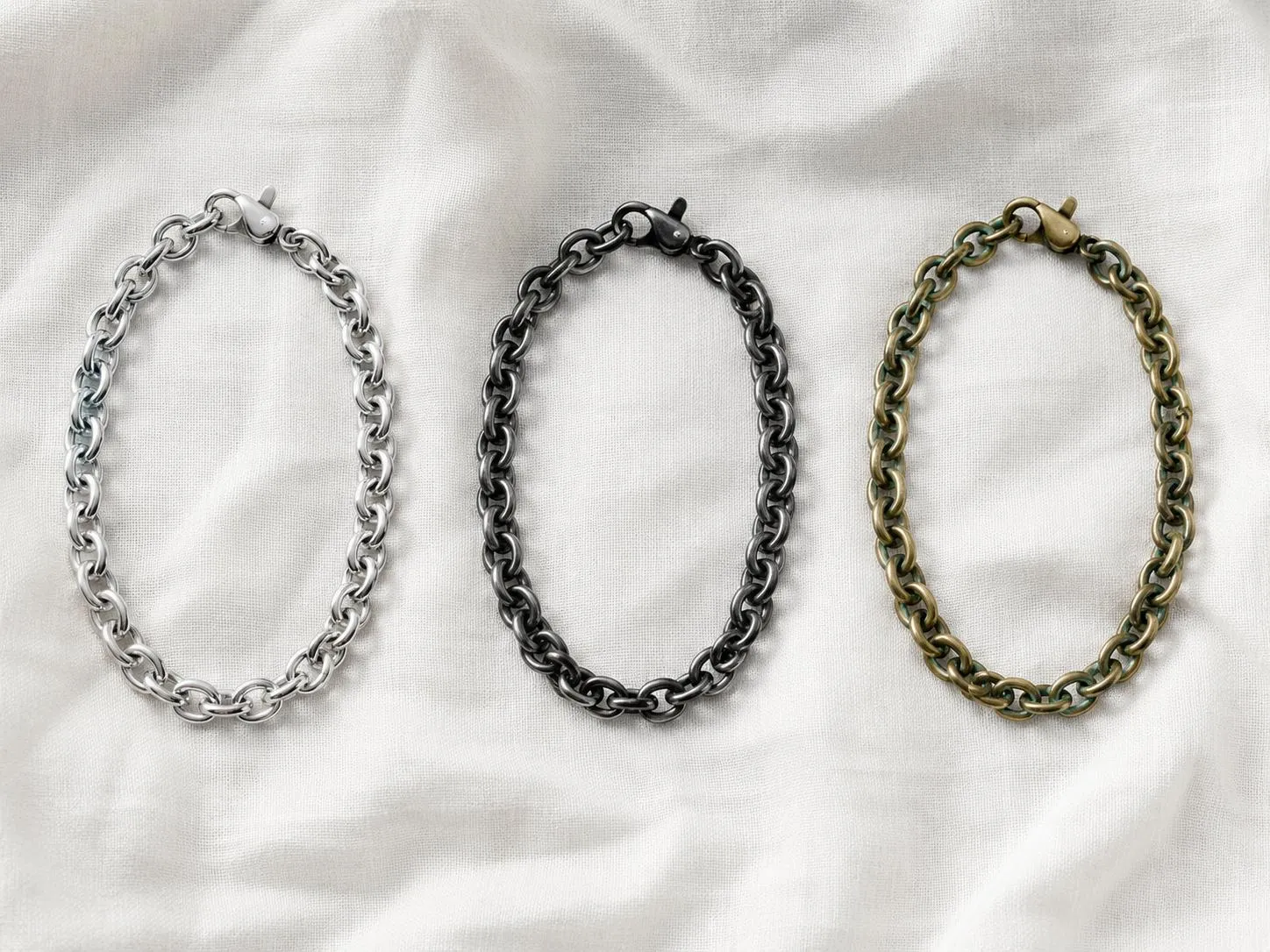
Different metals age in very different ways. The table below shows how they compare for a brand.
| Metal | Tarnish Risk | Skin Safety | Best for Brands |
|---|---|---|---|
316L Stainless Steel |
Very low |
High |
Daily-wear retail lines |
Sterling Silver |
High (turns black) |
Medium |
Premium, high-care pieces |
Brass |
High (turns skin green) |
Low |
Short-term fashion only |
Gold-Plated Base |
Plating wears off |
Varies |
Trend pieces with care |
Stainless steel wins for low tarnish and easy care. This is why it is a smart base for tarnish free jewelry lines.
How Can Brands Keep Jewelry Tarnish-Free?
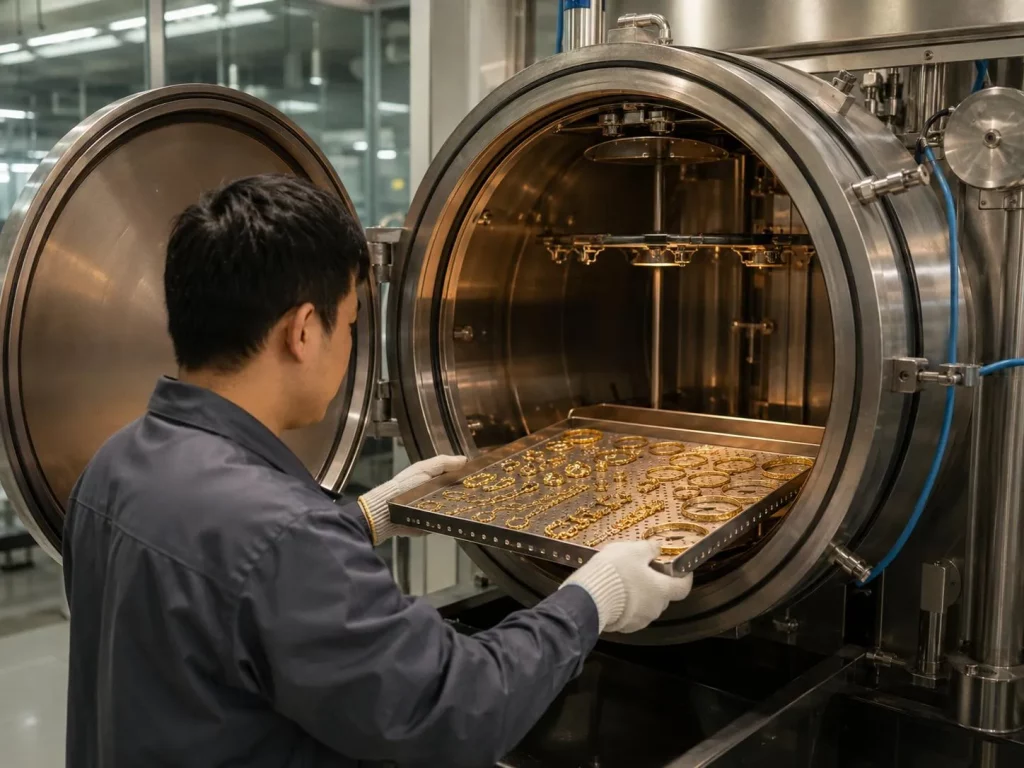
You can lower tarnish risk before the order even ships. The right grade and finish do most of the work. Focus on these three steps.
Choose 316L Grade
316L resists rust and sweat better than basic steel. It is the safest pick for daily-wear retail pieces. Ask your factory for the exact grade in writing.
Add a PVD Finish
PVD coating bonds color deep into the metal. It holds gold, rose gold, and black tones for years. See our PVD coating guide for the full process.
Share Care Tips With Buyers
Tell buyers to wipe pieces dry and store them in a pouch. Ask them to remove jewelry before they swim or clean. Simple care keeps the shine for years.
Why Tarnish Matters for Your Brand?
Tarnish drives returns and bad reviews. Each refund costs you money and trust. Strong, tarnish-resistant pieces protect your name. A tarnish-free product also earns repeat orders. Happy buyers come back and tell others. Haosen tests every batch and shares material test reports with each order.
Conclusion
So, does stainless steel tarnish? Far less than most metals. Quality 316L stainless steel jewelry stays bright for years with basic care. Harsh chemicals and low-grade steel cause most issues, not normal wear. To build true tarnish free jewelry, choose 316L, add a PVD finish, and source from an audited factory. Haosen has served global brands for 16 years. Get a free quote today and request a sample.
Frequently Asked Questions
1. Does stainless steel jewelry tarnish?
Quality stainless steel jewelry resists tarnish far better than silver or brass. With basic care, 316L pieces stay bright for years.
2. Will stainless steel tarnish if it gets wet?
No. Water, sweat, and showers are fine. Only harsh chemicals like bleach or chlorine can harm the finish over time.
3. How do I stop stainless steel from tarnishing?
Wipe it dry, store it in a pouch, and keep it away from strong chemicals. Choose the 316L grade for the best results.
4. Does 316L stainless steel tarnish?
316L resists tarnish very well. It has extra metal that fights sweat and salt. It is the top choice for daily-wear jewelry.
5. Is tarnished stainless steel ruined?
Usually not. Light dulling often cleans off with mild soap and warm water. Serious damage to a coating may need a refinish.
Author

Industry trend analysis and researches fashion jewelry market data.