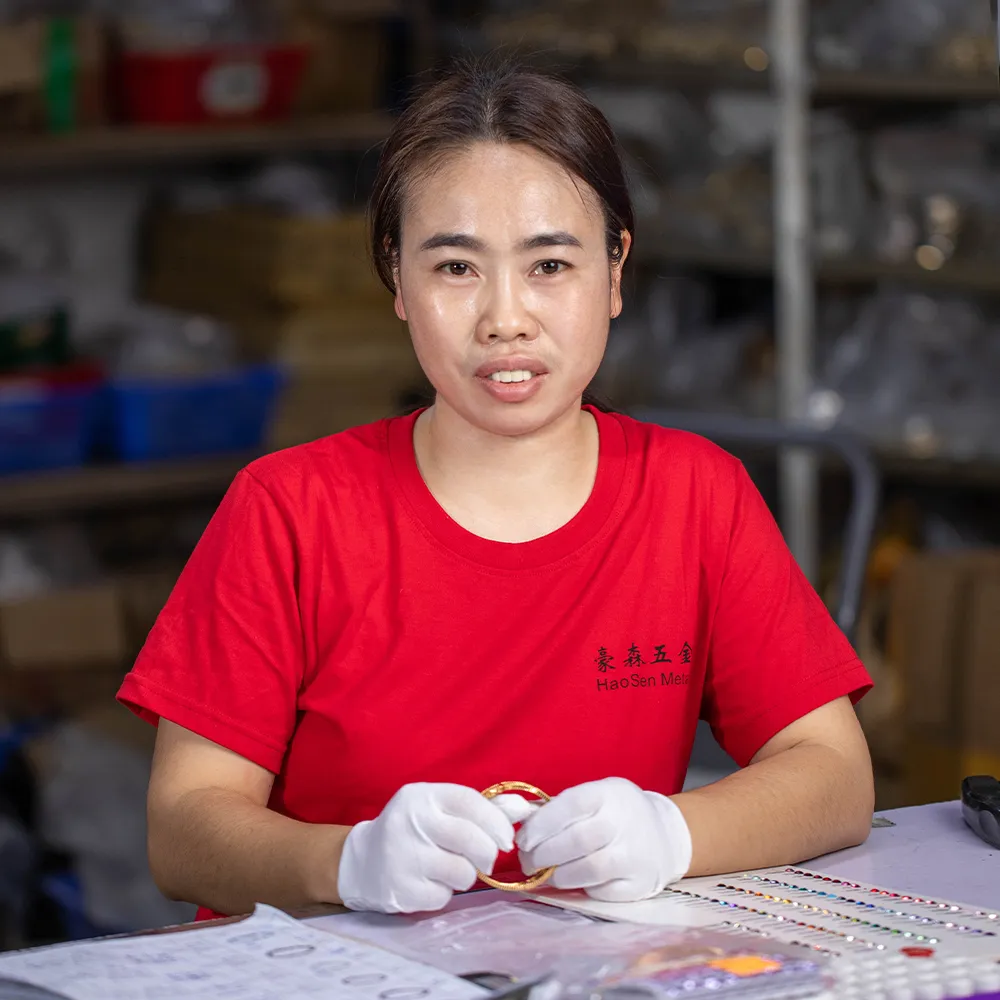

Interpretation of the SGS test report on nickel release from 316L stainless steel bar material.
For jewelry brands, buyers, and wholesalers, material safety is the foundation upon which to win the market’s trust. When your business is about to or is planning to expand its market, especially in a high-standard collection like the European Union, the success of customs permission, display on store shelves, and consumers’ satisfaction directly lies in its nickel release.
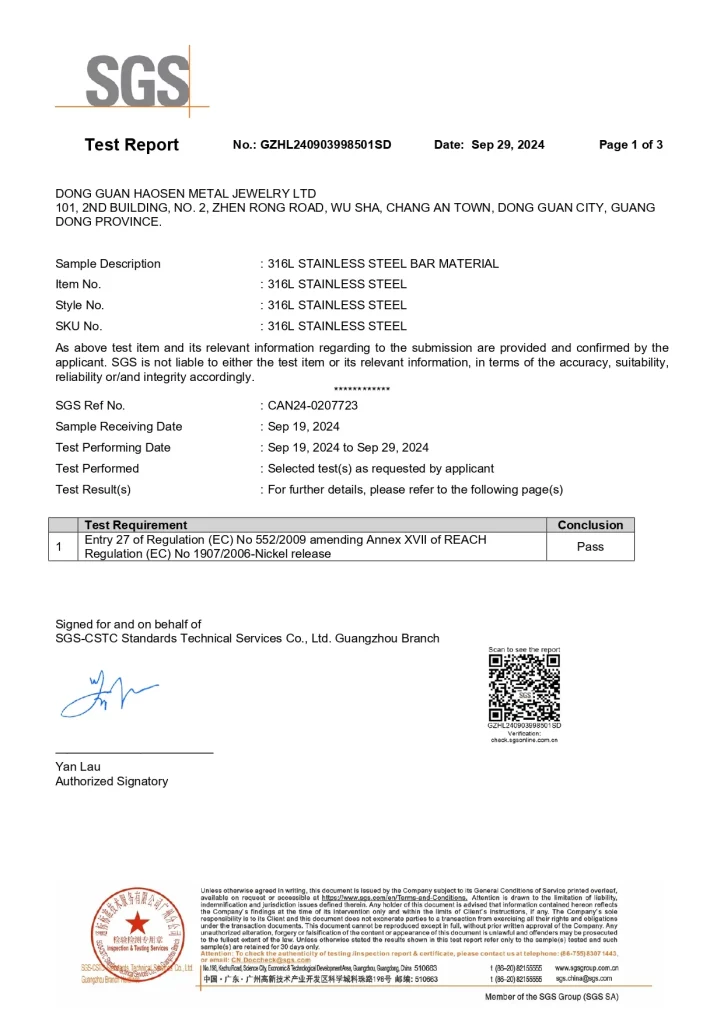
As a professional jewelry factory, we’re well aware that material quality is fundamental to our products. So all the 316L stainless steel jewelry bar material we submitted for testing was rigorously tested by the globally recognized institution SGS and has received an official report to prove that nickel release meets regulations. This means all types of stainless steel jewelry produced using this batch of materials meet the severe safety requirements of the EU REACH regulations, providing you with reliable assurance from the source.
Key Test Report Information
- Report Certificate No.: GZHL240903998501SD
- Report Issue Date: September 29, 2024
- Testing Organization: SGS-CSTC Standards Technical Services Co., Ltd. Guangzhou Branch
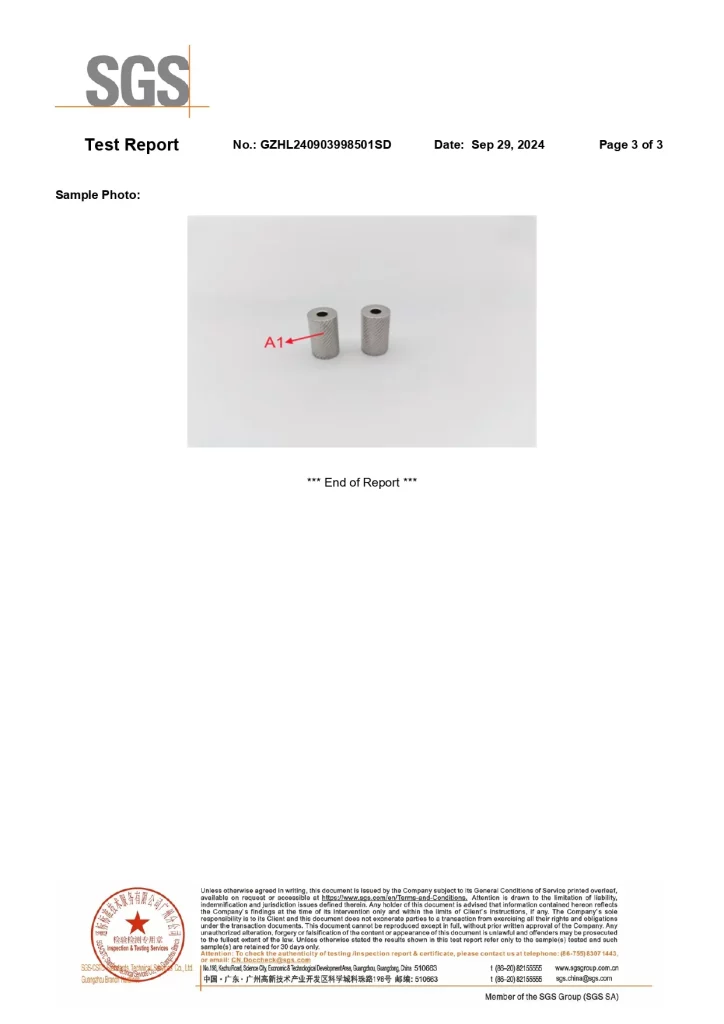
- Sample Description: 316L stainless steel bar material
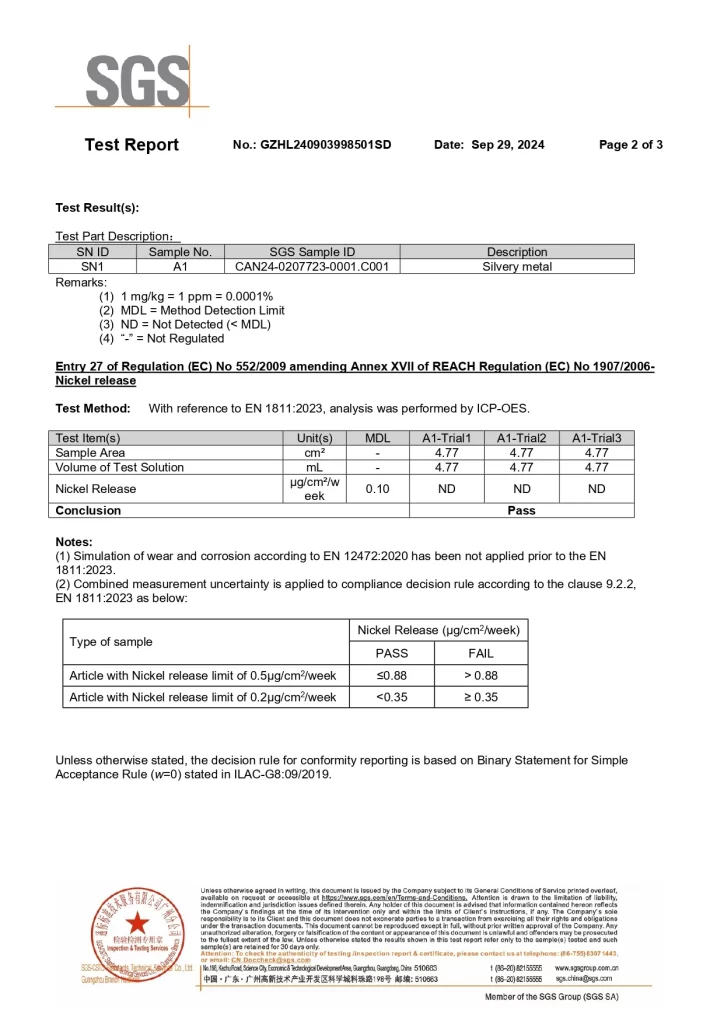
- Test Methods: With reference to EN 1811:2023, analysis performed by ICP-OES.
- Method Detection Limit (MDL): Nickel Release: 0.10 µg/cm²/week
Key Test Results (Fully Compliant)
| Tested Item | Regulations & Limit | Result |
|---|---|---|
Nickel Release |
ND |
Get compliant supplies immediately!
We provide quality 316L stainless steel materials with SGS authoritative test reports to ensure that your products fully meet EU REACH safety standards, and help you confidently expand into the international jewelry market.
Request NowFAQs
Q1: What level of recognition do reports from SGS carry?
SGS is the global industry leader and the benchmark company for the inspection, testing, and certification industry. The reports of SGS have the highest level of credibility across the globe, accepted by customs across the world, various retail giants, widely accepted on Internet stores such as Amazon and eBay, and also accepted by professional buyers across the globe. It become the “certificate of trust” in international trade.
Q2: What is "Nickel Release"?
Many metals, such as stainless steel, have nickel as an element. What matters most in the case of a piece of jewelry is not the percentage of nickel, but the amount released. If the amount of nickel ions is greater in relation to a certain standard when the skin is in contact with the piece of jewelry or the metal is exposed to sweat over a long time, the metal penetrates the skin, and an allergic reaction is triggered.
Q3: What is the EU REACH regulation?
The European Union’s Regulation on the Registration, Evaluation, Authorization, and Restriction of Chemicals, or REACH for short, outlines the necessary regulations to be followed within the European Union. In the Annex XVII, Item 27 of the document, it’s clearly stated that any product meant for extended contact with the skin, such as earrings, necklaces, and bracelets, needs to have the nickel release rate below 0.5 Micrograms/cm²/per week or 0.2 Micrograms/cm²/per week after piercing to be placed for sale on the European Union’s market or risk being seized or recalled.
Q4: What is the EN 1811:2023 standard?
This is the latest standard for nickel release testing methods recognized and accepted by the European Union. It was formulated to test for the conditions that occur naturally in the human body and to quantify the levels of nickel released into artificial perspiration from the surfaces of metallic products. This standard was formulated in 2023 and represents the most recognized and accepted format.
Q5: Does "ND (Not Detected)" suggest that the final product has absolutely no nickel?
Not quite accurate. “ND” means the nickel released is below the detection limit of the apparatus used, which is 0.1μg/cm²/week in the report. This is the actual scientific explanation to prove that the nickel released is safe, being only enough released in the simulation of usage of one week, as this is still far from the EU standard of 0.2μg/cm²/week, rather than the actual nickel content of the material being considered.
Q6: Isn't 316L stainless steel generally considered "hypoallergenic"? Why is testing still necessary?
Material grade “316L” and its “hypoallergenic” properties should be scientifically verified by authoritative nickel release testing. Different manufacturers and different batches of raw materials can have different manufacturing processes, which may lead to differences in the levels of nickel release.
Q7: If I buy this batch of materials with the test report, shall I be able to make all styles of jewelry?
Yes. Any jewelry style made from this batch of 316L stainless steel materials can use this report as supporting documentation on material safety for items such as necklace clasps, bracelet chains, ring bands, etc. We recommend performing random sample testing of the final products to ensure total peace of mind.
Other Raw Material Testing Reports
- Where Does Our Leather Come From? Unveiling LWG Gold-Certified Leather
- Are Our 316L Stainless Steel Bars SGS RoHS Certified? Check Our Report
- Does Our 16mm Environmentally Friendly Copper Rod Pass Heavy Metal Testing? Check the CTT Test Report
- Is 11mm Environmentally Friendly Copper Rod Material Safe for Jewelry Manufacturing?
- Is Our Packaging Supplier GRS Certified for Recycled PE and PP Bags?
Author

Arranges third-party lab testing (SGS/RoHS) and 100% Final Quality Control.