
Haosen, a China-based fashion jewelry manufacturer with 16 years of experience, shows you how the 10-step lost wax casting process can help optimize your jewelry supply chain and support smarter sourcing decisions.
What is Lost-Wax Casting?
Lost-wax casting, also known as investment casting or precision casting, is a metal forming technique with a history spanning thousands of years. It involves creating a wax model, encasing it in refractory material, dewaxing, and high-temperature pouring to inject molten metal into the pre-formed cavity, resulting in high-precision metal components.
In the field of stainless steel jewelry, lost-wax casting is the preferred method for achieving high complexity, artistic quality, and small-batch production. Its core value lies in its versatility: it is virtually unrestricted by shape, allowing designers to translate highly creative concepts into physical metal objects.
Below is the 10-step process we follow to ensure consistency and precision in our production.
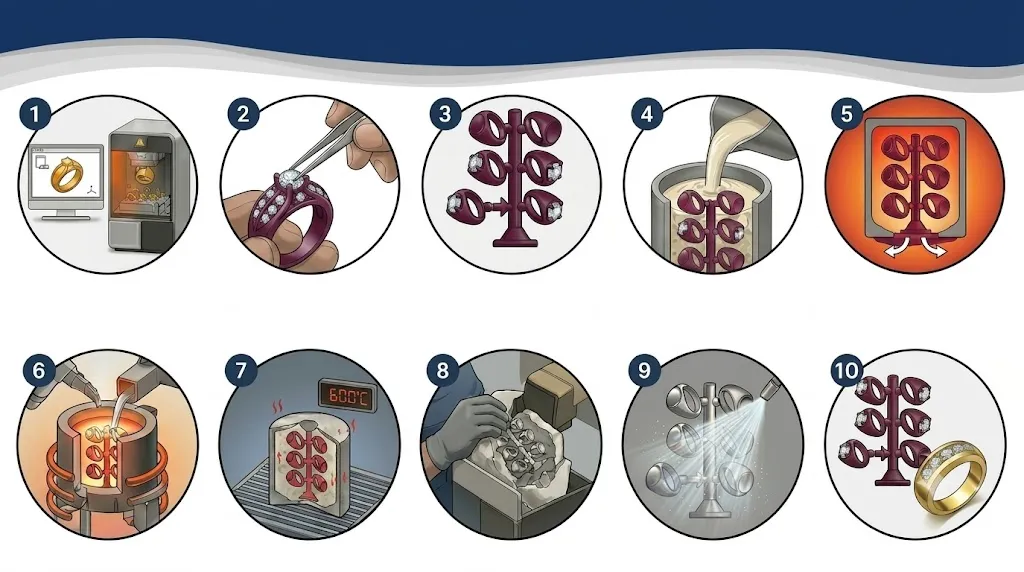
10-Stage Lost-Wax Casting Workflow Overview
| Step | Manufacturing Stage | Key Outcome |
|---|---|---|
|
1 |
Wax Pattern Making |
Create high-precision wax models |
|
2 |
Wax Stone Setting |
Pre-set stones for efficiency |
|
3 |
Wax Tree Assembly |
Connect multiple models for batch casting |
|
4 |
Investment Pouring |
Build the plaster mold around wax patterns |
|
5 |
Lost Wax Removal |
Remove wax and create mold cavities |
|
6 |
Casting |
Inject molten metal into the mold |
|
7 |
Cooling |
Allow metal to solidify properly |
|
8 |
Investment Breakout |
Remove the plaster shell |
|
9 |
Water Rinsin |
Surface cleaning |
|
10 |
Sprue Cutting |
Final part separation |
The 10-Stage Precision Casting Workflow
To ensure consistency in jewelry mass production, we follow a rigorous 10-step process:
Step 1: Wax Pattern Making
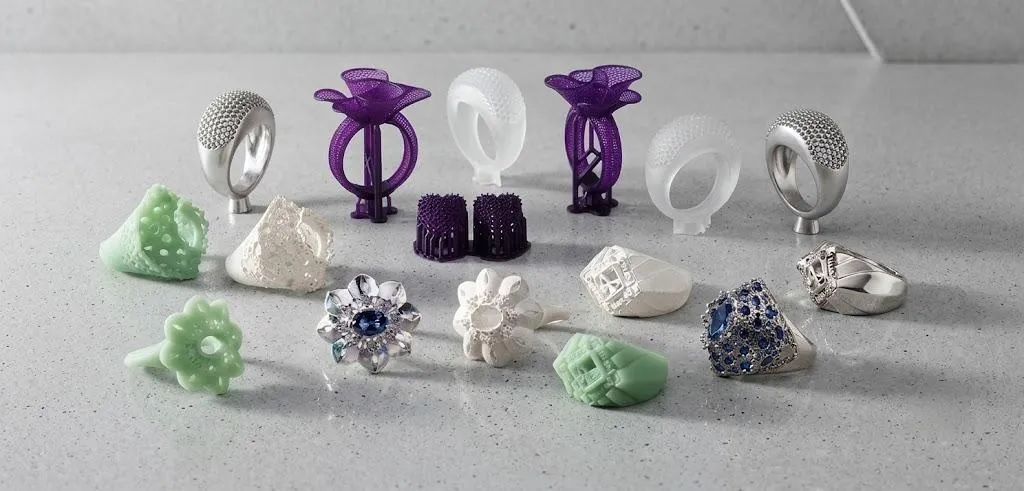
3D Wax Printing: We use the industry-leading ProJet MJP 300W Plus to print high-fidelity wax patterns directly from your CAD design files, serving as the master prototype for the casting process. With a precision of 20-30 microns, this advanced method accurately reproduces stone textures.Applicable Scale: Small-scale customization, sample development, and complex bespoke designs.
Manual Wax Injection: Securely close the prepared rubber mold and heat the wax in the injection machine to the appropriate melting point. Align the mold’s injection port with the nozzle of the wax injector, then use pressure to inject the liquid wax into the mold cavity. Maintain the pressure for a few seconds to ensure the wax fully solidifies within the cavity.Applicable Scale: Mid-scale production.
Automated Wax Injection: Pre-set the parameters and import the programs into the fully automatic vacuum digital wax injector, then mount the prepared rubber mold onto the machine’s fixture. Once the equipment is activated, the system automatically controls the closure of the wax injection nozzle with the mold, utilizing constant air pressure to precisely inject the molten wax into the mold cavity.Applicable Scale: Large-scale mass production.
| Method | Recommended Order Quantity | Core Advantages & Applicable Scale |
|---|---|---|
|
3D Wax Printing |
1 – 30 pcs |
No tooling cost, high design flexibility. Prototype Developmen、Small-batch Customization、Sample Development. |
|
Manual Wax Injection |
30 – 500 pcs |
High flexibility, mature process. High variety, small-batch orders (below 500 per design) |
|
Automated Wax Injection |
1000 + pcs |
Superior consistency, maximum efficiency. High-volume individual orders |
After cooling and solidification, every wax model undergoes a thorough visual inspection by our skilled quality control personnel. Key areas of focus include the sprue, flash, surface defects, stone setting prong positions, and the fullness of the textures. Models that can be repaired will be fixed, while those with serious defects are scrapped. This process ensures that 100% of the pieces entering the next step are of high quality.
Step 2: Wax Stone Setting
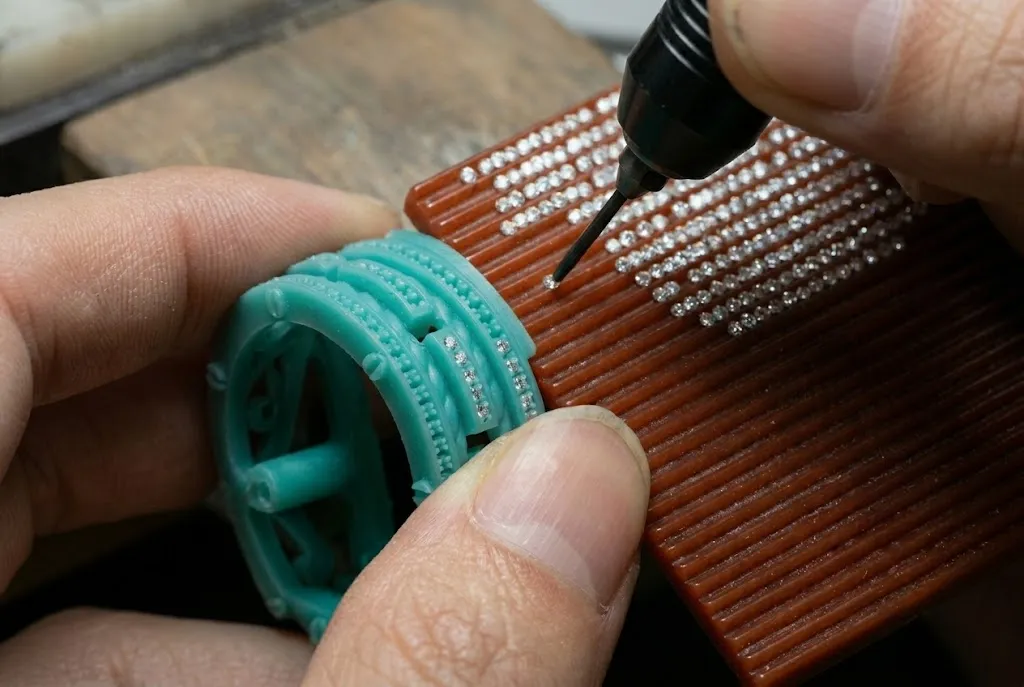
Wax stone setting is the process of placing CZ stones ou heat-resistant gemstones directly into thes’s wax pattern before casting.Each stone is precisely positioned according to the jewelry design to ensure proper alignment and fit.This method is commonly used in jewelry manufacturing to reduce post-casting stone setting work. However, it is not suitable for all materials. For example, wax stone setting is generally not recommended for stainless steel due to its high casting temperatures; furthermore, many pure metal designs do not require stone.
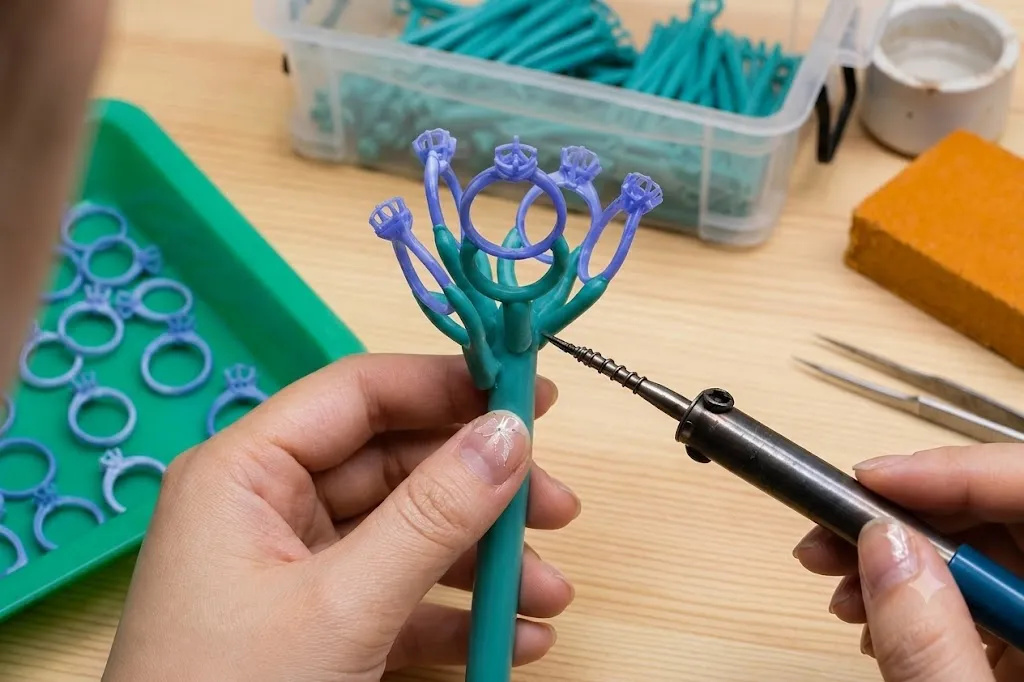
The base of the main wax sprue is first secured to a rubber base. Using a wax welder or electric soldering tool, the finished wax patterns are attached to the central sprue layer by layer, from bottom to top and from heavier pieces to lighter ones, following a circular arrangement. Adequate spacing is maintained between each wax pattern to ensure proper plaster coverage and prevent castings from sticking or fusing together during the lost wax casting process. This wax tree assembly process enables multiple jewelry pieces to be cast in a single cycle, optimizing metal flow, improving casting quality, and significantly increasing production efficiency for high-volume jewelry casting.
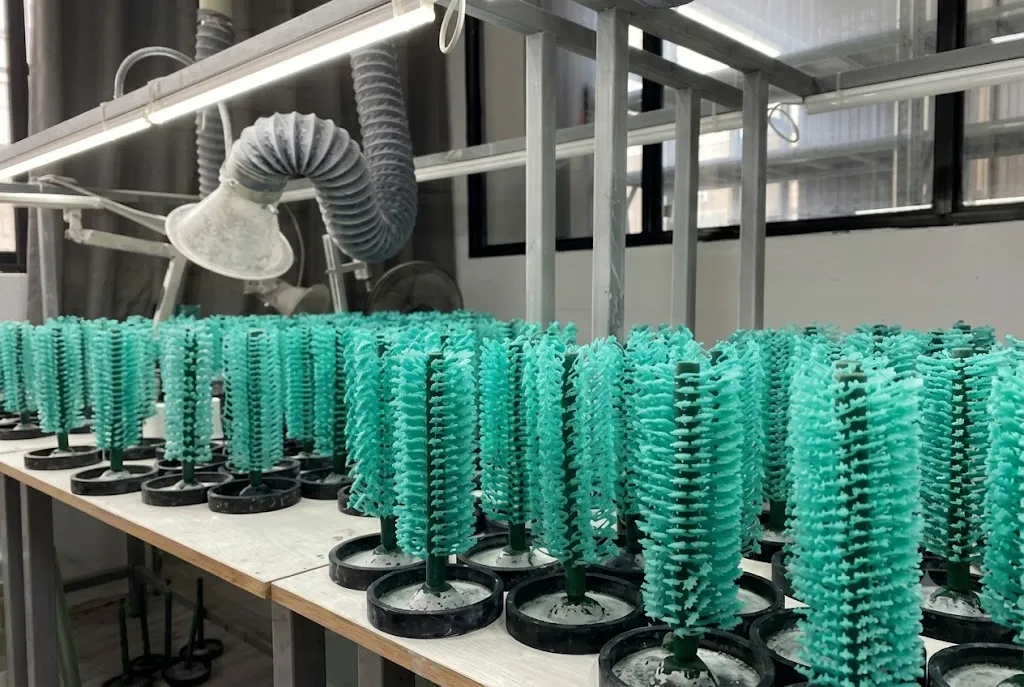
Step 4: Investment Pouring
Before pouring, a thin layer of investment plaster is carefully brushed onto the wax-set jewelry patterns to remove trapped air from fine details and narrow gaps. The plaster slurry is then slowly poured along the inner wall of the flask to prevent damage to the wax models and minimize air bubbles. Gentle vibration helps release any remaining air and ensures complete mold filling before the plaster hardens into a lost wax casting mold.
Step 5: Lost Wax Removal
wax removal: After the investment plaster has fully hardened, the molds are placed in a burnout furnace for wax removal. During the dewaxing process, the temperature is maintained at 120°C–180°C for 3–6 hours, allowing the wax to melt and flow out through the sprue system.
High-Temperature Burnout: The molds are then heated through a step-by-step temperature increase, typically increasing by 100°C per hour until reaching 700°C, where they are held for 2–3 hours. This gradual investment mold burnout process removes any remaining wax residue and helps prevent cracks caused by sudden temperature changes.
Step 6: Casting
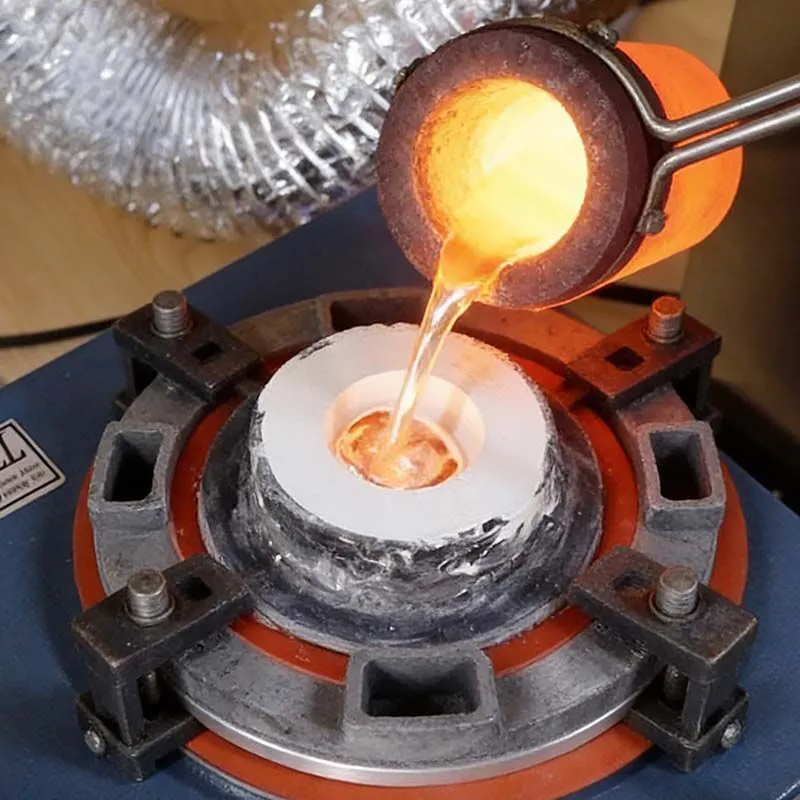
Select the appropriate metal material based on product requirements, such as 316L stainless steel, laiton, ou 925 silver.The metal is then heated in a crucible using a high-frequency melting furnace or gas torch until it is fully molten and reaches a bright, mirror-like flowing state.The molten metal is poured into the sprue of the plaster mold. Extra molten metal is retained to prevent shrinkage cavities in the casting.
For stainless steel jewelry projects, casting quality directly impacts lead times. Due to the high melting point and hardness of stainless steel, any casting failure requires a complete production reset. This process involves several days of preparation, which can cause a direct delivery delay of at least 1–2 weeks, or even longer.
Step 7: Cooling
Once cast, the mold cools naturally until the metal is completely solid. The cooling process must not be too rapid to avoid thermal cracking and dimensional deformation. Controlled cooling helps maintain the dimensional accuracy and quality of the metal casting process.
Step 8: Investment Breakout
Once cooled, the outer investment plaster shell is carefully broken and removed using tools such as hammers and chisels to expose the metal tree. For high-hardness metals such as 316L stainless steel, it is recommended to use a professional automatic de-investing machine (or vibration knock-out machine) for this process.
Step 9: Water Rinsing
The metal tree is thoroughly cleaned using a high-pressure water jet et acid washing to remove remaining investment plaster and surface oxidation. This ensures all plaster residue and surface oxidation are fully removed before further processing.
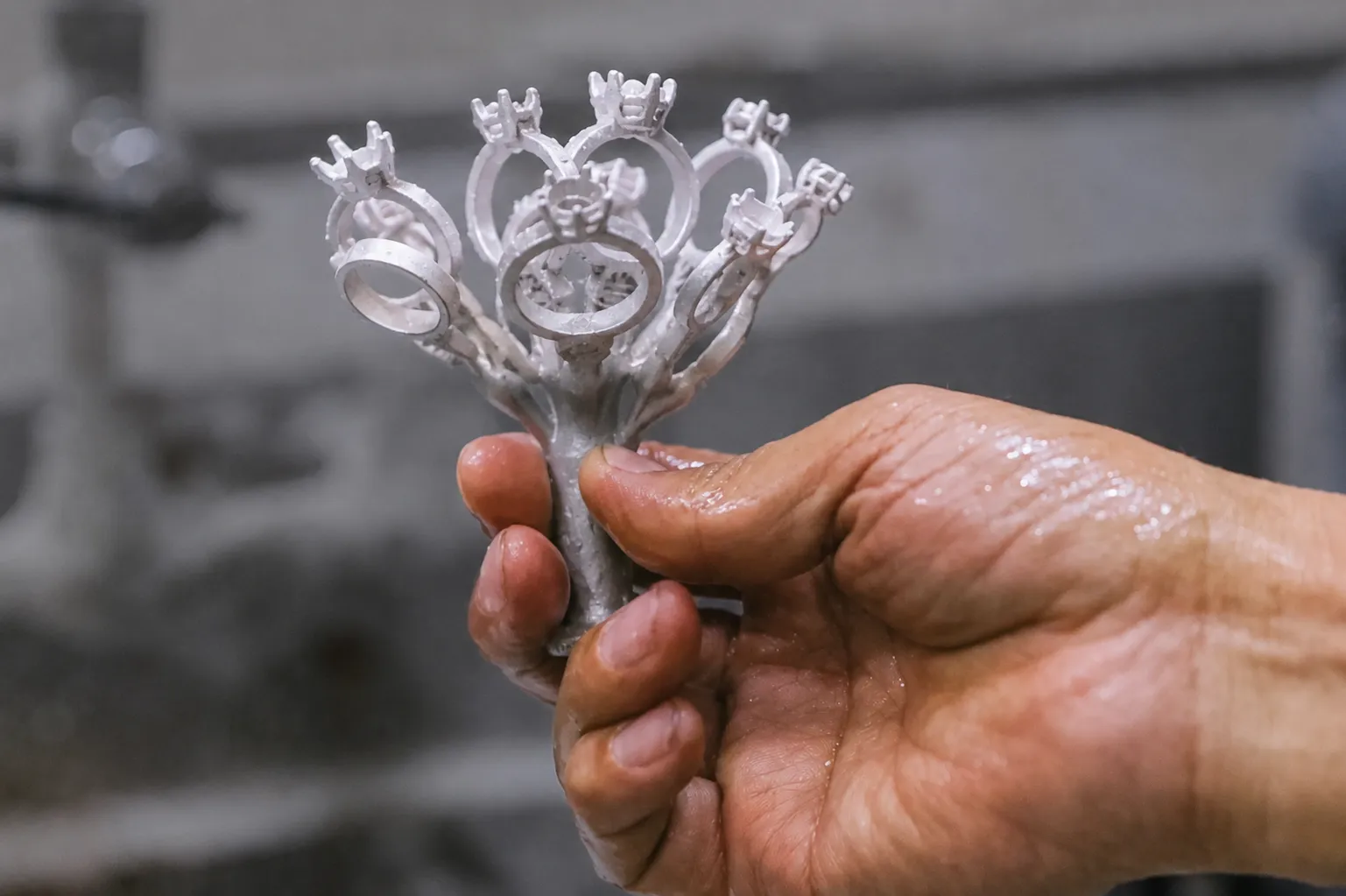
Step 10: Sprue Cutting
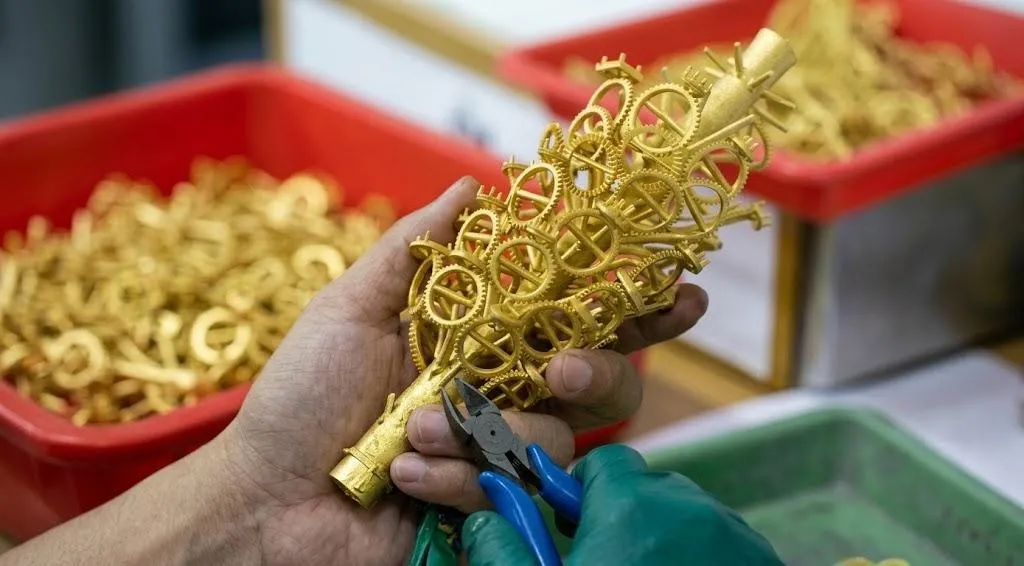
On a dust-free workstation, selecting the appropriate cutting method based on the physical properties of the specific metal is essential:
- For metals with good ductility, such as silver and copper: Specialized manual cutting pliers can be used to ensure precise control over the angle and force.
- For high-hardness metals such as 316L stainless steel: Professional mechanical cutting equipment (such as automated gate cutters or precision saws) must be used for the operation.
Operational standard: During the cutting process, a safety margin (allowance) must be maintained. This step is to ensure sufficient material for subsequent grinding, thereby minimizing the risk of damaging the fine details, textures, or intricate patterns on the surface of the castings.
Why Lost Wax Casting Remains the Best Choice for Jewelry Mass Production
Compared with hand fabrication methods, lost wax casting offers:
✅ High production efficiency
✅ Excellent design flexibility
✅ Superior detail reproduction
✅ Lower unit costs
✅ Consistent quality across large orders
✅ Compatibility with automated jewelry manufacturing systems
For fashion jewelry brands and private-label businesses, it remains the most cost-effective solution for scaling production. Explore our custom stainless steel jewelry manufacturing services to see how lost wax casting is applied in commercial jewelry production.
Comparison: Lost-Wax Casting vs. Other Techniques
Wondering which production method is right for your designs?
“Click here to download and print this detailed process comparison chart for your easy reference.”
| Comparison Dimension | Lost-Wax Casting | MIM (Metal Injection Molding) | Hydraulic Pressing | CNC Machining | 3D Printing |
|---|---|---|---|---|---|
|
Order Quantity |
30 pcs |
5000 pcs |
500 pcs |
1 pcs |
1 pcs |
|
Tooling Cost |
30$-120$ |
2000$-8000$ |
30$-200$ |
0$ |
0$ |
|
Surface Finish |
Medium |
Good |
Good |
Excellent |
Medium |
|
Material Utilization |
85 – 95% |
>98% |
70 – 80% |
70-80% |
>98% |
|
Lead Time |
7-10 days |
21 – 28 days |
7-14 days |
7 – 15 days |
7 days |
Ultimately, the choice of manufacturing process should align with your specific design requirements and production scale. If your project demands high artistic detail et flexibility for small-to-medium batches, lost-wax casting offers the ideal balance of precision et cost-effectiveness.
If you are searching for custom jewelry manufacturing solutions, including lost wax casting jewelry production, wax modeling, and mass production services, our team can support your project from design to finished products.
FAQs
Q1: Will gemstones fall out during lost wax casting?
Based on our internal testing, cubic zirconia (CZ) carries an approximate 2% risk of loss or damage during the casting process due to thermal expansion. Furthermore, heat-sensitive stones such as mother-of-pearl and agate are unsuitable for cast-in-place settings and cannot be used in this step. We conduct rigorous inspections on every piece before shipment to ensure that the final product you receive is 100% perfect and flawless.
Q2: Why is the lost wax process of casting suitably named?
A:It is called the “lost wax casting” process because the wax model used to form the jewelry is completely melted and removed during the burnout stage. As the mold is heated, the wax flows out and burns away, leaving a precise hollow cavity inside the plaster mold. This cavity is then filled with molten metal to create the final piece.
Q3: What Are the Advantages and Disadvantages of Lost Wax Casting Jewelry?
A: Lost wax casting offers excellent design flexibility, high detail reproduction, and consistent quality for jewelry mass production, making it ideal for complex and customized designs. However, the process requires additional finishing steps such as polishing et may involve longer production times compared to simpler manufacturing methods like stamping. Overall, it remains one of the most cost-effective solutions for producing detailed jewelry at scale.
Q4: Is Lost Wax Casting Expensive?
A: No. For most custom jewelry projects, lost-wax casting is one of the most cost-effective manufacturing methods. Tooling costs typically range from $30–$120, which is significantly lower than MIM (Metal Injection Molding). Lost-wax casting also supports low minimum order quantities starting from 30 pieces, making it ideal for new product launches, custom jewelry development et small-to-medium production runs.
Q5: How Long Does Lost Wax Casting Take?
A: Most lost-wax casting jewelry projects can be completed within 7–10 days, making it one of the fastest manufacturing methods for custom jewelry production. Compared with MIM, which typically requires 21–28 days, lost-wax casting offers significantly shorter lead times while maintaining excellent design flexibility.
Q6: Can Stainless Steel Be Lost Wax Cast?
A: Absolutely. stainless steel can absolutely be cast using the lost wax (investment casting) process. In fact, it is one of the most common materials used in precision casting today, especially for 316L stainless steel jewelry, due to its excellent corrosion resistance, durability, and hypoallergenic properties. However, compared to metals like silver or brass, stainless steel has a much higher melting point (around 1,370–1,400°C) and greater hardness, which requires specialized equipment, higher-temperature resistant investment plaster, and precise process control.
At Haosen, we specialize in stainless steel lost wax casting for fashion jewelry, with 16 years of experience ensuring high-quality results for mass production.