

Why Pre-Shipment Jewelry Inspection Is Critical for Bulk OEM Production
In fashion jewelry B2B manufacturing, bulk orders often range from hundreds to tens of thousands of pieces. Even a single unresolved quality issue can result in returns, chargebacks, costly remakes, delayed launches, and long-term damage to brand reputation.
For emerging jewelry brands and indie designers working with OEM or ODM manufacturers, pre-shipment inspection is not merely a technical checkpoint before shipment. It is a critical commercial risk management strategy.
Key priorities for B2B clients include:
- Consistency across bulk production
- Batch-to-batch quality stability
- Traceability and comprehensive documentation
- Compliance with US and EU regulations
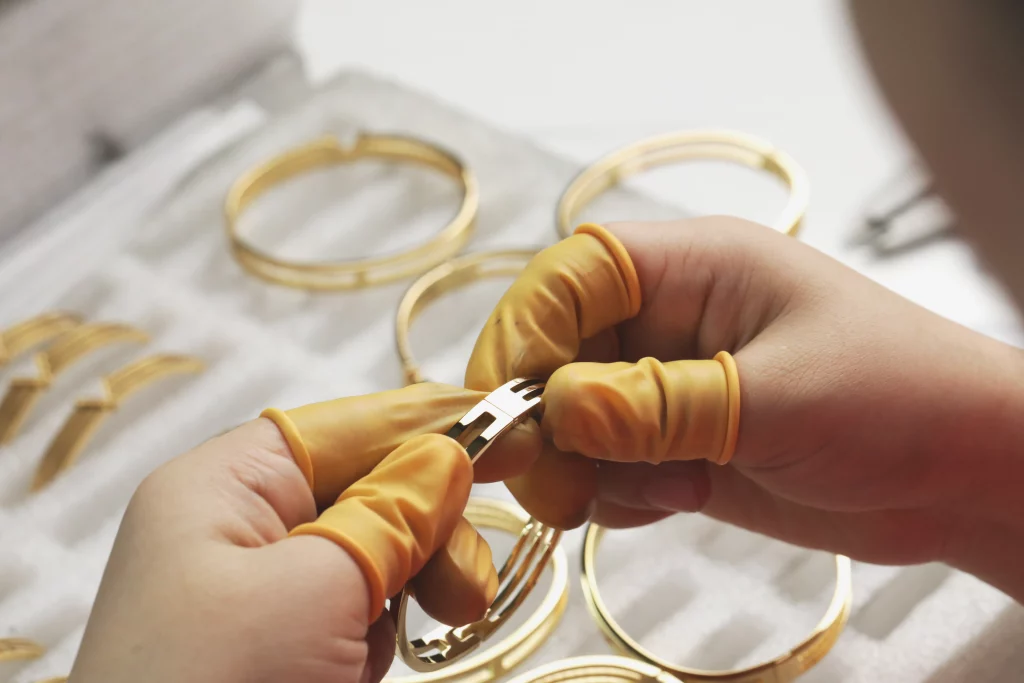
Without a standardized finished-goods inspection system, even a carefully approved sample can diverge significantly in bulk production. Partnering with a reliable 316L stainless steel jewelry manufacturer that prioritizes these checks ensures every piece matches the approved “golden sample,” technical specifications, and contractual standards—reducing returns and strengthening brand credibility.
We maintain a strict open-door policy and unconditionally accommodate client requests for third-party inspections. We welcome your designated agencies to our factory floor to conduct comprehensive pre-shipment audits based on standard AQL (Acceptable Quality Limit) protocols, ensuring you have complete peace of mind before a single carton leaves our dock.
Pro-Tip for Buyers:
If you are selecting an independent agency for your pre-shipment inspection at our facility, we recommend globally recognized leaders such as SGS, Intertek, Bureau Veritas, or QIMA. These organizations provide standardized AQL reports that ensure transparency and consistency across your entire supply chain.
QC vs. QA in Jewelry Manufacturing: What B2B Brands Must Understand
Quality Control (QC) and Quality Assurance (QA) play complementary roles in ensuring consistent jewelry quality.
- QC inspects finished products, identifies defects, and determines batch acceptance.
- QA establishes systems, standards, and preventive measures to minimize defects before production.
In simple terms: QC finds problems; QA prevents problems.
For B2B partnerships, integrating QC and QA is essential. Factories that rely solely on QC may detect issues too late. A system that incorporates QA reduces defects early in the process. Clear definitions of defect types, AQL levels, and inspection procedures in contracts protect both parties and minimize disputes.
How to Build a Structured Jewelry Pre-Shipment Inspection Process
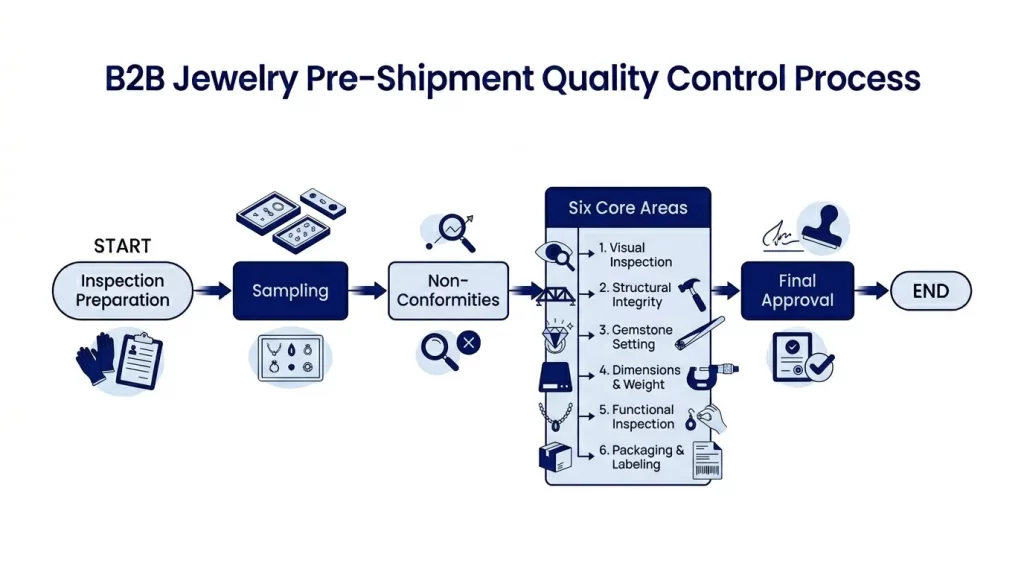
Step 1: Inspection Preparation and Reference Standards
Before inspection begins, ensure all references and tools are ready:
- Golden sample approved by the client
- Technical specification sheet
- Order quantity and packaging requirements
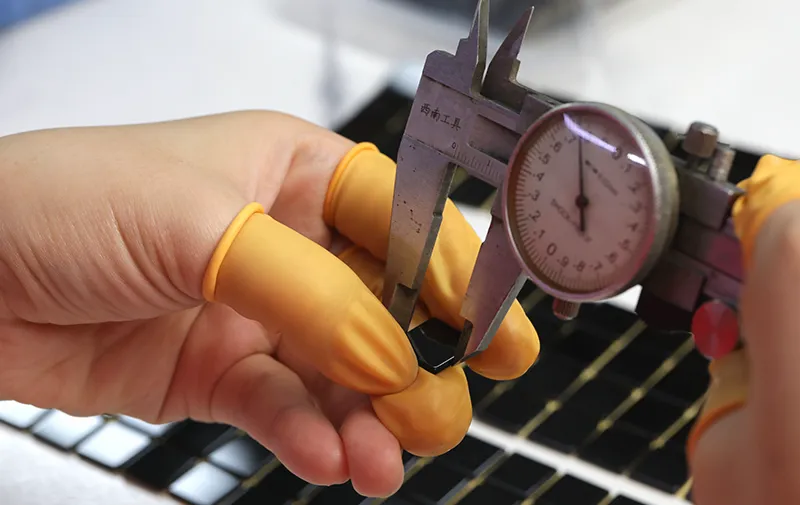
Inspection tools should include: magnifier or microscope, caliper, digital scale, stone probe, tension tester, color comparison card, and standard light box. Inspections must be conducted under consistent lighting to maintain accuracy.
Step 2: AQL Sampling Standards for Bulk Orders
Internationally recognized AQL standards (ANSI/ASQC Z1.4 or GB/T 2828.1) guide sampling:
| Defect Level | AQL | Examples |
|---|---|---|
Critical |
0 |
Safety hazards, regulatory violations, structural failure |
Major |
1.0 |
Visible cosmetic or functional issues |
Minor |
2.5 |
Small imperfections that do not affect function |
Example: In a batch of 500 pieces, approximately 50 units are sampled at General Inspection Level II. Acceptance depends on the number and category of defects identified.
Step 3: Handling Non-Conformities
- Any critical defect triggers immediate batch rejection.
- Major defects approaching the rejection threshold require expanded sampling.
- A documented corrective loop ensures consistent resolution:
Record → Rework → Re-inspect → Confirm Approval
This closed-loop system ensures defects are addressed and prevents repeated errors.
The Six Core Areas of Finished Jewelry Inspection
1. Visual Inspection — The First Impression

This is the most intuitive and broadest category in finished goods inspection.
| Inspection Item | Standard Requirements | Common Defects |
|---|---|---|
Overall Appearance |
Must match the approved sample; well-proportioned shape with no deformation. |
Overall misalignment, asymmetry, or warping. |
Surface Finish |
Mirror-like polish on smooth surfaces; uniform and fine matte/satin finish; no buffing marks or ripples. |
Scratches, pitting, lingering polish marks, or exposed base metal. |
Plating Quality |
Consistent color with no shading; plating must not peel, blister, or yellow. |
Color mismatch, haziness, or localized peeling. |
Solder Joints |
Smooth solder joints with no visible scarring; welds must be secure and durable. |
Blackened joints, cracking, or obvious protrusions. |
Hallmarks/Engraving |
Clear precious metal hallmarks (e.g., S925, Au750); LOGO font must be neat and correctly positioned. |
Blurred hallmarks, misalignment, or missing stamps. |
Judgment Criteria:
- Major Defect:Scratches or pitting clearly visible under 10x magnification, or color discrepancy visible to the naked eye at a distance of 20cm.
- Minor Defect:Subtle flaws barely visible under 10x magnification that do not affect the overall aesthetic.
2. Structural Integrity — Safety & Durability
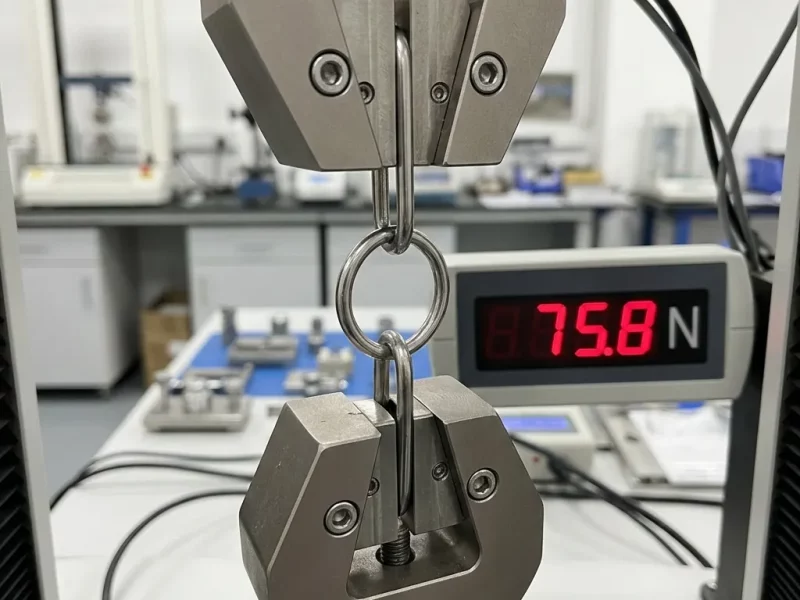
The structural integrity of jewelry directly impacts wearer safety and falls under the Critical Defect category.
| Inspection Item | Testing Method | Standard Requirements |
|---|---|---|
Chain Tensile Strength |
Apply constant tension using a force gauge; hold for 10 seconds. |
Silver/Copper: ≥5kg without breaking; K-Gold: ≥8kg without breaking; Fine chains: Standards set per specific craft. |
Clasp Functionality |
Repeatedly open and close lobster, spring, or magnetic clasps 50 times. |
Smooth operation with strong spring tension; no sticking, jamming, or accidental release. |
Solder Strength |
Perform manual pull and light bend tests. |
No loosening or breaking at the solder/weld joints. |
Ear Post & Nut |
Vertical pressure test on ear posts; pull-out test on ear nuts (backs). |
Ear posts must resist bending; ear nuts must remain secure and not slip off easily after insertion. |
End Caps / Extenders |
Tensile test on pendant jump rings and end-of-chain clasps. |
Must withstand 3kg of tension without deformation or cracking. |
Judgment: Failure in any of the above items is classified as a Critical Defect, resulting in the rejection of the entire lot.
3. Gemstone Setting — The Core of Craftsmanship
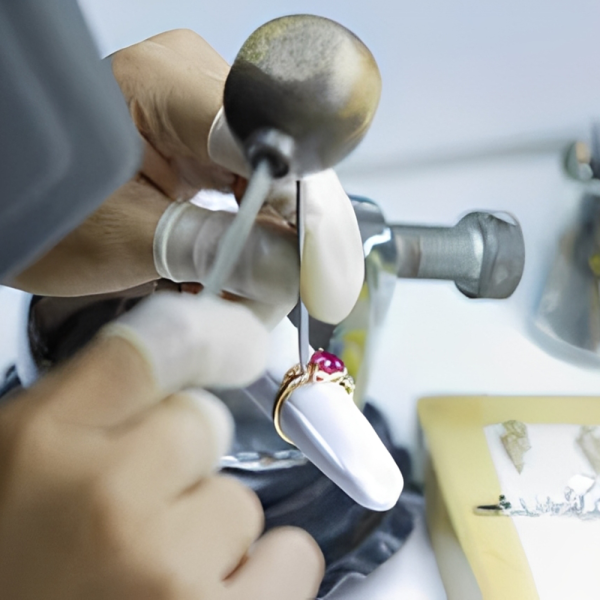
Setting quality is the most vital part of finished goods inspection; stone loss is the most frequent cause of customer complaints.
| Inspection Item | Testing Method | Standard Requirements |
|---|---|---|
Setting Security |
Use a probe to gently nudge the edge of the gemstone; check one by one. |
No wobbling or loosening; prongs must be perfectly flush against the stone. |
Position & Leveling |
Visual inspection combined with a jeweler’s loupe. |
Stones must be neatly aligned; height variation ≤ 0.05mm (dense mosaic); center stone must be upright and perfectly centered. |
Setting Integrity |
100% Full Inspection. |
No missing stones, skipped settings, chipped stones, or cracked stones. |
Prong Craftsmanship |
Examine the condition of the claws with a magnifying glass. |
Prong tips must be smooth and snag-free; no crooked, broken, or lifted prongs. |
Micro/Channel Setting |
Inspect the setting groove under a loupe. |
Setting seats must be neat with no gaps; gemstone spacing must be uniform. |
Judgment:
- Critical Defect:Loose stones, lost stones, or fractured/chipped stones.
- Major Defect:Obvious misalignment, uneven stone height, or prongs that catch/snag.
4. Dimensions & Weight — Specification Compliance
| Inspection Item | Testing Method | Standard Requirements |
|---|---|---|
Dimensions |
Measure with digital calipers |
Key dimensions (length/width/height/inner diameter) within a tolerance of ±0.3mm (adjustable based on product type) |
Weight |
Weigh on an electronic scale |
Precious metal products: Within ±5% of theoretical weight; Fashion jewelry: Must match approved sample |
Chain Length |
Measure laid flat |
Length tolerance of ±3mm |
Ring Size |
Measure with a ring mandrel |
Must match standard sizing; tolerance of ±0.5 size |
5. Functional Inspection — Wearer Experience
| Product Type | Inspection Item | Standard Requirements |
|---|---|---|
Opening Mechanism |
Smooth opening/closing; hinge or catch must be secure when closed to prevent accidental opening. | |
Adjustability |
Smooth adjustment; holds position firmly; does not slide or loosen automatically while worn. | |
Mechanical Jewelry |
Mechanical Function |
Moving parts operate smoothly with no abnormal noise or jamming. |
Magnetic Jewelry |
Magnetic Force Test |
Suction force must be balanced—strong enough to stay secure, but easy enough to pull apart manually. |
6. Packaging & Labeling — Shipping Compliance
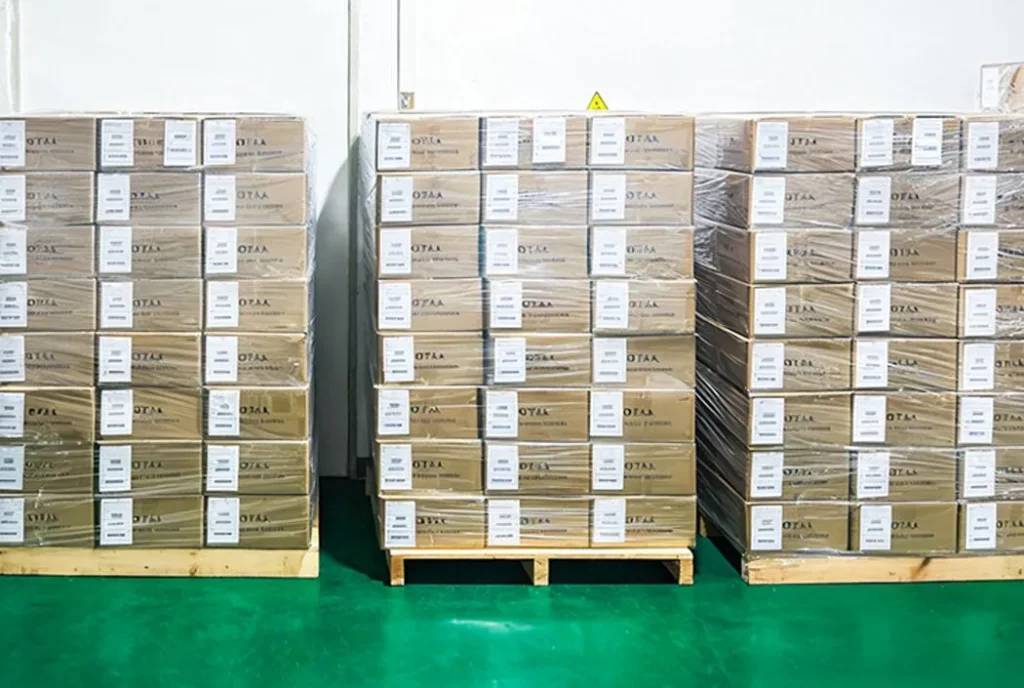
Packaging is the final step, directly affecting customer experience and logistics safety.
| Inspection Item | Standard Requirements |
|---|---|
Packaging Method |
Per order specs: Individual OPP bags, blister trays, jewelry boxes, or plastic packaging box; anti-shock and anti-scratch measures must be in place. |
Tags/Labels |
Material descriptions, hallmarks, barcodes, and price tags must be accurate and correctly placed. |
Carton Markings |
Shipping marks (Box #, G.W., N.W., dimensions, order #) must be clear; tape sealing must be secure. |
Compliance |
Outer cartons must be free of damage or moisture; must meet export/domestic logistics packaging standards. |
Finished Product Inspection: Judgment and Handling Procedures
Upon completion of the inspection, a formal inspection report must be issued, and the following judgment and handling procedures shall be executed:
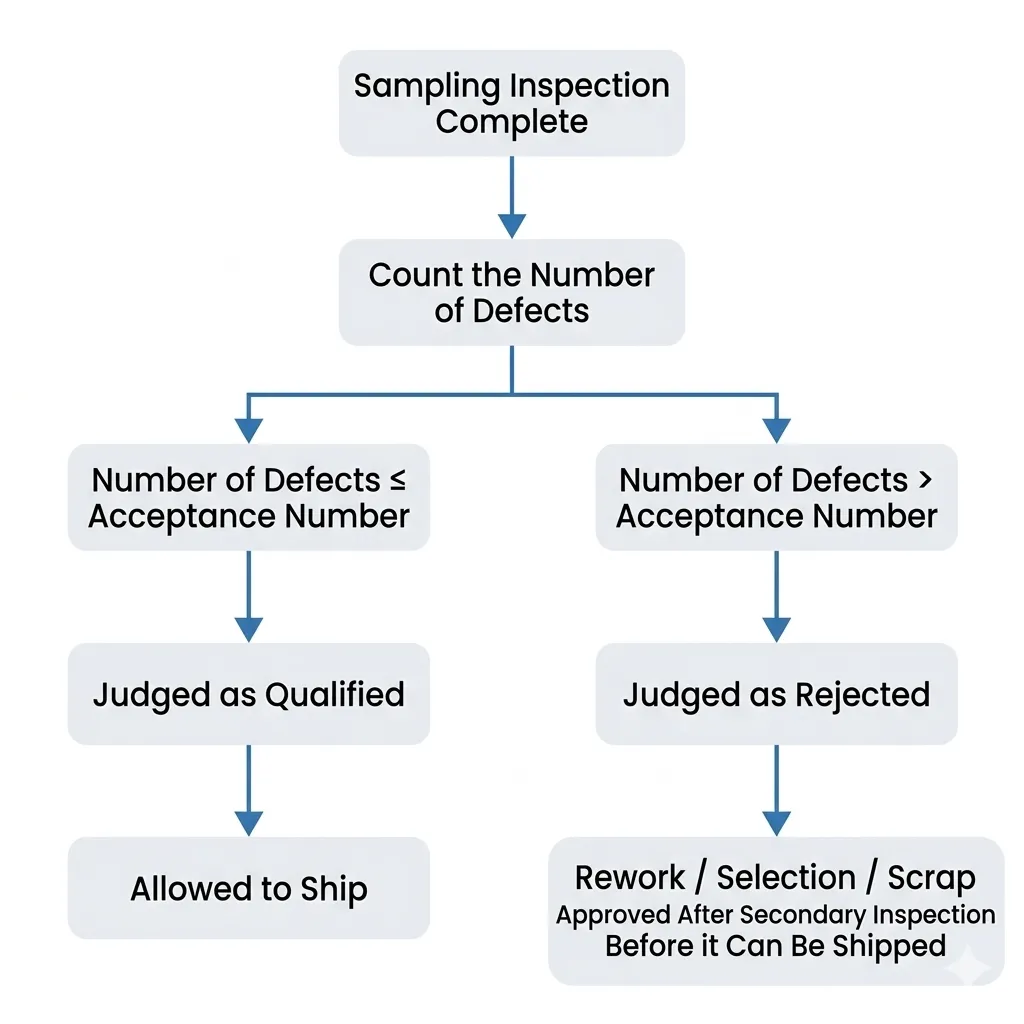
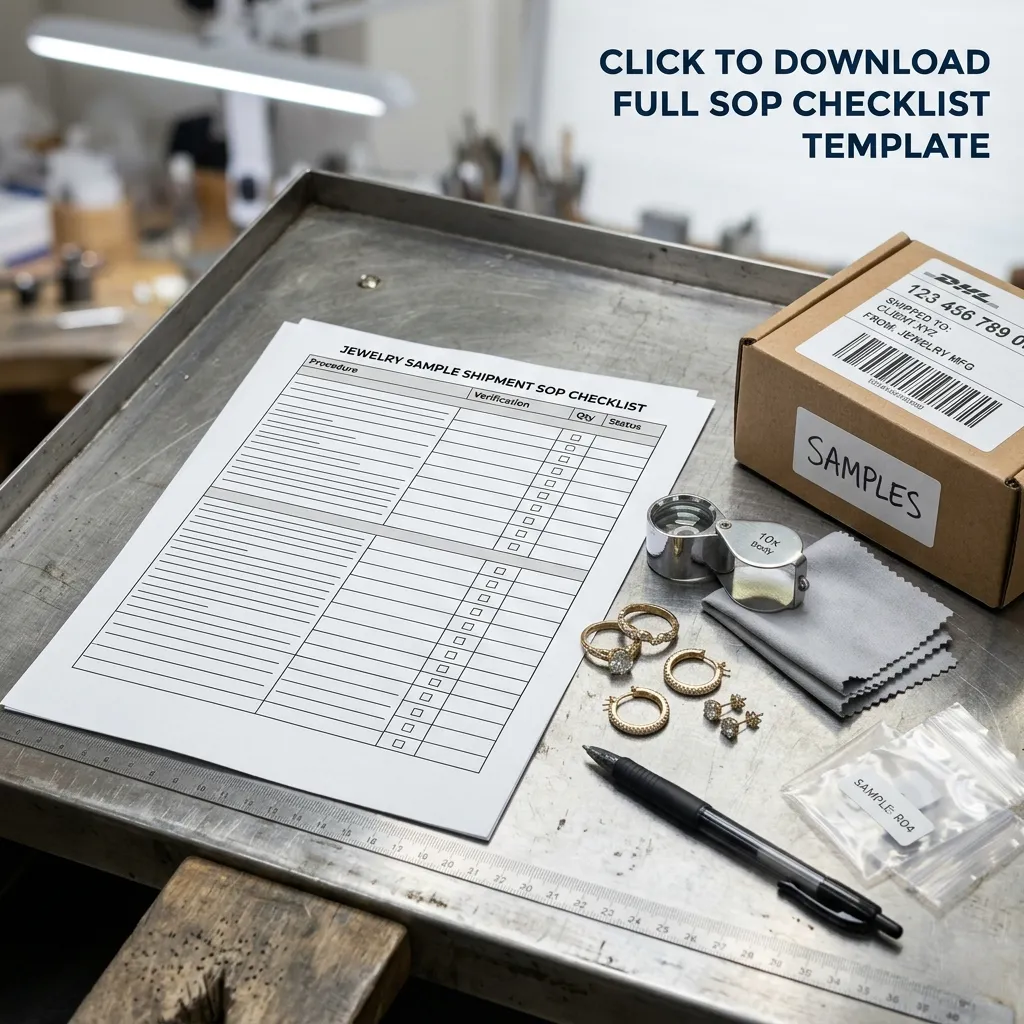
Handling of Special Circumstances:
- Discovery of Critical Defects: Regardless of the sample size, the entire batch shall be immediately rejected, and the Production Department notified to conduct a comprehensive investigation.
- Threshold for Major Defects: If the number of defects approaches the upper limit for acceptance, it is recommended to expand the sampling scope and conduct a re-inspection.
- Dispute Resolution: In the event that a customer disputes the inspection results, a joint re-inspection involving both parties may be arranged, or the matter may be referred to a third-party testing agency for arbitration.
Reference Table for Classification of Common Finished Product Defects
| Defect Severity | Defect Type | Specific Description |
|---|---|---|
Critical Defects |
Safety Risks |
Broken chain, fastener failure, loose/detached gemstone, metal burrs causing skin injury |
Legal Risks |
Insufficient precious metal content, incorrect hallmarks/stamping, excessive lead or cadmium levels | |
Functional Failure |
Ring size adjustment mechanism failure, fastener unable to open, jammed moving parts | |
Major Defects |
Appearance Issues |
Visible scratches/pitting, plating color discrepancies, visibly misaligned gemstone, visibly blackened solder joints |
Dimensional Deviations |
Ring size deviation exceeding 0.5 sizes, chain length deviation exceeding 5mm | |
Packaging Issues |
Incorrect label information, improper packaging resulting in product damage | |
Minor Defects |
Minor Imperfections |
Micro-scratches visible only under magnification, tiny pinholes, slight lack of polishing on inner surfaces |
Packaging Details |
Minor damage to outer carton (not affecting contents), slightly misaligned hangtag |
Recommendations for Buyers/Brands
Retention of Approved Samples: Prior to the commencement of each mass production run, it is imperative to verify and seal a “Golden Sample.” This sample shall serve as the sole benchmark for comparison during subsequent quality inspections.
Establishment of Clear Inspection Standards: The procurement contract must explicitly define the AQL sampling standards, defect classifications, and acceptance criteria to prevent potential disputes later in the process.
In-Factory Monitoring vs. Pre-Shipment Inspection: For high-value products (e.g., karat gold, diamond-set jewelry), it is recommended to station a dedicated representative at the factory to monitor production and maintain quality control from the very inception of the manufacturing process. For high-volume fashion accessories, a pre-shipment inspection may be conducted once 80% of the packaging is complete; this approach ensures the statistical representativeness of the sample while allowing sufficient time for any necessary rework.
Third-Party Testing: For products destined for export to European and North American markets, it is advisable to incorporate testing by an independent third-party laboratory. Key testing areas include:
- Nickel Release Testing (EN 1811 / EN 12472)
- Lead Cadmium Content Testing (CPSIA / RoHS)
- Safety Testing for Children’s Jewelry (ASTM F2923 / EN 71-3)
Finished product inspection is not merely a routine quality check; it serves as a comprehensive assessment of the factory’s overall production management capabilities. A standardized inspection workflow, clearly defined acceptance criteria, and professional inspection tools—these three elements are indispensable. Only by steadfastly maintaining this final line of defense—the finished product inspection—can we ensure that every piece of jewelry delivered to the customer is of impeccable quality and stands up to rigorous scrutiny.
(Note: In actual inspection practice, specific parameters—such as tensile strength values, AQL levels, etc.—may be adjusted based on the specific product type, brand positioning, and contractual agreements.)
Ready to Standardize Your QC Process?
Implementing a professional QC system is the ultimate risk management strategy for growing jewelry labels. If your current manufacturing process feels like a gamble, let us help you stabilize it.
Author

Arranges third-party lab testing (SGS/RoHS) and 100% Final Quality Control.