
How to Choose the Right Metal Chain to Balance Weight, Cost, Durability, and Aesthetics
Choosing the right chain is a balancing act between weight, cost, durability, and aesthetics. Depending on material properties and structural types, their application logic varies significantly. Below is our practical application guide:
Brass Chains: The All-Rounder for Mid-to-High End Accessories
Stainless Steel Chains: The King of Hardcore Trends and Functionality
Aluminum Chains: The Weight-Saving Hero for Large-Size Designs
Iron Chains: Cost-Effective Structural Support
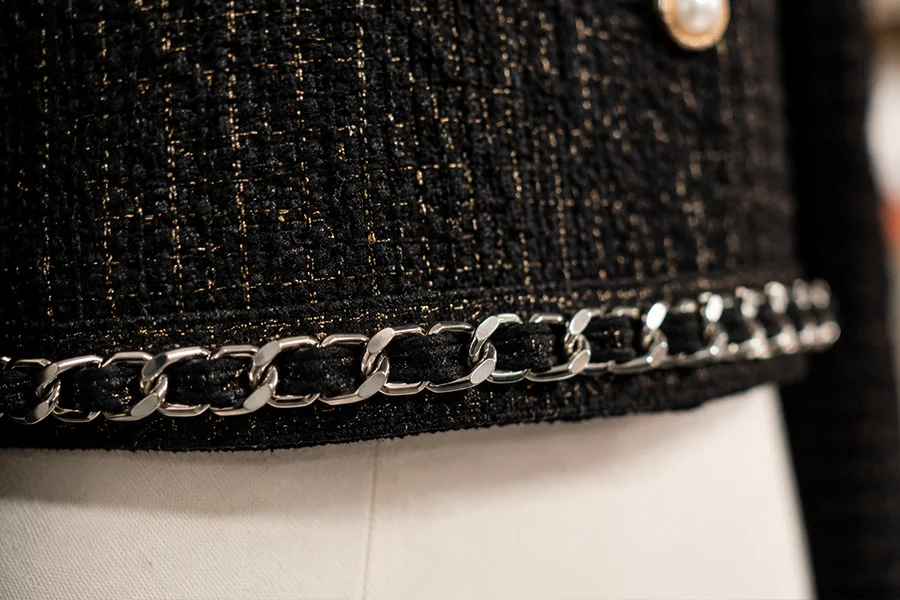
Expert Insight: Mixed-Material Application Solutions
Structural Logic: Why Do Your Chains Easily Get Stuck or Break?
Most people judge a chain only by its look. Industry insiders focus on dynamic redundancy.
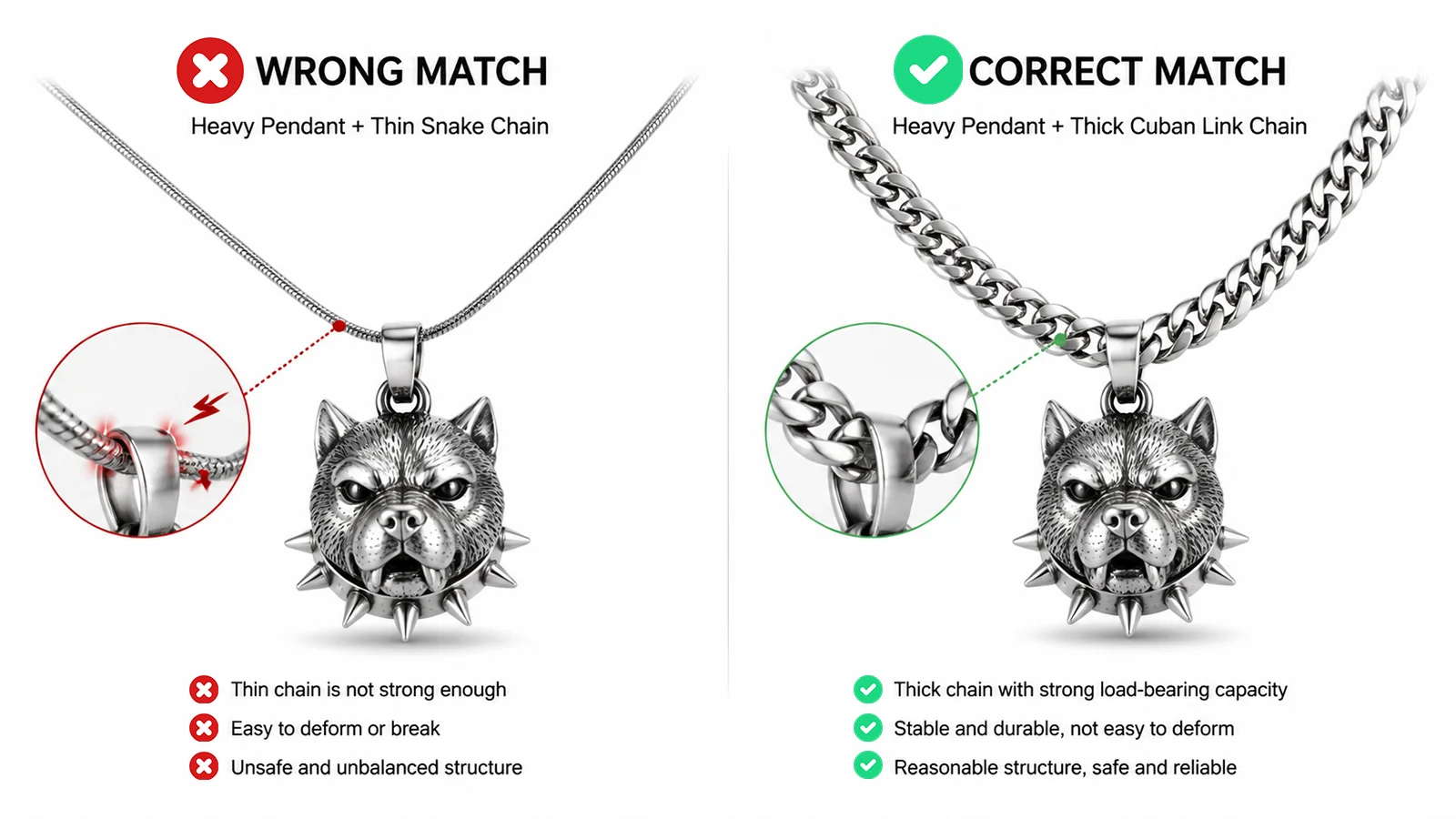
The Trap of Curb Chains and Cuban Link Chains
The core of a Cuban chain is not its thickness, but its "torque balance." Many cheap factories' Cuban chains flip over inexplicably when laid flat, because the internal stress was not relieved during the machine twisting process. At 96Jewelry, we use a secondary heat treatment process to ensure that even large-size chains have a smooth, fluid drape.
The Fatal Flaw of Snake Chains
Snake chains are the most precise of all structures, but also the most fragile. Once a permanent crease forms, the entire chain is ruined. During manufacturing, we add internal core tension testing to ensure that while the chain maintains its fluid feel, it also has a higher bending resistance threshold.
Solder Joint Management
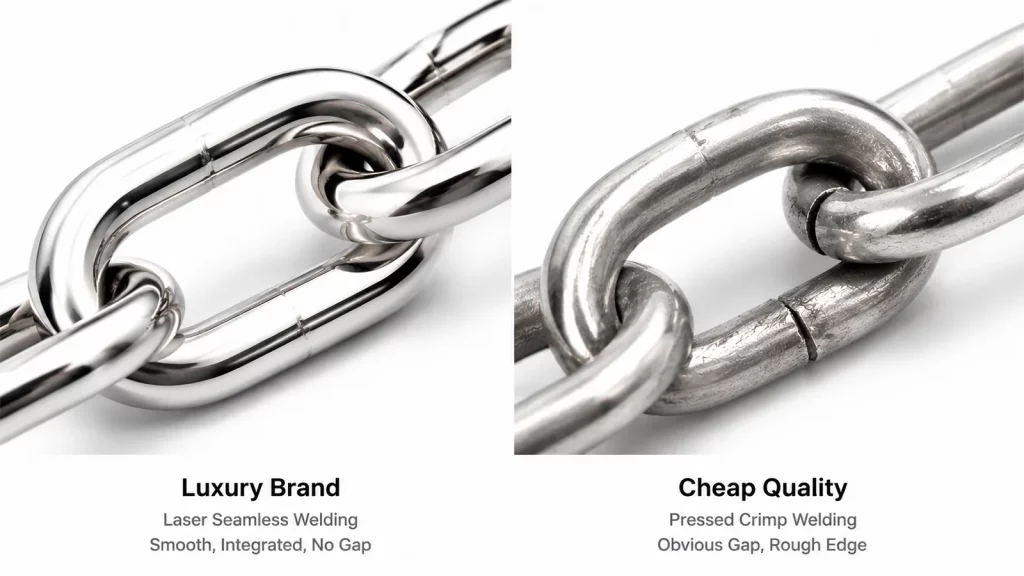
Why do big brands' cable chains look seamless? That is laser seamless welding. Many low-cost orders use press-fit technology, which breaks directly under heavy weight. We provide customized solutions from "cold press" to "laser welding" based on your pendant's weight.
Which Surface Finishes Ensure Long-Lasting Color Retention for Chains?
In B2B trade, "color retention promises" without testing standards are meaningless.
PVD Vacuum Plating (Standard for Stainless Steel)
This is not a coating—it is the mutual penetration of ions. If your positioning is sports or trendy brands, PVD is the only choice. But remember: the "gold" in PVD is a color simulated by titanium nitride. To achieve the texture of real gold, you need an additional real gold target process on top of PVD.
Electroplating + Sealing
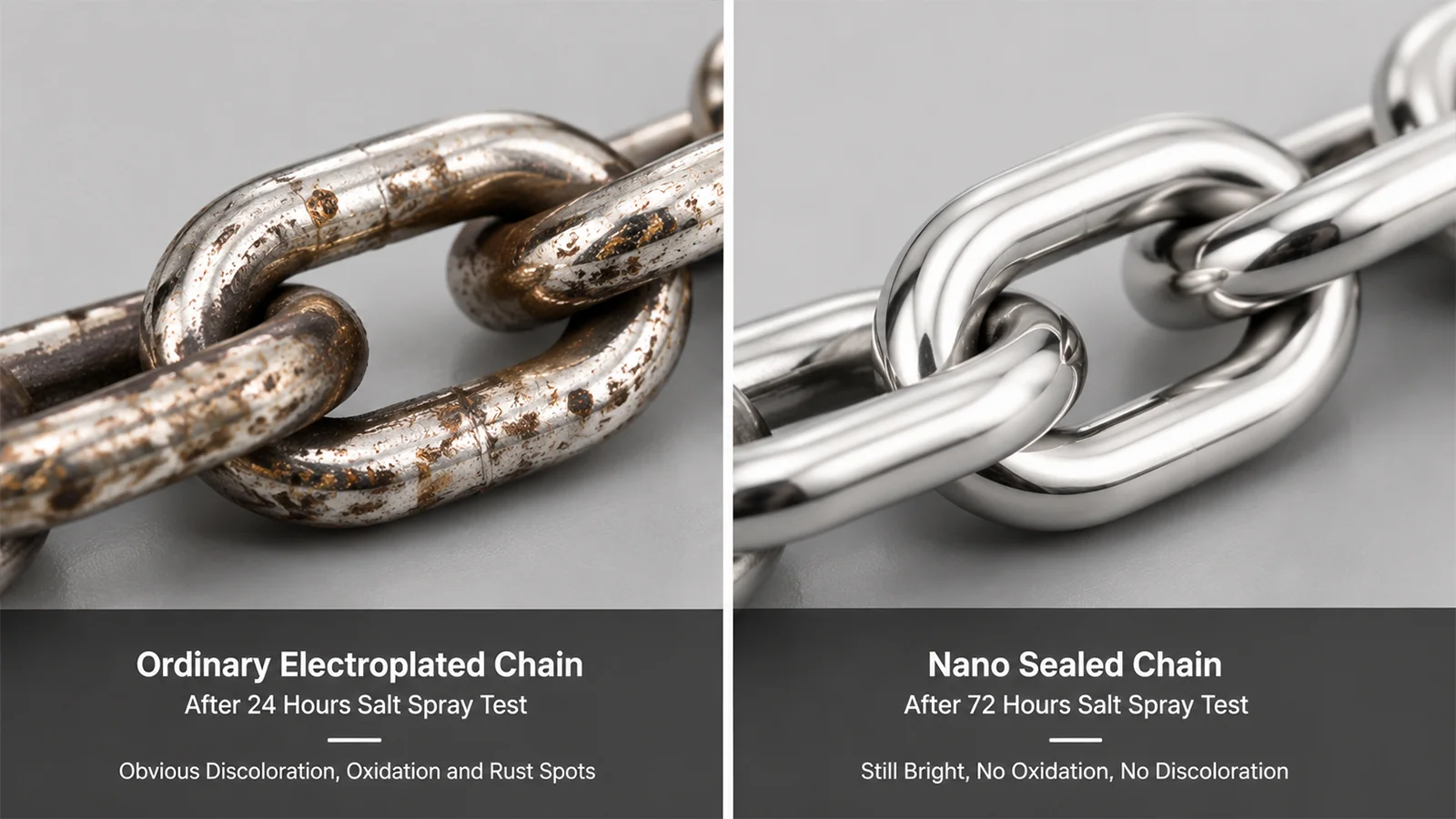
Brass and silver chains must use electroplating to achieve that moisturizing luster. But at 96Jewelry, we go one step further: nano-ceramic sealing. This process fills the microscopic holes in the electroplating layer, lifting the salt spray test time from 24 hours to over 72 hours.
Physical Polishing (The Base Material Logic)
How bright the electroplating is does not depend on the chemical solution—it depends on polishing. Many factories use chemical polishing to cover up base material flaws; the product looks bright when it leaves the factory, but starts to darken after a month. We stick to a dual process of manual fine polishing + magnetic polishing. Only when the base material is perfect can the plating have depth.
What Hidden Costs Arise in Jewelry and Apparel Chain Applications?
The Dye Reaction in Apparel Accessories
If you are sewing chains onto garments (such as the hem chain in Chanel-style jackets), you must consider the chemical reaction between the chain and the fabric dye. Inferior chains will oxidize, turn black, and stain the fabric. Our apparel-grade acid-resistant treatment can effectively block the acidic residue in the dye.
The Weight Anxiety of Heavy-Duty Accessories
Making a 30mm thick Cuban chain—if you use brass, the model's neck will strain after wearing it for 10 minutes. You have to use aluminum chain here. But the pain point of aluminum chain is its lightweight feel that looks cheap. We solved this by thickening the anodization coating to increase its "visual weight"—it looks as heavy as gold, but wears as light as a feather.
Which Chain and Charm Combinations Maximize Product Performance and Wearability?