
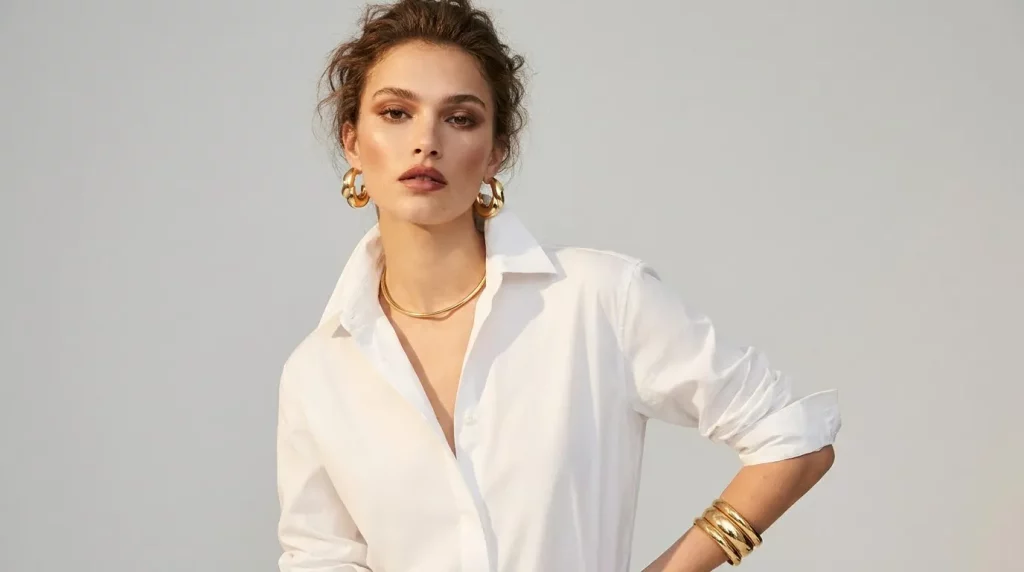
ZARA jewelry trends 2026 center on bold, sculptural pieces: organic shapes, sculptural earrings, cocktail rings, wide cuffs, stacking bracelets and chokers that finish a simple outfit. These styles fit the high-street look that clothing brands want to match. They also bring real production questions about weight, molds, finishes and timing. This guide explains the ZARA jewelry trends 2026 that matter most for apparel labels, then shows how to turn each one into a product your factory can make well. Note: ZARA is a trademark of its owner, and this guide is independent. We use it as a reference point for the high-street style many brands follow.
TL;DR
- 2026 trends favor bold, sculptural and tactile jewelry.
- Six styles lead: organic shapes, sculptural earrings, cocktail rings, cuffs, stacks and chokers.
- Each trend has its own manufacturing challenge.
- Brass, 316L stainless steel, zinc alloy and resin cover most designs.
- Plan sampling at least two months before a collection drop.
Which Fashion Jewelry Trends 2026 Should Clothing Brands Follow?
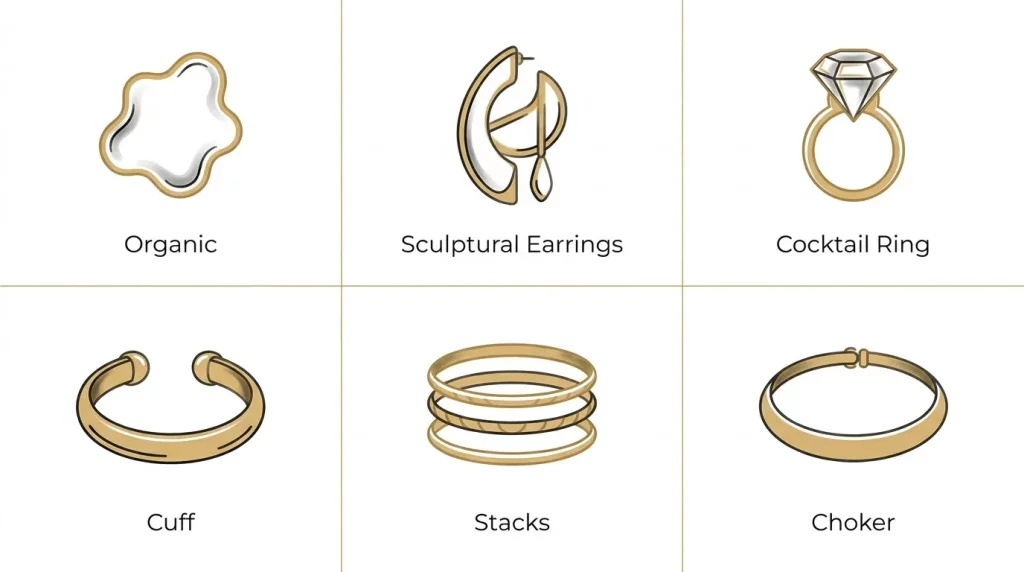
Clothing brands should follow six fashion jewelry trends 2026 is built on: organic and irregular shapes, sculptural earrings, cocktail rings, cuff bangles, stacking bracelets and chokers. Each one links back to a clear selling point and a clear factory task.
| Trend | Why It Works for Clothing Brands | Key Manufacturing Point |
|---|---|---|
| Organic and irregular shapes | Adds an artisan feel to basic outfits | Casting and texture control |
| Sculptural earrings | One piece can style a whole look | Weight and material choice |
| Cocktail rings | Strong gift and impulse item | Mold design and stone setting |
| Cuff bangles | Easy sizing, wide appeal | Metal forming and thickness |
| Stacking bracelets | Sells as sets, raises basket value | Matching finishes across pieces |
| Chokers | Pairs with necklines in your range | Length, curve and clasp |
What Makes Organic and Sculptural Jewelry So Popular?
Organic and sculptural jewelry is popular because it feels handmade and personal, while still looking clean next to minimal clothing. Molten forms, uneven edges and soft curves give each piece a sense of character.
Organic and Irregular Shapes
Irregular designs are usually cast, because liquid metal captures curves and texture well. The challenge is consistency. Every "random" shape still has to match the approved sample. Hammered or sandblasted finishes help, as this surface texture guide shows.
Sculptural Earrings
Sculptural earrings are big, but they must stay comfortable. Brands often choose between hollow metal and lightweight resin. Weight testing on the ear should be part of every sample review.
How Should Brands Approach Rings, Cuffs and Stacks?
Brands should approach rings, cuffs and stacks as size-driven products, where fit and finish matching matter as much as the design itself.
Cocktail Rings
Cocktail rings need a solid mold and secure stone settings. Plating and stones must be planned together, since some coatings do not suit every stone type.
Cuff Bangles and Stacking Bracelets
Cuffs are often stamped or bent from sheet or bar, then shaped. Their open form makes sizing easy. Stacking bracelets sell as sets, so every piece in a stack needs the same plating color. Our custom bracelets range shows how matched sets come together.
Why Are Chokers Back for 2026?
Chokers are back for 2026 because they pair naturally with open necklines, slip dresses and tailored shirts that many clothing ranges carry. A choker sits high on the neck, so length and curve need careful planning. Adjustable extension chains help one size fit more customers. The necklace length guide is a useful starting point when setting sizes.
Which Materials Suit Jewelry for Clothing Brands?
Brass, 316L stainless steel, zinc alloy and resin suit most jewelry for clothing brands. The right choice depends on price point, detail and how often the piece will be worn.
- Brass suits detailed premium pieces with rich gold plating.
- 316L stainless steel suits durable, low-care everyday styles.
- Zinc alloy suits detailed fashion pieces at volume.
- Resin suits large, light statement shapes.
Plating matters too. Brass and alloy electroplating ranges from 0.03 to 3 μm. Stainless steel PVD runs from a standard 0.03 μm to an upgraded 0.05 to 0.10 μm.
How Do Clothing Brands Develop a Private Label Jewelry Line?
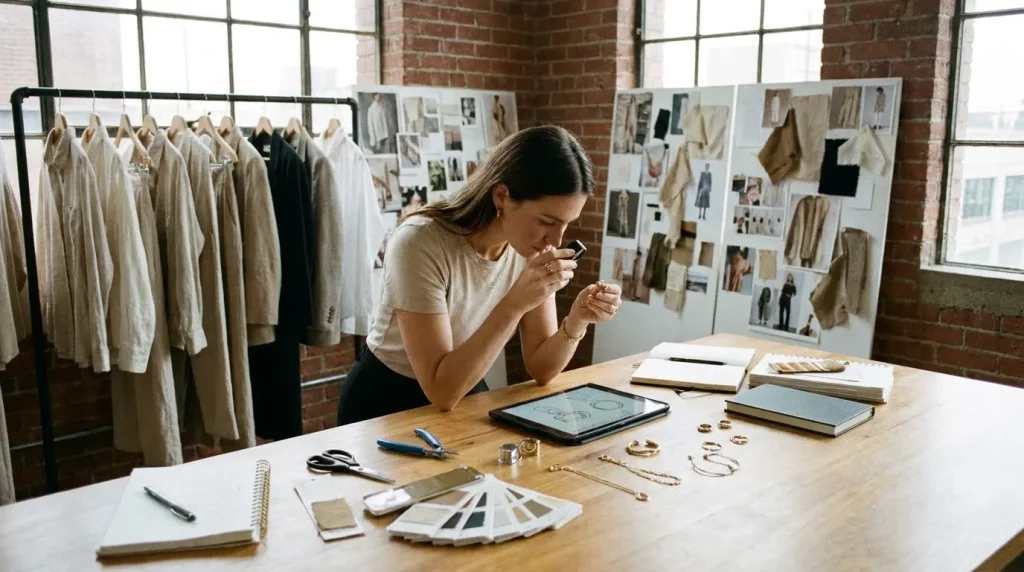
Clothing brands develop a private label jewelry line in five stages: brief, design, sampling, bulk production and packing. A factory partner can guide each step.
- Brief: share mood boards, target prices and quantities.
- Design: turn sketches or references into CAD files.
- Sampling: approve samples for fit, weight and finish.
- Production: start bulk orders after sample approval.
- Packing: add branded cards, pouches or boxes.
Standard MOQ starts from 30 pieces per style per color, which suits capsule drops. Custom samples take a minimum of 7–10 days after CAD approval. Bulk production takes a minimum of 25–45 days. Our OEM/ODM service explains how we support apparel teams from brief to delivery.
FAQs
What jewelry trends are popular in 2026?
Popular jewelry trends in 2026 include sculptural earrings, organic shapes, cocktail rings, wide cuffs, stacking bracelets and chokers. Bold, tactile pieces lead the season.
Can a clothing brand sell its own jewelry line?
A clothing brand can sell its own jewelry line through private label manufacturing. The factory makes the pieces, and the brand adds its own name and packaging.
What MOQ should a clothing brand expect for jewelry?
Standard MOQ starts from 30 pieces per style per color. Complex designs may need 200 to 500 pieces, depending on complexity.
How early should we start developing jewelry for a new season?
Start at least two months before launch. This leaves time for CAD, sampling, revisions and bulk production.
Which metal is best for fast-fashion jewelry?
Zinc alloy and brass are common for fast-fashion jewelry because they hold detail at good prices. 316L stainless steel suits meant to last longer.
Final Thoughts on ZARA Jewelry Trends for 2026
The 2026 jewelry mood is bold, sculptural and personal. Clothing brands can use it to raise basket value and build a stronger brand look. The key is turning trend images into products that are comfortable, consistent and ready on time. Haosen Jewelry has 16+ years of experience making private label jewelry for fashion brands from Dongguan, China. Planning your 2026 accessory line? Nous contacter to start your brief and sampling.
Auteur

Ertian Jiang (Jasper) est le fondateur de Haosen Metal Jewelry. Depuis ses débuts à 26 ans, il associe un solide savoir-faire artisanal à une compréhension fine du marché, deux piliers sur lesquels repose l’excellence de l’entreprise.
Ertian Jiang a commencé comme artisan, spécialisé dans les pierres semi-précieuses (agate, nacre et œil-de-tigre) et l’incrustation manuelle. Il a perfectionné la pose de pierres naturelles sur des supports métalliques, sans jeu ni défaillance de la colle. Son expérience directe de la vente lui a également permis d’échanger avec les acheteurs et de comprendre leurs difficultés face aux pierres qui se détachent et aux couleurs qui s’altèrent.