

Fast fashion buyers should evaluate a Canton Fair jewelry factory across five areas: sample-development speed, craftsmanship, raw-material availability, MOQ flexibility, and bulk-production consistency. A suitable factory should provide clear development timelines, production evidence, quality-control procedures, and material documentation rather than relying only on booth samples or verbal claims.
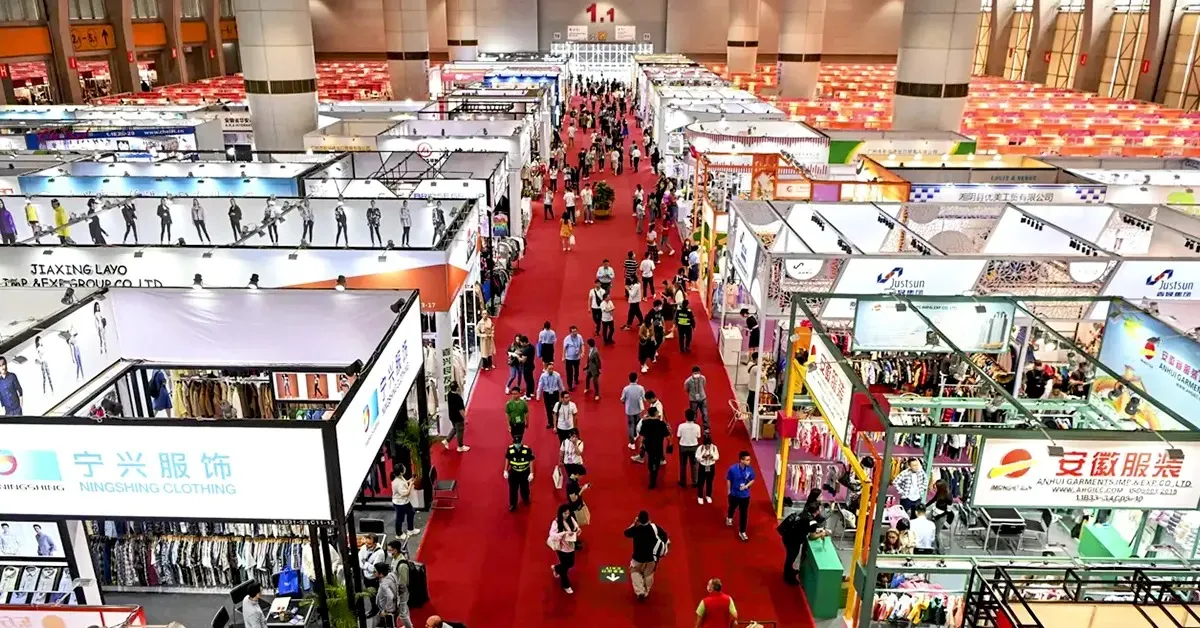
The womenswear market is experiencing a strong retro revival. Younger consumers are drawn to bright colors, bold designs, Y2K aesthetics, and nostalgic pop elements. Fast-fashion brands need to launch new styles frequently, often weekly. Yet many apparel buyers overlook one critical part of the assortment: pairing retro clothing with complementary fashion jewelry can create additional cross-selling opportunities and help fashion brands build more coordinated collections. Metal chain bag charms, colorful enamel earrings, and oversized resin rings are especially relevant to retro and Y2K-inspired assortments.
The Canton Fair is an effective channel for womenswear buyers to connect with jewelry OEM manufacturers. For the 140th Canton Fair in Autumn 2026, Phase 2 runs from October 23 to 27, while Phase 3 runs from October 31 to November 4. The current official exhibition-hall map lists Fashion Jewelry in Phase 2, while apparel and Fashion Accessories & Fittings are included in Phase 3. For womenswear buyers sourcing across both categories, this creates an opportunity to shortlist jewelry suppliers first and then refine accessory choices after the apparel assortment has been selected. Because exhibition sections and hall assignments may change between Canton Fair sessions, buyers should always verify the latest official floor plan before visiting.
The biggest challenge, however, is speed. Fast-fashion apparel has an extremely short product life cycle, and the timeline from design to launch is often only 4-6 weeks. If jewelry development falls two weeks behind, the entire launch plan for the womenswear collection can be disrupted. Many traditional jewelry factories still operate on a make-to-order model, with sample lead times of 15-20 days – far too slow for the launch cadence of fashion brands.
So how can you quickly identify jewelry factories with true rapid-response capability at the Canton Fair? Based on 16 years of building Haosen Jewelry and 10 consecutive years of meeting overseas buyers on the Canton Fair floor, I have summarized a repeatable screening method.
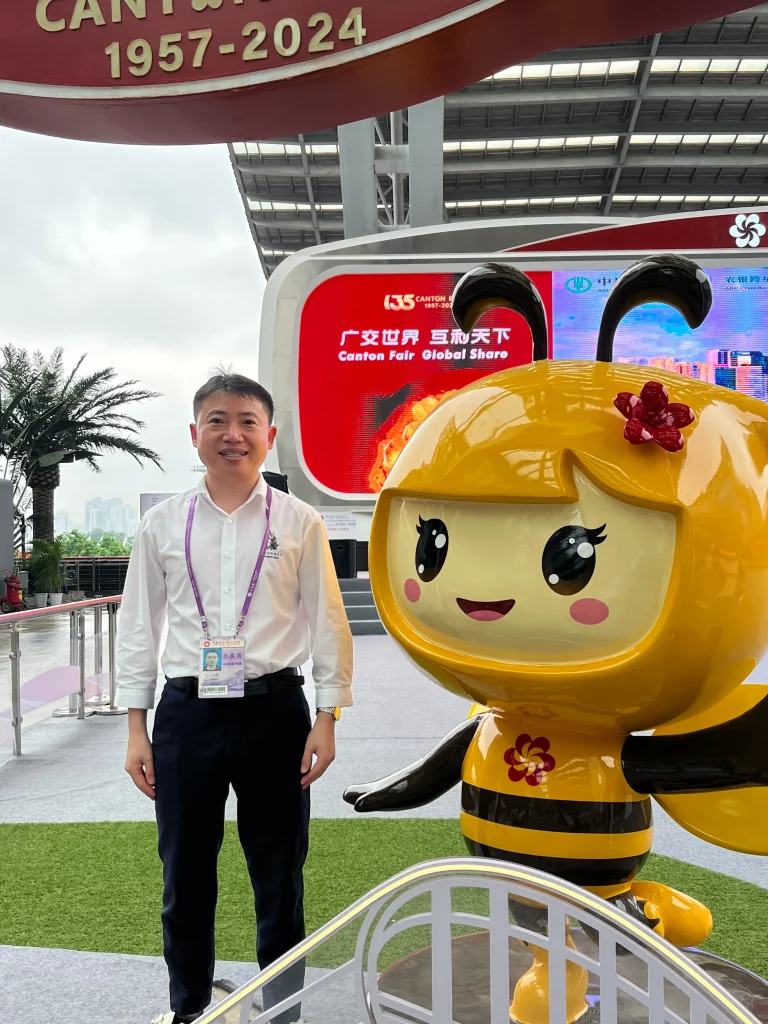
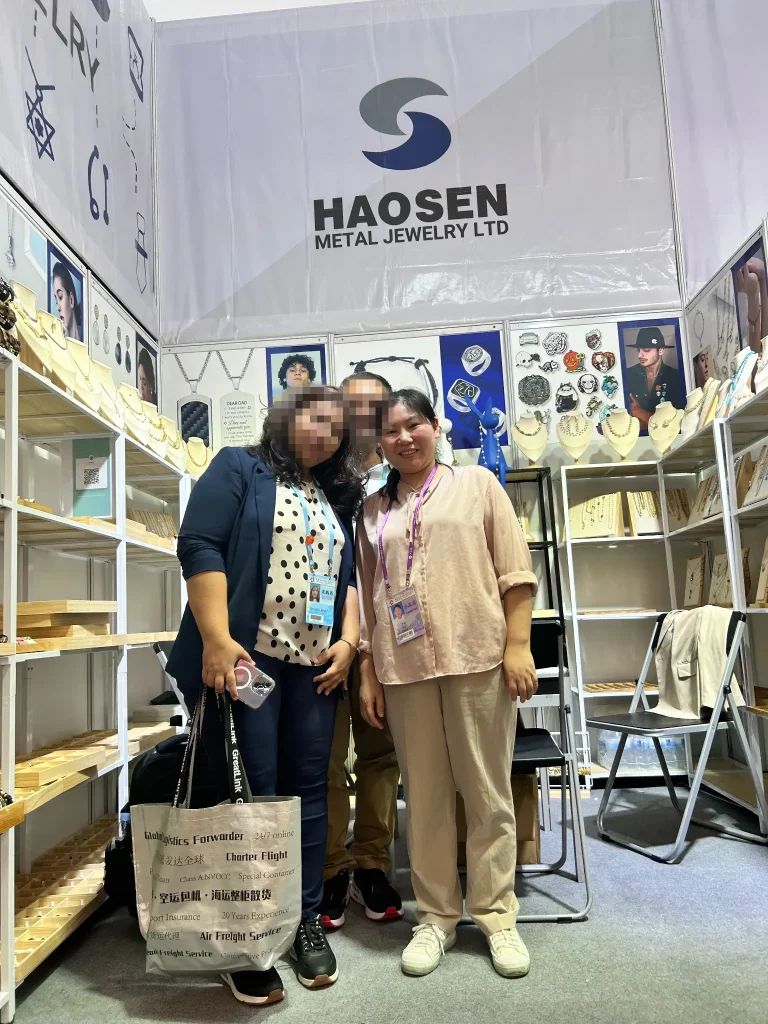
First Filter: Verify Product Development Speed at the Booth
Experienced womenswear buyers do not waste time on small talk at a booth. Within the first three minutes, they ask the questions that reveal whether a factory is worth pursuing. For a broader supplier-screening framework beyond fast-fashion development speed, see our guide to finding reliable jewelry suppliers at the Canton Fair.
Three questions you should ask directly:
How many new styles can your design team develop each month?
- A traditional factory will often answer: 50-80 styles.
- A reasonable benchmark for a rapid-response factory is more than 200 styles.
- At Haosen, for example, our design team develops 300-500 new styles per month. That level of design capacity means the factory can support a high-frequency product launch schedule.
From receiving the design drawing to shipping a physical sample, what is your fastest lead time?
- Industry average: 10-15 days.
- Rapid-response benchmark: within 7 days, including 3D modeling, 3D printing or manual master model making, plating, and assembly.
- If the answer is “it depends on the order quantity” or “at least two weeks,” move on.
If the first sample needs changes, do you charge for the second sampling round?
- Strong rapid-response factories will often provide 1-2 rounds of revisions at no additional charge, provided that you give clear revision feedback.
- A factory that immediately charges a high revision fee may not be set up for fast development and may be using the fee as a barrier to discourage repeated sample changes.
Real case: At the 2025 Autumn Canton Fair, a UK womenswear buyer came to us with artwork for a retro polka-dot dress. She needed the entire process – from jewelry design to bulk delivery – completed within 21 days. We finished the 3D model the same day, shipped the physical sample on Day 3, confirmed bulk production on Day 7, and completed delivery on Day 18. Her retro collection launched one week ahead of schedule, and the jewelry-matched styles achieved a 67% sell-through rate in the first month. For another example of how a fashion-brand concept moves from design review to CAD, sampling, and production, see our jewelry product development case study.
Second Filter: Test the Factory's Ability to Execute Retro Jewelry Techniques
Retro-inspired womenswear places specific technical demands on jewelry. Not every factory can handle highly saturated colors or complex stone setting consistently.
Three core process requirements for retro styling:
Colored Enamel
Retro aesthetics – especially Y2K, pop, and Memphis-inspired styles – often rely on large areas of vivid color. Enamel is one of the most effective jewelry techniques for reproducing high-saturation color.
On-site inspection method: pick up an enamel jewelry piece and rotate it under the light.
- Color accuracy: ask, “Can you match colors precisely to a Pantone reference, and how long does color approval take?” A rapid-response factory should be able to complete color-sample confirmation within 3 days.
- Surface flatness: high-quality enamel should be smooth and even, with no bubbles, sagging, or grainy texture.
- Edge definition: the boundaries between different color areas should be clean and sharp, without bleeding into one another.
Hand Setting of Semi-Precious Stones
Natural materials such as agate, mother-of-pearl, and tiger eye add depth and texture to retro jewelry, creating a strong material contrast with vintage-inspired fabrics such as velvet, corduroy, and tweed.
On-site inspection method: hold a ring set with agate or tiger eye up to the light and inspect it carefully:
- Check for glue overflow: there should be no visible adhesive where the stone meets the metal setting. This is one of the clearest ways to distinguish precise hand setting from rough adhesive assembly.
- Check flatness: the surface of a hand-set stone should sit completely flat. Lightly run a fingertip across the surface; there should be no obvious unevenness.
- Check fit: the gap between the stone and the metal rim should be fine and even, with no obvious open spaces.
Our factory started with hand setting of semi-precious stones. Sixteen years of process experience have helped us build a clear quality advantage in this area.
Metal Surface Finishing
Retro jewelry often requires very specific metal looks, such as antique silver, antique gold, or matte black. For stainless-steel projects where color durability is important, surface treatment may also include Revêtement PVD.
On-site inspection method:
- Ask: “Is the antique effect created chemically or mechanically?” Chemical antiquing is generally more uniform and better suited to volume production.
- Ask: “Can you mix three or more surface finishes within a small-batch order?” A rapid-response factory should be able to support mixed finishes without an additional surcharge.
Third Filter: Verify the Supply-Chain Support Behind Rapid Response
Development speed is only the visible part of the process. True rapid-response capability depends on the supply-chain system behind it. If you are evaluating a supplier beyond the trade-show environment, use a broader jewelry manufacturer checklist to review materials, factory capability, testing, and production controls.
Three questions you should follow up with:
Do you keep raw materials in stock?
- If a factory has to purchase raw materials only after receiving an order, the timeline will typically be extended by at least 7-10 days.
- A rapid-response factory should keep safety stock of commonly used materials such as l’acier inoxydable 316L, brass, and zinc alloy so production can start quickly.
Is your minimum order quantity (MOQ) flexible?
- Traditional factories often require an MOQ of 500-1,000 pieces per style.
- A rapid-response factory should be able to support small trial orders of 30-120 pieces, which is essential for apparel brands testing market response.
What is your bulk production lead time?
- Standard production: 20-25 days.
- Expedited production: If the womenswear launch date is approaching, can the lead time be compressed to 12-15 days? Does the factory accept rush-production fees?
At Haosen, for example, our raw-material inventory covers four major material lines: 316L stainless steel, brass, zinc alloy, and titanium steel. Our monthly production capacity remains above 100,000 pieces, allowing us to support flexible requirements ranging from 30-piece trial orders to bulk runs of more than 10,000 pieces.
Advanced Canton Fair Strategy: Bring Your Apparel Artwork to the Factory
The biggest mistake many womenswear buyers make is arriving at the show with a “find ready stock” mindset. Ready-stock sourcing may seem easier, but it creates two serious problems:
- Ready-stock jewelry lacks an exclusive styling relationship with your retro apparel collection, and consumers can easily find the same designs in other stores.
- You have limited control over the material and production process, making it difficult to ensure consistency with your brand positioning.
A smarter approach is to bring the design artwork for your next apparel season to the show. Recommended process:
- Before Phase 2: send your retro womenswear style drawings, fabric color cards, and collection concept brief to shortlisted jewelry factories.
- During Phase 2: meet shortlisted jewelry suppliers and discuss possible accessory directions based on your apparel artwork, color cards, and collection concept.
- During Phase 3: after completing your apparel sourcing, use the selected garments to refine the jewelry direction. Arrange a follow-up meeting, showroom visit, sample handoff, or online review with shortlisted jewelry suppliers instead of assuming that the same Phase 2 booth will remain active during Phase 3.
- After the fair: finalize the jewelry sample alongside the selected apparel pieces so that materials, colors, proportions, and styling can be reviewed together.
This design-forward collaboration model helps ensure that retro apparel and dedicated accessories can launch together, solving the common supply-chain disconnect of “the clothing is ready, but the jewelry is still in sampling.”
Final Safeguard: Always Test Samples from Bulk Production
Any sample displayed at a trade-show booth represents the factory at its best. Only randomly selected samples taken from the production line can reflect the true level of bulk production. After the show, buyers should complete the following verification process:
- Ask the factory to send randomly selected samples from the production line, not booth display samples.
- Photograph the jewelry samples together with the purchased apparel samples to evaluate the overall visual effect.
- Conduct an 8-hour wear test to check for color loss, allergic reactions, and loose stones.
- Only after all of the above checks are passed should you sign the formal purchase contract.
A professional buyer should follow one bottom-line rule: never pay a deposit of more than 30% before seeing a bulk-production sample.
Special Note: A "Hidden Route" for Canton Fair Phase 3
If you only plan to attend Phase 3 (May 1-5), you can still find accessory suppliers near the apparel section. If Phase 3 is your main sourcing window, read our detailed explanation of why professional jewelry exhibitors can be harder to find in the apparel-focused areas of the fair.
Keep the following points in mind:
- Accessory booths in Phase 3 are mainly located in Halls 9-11 of Area B, approximately a 15-minute walk from the apparel section in Halls 1-5 of Area A.
- Suggested approach: spend the morning of the first day of Phase 3 focusing on apparel, then reserve three hours in the afternoon to walk to Area B and meet jewelry exhibitors.
- Do not wait until the final day. By then, many factory samples may already be reserved, and key decision-makers may leave the show early.
Complete Schedule for Covering Both Phase 2 and Phase 3
| Timing | Task | Key Output |
|---|---|---|
2 weeks before the show |
Shortlist target jewelry exhibitors on the official website and send apparel artwork. |
Identify 10-15 factories; some may already begin initial design work. |
Phase 2, Days 1-2 |
Visit the fashion accessories section intensively and discuss designs face-to-face. |
Narrow the list to 3-5 factories for sampling. |
Phase 2, Days 3-4 |
Return to priority booths and confirm the sampling timeline. |
Select 1-2 factories to start sampling. |
Phase 3, Days 1-2 |
Complete apparel sourcing and bring physical garments back to the jewelry booths for matching. |
Confirm physical styling and select the final partner. |
1 week after the show |
Receive randomly selected production-line samples and conduct wear testing. |
Confirm bulk-production quality. |
Within 2 weeks after the show |
Sign the contract and pay the deposit. |
Start bulk production. |
Key Takeaways
- Bring design artwork instead of simply looking for ready stock. Develop jewelry specifically for your retro apparel collection.
- Ask three questions at the booth: monthly new-style development capacity, sample lead time, and whether sample revisions are charged. These questions quickly eliminate factories without true rapid-response capability.
- Inspect craftsmanship: enamel color accuracy and surface flatness, plus glue control and fit in semi-precious stone setting. These checks help screen out suppliers with weak technical execution.
- Verify the supply chain: raw-material inventory, MOQ, and bulk-production lead time. Confirm that the factory has enough flexibility to match a fast-fashion launch cadence.
- Test production samples: after the show, always request randomly selected samples from the production line and complete wear testing before signing the contract.
I hope you can efficiently identify the right rapid-response jewelry partner at the Canton Fair and achieve what fast-fashion sourcing really needs: apparel and accessories developed in sync and launched to market quickly.
Planning Jewelry for Your Next Fashion Collection?
Send us your design references, target material, quantity, and launch schedule. Our team can review development feasibility, sampling options, and production requirements.
Discuss Your Jewelry ProjectAuteur

Ertian Jiang (Jasper) est le fondateur de Haosen Metal Jewelry. Depuis ses débuts à 26 ans, il associe un solide savoir-faire artisanal à une compréhension fine du marché, deux piliers sur lesquels repose l’excellence de l’entreprise.
Ertian Jiang a commencé comme artisan, spécialisé dans les pierres semi-précieuses (agate, nacre et œil-de-tigre) et l’incrustation manuelle. Il a perfectionné la pose de pierres naturelles sur des supports métalliques, sans jeu ni défaillance de la colle. Son expérience directe de la vente lui a également permis d’échanger avec les acheteurs et de comprendre leurs difficultés face aux pierres qui se détachent et aux couleurs qui s’altèrent.