
Bringing a custom stainless steel pendant to market takes more than aesthetic design. It demands engineering expertise and jewelry product development with an eye on feasibility and marketability. When a streetwear and fashion brand in the United States approached Haosen Jewelry for OEM/ODM design and production, we worked together to bring a mere idea to reality.
The client offers apparel and accessories for a specific market sector. With an eye on the unique jewelry market, they generated the look of a stainless-steel pendant using AI. This was their first time working on a pendant in this material. From this basic direction, our expert design and development team stepped in to work closely with the client to bring AI jewelry design to production. This case study outlines the process and results of the collaboration.
Client Confidentiality Note: To protect the client’s design and intellectual property, the original product images and identifying design details are not shown in this case study. Illustrative visuals are used to demonstrate the development process while preserving the actual project workflow and manufacturing challenges.
What design and production challenges come with custom stainless steel pendant manufacturing?
The AI image of the pendant design provided a reasonable example of the look the fashion brand wanted to go with. Like many generated images, it did not have the precision or accuracy that would translate directly into a quality product design. It included undefined details that would not only be difficult to manufacture, but also make the finished product look lower quality.
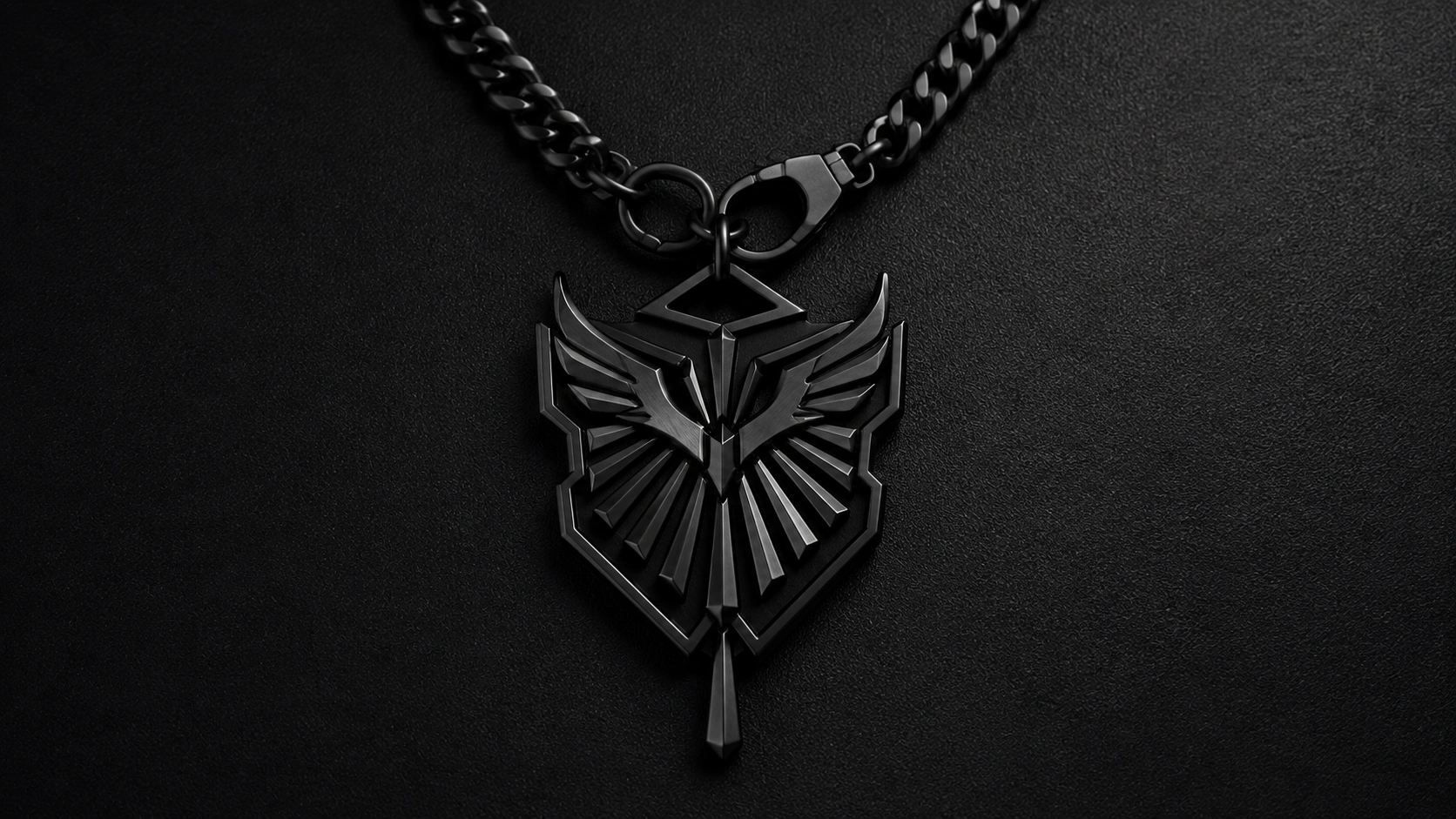
The specific challenge involved differing chain styles and connector elements. Some details were excessively complex, which would have increased production costs beyond what the client preferred to spend. To ensure efficient manufacturing and an exceptional finished style, we reviewed and refined the design before moving on.
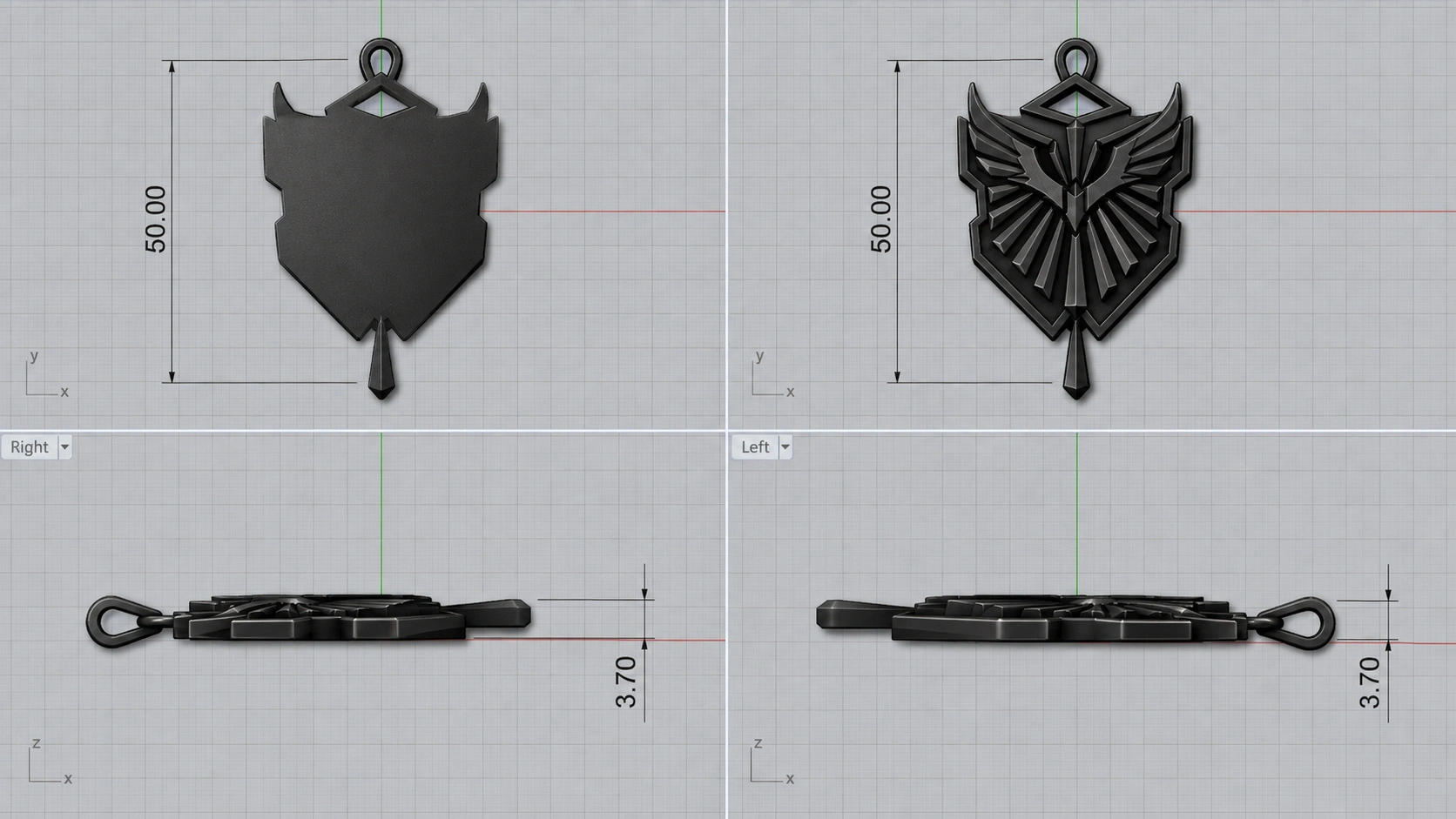
Additional challenges arose during the custom pendant sampling development process. The original jump ring durability was insufficient to support the large pendant, which was 50mm tall with a 3.7mm maximum thickness. The matte black finish showed fingerprints too strongly. When our team identified these potential issues, we were able to correct them during development to deliver an exceptional end product.
How does an OEM jewelry manufacturer solve these problems?
The coordinated approach addresses everything from design and engineering to manufacturing the final products suitable for retail sales. A preliminary consultation went over the provided AI example and included more in-depth conversations about the client’s vision. This outlined product specifications, surface finish, and pricing. After the initial plan developed, our CAD engineering team used the concept to create a manufacturable 3D design. This is when we corrected the AI inconsistencies and adjusted any unrefined details.
Throughout the entire process, Haosen Jewelry, custom pendant manufacturer, offered development guidance to ensure the client understood how the choices and changes would affect durability, quality, and cost. We weave quality inspections and oversight into every step along the way and stay in constant communication with the client. This ensures that nothing slips by unnoticed and that we get to the final, marketable product much more quickly and affordably than otherwise.
All these elements of our solution-oriented process come together to deliver client satisfaction. For this case study, the details of the stages involved much more than correcting the original AI image of the streetwear brand’s intended pendant.
Every jewelry product brought to retail market must not only look good but also function as intended. The clasps, chains, and connectors need appropriate strength without sacrificing aesthetics. The complexity of the initial AI design did not translate well to the final physical product. Our team identified necessary changes and shared them with the client to discuss more workable and feasible alternatives.
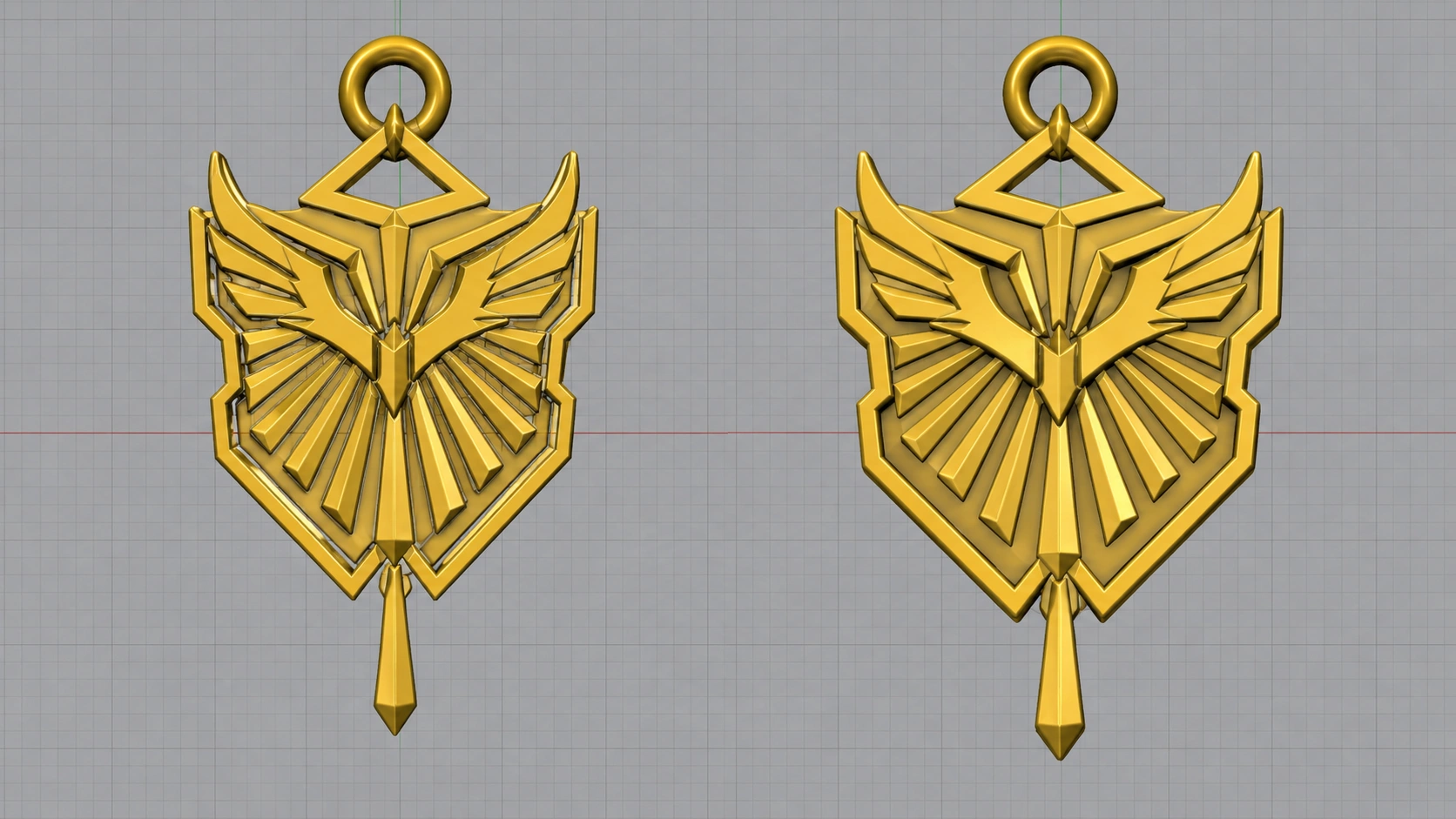
Part of this involved suggestions to use elements our manufacturing plants were already set up to create. Instead of a custom connector that would require all new tooling, we recommended an option that would keep costs and production time down. Likewise, we finalized the chain style, as the AI design showed two different ones initially. A non-standard notch on the logo tag required verification before finalizing the plan. As the CAD team worked closely with the client to resolve these details first, actual development went smoothly.
The client had a few more changes to make. The central eye motif wasn’t prominent enough and they wanted to further simplify the surrounding pattern. The final design was realistic to produce without compromising the client’s aesthetic choices in any way.
Transparency in the custom jewelry manufacturing process.
The manufacturing process for this stainless-steel pendant involved more than a checkmark in the design approval column and factory work. With the final CAD in hand, the team moved on to mold development followed by casting the metal blank. This included both the ornate pendant design and the rectangular brand tag in order to preserve consistency in each production run. The rough piece went through machine and hand polishing processes necessary for the refined details on the jewelry. Plating for the stainless-steel finish and a final polish completed the first iteration manufacturing process.
Creating a custom jewelry prototype to previously agreed-upon specifications is not enough to fully satisfy a client. The Haosen Jewelry team offers complete transparency and clear communication throughout the entire process. This helps catch any inconsistencies between design and their expectations. We sent multiple photos at every stage: tooling, rough product, plating process, assembly, and the final sample.
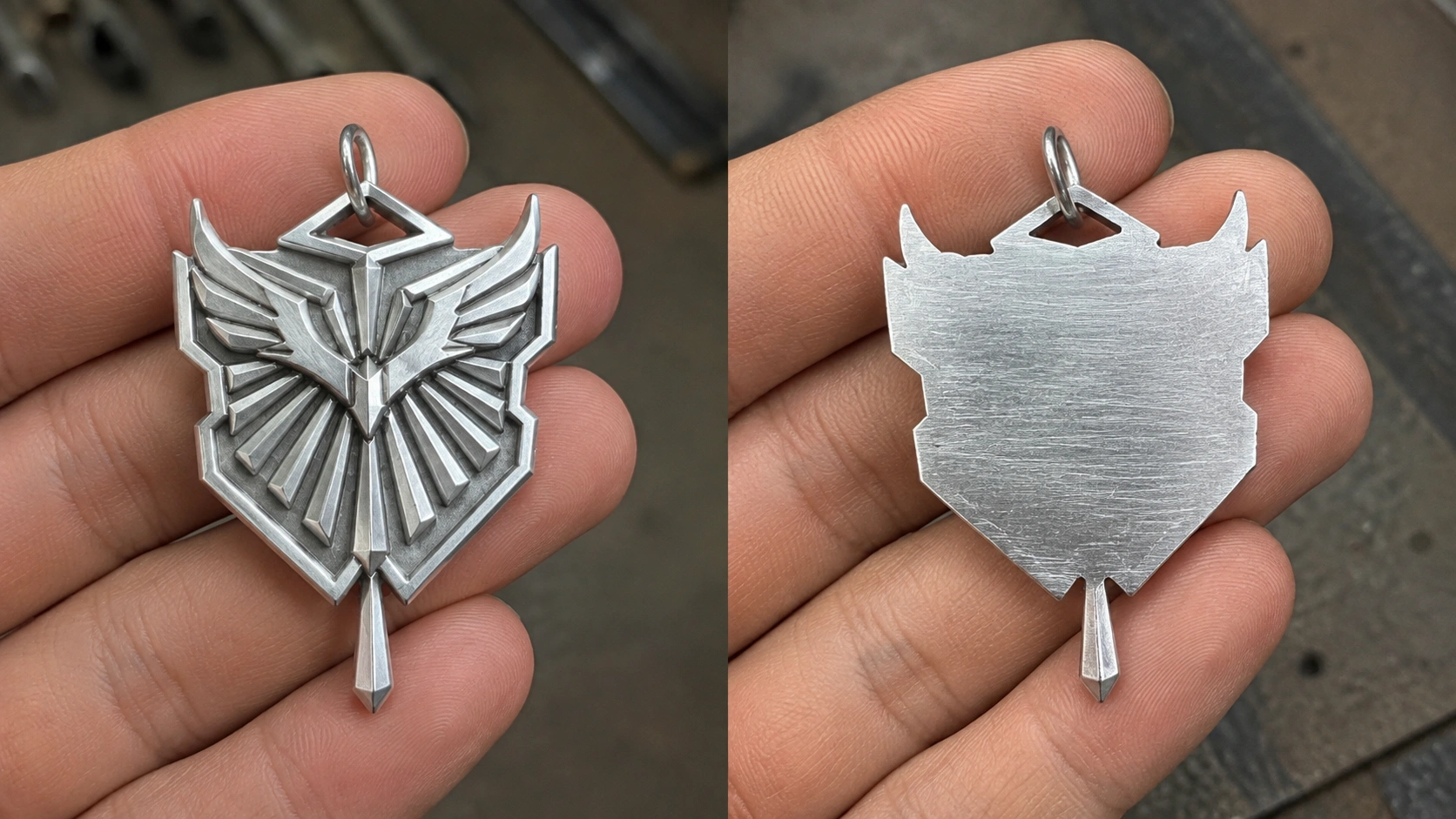
The manufacturing team identified a potential issue and weak point after plating, which necessitated an additional week added to the original timeline. The client agreed without hesitation, we made the necessary changes, and things got back under way.
Only the most open and transparent communication could make the entire process run smoothly. Part of the way through the small batch jewelry production process, the client requested an additional element fashioned from white enamel in the center of the pendant. We offered two design options, they chose their favorite, and we carried that change into the next stage of development.
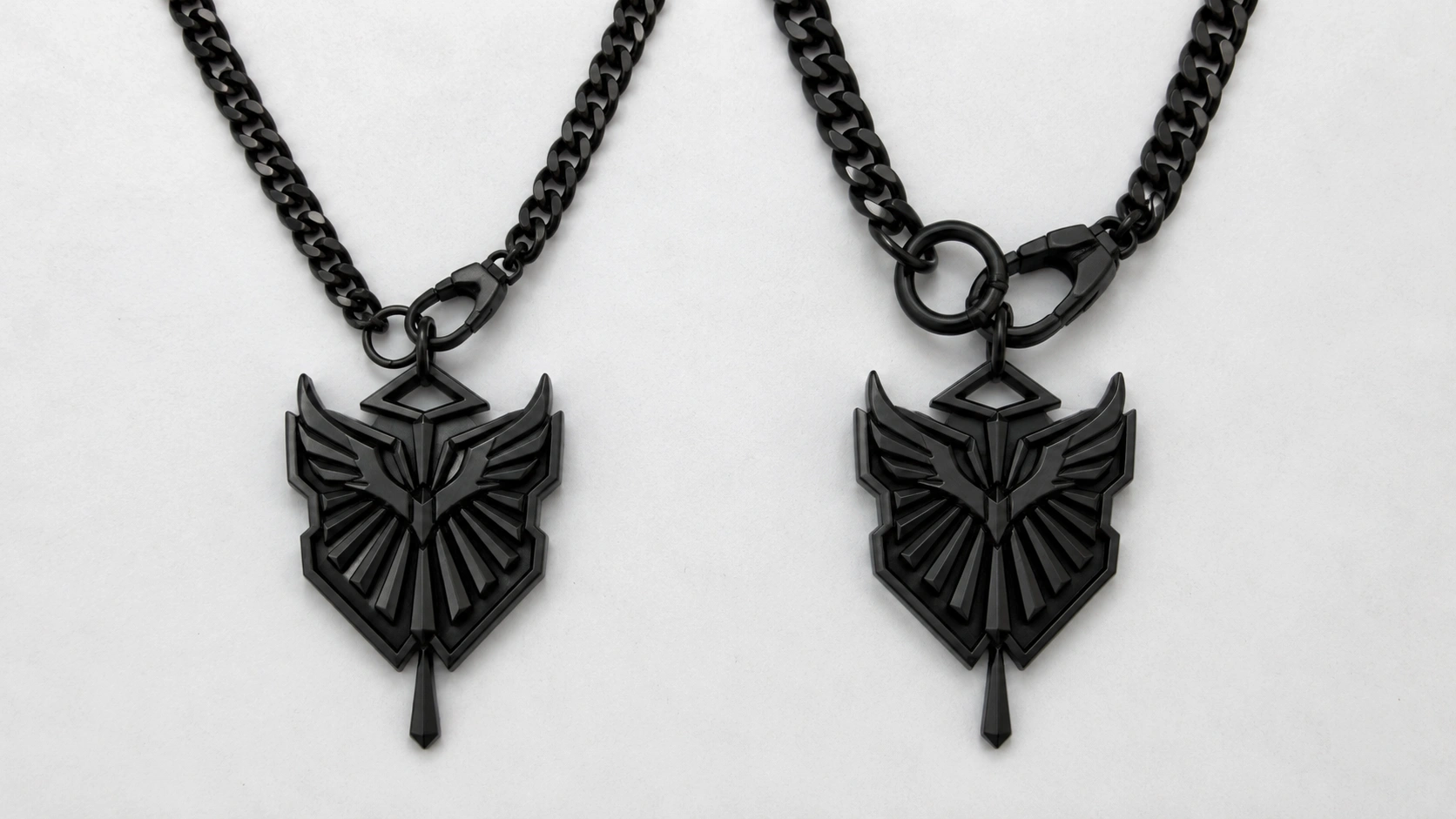
Proactive jewelry quality control catches issues fast.
Identifying potential issues with the final design is an important part of the whole process, but real quality control offers solutions. The undersized jump ring and fingerprint issues with the matte black stainless steel pendant’s finish would not give the clients a high-quality, marketable jewelry product to add to their fashion accessory product lines.
These changes also involved transparent communication with the client. We suggested a thicker connector and anti-fingerprint coating for jewelry on the smooth back. When the pendant was sent back through the assembly and plating process, the changes made all the difference.
What was the outcome of this 100-piece custom pendant order?
The final approved, high-quality iteration of the stainless-steel jewelry pendant and chain fulfilled all the requirements of the agreed-upon design. We shipped the sample directly to the client with a tracking number so they could watch for delivery. Their enthusiastic response let us know that they were fully satisfied with the process, our communication, and the finished piece.
They placed an order for 100 pieces immediately. We estimate the jewelry production lead time of 25 to 35 working days for the final production run. In less time than expected and at an affordable cost, they will have a quality new addition to their product catalog.
The collaboration between Haosen Jewelry and the US streetwear and fashion brand reflects the dedication, attention to detail, and client satisfaction we embody. From a rough AI design to the final concept and physical product, we worked alongside the client to ensure not only their approval of the design, but also the feasibility of the item itself. This translates to their customer satisfaction in the long run, and another successful example of our dedication to the service we provide.
Turn Your AI Jewelry Concept Into a Production-Ready Pendant
Custom jewelry development often involves unreleased products, proprietary artwork, and confidential brand assets. We do not publish client designs, CAD files, or production images without permission. When confidentiality is required, anonymized project details and illustrative visuals are used instead.
Have an AI-generated design or jewelry reference you want to develop? Our OEM/ODM team can review the design, optimize its structure, create CAD files, develop samples, and support production of your custom stainless steel pendant.
Auteur

Ertian Jiang (Jasper) est le fondateur de Haosen Metal Jewelry. Depuis ses débuts à 26 ans, il associe un solide savoir-faire artisanal à une compréhension fine du marché, deux piliers sur lesquels repose l’excellence de l’entreprise.
Ertian Jiang a commencé comme artisan, spécialisé dans les pierres semi-précieuses (agate, nacre et œil-de-tigre) et l’incrustation manuelle. Il a perfectionné la pose de pierres naturelles sur des supports métalliques, sans jeu ni défaillance de la colle. Son expérience directe de la vente lui a également permis d’échanger avec les acheteurs et de comprendre leurs difficultés face aux pierres qui se détachent et aux couleurs qui s’altèrent.