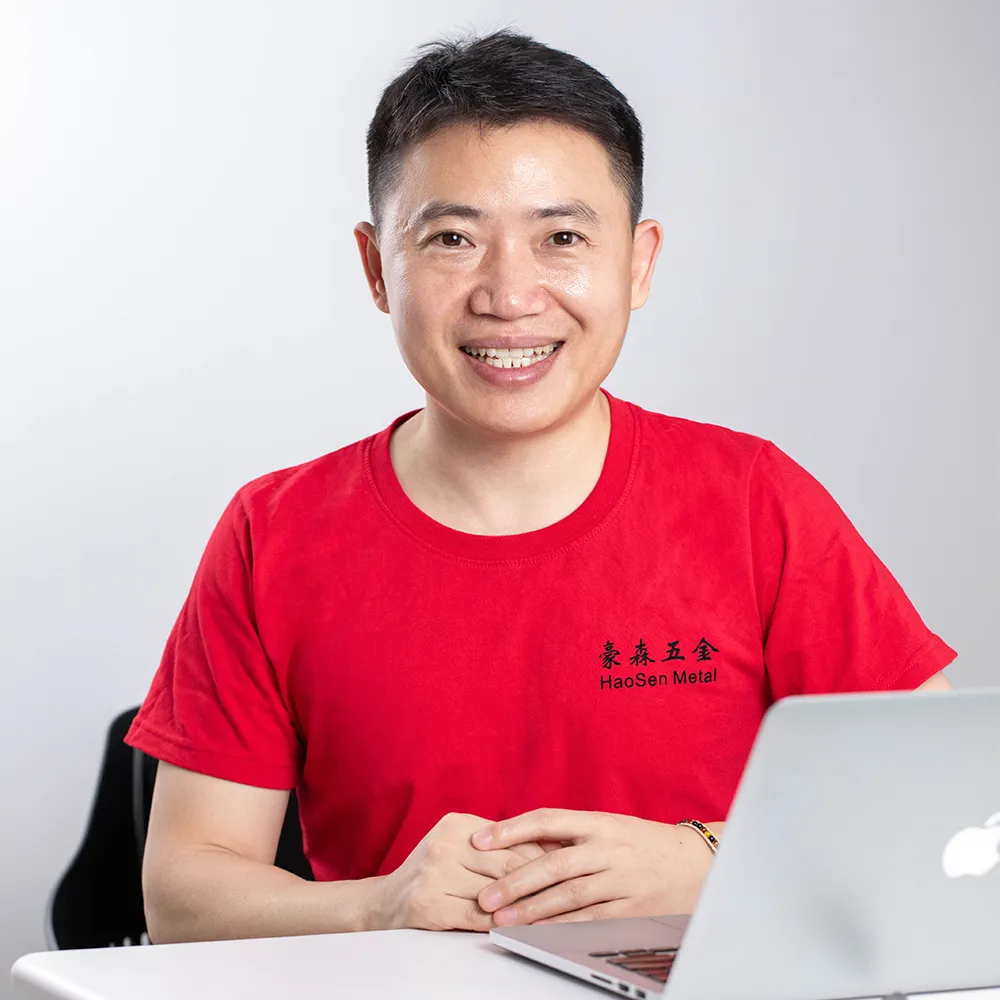

After 16 years in jewelry manufacturing, the central lesson is that jewelry brands should work directly with a jewelry factory rather than rely only on ready-made market products if they want to build a real brand. A direct factory partnership supports unique product DNA, reliable quality control, better traceability, flexible MOQs and replenishment, stronger repeat purchases, and long-term brand value. Even small brands with low order volumes can earn a factory’s long-term support by communicating professionally and treating the factory as a partner, not just a vendor.
I’m Jasper, founder of Haosen Jewelry. In 2006, when I was 26, I started in a small workshop in Huizhou, Guangdong, hand-polishing jewelry and setting semi-precious stones. At the time, I had no grand vision. I was simply focused on learning how to set agate, mother-of-pearl, tiger’s eye, and other stones precisely into metal settings so they would stay securely in place.
Our factory has passed SEDEX audits for 16 consecutive years. In 2021, we opened a showroom in San Diego, USA, and over the years we have served more than 200 brands worldwide. Even today, new jewelry brand founders still ask me the same question: “Jasper, I’m just getting started, and my order quantities are still small. Should I buy ready-made jewelry from markets in Yiwu or Guangzhou, or work directly with a factory like yours?”
My answer is always the same: if your goal is simply to resell products and make a quick margin, buying ready-made goods from the market may work. But if you want to build a real brand—even if you currently have only one product—you need to build a direct relationship with a factory. I do not say this simply because I own a factory. I say it because I have watched too many brands sacrifice their long-term potential for the short-term convenience of ready-made products.
The Core of Jewelry Is Not the “Style”—It Is the Brand’s Product DNA
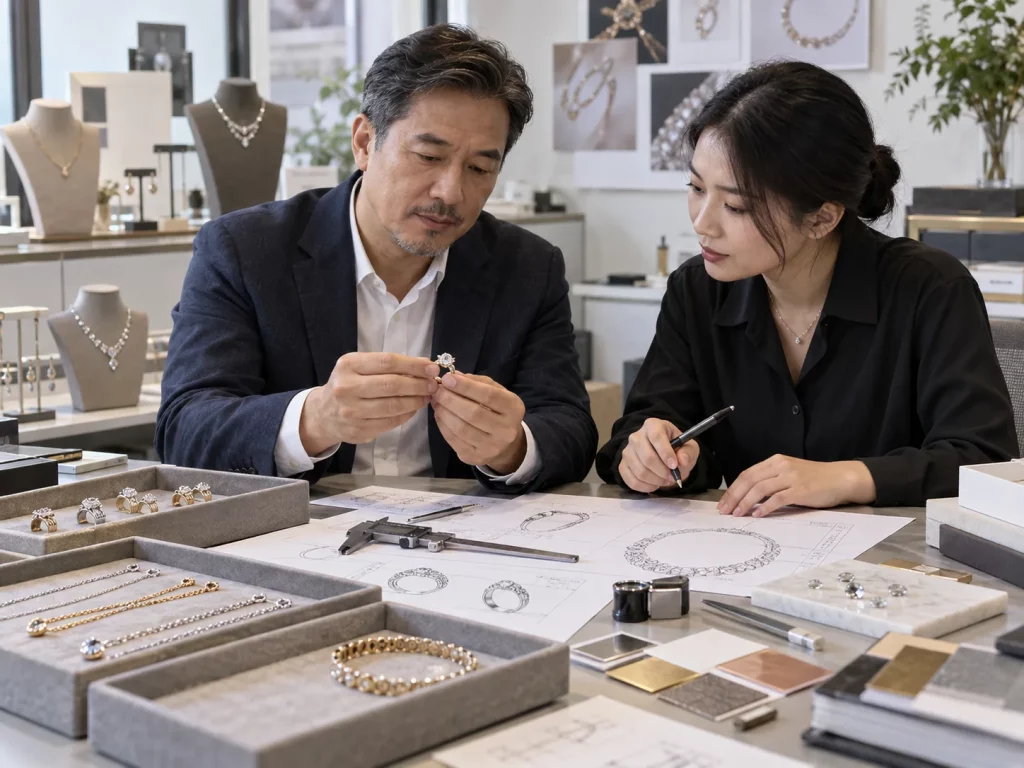
Ready-made jewelry markets are always chasing the next bestseller. If a popular design sells well today, similar versions can appear across the market almost immediately. Once the packaging is removed, the product may have very little to distinguish it from countless low-priced pieces sold through livestreams and online marketplaces.
But what makes a brand a brand? Recognition. It is the shape developed from your own mold. It is your logo stamped into the metal. It is the specific cool-toned appearance you consistently require from 316L stainless steel. It is the specific cool-toned appearance you consistently require from 316L stainless steel. Material selection also matters because grades can differ in composition and performance; our guide to 304 vs. 316L stainless steel for jewelry explains the differences in more detail.
These details create a recognizable product identity. Developing them usually requires a jewelry factory that is willing to work with you through repeated mold revisions, sampling, color testing, and production adjustments. Developing these details usually requires a jewelry factory that is willing to work with you through repeated mold revisions, sampling, color testing, and production adjustments. A structured custom jewelry development process helps move a design from concept and sampling through production, QC, and final packing.
When I speak with buyers at trade shows in the United States, one of the first questions they often ask is whether a design is exclusive to the brand or simply a standard market product. Without a differentiated supply chain, it is difficult for a brand to build meaningful product differentiation or sustain stronger pricing power.
Ready-Made Market Quality Control Can Be a “Black Box”
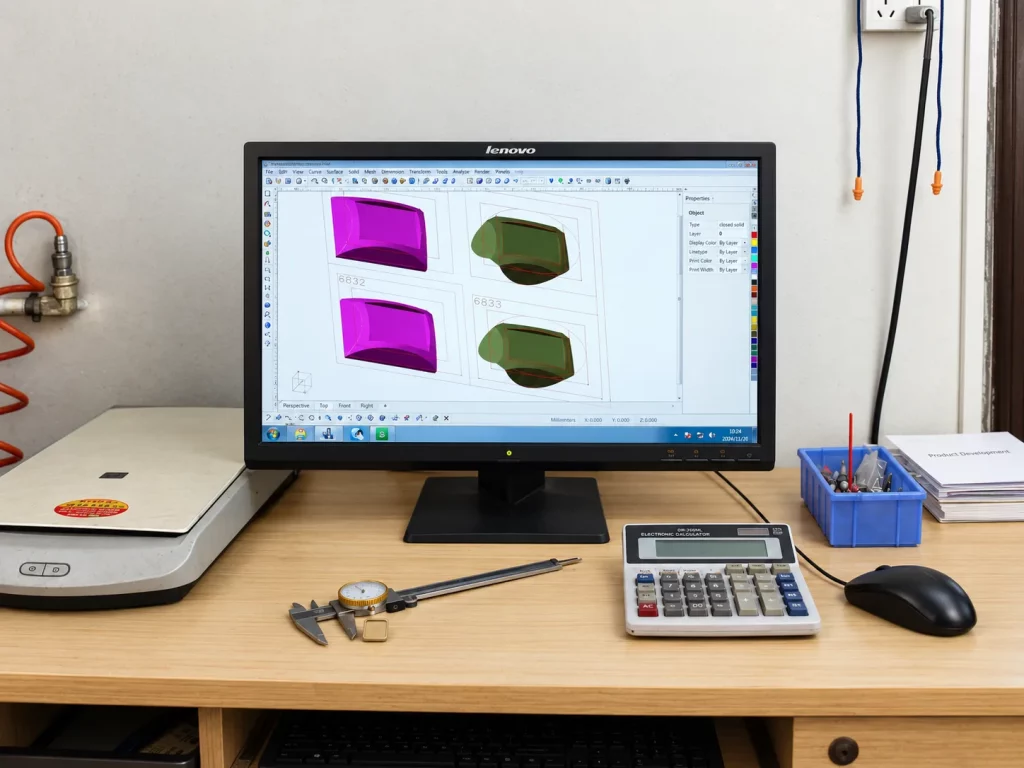
I have taken many clients through jewelry markets, and they often notice the same problem. The same pair of earrings may have a bright, even plating finish in one order. The next batch may look darker. Another batch may begin exposing the copper-colored base metal after only a few days of wear, sometimes leaving green discoloration on the wearer’s skin.
Why does this happen? When suppliers compete primarily on price, production specifications may change from batch to batch. One production run may use the requested gold-plating process, while the next may reduce plating thickness or change part of the finishing process to lower costs.
When a problem occurs, traceability can also be difficult because the buyer may not know which factory actually produced the goods. The customer, however, will not blame the upstream market seller. They will associate the problem with your brand.
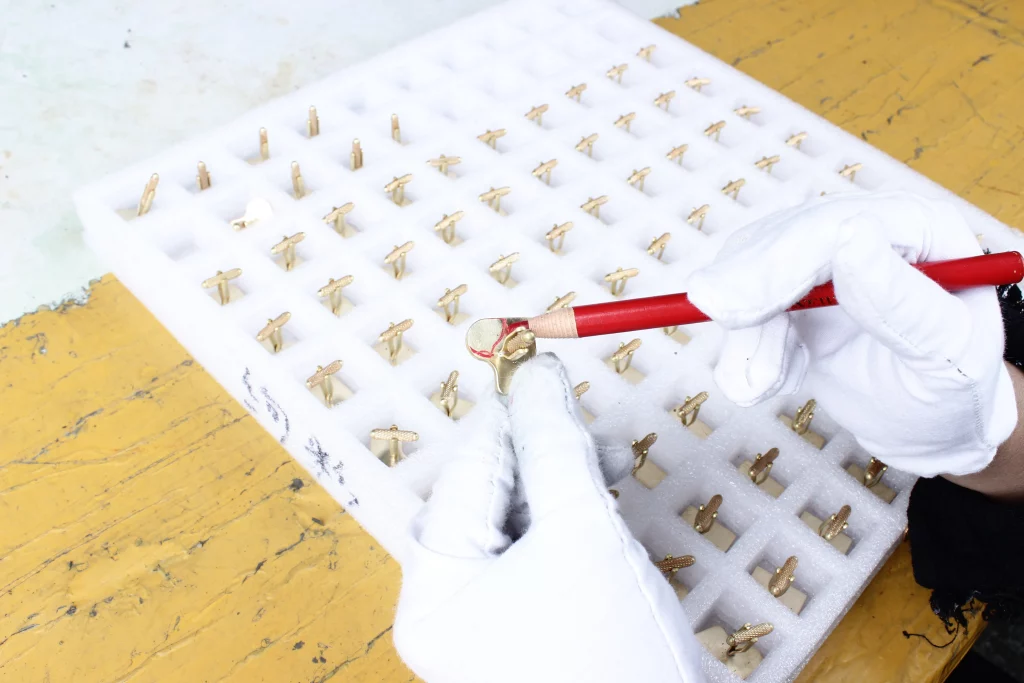
In our factory, quality is controlled through defined production processes. For example, for certain gold-color finishes, we can specify a 0.03 μm PVD vacuum-deposited layer together with an E-coating protective layer. Each production batch also goes through our QC team. For stainless steel jewelry, the required finish can be controlled through processes such as PVD vacuum plating. Understanding the PVD coating process for jewelry also helps buyers define color, finish, and performance requirements more clearly before production.
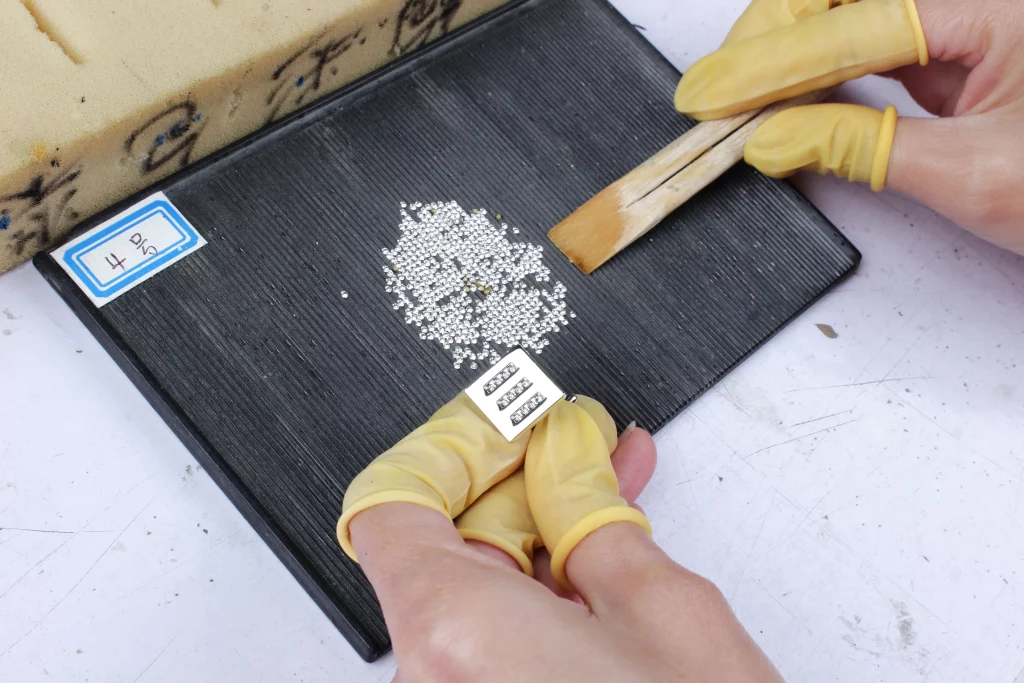
Our QC supervisor, Ms. Yang, has worked with me for 10 years. She knows exactly what we mean when we say that stones must remain securely set. We are able to keep the defect rate below 1% because we can intervene at each production stage. That level of process control is something a ready-made market usually cannot provide.
From Securing Stock to Developing Products Together
One of the biggest concerns for a new jewelry brand is running out of stock. With ready-made market products, an item may be available today and unavailable tomorrow. If a design suddenly becomes popular, buyers may have to compete for inventory, with very little negotiating power.
Working directly with a factory is different. The early stage does require patience. Sampling takes time. Both sides need time to understand each other’s requirements, and production schedules need to be coordinated.
But once that working relationship is established, the factory can become part of your supply chain rather than simply another vendor.
For example, for long-term partner brands, we can support flexible MOQs starting at 30 pièces, with production lead times of around 25 days depending on the project. During peak seasons, we also try to prioritize production capacity for established customers because they trust us and we do not want avoidable production delays to leave them out of stock.
This ability to support smaller production runs and faster replenishment comes from time, communication, and mutual trust. For a growing brand, that supply-chain responsiveness can make a significant difference when reacting to market demand.
Do Not Look Only at Unit Cost—Look at Repeat Purchases and Brand Longevity
Many new brand owners make a simple calculation: a ready-made product costs RMB 9, while factory production costs RMB 15. Why spend the extra RMB 6? I usually answer with another question: how long do you want your customer to wear your necklace?
If you only expect the product to last a week, the lower-cost option may generate a quick margin. But it is essentially a one-time transaction.
If you want the necklace to remain bright and wearable after six months—and you want customers to return because the jewelry is comfortable to wear, keeps its finish, and performs consistently—then that extra cost is not simply a manufacturing expense. It is an investment in the lifespan of your brand.
I have worked in jewelry manufacturing for a long time. I have seen many brands grow quickly by competing primarily on low prices, only to disappear just as quickly. The ones that last are often the ones willing to invest from the beginning in details customers may never see directly: plating thickness, stone-setting quality, material specifications, and production consistency.
How Should a New Jewelry Brand Work With a Factory?
My advice is simple: do not approach the factory only as “the client.” When your order quantity is still small, your project may naturally require more communication and coordination relative to the order size. But you can make cooperation much more efficient by coming prepared.
Bring clear drawings. Provide precise material requirements. For example, specify the copper alloy, titanium, or stainless steel grade you require rather than simply writing “metal.” Tell the factory whether the products will be sold in the United States, Europe, or another market. That information allows the manufacturing team to consider relevant compliance requirements early in product development, such as California Proposition 65 ou REACH requirements where applicable.
Use your professionalism to earn the factory’s attention. Factories do not simply need more orders. Good factories value long-term partners who understand product development, communicate clearly, respect manufacturing realities, and have the potential to grow together. Even if you currently have only one product, building a strong relationship with the right jewelry factory can be worth the effort. That is also why we are willing to support MOQs starting from 30 pieces for certain projects, giving emerging brands more flexibility to test designs and learn from the market before scaling production.
Building a brand this way is not the easiest path. But after 16 years in jewelry manufacturing—from a small workshop in Guangdong to exhibiting at JCK in the United States—it is the path I have seen work repeatedly. If you are willing to build your brand step by step, we are always open to discussing how we can develop it together.
Auteur

Ertian Jiang (Jasper) est le fondateur de Haosen Metal Jewelry. Depuis ses débuts à 26 ans, il associe un solide savoir-faire artisanal à une compréhension fine du marché, deux piliers sur lesquels repose l’excellence de l’entreprise.
Ertian Jiang a commencé comme artisan, spécialisé dans les pierres semi-précieuses (agate, nacre et œil-de-tigre) et l’incrustation manuelle. Il a perfectionné la pose de pierres naturelles sur des supports métalliques, sans jeu ni défaillance de la colle. Son expérience directe de la vente lui a également permis d’échanger avec les acheteurs et de comprendre leurs difficultés face aux pierres qui se détachent et aux couleurs qui s’altèrent.