

A beautifully crafted piece of jewelry needs to withstand the test of time, water, and daily wear. You may have heard that “PVD coating” is the secret to tarnish-free jewelry. While PVD acts as a gorgeous, rock-solid outer shield, what truly determines a jewelry piece’s lifespan, weight, and price is the “body” wrapped inside: the base metal.
Understanding the Basics: What Exactly is PVD?
The Science Behind Vacuum Plating
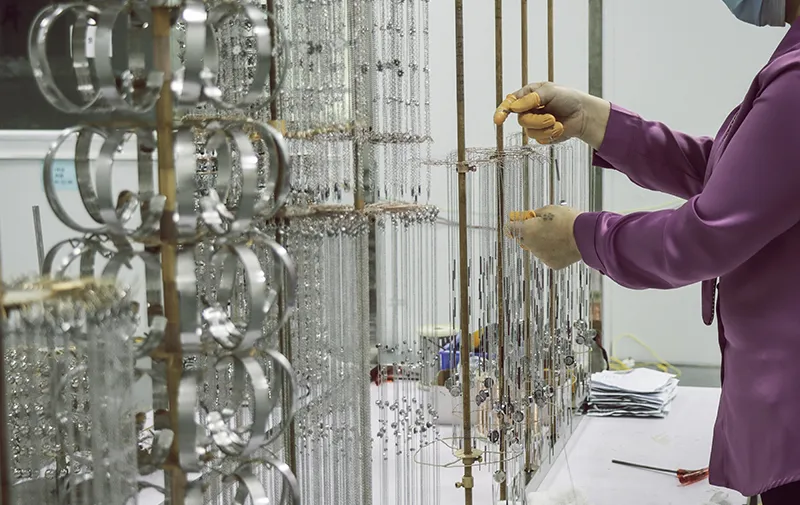
What is PVD material? PVD stands for Physical Vapor Deposition. It is not a specific metal itself, but rather a highly advanced vacuum coating process. In a high-tech vacuum chamber, solid metals (like titanium or real gold) are vaporized into a plasma state and then atomically bonded to the surface of the base metal. This creates a thin, extremely dense, and durable layer.
PVD vs. Traditional Electroplating
Industry Benchmark
Standard stainless steel jewelry: PVD vacuum plating at approximately 0,03 µm.
Custom stainless steel jewelry: Thicker plating range from 0.05μm to 0.1μm, ensuring every piece passes a rigorous 72-hour salt spray test (ASTM B117 standard).
The "Body" Matters: Why the Base Metal is Crucial
If PVD is the indestructible armor, the base metal is the skeleton. Even the best PVD coating will fail if the metal underneath is prone to melting, rusting, or allergic reactions. Let’s break down the three most common base metals used in high-quality PVD jewelry and see which one fits your needs.
Stainless Steel: The Undisputed King of PVD Jewelry
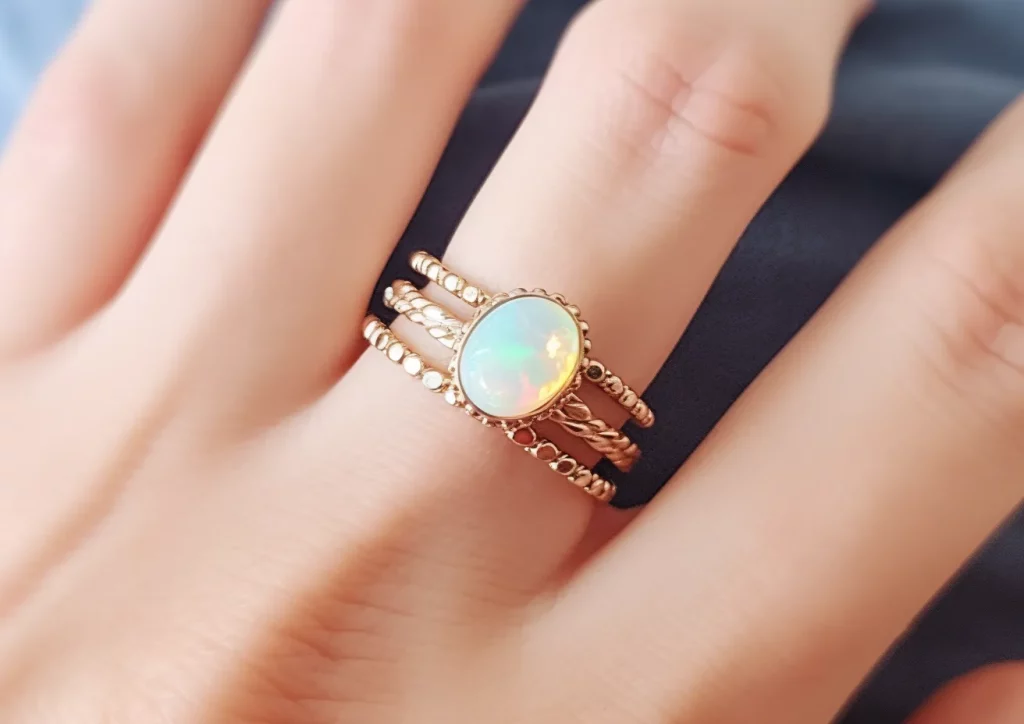
When people ask for waterproof and tarnish-free jewelry, they are usually looking for PVD coating on stainless steel (specifically 304 or 316L grades). Stainless steel is incredibly durable, naturally rust-proof, and free of lead and nickel. Because of its high melting point, it performs exceptionally well inside the high-temperature PVD vacuum chamber.
Haosen's Compliance Data
At Haosen, our 316L stainless steel raw material is certified by the latest SGS report (Feb 2026) to be free of lead, mercury, and cadmium, fully compliant with RoHS de l'UE standards. Our 316L stainless steel earrings also passed REACH et une bonne California Prop 65 compliance testing (Feb 2026), passing 252 SVHC substance screenings for the EU and US markets.
This means your stainless steel PVD jewelry can truly be worn every day, even in the shower, while maintaining a real-gold feel and years of lifespan. Haosen has also expanded into 316L stainless steel jewelry featuring lab-grown diamonds and moissanite, offering high-end stainless steel product lines for your brand.
Brass: The Choice for Luxury and Complex Textures
Overcoming Brass Oxidation with E-Coating
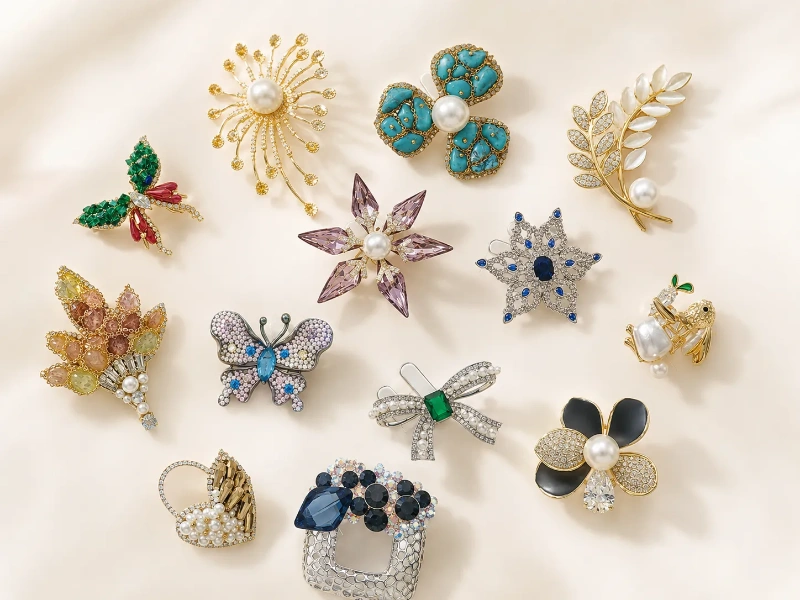
What is PVD brass? Brass is heavier and significantly softer than stainless steel, making it the perfect canvas for intricately carved, vintage, or bulky luxury jewelry. Its weighty, warm touch is irreplaceable.
However, brass has a natural enemy: oxidation (turning green). To solve this, advanced manufacturers apply a real-gold PVD layer (typically 0.03μm-3μm) and top it with a professional E-Coating (Electrophoretic Coating). This invisible shield seals out air and moisture entirely.
Additionally, because brass is softer, it is excellent for manual inlaying (setting stones like agate or zirconia), ensuring stones grip securely without falling out. Haosen’s brass material has passed heavy metal screening (April 2026), offering a safe, lead-compliant, and nickel-safe solution for fashion jewelry production.
Titanium: Lightweight and Hypoallergenic
When to Choose PVD Titanium
Titanium is an aerospace-grade material that is incredibly lightweight and 100% biocompatible. PVD titanium is the absolute go-to for individuals with hypersensitive skin.
You will most commonly find titanium used in high-end piercing jewelry or oversized statement pieces where weight is a concern. Through high-precision usinage CNC de précision, titanium can achieve an ultra-smooth finish. When coated with PVD, you get stunning colors without compromising its zero-allergy properties. At Haosen, our titanium material for body jewelry has passed the March 2026 PTC (RoHS 2.0) screening, confirming zero hazardous heavy metals.
Haosen's Precision Machining
Titanium items are crafted via high-precision CNC machining to maintain hypoallergenic properties while achieving an ultra-smooth, comfortable finish. In addition, our tungsten products undergo diamond-wheel polishing for a scratch-proof, mirror-like luster that never loses its brilliance.
Base Metals to Avoid for PVD Coatings
Not all metals can survive the PVD process. Cheap alloys with very low melting points, such as Alliage de zinc, cannot withstand the extreme heat of the vacuum chamber. As a result, zinc alloy jewelry is usually treated with traditional liquid electroplating, which is why cheap fast-fashion rings often fade or turn fingers green within a few weeks. If durability is your goal, avoid zinc alloy as your base.
Honest Note from Haosen
At Haosen, our Zinc Alloy material has been rigorously tested by SGS (Jan 2026) to meet California Proposition 65 standards. The results confirm that Lead (Pb) and Cadmium (Cd) levels are “ND” (Not Detected). However, we still recommend the most suitable base material and surface treatment based on your product positioning. If you pursue ultimate durability and waterproof performance, we will recommend stainless steel PVD over zinc alloy water plating.
Summary: Which Base Metal Should You Choose?
| Your Goal | Recommended Base Metal | The PVD Advantage |
|---|---|---|
Everyday Wear & Waterproof |
Stainless Steel (304/316L) |
316L raw material SGS certified, 72-hour salt spray test (ASTM B117), 0.06-0.1μm thicker plating. |
Luxury Weight & Complex Designs |
Brass |
E-Coating invisible shield, 0.03-3μm real gold plating, manual inlay expert. |
Piercing & Hypersensitive Skin |
Titane |
CNC high-precision machining, PTC (RoHS 2.0) certified, zero hazardous heavy metals, 100% hypoallergenic. |
Bring Your Jewelry Designs to Life with Haosen
Choosing the right base material is 80% of the battle; choosing the right manufacturing partner is the other 20%.
At Haosen Jewelry, our journey started in 2008 as “Zhensen Hardware Jewelry Factory.” Our founder, Jasper, began as a frontline craftsman doing manual inlay of semi-precious stones (agate, mother of pearl, tiger’s eye). He personally learned how to fit natural stones into metal bases without gaps or glue failure. He also worked on the front lines of sales, speaking face-to-face with buyers, listening to their frustrations about fallen stones and fading colors. These experiences taught him: only by choosing the right material and process from the source can we truly solve customer problems.
Today, as a SEDEX-audited OEM/ODM manufacturer serving over 200 global brands, department stores, and retailers, we combine this craftsmanship with mass-production precision. Whether you need SGS-certified 316L stainless steel, E-coated brass, or CNC-machined titanium, our independent 8-12 person QC team ensures a defect rate of <1%.
Why Choose Haosen
- 16+ years in jewelry and hardware manufacturing
- 200+ department stores, retailers, and global brand partners
- <1% defective rate, maintained by an independent 8-12 person QC team
- 30-120 flexible MOQ, approximately 25-day mass production lead time
- SEDEX/SMETA audit passed (2012 to present), compliant with EU REACH and California Prop 65
- US Showroom in San Diego, CA—for samples, meetings, and faster communication
Our Commitment
“Your Design, Flawlessly Executed.” This is Haosen’s mission. We are committed to eliminating common pain points in jewelry sourcing—fading, stone loss, and communication gaps. By combining China’s manufacturing power with localized US support, we deliver a seamless, high-quality OEM/ODM experience from concept to mass production.
Contact Us Now
- Visit our US Showroom:VISIONARE 1820 CAL INC., 3802 Main Street Suite 3, Chula Vista CA 91911, San Diego County
- Call us:+1 6193580328
- Trade Shows:JCK Las Vegas 2026 (May 28-June 1, Booth 47099) | Magic Sourcing Las Vegas 2026 (Aug 10-12) | Magic Sourcing New York 2026 (Sep 9-11)
FAQ
What is PVD material made of?
PVD material is made of a thin layer of metals such as gold, titanium, zirconium, or applied via a vacuum deposition process. It bonds to the base metal surface without using liquids or chemicals.
Is PVD coating on stainless steel durable?
Yes. PVD coating on stainless steel is highly durable. At Haosen, our custom stainless steel PVD jewelry passes a 72-hour salt spray test (ASTM B117), meaning it resists tarnishing and fading for years.
Does PVD coating fade on brass?
PVD coating on brass does not fade easily if applied correctly. Haosen adds an E-Coating layer over the PVD gold plating to seal out air and moisture, preventing brass oxidation and color loss.
Is PVD brass safe for sensitive skin?
Yes, PVD brass is safe for most sensitive skin when the brass material is lead-compliant and nickel-safe. Haosen’s brass material has passed heavy metal screening (April 2026).
What is PVD titanium used for?
PVD titanium is commonly used for high-end piercing jewelry, body jewelry, and statement pieces because it is lightweight, hypoallergenic, and durable.
About Haosen Jewelry
Haosen is an audited OEM/ODM China jewelry manufacturer focused on fashion jewelry and garment accessories. We work with global brands, wholesalers, and designers to develop and produce customized jewelry collections, from concept development to mass production. Our factory has passed SMETA/SEDEX ethical audits and SGS on-site factory inspections. All materials and finishes are tested to meet EU REACH and California Prop 65 requirements.
Founder Jasper's Words
“My journey began when I was 26, starting as a craftsman specializing in manual inlay of semi-precious stones. I personally learned how to fit natural stones into metal bases without gaps or glue failure. I also worked on the front lines of sales, speaking face-to-face with buyers, listening to their frustrations about fallen stones and fading colors. These experiences taught me: only by choosing the right material and process from the source can we truly solve customer problems.”
Haosen's Core Values
- Artisan Spirit in Mass Production:From manual inlay to mass production, no compromise on craftsmanship.
- Empathy for the Buyer:Actively listen to market pain points, provide material-specific solutions at the source.
- Ethical & Sustainable Integrity:Annual SEDEX audits, strict Prop 65/REACH compliance.
- Borderless Partnership:China manufacturing + US San Diego showroom, “Hybrid Advantage” eliminates geographical barriers.
