

A brass ring can begin as sheet, solid bar or casting stock. For a buyer, the difference is how that starting material helps create the face detail, ring size and overall shape of the finished piece.
Our guide, Brass Jewelry Raw Materials: 8 Forms and Their Uses, explains the different supply forms. Here, we follow those materials into a real project: two rings developed for Robert, a purchasing manager for a US accessories brand.
You do not need to memorize alloy codes to follow the decisions. Start with the design, then consider which material form gives each component a practical manufacturing route.
The First Ring Used Sheet and Bar
Robert’s first design had a raised relief pattern on the ring face, a curved band and a gold-plated finish. The initial order was 500 pieces across four ring sizes. His brief was straightforward: brass, real gold plating and a waterproof finish.
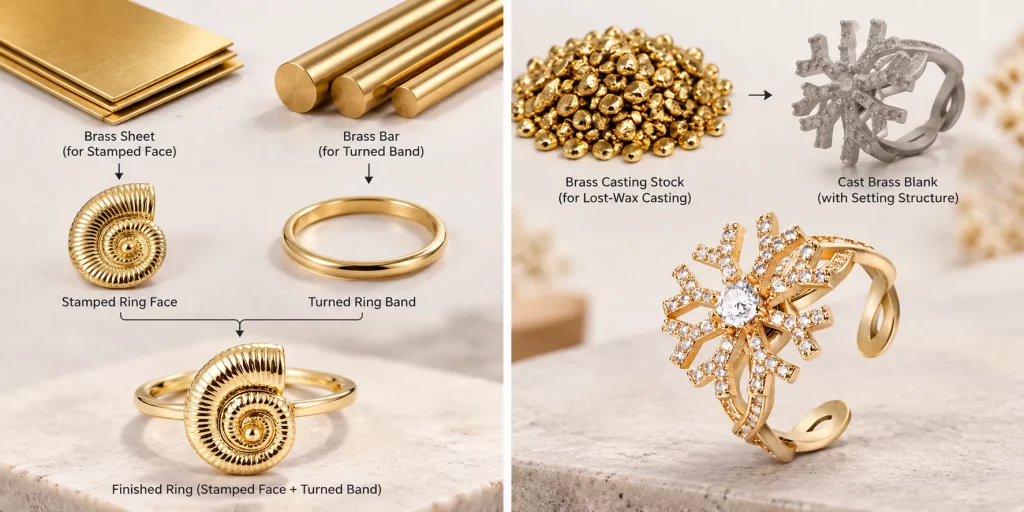
We assessed the face and band separately. The face needed its pattern reproduced clearly, while the band needed dimensions for the different ring sizes. We chose to make the components separately and then assemble them.
Sheet for the Stamped Face
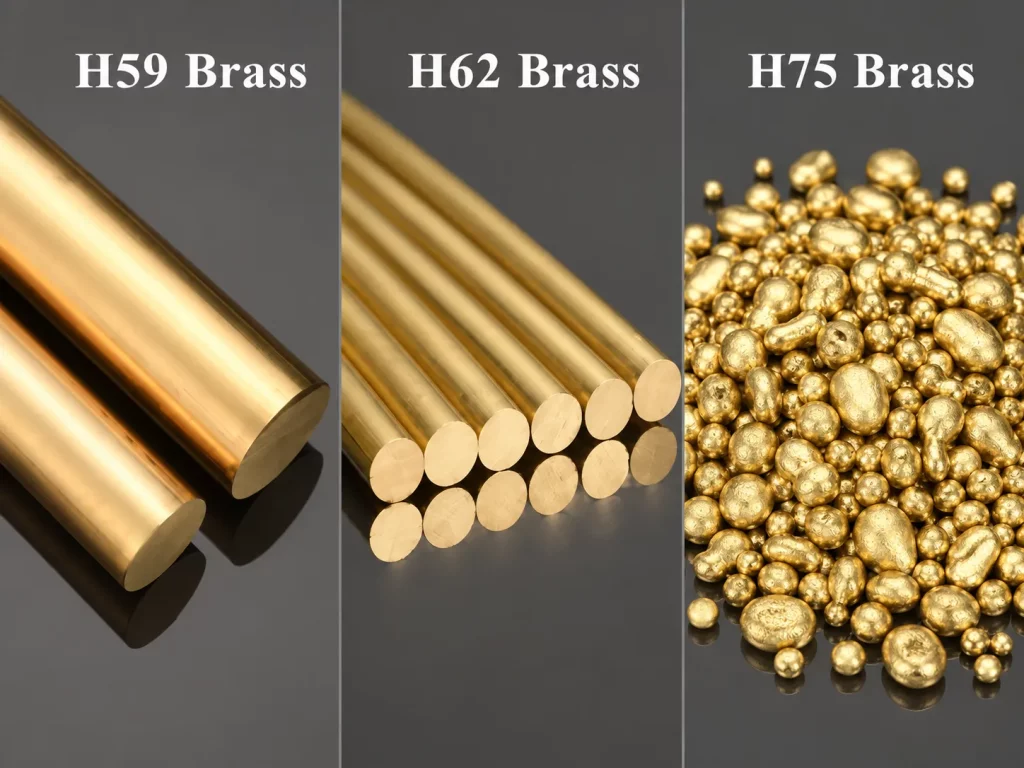
Sheet provides a flat starting material that can be stamped into the face shape and pattern. For this project, we used H62 brass sheet. The important checks for Robert were the clarity of the raised detail, the edges and the appearance after plating.
Bar for the Turned Band
Solid bar can be turned to produce the band. The project used brass bar referred to in our workshop as “H59 Brass”. Its role was different from that of the face: the priorities were ring dimensions, shape and the machined surface.
The separately made components were assembled into a complete ring. Robert approved the first sampling round, and subsequent production was stable. The two material forms allowed each component to follow a suitable process.
The Second Ring Used Casting Stock
Robert’s next ring had a more complex sculpted design and required gemstone setting. We reassessed the manufacturing route and recommended casting, using material referred to in the project as ‘H75 Brass.’
This time, the priority was forming the three-dimensional design and setting features. Casting stock is melted and introduced into a mold to create a brass blank. It offers a different starting point from shaping flat sheet or removing material from solid bar.
For this design, casting provided another forming route. However, producing the shape does not finish the jewelry. The blank still needs its detail, surface and setting features checked, followed by the appropriate trimming, polishing, stone setting and plating.
A gemstone requirement alone does not make casting mandatory. The setting structure, ring design and subsequent operations all need to be considered.
How the Designs Relate to Material Forms
| Design requirement | Starting material and process | What the buyer should check |
|---|---|---|
Raised face detail on the first ring |
Brass sheet, stamped |
Pattern clarity, edges and surface appearance |
Band on the first ring |
Brass bar, turned |
Ring dimensions and shape |
Sculpted design and setting features on the second ring |
Casting stock, formed into a blank |
Detail and suitability for subsequent finishing and setting |
These were choices for Robert’s designs, rather than a fixed recipe for every brass ring. When the design changes, the starting material and process may change too.
These examples illustrate how material selection supports different approaches to custom ring manufacturing, depending on the design and component structure.
Wire Is Another Possible Starting Point
A wrapped or bent-wire ring starts with wire. Its diameter, bends, connections and ability to retain shape become important. Half-hard brass wire can be an option to evaluate, depending on the design. This is another application of the material-form guide; it was not the route used for Robert’s two rings.
Do Buyers Need to Specify the Alloy
If you have an established material specification, include it in the inquiry. If you do not, begin with the product requirements. Ask the manufacturer to explain the proposed starting material and process, then evaluate the sample.
Sheet, bar and casting stock describe the material form. Alloy grades and tempers describe the specific material within that form. Our companion guide, Brass Grades, Tempers and Hardness: A Guide for Jewelry Buyers, explains that next level of specification.
The project terms ‘H59 Brass’ and ‘H75 Brass’ should be supported by the supplier’s full alloy designation or product specification for purchasing and repeat production. A workshop name alone does not define the complete material or guarantee its performance.
Five Things to Share Before Sampling
Design: Send drawings, dimensions and reference images, identifying the details that must be preserved.
Sizes and quantities: List the ring sizes and the quantity required for each size.
Gemstones: Specify stone type, dimensions and the intended setting appearance.
Finish and wear: Provide the color reference, plating requirements and intended wearing conditions.
Market and budget: Identify the sales market, customer material requirements and budget range.
Robert’s request for a waterproof finish also needs its own specification. An alloy code cannot guarantee that result. Intended exposure, the plating system and an agreed verification method need to be discussed separately.
For more information about moving from a design brief to sample approval and production, explore our OEM/ODM development process.
Apply the Material Guide to Your Ring
Robert’s first ring began with sheet and bar. His second began with casting stock. At 96Jewelry, the selection starts with understanding the design, choosing a practical material form and process, and checking the result through sampling.
For your brass ring project, share the drawing, sizes, quantities and finish requirements.
For your brass ring project, share the drawing, sizes, quantities and finish requirements. Our custom brass jewelry manufacturing services can help you evaluate suitable material forms, production methods and sampling requirements.
This article draws on 96Jewelry’s project material selection and manufacturing experience. For the broader material overview, read Brass Jewelry Raw Materials: 8 Forms and Their Uses. For alloy specifications, read Brass Grades, Tempers and Hardness: A Guide for Jewelry Buyers.
