

Why Charm Clasps Should Be Engineered as Functional Hardware
In the high-stakes world of fashion jewelry manufacturing, every microscopic component determines the final product’s quality.
In the professional B2B jewelry supply chain, a charm clasp is the critical mechanical interface between the pendant and the carrier. Defining these components as “engineering hardware” shifts the focus from aesthetics to structural integrity. For brand owners, the clasp is the single point of failure that can determine the product’s return rate (RMA) and long-term brand equity. High-performance hardware minimize mechanical fatigue and ensures the security of the high-value stainless steel charms they support.
For global jewelry brands seeking to minimize returns and maximize perceived value, understanding the engineering behind precision clasps is no longer optional—it’s strategic.
This article provides a technical deep-dive into how industrial-grade precision clasps empower charm products, offering verifiable OEM/ODM solutions for professional buyers, product development managers, and sourcing specialists.
How Do You Choose the Best Material for a Charm Clasp (Is 316L Stainless Steel Ideal)?
Material science determines the service life of a charm clasp. While zinc alloy and brass are common in the entry-level market, 316L stainless steel remains the benchmark for professional-grade jewelry due to its optimal balance of hardness, corrosion resistance, and biocompatibility.
Industrial-grade precision clasps transcend the traditional role of simple connectors. Through advanced materials science, micron-level tolerance control, and optimized physical structures, they achieve a qualitative leap in connection performance. We define them as the core load-bearing carrier of charms, where performance directly dictates the final product’s durability, security, and wearing experience.
Material Engineering: Utilizes 316L medical-grade stainless steel, titanium alloys, or high-hardness copper-based alloys combined with precision stamping, CNC machining, or MIM (Metal Injection Molding) to ensure mechanical strength and corrosion resistance.
Tolerance Control: Critical mating surfaces are controlled within ±0.05mm, ensuring smooth opening/closing without wobbling or rattling, while also enabling compatibility with automated assembly processes.
| Property | 316L Stainless Steel | Zinc Alloy | Brass |
|---|---|---|---|
Corrosion Resistance | Excellent (Marine Grade) |
Low |
Moderate |
Vickers Hardness |
200 – 240 HV |
200 – 240 HV 80 – 120 HV |
120 – 150 HV |
Nickel Release | Compliant (<0.2μg/cm²/week) |
High |
Moderate |
Industrial Value |
High-End / Long-Life |
Fast Fashion / Promo |
Mid-Market |
Which Charm Clasp Styles Offer the Best Security for Bracelets and Charms?
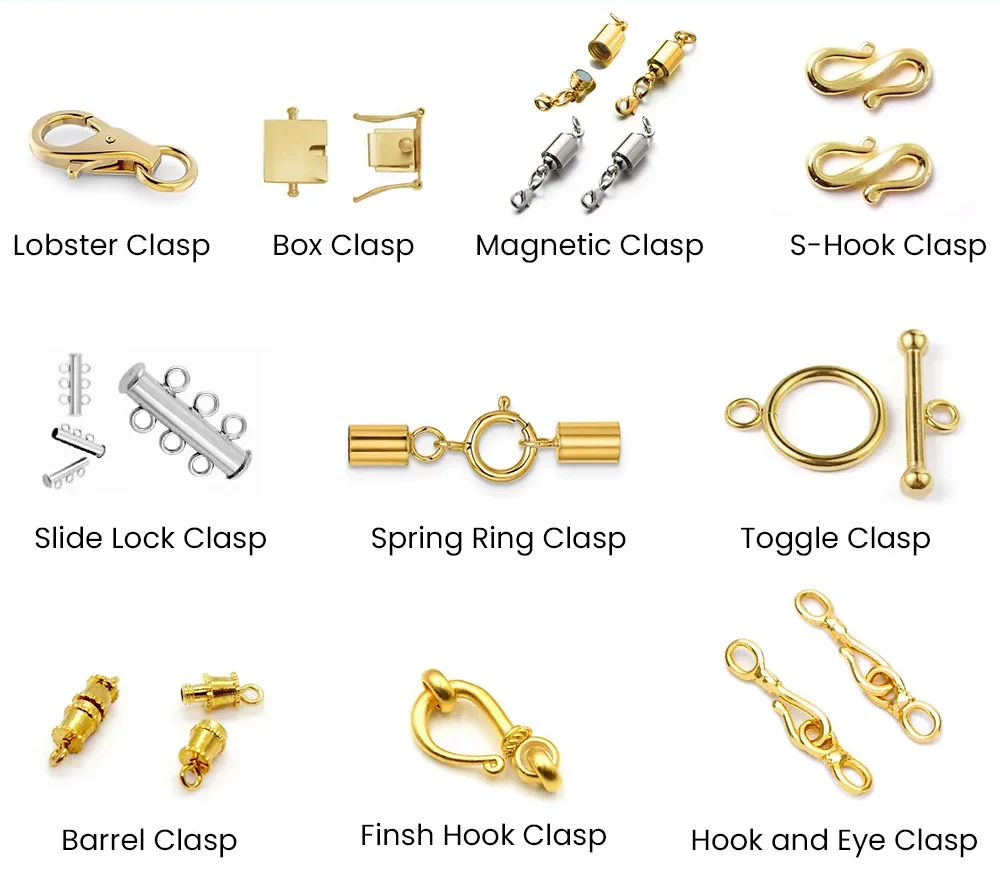
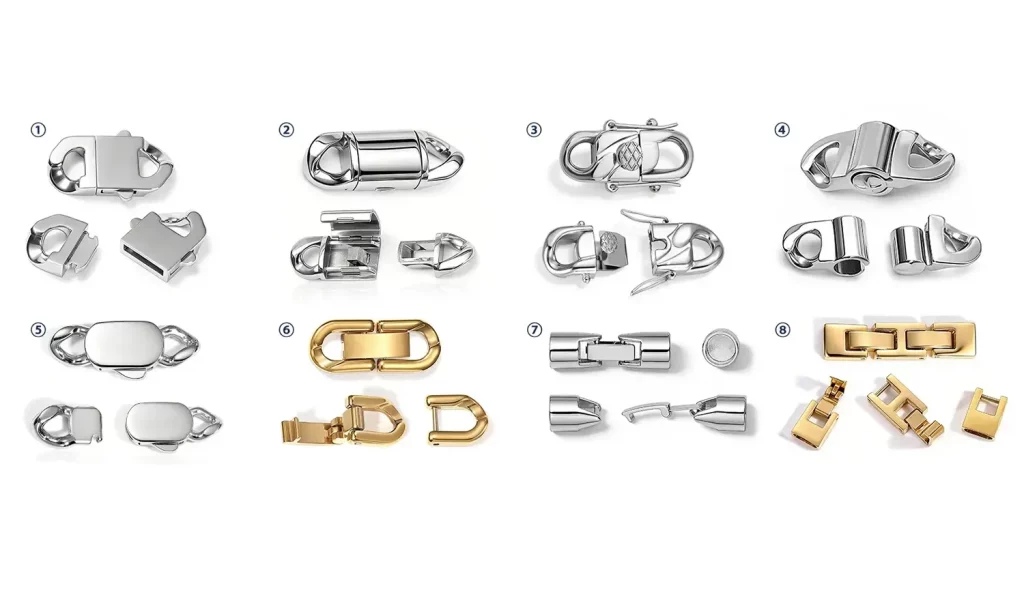
Strategic sourcing requires a deep understanding of mechanical functionality. Below are the primary styles utilized in high-performance jewelry manufacturing:
- Lobster Clasp: The industry-standard high-tension closure for wholesale stainless steel charms.
- Spring Ring Clasp: A lightweight, circular mechanical closure for dainty collections.
- Screw-Lock Clasp: Precision-threaded hardware designed for high-security and permanent attachment.
- Integrated Bail Clasp (One-Piece): A seamless connection hardware that combines the bail and clasp into a single structural unit for a cleaner aesthetic.
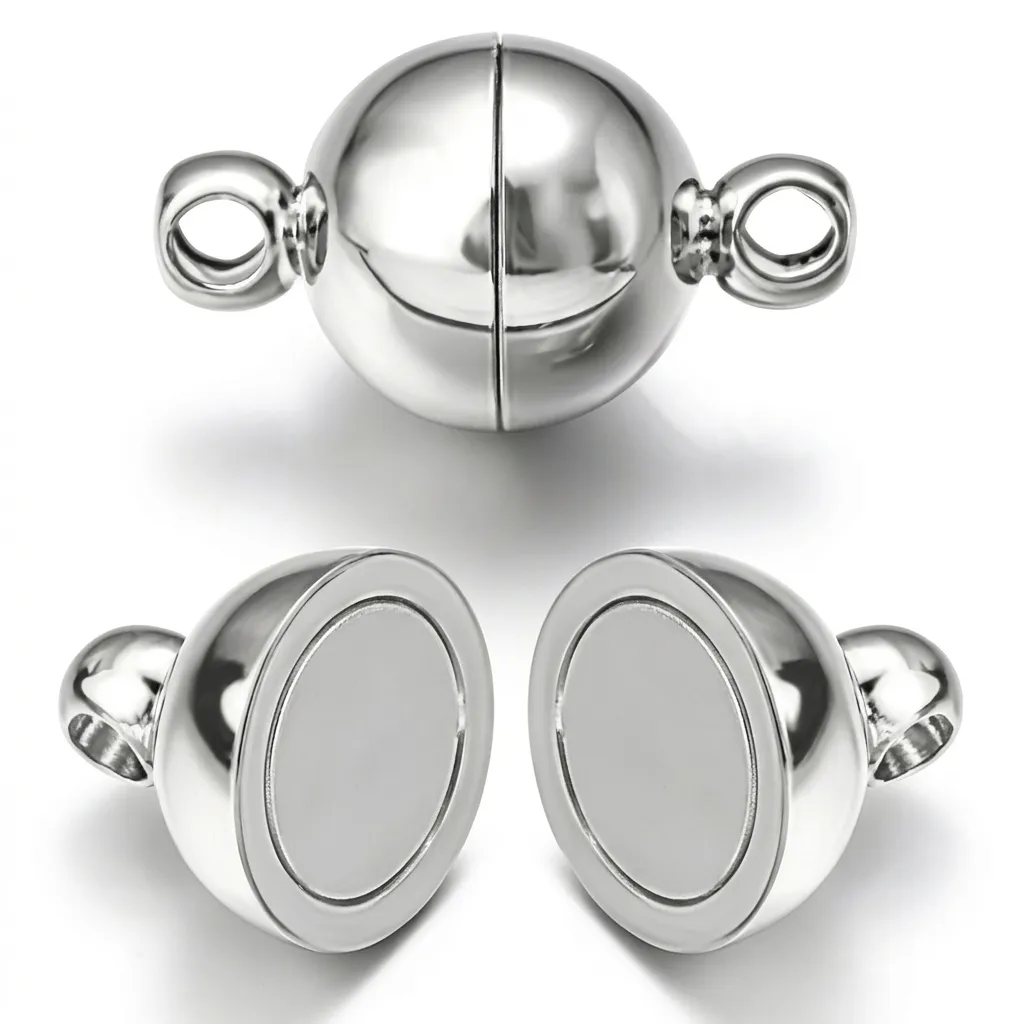
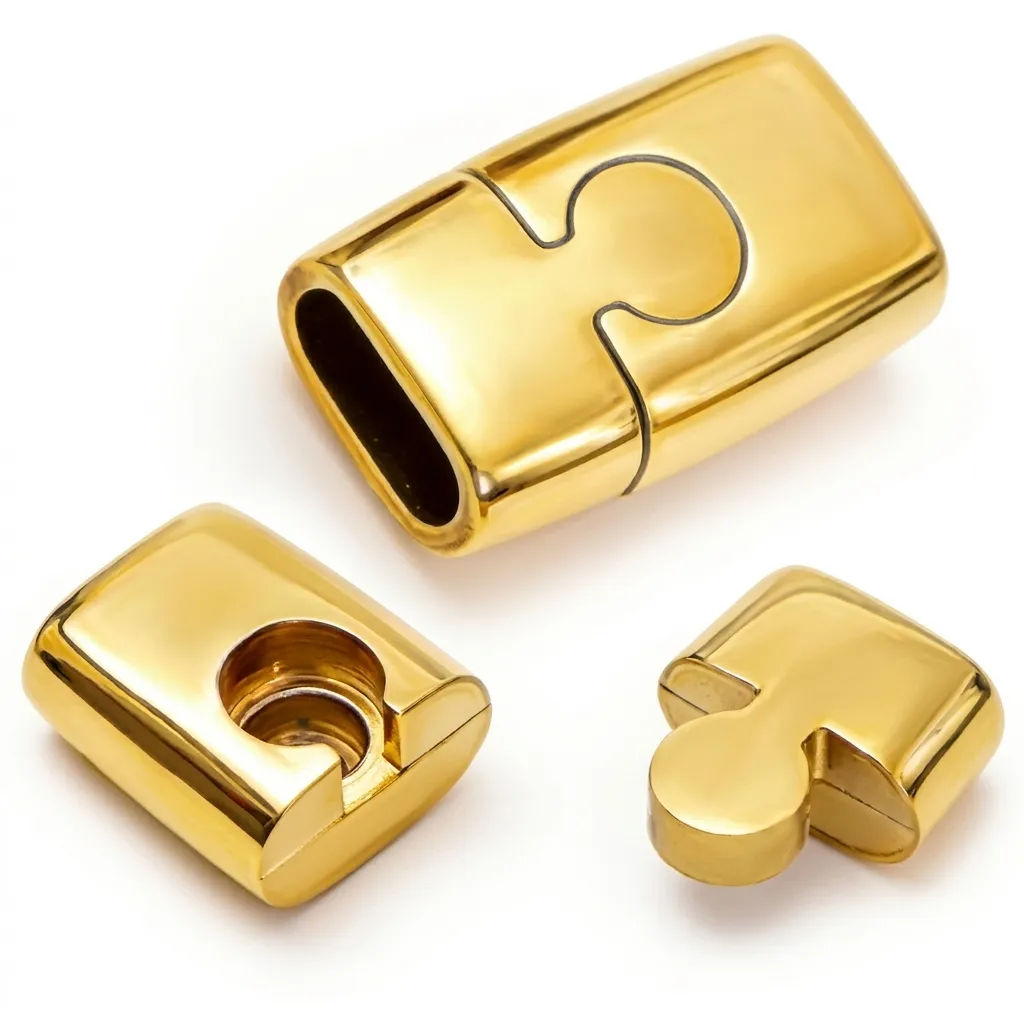
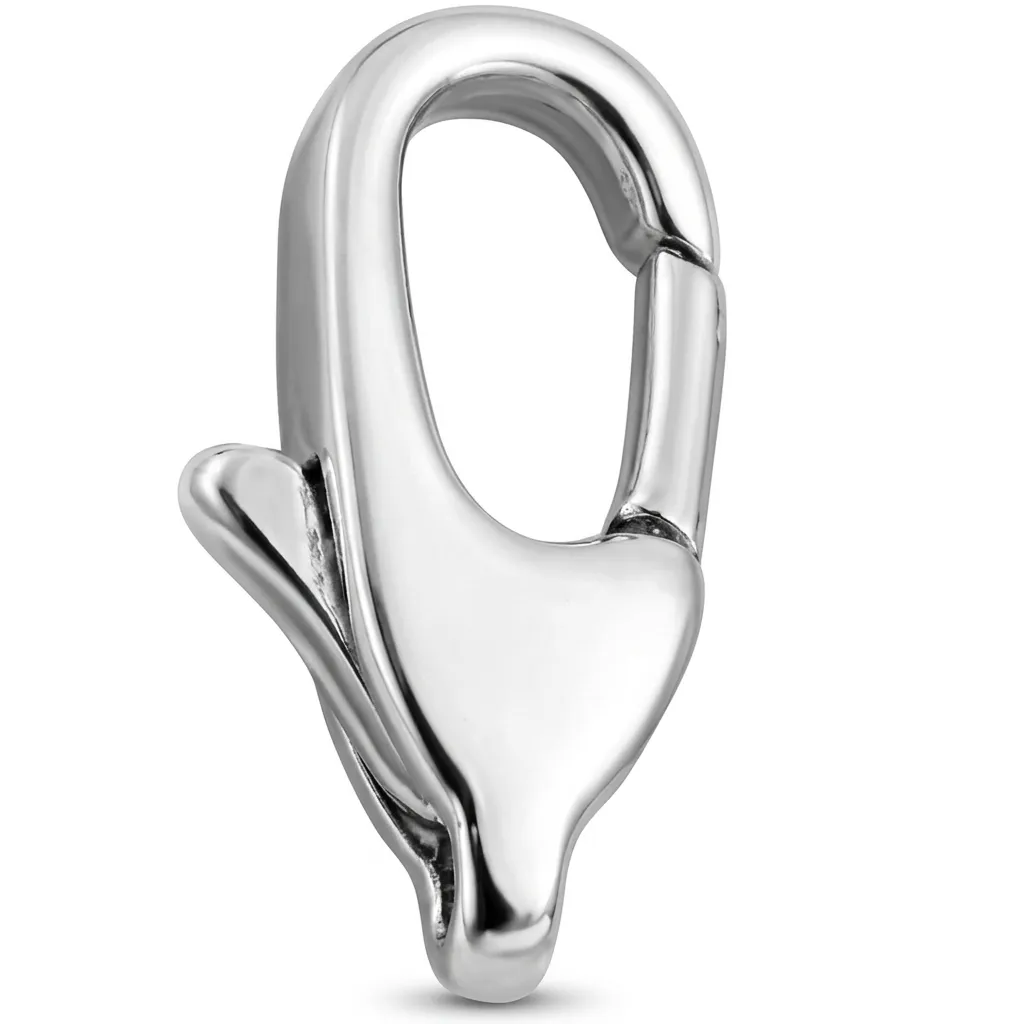
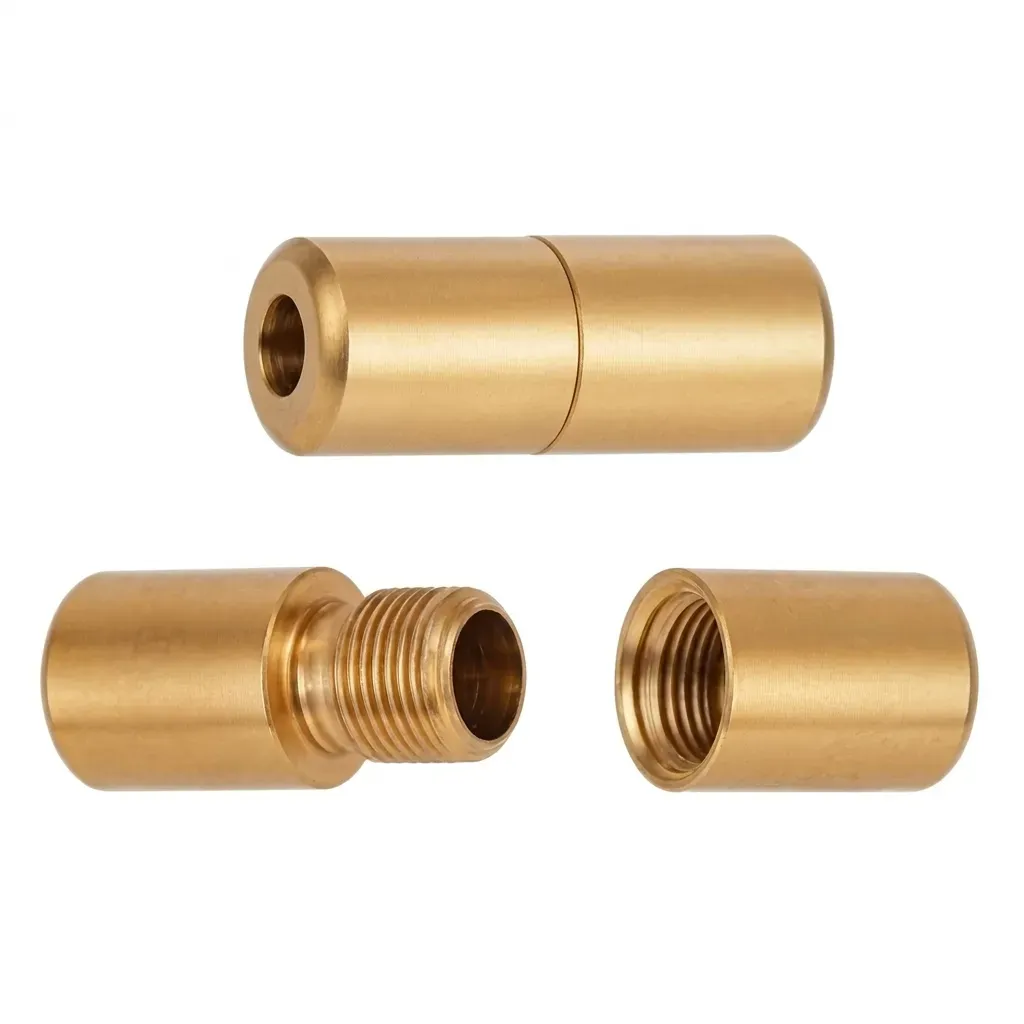
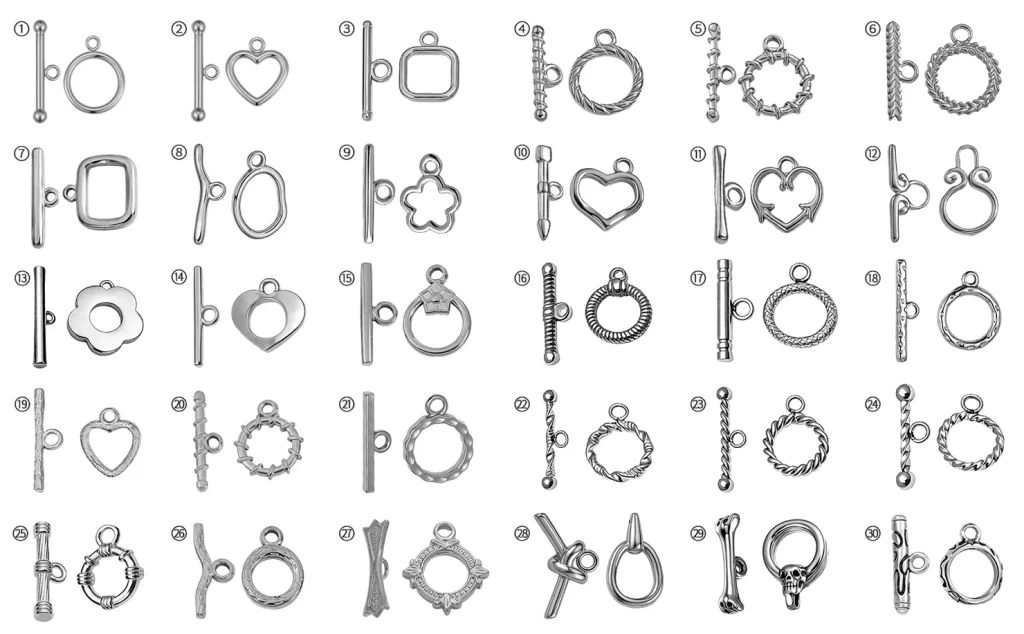
Lightweight Series (Slim profile): Suited for charms weighing <5g; clasp body thickness ≤2mm.
Heavy Series (Reinforced): Suited for charms weighing >10g or functional charms.
How Can You Prevent Structural Breakage Between a Charm and Its Clasp?
The connection point is the most common site of structural failure in stainless steel necklace charms. Preventing breakage requires focus on precision tolerances and material fatigue management at the stress points.
Laser-Welding: To ensure a permanent bond, all jump rings must be laser-welded rather than simply pinched closed. This eliminates the risk of rings opening under tension.
Tolerance Calibration: The inner diameter of the bail must match the clasp’s pivot stroke within a 0.05mm tolerance. Too tight, and the friction causes mechanical fatigue; too loose, and the “jostling” effect leads to abrasive wear over time.
Why Do Charms Flip Over and How Does the Right Charm Clasp Solve the Problem?
The “flipping charm” phenomenon is fundamentally a failure of Torque Balance and Center of Gravity (CoG) management. When a wearer moves, the chain experiences rotational kinetic energy. In a static connection—where the clasp and charm are rigidly linked—this torque is transmitted directly to the pendant. If the charm’s design is asymmetrical or “top-heavy” (where the CoG is located above or near the pivot point), the rotational force will easily overcome the restoring force of gravity, causing the charm to flip over and stay in a reversed position. This is a major pain point for brands selling wholesale stainless steel charms, as it obscures the design and looks unrefined to the end consumer.
The most effective engineering fix is the integration of a 360-degree Swivel Axis within the clasp assembly. A Swivel Lobster Clasp acts as a mechanical “decoupler.” By allowing the chain-end to rotate independently of the pendant-end, the rotational torque is dissipated at the swivel joint before it ever reaches the charm. This allows the pendant to remain “gravity-locked” in its intended orientation. Additionally, we optimize the Bail’s Geometric Profile. By using a tapered “V-shape” or a weighted “Drop-style” bail, we manually lower the system’s center of gravity. This creates a self-righting mechanism: even if the charm is forcibly flipped, the mass distribution ensures it automatically swings back to the front-facing position. For B2B buyers, specifying “anti-flip engineering” in your technical requirements is a key differentiator that adds significant value to your product line.
How Do Charm Clasp Tension Ratings (5kg–40kg) Prevent Product Failure?
In the world of B2B jewelry procurement, vague terms like “high quality” or “strong enough” hold no legal or technical weight. To protect your brand from systemic product failure and potential liability, you must transition to Quantitative Tension Ratings. These ratings—typically ranging from 5kg for dainty items to 40kg for heavy-duty hardware—represent the maximum load a clasp can withstand before mechanical failure occurs. Without these benchmarks, your Quality Control (QC) process is subjective. A batch of jewelry clasps might look identical but have different spring tensions or alloy densities, leading to unpredictable breakages in the hands of the consumer.
Implementing a Tension-Tested Workflow serves as an insurance policy for your brand equity. As detailed in our Industrial Tension Benchmark (see table), different components require specific force thresholds to ensure reliability. For instance, while a 12mm 316L lobster clasp for standard fashion lines should pass a 10kg pull test, high-weight statement pieces necessitate heavy-duty swivel locks rated up to 40kg. By mandating these quantifiable specs, you filter out “Subsurface Porosity” and “Spring Fatigue” issues. This data-driven approach streamlines B2B relationships, providing an objective basis for quality acceptance and justifying a premium wholesale price point for your distributors.
| Component Type | Tension Rating | Target Application |
|---|---|---|
Dainty Spring Ring | 3.5 kg – 5.0 kg |
Fine Jewelry / Lightweight Charms |
Standard Lobster Clasp | 8.0 kg – 15.0 kg | Standard Fashion Jewelry Lines |
Heavy-Duty Swivel Lock | 20.0 kg – 40.0 kg |
Statement Pieces / High-Weight Loads |
How Does 100,000-Cycle Fatigue Testing Improve Charm Clasp Reliability?
The internal spring is the heart of any jewelry clasp. Mechanical endurance is measured through cycle testing.
Fatigue Management: We mandate a 100,000-cycle test to ensure the spring leaf does not undergo plastic deformation (losing its “snap”).
Longevity: This rigor ensures the clasp remains functional even after years of daily operation. For B2B buyers, this translates to lower return rates and higher customer lifetime value (CLV) for the end consumer.
PVD Coating Specifications and Surface Hardness for Jewelry Clasps (≥2000HV)
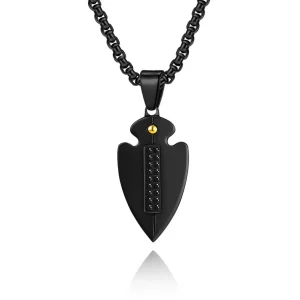
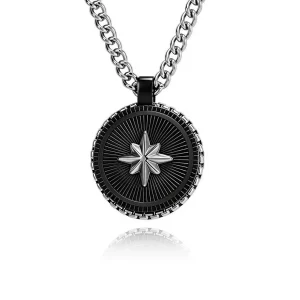
In premium jewelry manufacturing, PVD (Physical Vapor Deposition) is the non-negotiable standard for color longevity.
Atomic Bonding: Unlike traditional electroplating that sits on the surface, PVD creates an atomic-level bond with the 316L substrate, preventing peeling or flaking.
Technical Specs: By achieving a Vickers hardness of ≥2000HV, the coating resists daily abrasive forces (friction with skin and fabric).
Sustainability: PVD is a zero-discharge green technology, free from harmful cyanides, aligning your brand with global ESG requirements.
ODM Workflow for Custom Clasp Tooling and Development
For global jewelry brands, speed-to-market is paramount. Our optimized OEM/ODM workflow is designed to shorten development cycles while ensuring precision.
- DFM Analysis: Every custom design undergoes Design for Manufacturability (DFM) analysis to identify structural flaws before mold fabrication begins.
- Precision Machining: Utilizing slow-feed wire-cut EDM and CNC machining, we ensure that the final gold samples match technical drawings with micron-level precision—typically completed within 25 business days.
Collaboration Process
We provide “Rapid Prototyping + Precision Mold Development” services to support customized client requirements:
Requirement Input: Brand provides design sketches or reference samples.
Feasibility Analysis: DFM (Design for Manufacturing) report issued within 7 days, assessing tooling costs and lead times.
Rapid Sampling: 3D printing or CNC machining delivers physical samples in 7-14 days.
Mold Development & Mass Production: Precision mold development initiated upon sample approval, with lead times controlled within 25-30 days.
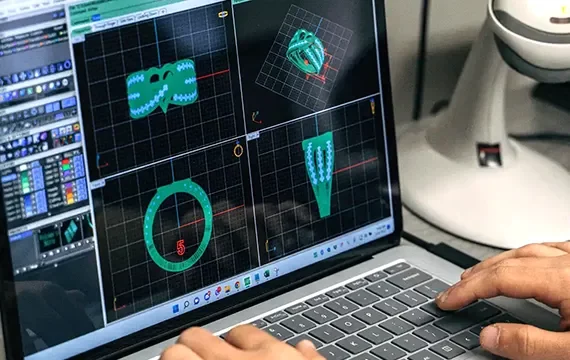
Requirement Input
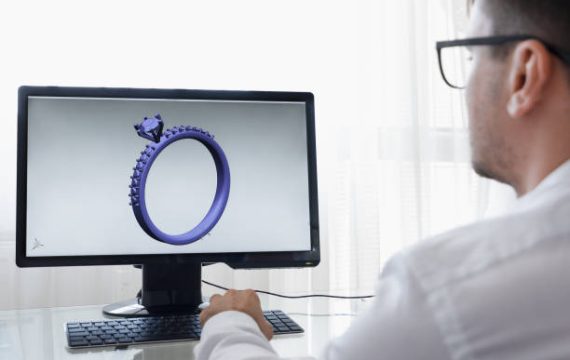
Feasibility Analysis
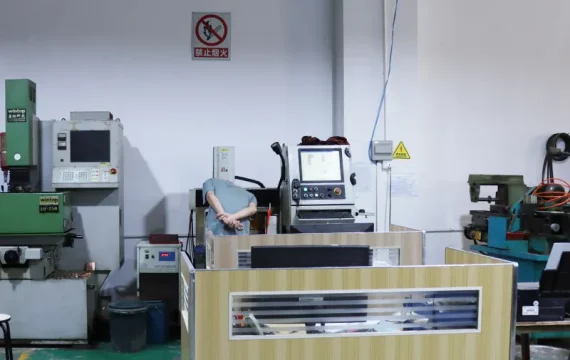
Rapid Sampling
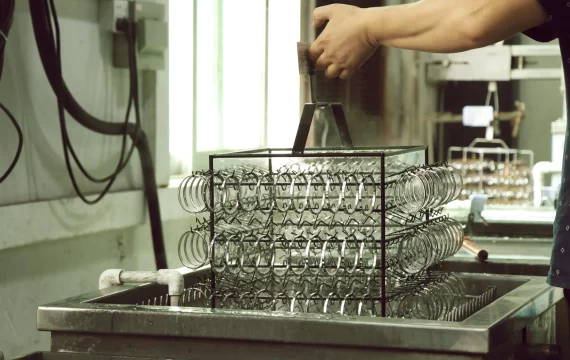
Mold Development & Mass Production
Global Compliance and Certification of Jewelry Clasps for REACH Standards
To enter major North American and European retail channels, jewelry clasp components must pass rigorous chemical analysis.
Chemical Safety: Compliance with REACH and CA Prop 65 ensures that components are lead-free, nickel-free, and cadmium-free.
Strategic Asset: These certifications are not just paperwork; they are strategic assets that facilitate smooth customs clearance and protect the brand from international legal risks.
FAQ
Why do you classify a jewelry clasp as a "precision engineering component"?
Unlike generic “findings,” our clasps are engineered with micron-level tolerances (±0.05mm) and medical-grade materials. They serve as the structural anchor of the charm, dictating the safety and mechanical longevity of the entire piece.
How do I choose the right clasp style for my specific charm design?
We recommend our Matrix Selection approach: Use Classic Kinetic for high-volume daily wear, Mechanical Locking for premium/heavy-duty “Tech-wear,” and Structural Aesthetic (Toggles) for minimalist designer collections.
Can these precision clasps actually lower my brand’s return rate?
Absolutely. Internal data shows that charms equipped with our precision connectors see a 73% reduction in defect-related returns, specifically those caused by spring failure or structural deformation.
How does your tolerance control affect the fit between the charm and the chain?
We control the Bail Aperture to a precision of ≤ ±0.03mm. This eliminates “loose play” or rattling, ensuring the charm glides smoothly on premium chains like Snake or O-chains.
Do you offer reinforced solutions for oversized or heavy-weight charms?
Yes. Our Heavy-Duty Series is designed for charms over 10g, featuring reinforced wall gauges and dual-locking mechanisms with a tensile threshold of up to 40kg.
How do you ensure a charm stays vertically aligned and doesn't "flip"?
Every clasp-to-charm unit undergoes Mechanical Equilibrium Calibration. We align the center of gravity between the connector and the charm body to ensure a perfect 90-degree hang.
Can we customize a proprietary clasp shape for our brand?
Yes. Through our Agile ODM workflow, we use rapid 3D modeling and precision tooling to develop custom-branded hardware that aligns with your specific design DNA.
What specific quality standards do your clasps meet?
Every batch undergoes quantitative testing: Fatigue Testing (100k cycles), Tensile Load Testing (laser-weld integrity), and 48-Hour Salt Spray Testing for PVD durability.
How does "Turnkey Delivery" improve my supply chain efficiency?
By delivering integrated “Clasp + Charm” units, we eliminate your need for secondary in-house assembly. This typically shortens your time-to-market by 7–15 days and removes the risk of inventory mismatch.
Can your engineering team assist us during our early-stage R&D?
We encourage early collaboration. Our engineers can assist with structural optimization and cost-engineering, helping you turn “industrial-grade hardware” into a technical marketing point for your brand.
Call to Action: Request Samples & Technical Consultation
If you are seeking a clasp supplier capable of elevating charm quality and reducing after-sales risks, contact us today:
Request Samples: Submit your charm drawings or requirements; we will provide 2-3 matching clasp samples free of charge for your evaluation.
Schedule Technical Consultation: Our engineers can meet online or on-site with your product team to assist with selection and structural optimization.
Download Material Certification Documents: Obtain REACH/RoHS compliance statements and test reports for materials like 316L stainless steel and PVD coatings.
➡️ View Our UK Case Studies
➡️ View Our OEM Case Studies
➡️ View SGS Test Report