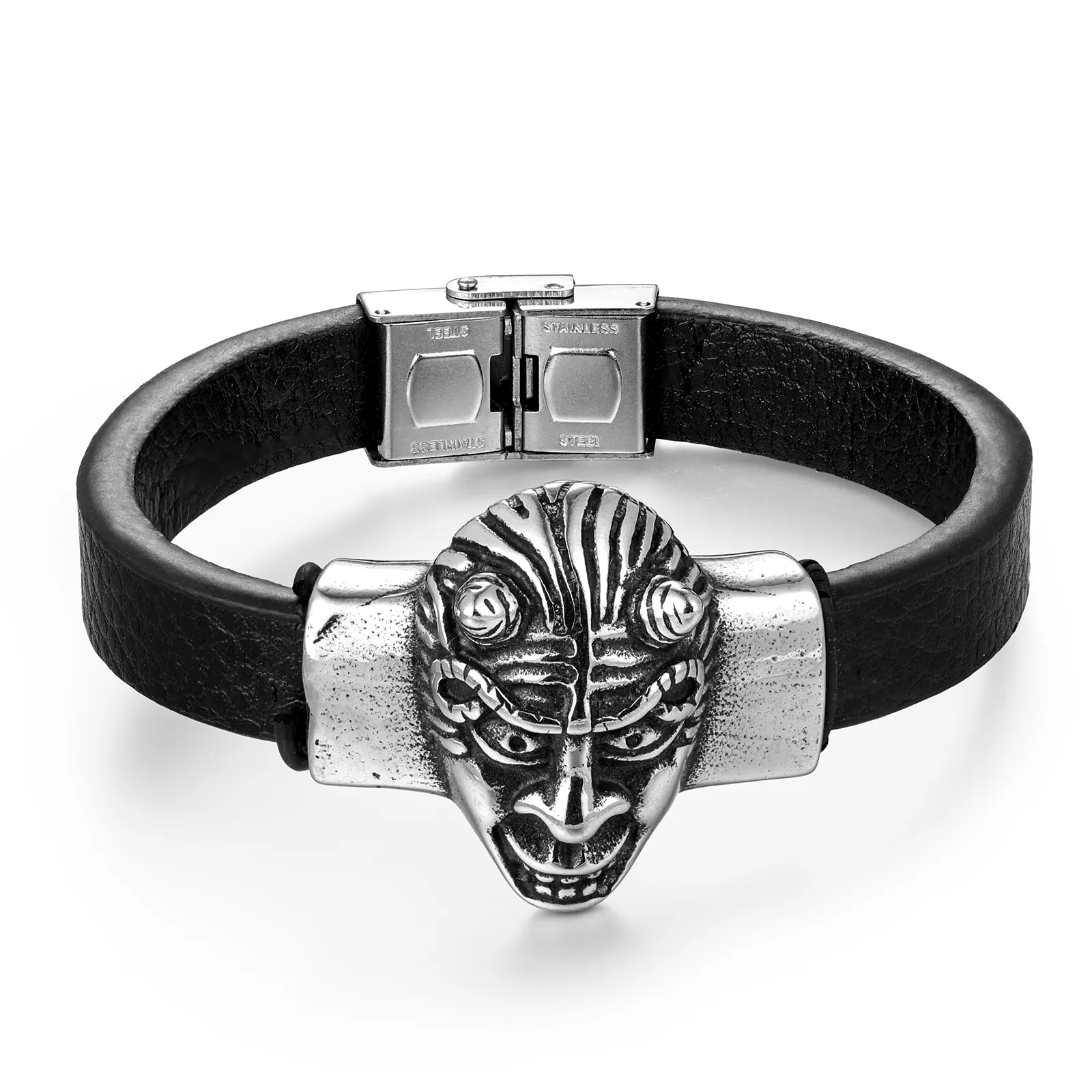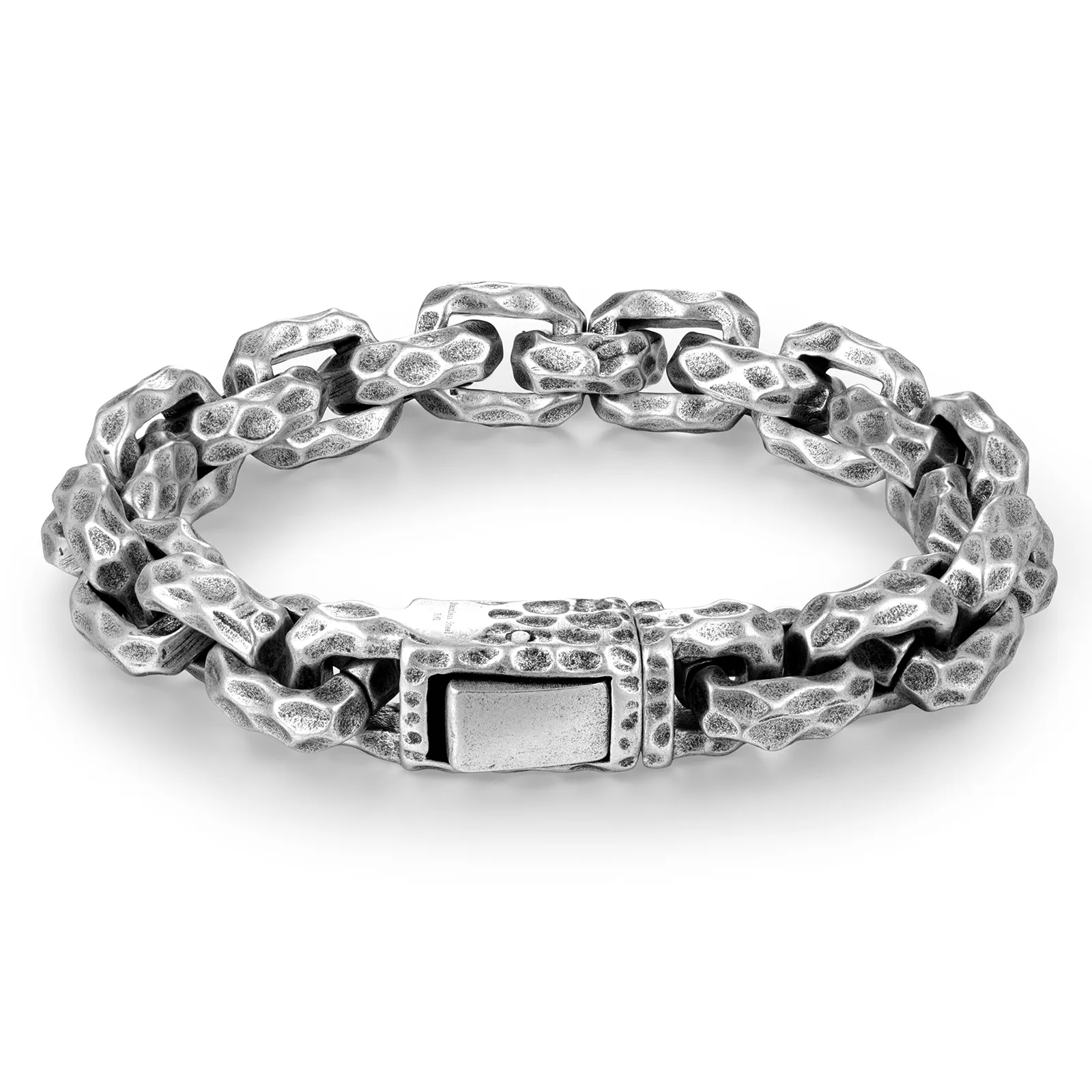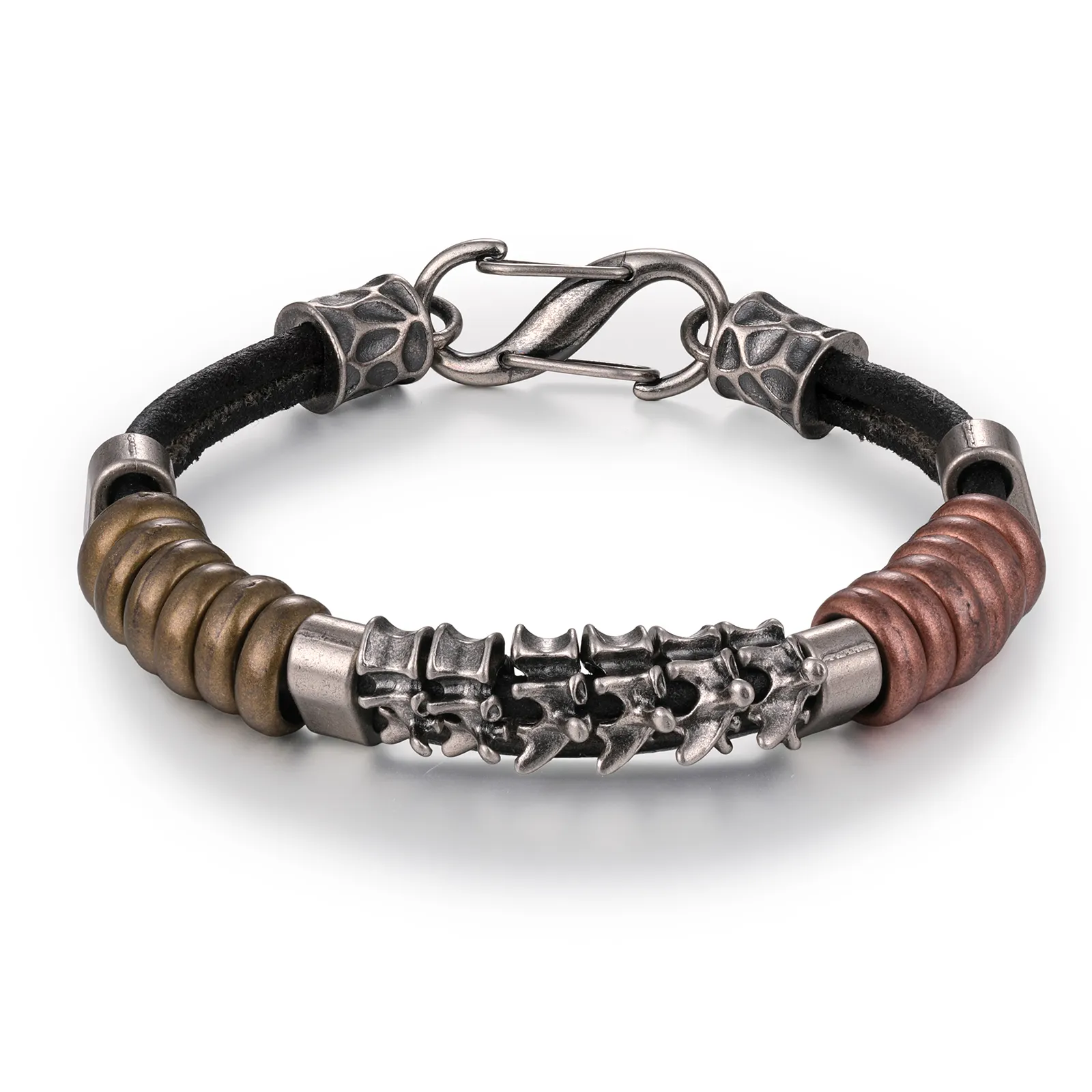


You think it's just “casting,” but the 316L process itself is much harsher
- The full process of 316L lost-wax casting consists of the following stages:
Material procurement → Wax pattern manufacturing → Multiple applications of ceramic shell slurry → Sintering of shells at high temperatures for tens of hours→ Melting at 1400°C+ → Cooling → Gate removal → Rough finishing → Precision grinding
If there is any error in temperature control, proportion, or timing during this process, it doesn’t mean rework—it means the entire batch is scrapped and sent back to the furnace.
Read more about 316L Lost-Wax Casting
Challenge One: The Material Was Never Meant for Casting
- It is not a standard jewelry casting material.
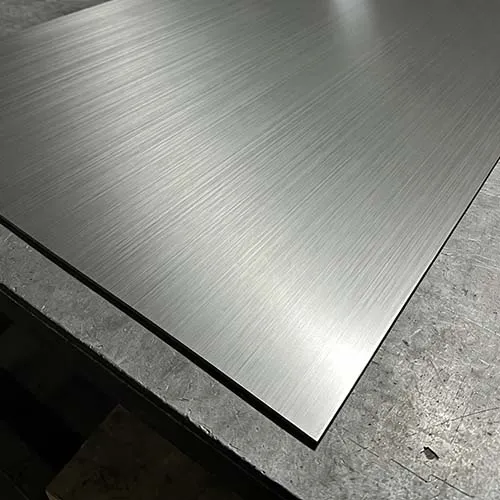
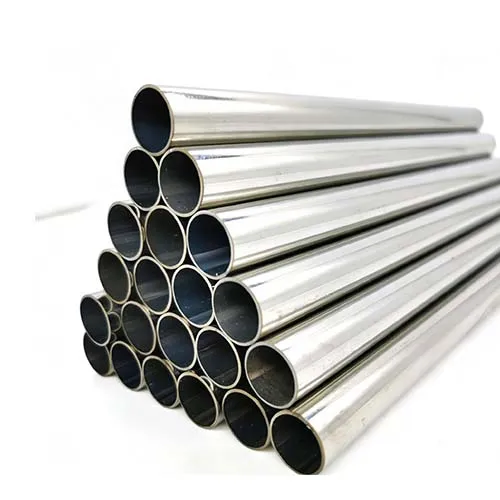
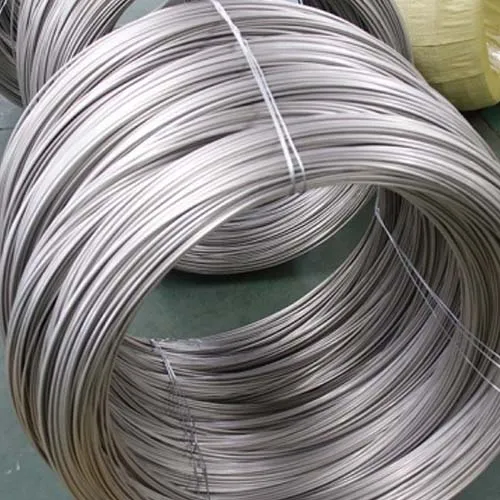
In the jewelry industry, 316L is commonly supplied as:
Sheets
Tubes
Wires - These forms are intended for CNC engraving and welded structures—not for lost-wax casting.Contrary to 925 silver and Brass,casting pellets and casting ingots are not standard stock items.Specialized 316L casting material may require the following:
Special orders
Small-batch procurement through industrial channels
Lead times - Time has been stretched since day one
- Even working with scrap, it is not a matter of “just tossing it into the furnace.”
Remelting of plate scrap material 316L:
1)Composition may be irregular
2)Oil residues or oxide layers may be present on the surface
3)Trace element aberrations have direct effects on fluidity and strength
Strict cleaning + composition adjustment before entering the casting furnace are obligatory.
This step is practically non-existent in silver jewelry production.
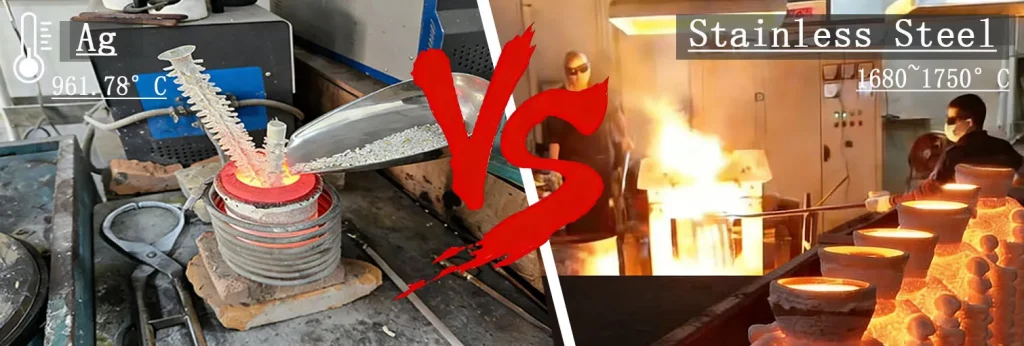
The melting point isn't just “a bit higher”—it's as high as Mount Everest
- Silver has a melting point about 961.78°C,
easily cooked using a gas stove.
What about 316L?
Above 1680~1750°C.
This is far from simply “using more electricity.” This is about:
1)The standard plaster molds melt instantly
2)Special ceramic investment shells are required.
3)Shells require multiple slurry applications and extended high-temperature sintering (tens of hours)
Skip this step,and what you get isn’t jewelry—it’s the lunar surface:
Pores, voids, orange peel texture—all present and accounted for.
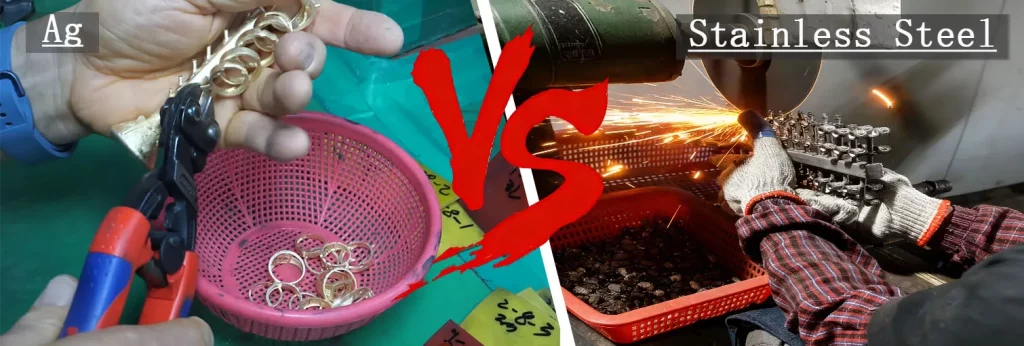
That you refer to as "polishing" is actually "stone cutting" for 316L
- Many clients believe that polishing can be defined as:”Just buffing it to a shine”
However, for 316L casting,
The polishing process itself “is a physical slog and a war of attrition.”
1)Sandpaper for silver jewelry
2)May clog up in seconds when used on 316L
3)High hardness & high toughness
4)Tools and materials degrade very rapidly - Our workshop masters often joke:“Working with 316L is like training your arm strength.”
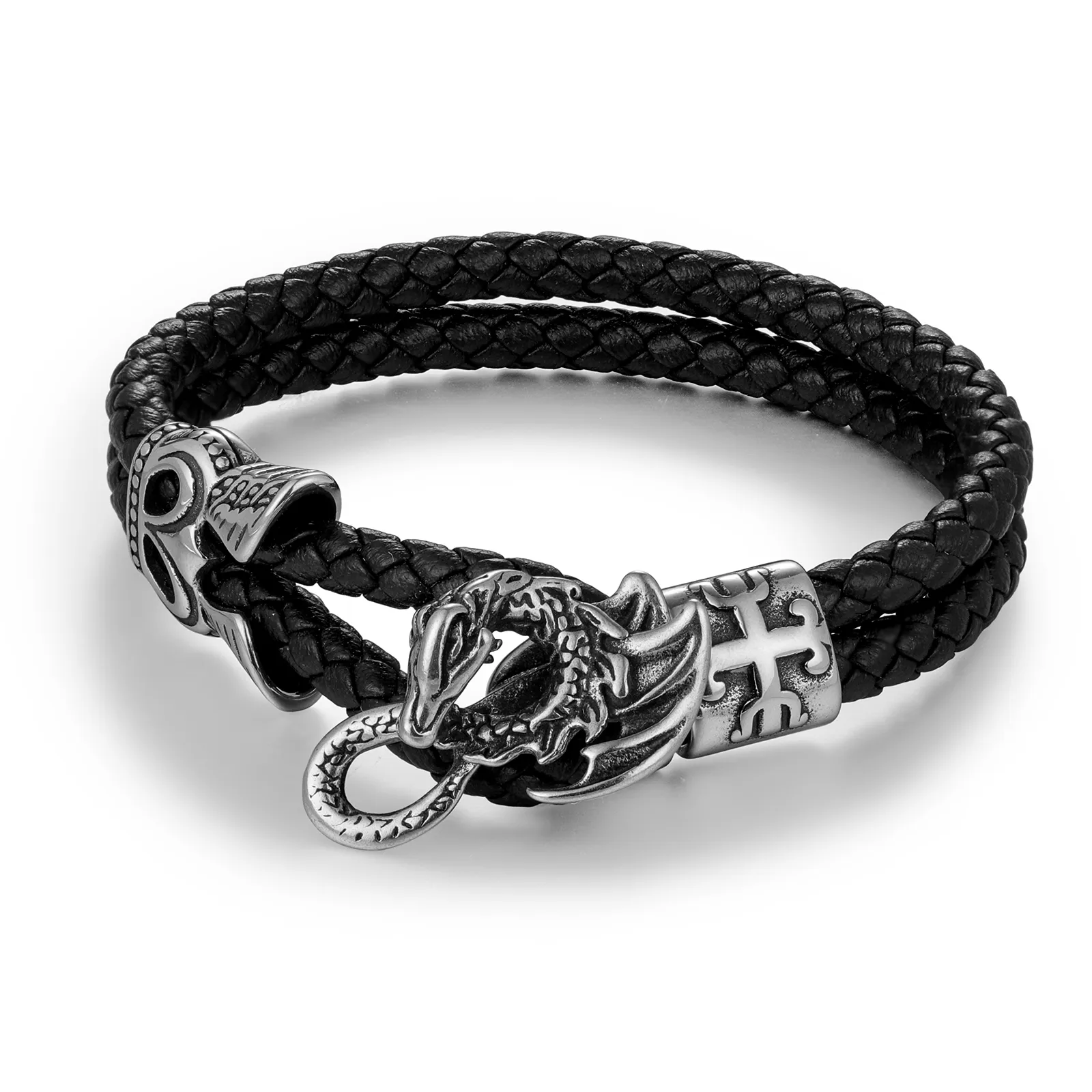
This elaborate pendant can be taken:
Silver polishing 5 minutes,316L casting minimum 1 hour. - This is the actual cost of labor that is literally pounded out.
The Most Important Issue: 316L Casting Provides Practically No Tolerance for Error
- Lack of Flowability, Such as 316L has very poor flow properties when melted:
1)hollow bodies
2)ultra-fine
3)deep recess
Tends to be incompletely filled and porous - Extreme shrinkage & thermal stress
1)shrinkage rate far exceeds silver
2)concentrated thermal stress
3)minor casting system design flaws
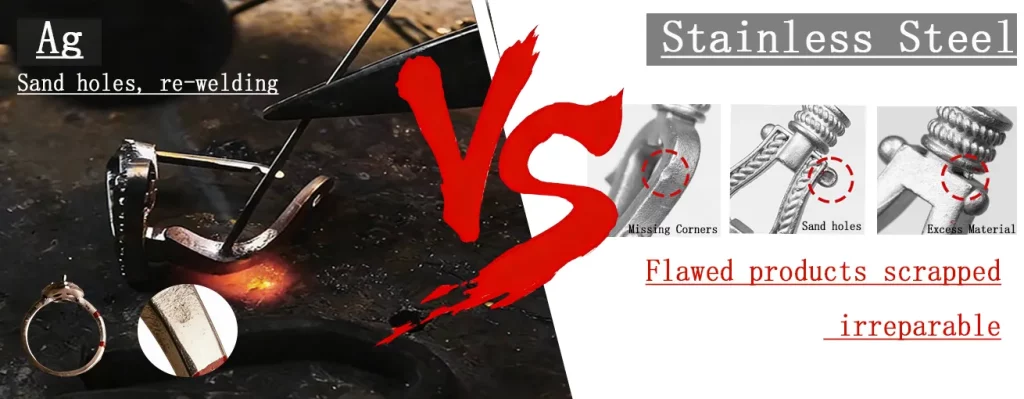
Result : Entire batch cracking - Even more brutal : 316L castings are nearly impossible to repair via soldering like silver jewelry defects?
Entire batches must be remelted.This uncertainty is the true culprit behind infinitely extended lead times.
Jasper's Insider Tip (Also My Most Frequently Repeated Advice)
- If you are looking for :
1)efficiency
2)consistent delivery times
3)razor-sharp surfaces
abandon casting and switch to CNC or hydraulic processes.Direct CNC engraving on 316L sheet metal: Faster speed, more precise structure, completely avoids pitfalls of casting, and better showcases the metallic texture of stainless steel. - When would you insist on casting instead?
If your design features:
1)Highly organic forms
2)Strong sculptural elements
3)Hand-hammered textures
4)Random folds,asymmetrical structures
5)Wax carving marks,lost-wax casting remains the best expression method. But there’s one critical prerequisite: You need to accept the natural timeline of casting and plan procurement and delivery well in advance.
Jasper's Professional Strategy Recommendations (for ‘urgent delivery’ clients)
When dealing with clients who have very sensitive lead times, I recommend no more than two alternatives:
- Guide Process Transformation :
Flat, geometrically strong designs,Strongly recommend CNC or hydraulic processes :
1)No need to queue for casting
2)Sharper surfaces
3)Delivery times remain controllable - Lock in Material Availability Early
For bulk 316L casting orders,secure raw materials 10 days in advance.
We can perform preliminary composition treatment,reducing uncertainty by at least half.
FAQS
Frequently Asked Questions (FAQs) About 316L Casting
You mentioned that 316L casting material is not a standard item. What specific problems with delivery would this create?
It affects the ‘starting point’ discussed earlier. It is easy to obtain silver or copper dental casting alloys; ordering the 316L dental casting alloy may sometimes be needed. Also, there are procedures involved in remelting the sheet scrap that entail cleaning, decontamination, and composition adjustment, which are not normally involved in silver jewelry casting.
You said, “sintering the mold shell takes dozens of hours.” Why can it not be shortened?
Because 316L has a very high pouring temperature. If the strength of shell and capacity of venting are too poor, directly leading to:
Surface roughness resembling sandpaper Dense pinholes Localized shell collapse causing material or corner defects
Sintering time essentially trades for “shell strength, stability, and surface quality.
Silver can be produced by casting, using plaster molds, while 316L cannot. Why?
Because the temperature ranges are worlds apart. “Silver’s temperature ranges are friendly to the mold materials—plaster can resist the temperatures. The temperature ranges of 316L cause the plaster systems to fail, including the breakdown or disintegration, requiring high temperature ceramic shells.” It, by itself, prolongs the process.
In what way does 316L's flow ability after melting relate to its similarity to “syrup”?
It will cause jams in three types of structures:
Ultra-fine patterns (shallow, fine, dense): Tends to incompletely fill.
Deep narrow grooves: Tendency for gas traps and shrinkage voids.
Ultra-dense openwork: Complexity in metal currents results in material deficiencies.
“Acceptable” yields may be realized in silver, but the success rate will worsen in 316L.
You talked about "temperature control deviations can scrap entire batches."What types of deviations are you referring to mainly?
Primarily involved: melting temperature vs. time, pouring temperature range, temperature for preheating the mold, shell, cooling rate. The range in 316L is limited, and deviations get magnified from “imperfections” “structural defects” (cracks, shorts, and heavy porosity).
You talked about “greater shrinkage and thermal stress.” Would 316L be more likely to split?
That’s right. The reason why the stress concentration due to differences in temperature is a problem in 316L material is that in structures with a large change in thickness, sharp corners, or a thin side transition to a thicker side at a corner, a non-uniform stress relaxation during cooling leads to cracking. This is because, although silver “survives”.
In the text, it is written that “even minor defects require recasting.” Why can it not be repaired like silver?
Defects in silver jewelry are usually ‘surface repairable.’ Typical defects in 316L jewelry are the possibility of under-filling, shrinkage cavities, fractures, or hidden stresses that might reappear even after repairs, thereby causing a second breakage. Recasting is always a better option than taking a chance on repairs.
“It's not grinding, it’s a ‘battle’,” you say. And where is the delay?
The causes of delays include two things:
- Abrasion caused because of hardness/toughness leads to clogging/quick wear.
- Large increases in times for casting gates, parting lines, and localized sand holes.
What takes minutes for silver can take hours for 316L.
Would improved equipment enable casting 316L as quickly as it is possible to cast silver?
Equipment will improve ceiling levels more easily than over material differences. The real issue w/r to delivering is not just the machine itself, but rather: material sourcing + shell mold system + high-temperature window + intensity of post-process w/i.
In your conclusion, you recommend replacing traditional lathes with CNC/hydraulic lathes. What designs must be altered?
If your clients care most about:
- Lead times, highly clean surfaces, having edges, spec conformance, and shapes tending towards Geometric/Regular/Flat, CNC/hydraulic is likely your best bet. While you could use casting, you’re going to fight process variability much harder.
What designs, then, would be “better suited for casting”? What, precisely, is your definition of the “artistic feel” that is referred to in your article?
It is the referent for sculptural undulations, natural curves, wax carving scratch marks, random folds, and hammer marks—that is, expressions described as “non-industrial.” Casting marks and randomness are incorporated into this style. CNC machining will often render this pattern too clean, stripping away this aesthetic.
If your client insists on the following, “I want casting, but I also want it fast,” how will you handle the situation?
I clearly outline the options:
- For speed, one should consider CNC/hydraulic processes.
- For casting, “accept a reasonable time schedule and reduce uncertainties by structural optimization + material locking”.
The attempt to have both ends up just moving risks into the scrap and rework buckets.
You said, “send me a PDF and I'll have the engineering team review it.” What would be the important points that you would be reviewing in the document?
Basically, we are concerned with four things:
- Thickness transitions (stress and crack risk).
- Pattern/hollow density (flow & fill risks).
- Machining allowance (inlay, hole, flatness accuracy).
- Surface finish objective (crafstman appearance vs. mirrored finish).
We then go on to make a recommendation regarding what to combine. That recommendation is to combine “casting / CNC / casting + post-processing”.
Can you rate it even without the images in a 3D file?
A initial direction-oriented guess (tending towards CNC or casting) may be possible. In matters such as hole concentricity, thin-wall specifications, and filling holes, it is necessary to prioritize having a dimension PDF drawing or a 3D file.
If you'd like to learn more about stainless steel jewelry, click the button below for details.
Recent Articles
Author

Ertian Jiang (Jasper) is the founder of Haosen Metal Jewelry. Since the age of 26, he has combined deep roots in traditional craftsmanship with a sharp vision for the market to build the foundation of the company’s excellence.
Ertian Jiang started on the ground floor as a craftsman, specializing in semi-precious stones (agate, mother of pearl, tiger’s eye) and manual inlaying—perfecting how to fit natural stones into metal bases without gaps or glue failure. He also worked on the front lines of sales, speaking face-to-face with buyers and listening to their frustrations about fallen stones and fading colors.