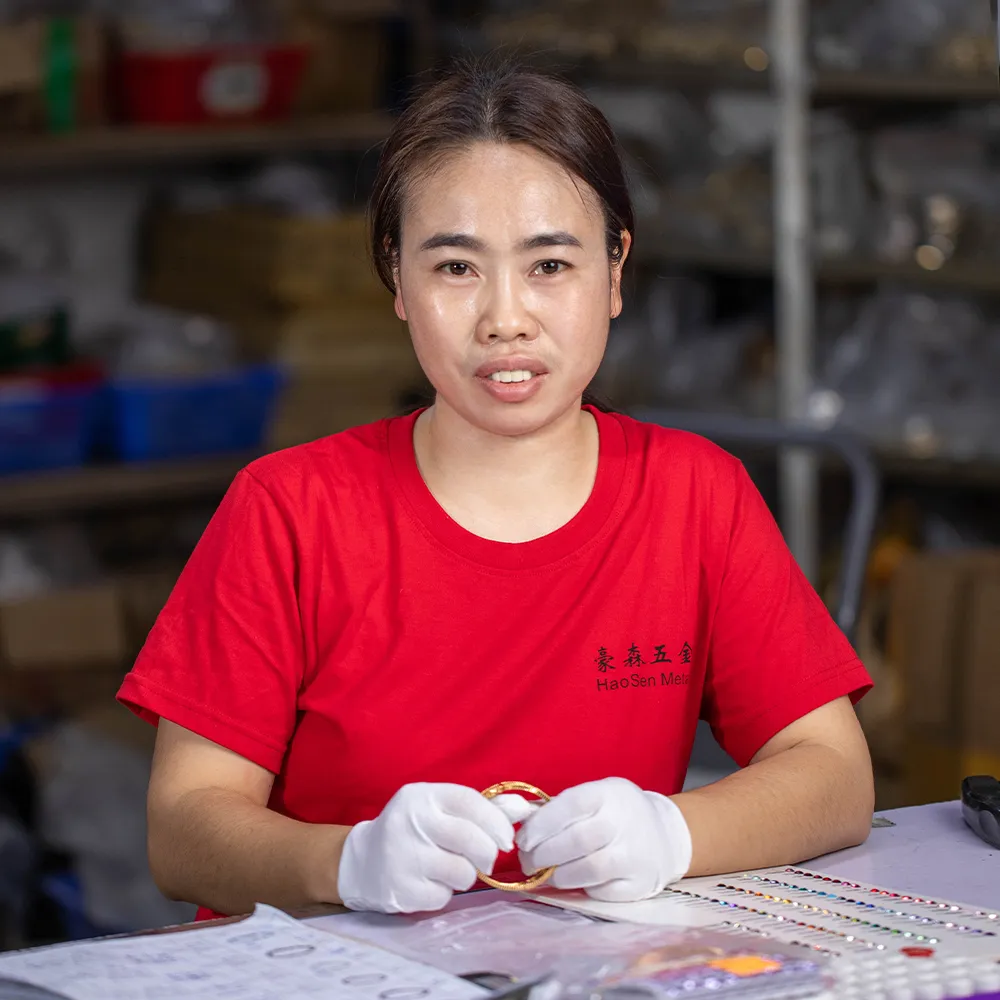

A nickel-free label can help you choose jewelry, but it does not tell you everything about the piece. The base metal, plating layers, earring posts and small connecting parts all deserve attention.
Whether you are buying a pair of earrings or developing a collection for your brand, the useful question is what supports the claim. This guide explains the common terms and the details to check before you buy.
What does nickel free mean in jewelry?
Nickel-free describes a claim about nickel in a product. Before relying on it, ask what the seller means: no intentionally added nickel, nickel content below a stated detection limit, or compliance with a nickel-release requirement. These statements describe different things.
Nickel content measures how much nickel a material contains. Nickel release measures how much comes off its surface under specified test conditions. A product can meet a nickel-release limit even when its alloy contains nickel. A passing release test alone does not prove that the product contains no nickel.
For a brand, the claim should match the specification and evidence for the finished piece, including its components and finish.
What is the difference between nickel-free and nickel release?
Nickel-free is a statement about whether nickel is present in the specified material or product, so a buyer needs a clear definition, such as no intentionally added nickel or a stated maximum content or detection limit. Nickel release is different: it measures the amount of nickel that migrates from a surface under specified test conditions, usually reported in micrograms per square centimeter per week (µg/cm²/week).
Under EU REACH Annex XVII, entry 27, the nickel-release threshold is less than 0.2 µg/cm²/week for posts inserted into pierced ears or other pierced body parts. For jewelry components intended for direct and prolonged skin contact, the limit is 0.5 µg/cm²/week. These are release requirements, not limits on the total nickel content of an alloy. [2, 6, 7]
For example, 316L stainless steel normally contains nickel but may meet an applicable nickel-release requirement. Passing that test does not make the alloy nickel-free. On the other hand, a claim of no intentionally added nickel does not replace a finished-product release test where one is required. Brands should state which claim they are making and keep matching evidence. [3, 8]
What is nickel free jewelry?
Nickel-free jewelry is jewelry sold with a nickel-free claim covering the relevant materials and components. It can include earrings, rings, necklaces and bracelets in different styles and price ranges.
The label does not identify one particular metal. It also does not automatically mean waterproof, tarnish-resistant, lead-free or suitable for every person with sensitive skin. Each of those claims needs its own basis.
Why is nickel free jewelry important?
Nickel is a common cause of allergic contact dermatitis. Jewelry that exposes a sensitive wearer to nickel can cause an itchy rash. Earrings and earring backs are among the items highlighted by the American Academy of Dermatology. [1]
Reducing nickel exposure matters to people with a nickel allergy. For jewelry brands, clear material information also helps customers choose products more confidently. Avoid promising that a piece cannot cause any allergic reaction. Other materials may cause reactions too. A recurring or persistent rash should be assessed by a dermatologist.
What metals are nickel free?
Pure metals such as titanium, niobium, silver, gold and platinum do not have nickel as part of their elemental composition. Finished jewelry, however, often uses alloys, coatings or mixed components. A metal name alone is not enough to verify the entire piece.
Brass is a copper-zinc alloy and can be specified without intentionally added nickel. Its exact grade, impurities, joining materials and plating still need to be checked. Gold alloys and sterling silver also require confirmation of their additional metals. Stainless steel needs particular care because common jewelry grades contain nickel.
For procurement, request the exact alloy specification and supporting evidence rather than accepting a general list of supposedly safe metals.
Which metals used in jewelry may contain nickel?
Nickel may be part of the base alloy, an intermediate plating layer, or a small component. Common examples include 304 and 316L austenitic stainless steels; some white-gold alloys (others use palladium instead); nickel silver or German silver, which contains copper, nickel and zinc despite its name; and copper-nickel alloys. Certain sterling-silver formulations or other jewelry alloys may also use nickel. [3, 4, 8, 9]
A brass base made chiefly from copper and zinc does not automatically contain intentionally added nickel, but its full grade, nickel-bearing underplating, clasps, earring posts, solder and other findings still need to be checked. Similarly, the words “stainless steel,” “silver,” “white gold” or “gold plated” do not establish that the finished item is nickel-free.
For purchasing, request the exact alloy designation and a component-level bill of materials. Identify possible nickel-bearing plating layers and confirm whether the finished item needs composition testing, nickel-release testing, or both for its intended market.
What jewelry is nickel free?
Look for a documented claim for the specific product you want to buy. Verified titanium earrings, confirmed nickel-free sterling silver pieces and appropriately specified brass jewelry can be options. Their material names are a starting point for checking, rather than proof by themselves.
Check the less visible parts too. A necklace pendant may use one alloy while its clasp uses another. An earring body, post and back may have different specifications. Gold color and a polished surface do not reveal nickel content.
What is nickel free jewelry made of?
There is no single recipe. A piece may use a confirmed nickel-free alloy, a verified material such as titanium, or a combination of materials selected for its design.
For plated brass jewelry, ask about the brass grade and every layer in the plating system. A gold-colored top layer does not tell you whether nickel is present underneath it. The clasp, chain, solder and connecting rings may also need separate material specifications.
For a custom collection, document these choices before sampling so that the approved appearance and the required materials are developed together.
What are nickel free earrings?
Nickel-free earrings are earrings with a supported nickel-free claim for their relevant parts. The claim should cover more than the decorative front: posts, hooks, backs, hinges and other contact parts also matter.
For example, a brass earring body paired with a stainless steel post cannot automatically be described as entirely nickel-free. Verify the post grade and decide what claim the evidence supports. Jewelry for a fresh piercing also has requirements beyond a nickel-free label.
What are nickel free earrings made of?
Earrings can use verified titanium or niobium contact parts, confirmed nickel-free silver or gold alloys, and appropriately specified brass bodies. Some designs combine a decorative alloy body with a different post material.
Ask for the material of the body, post or hook, back, and any hinge or soldered joint. If the earring is plated, ask whether the plating specification applies to all relevant components. A supplier should be able to describe the construction, rather than simply repeat the label.
How can you tell if earrings are nickel free?
Start with the product specification and ask the seller what supports its claim. A description that only says gold plated or surgical steel does not establish that an earring contains no nickel.
For wholesale orders, request documents that identify the sampled style, components, finish, test method and result. Check that they describe the product you are ordering. A report for a different earring or a different plating system may not answer your question.
A home nickel spot test may help screen for nickel release, but a negative result does not prove zero nickel or replace laboratory testing.
How can you tell if jewelry is nickel free?
You cannot reliably judge nickel content from color, weight, price or appearance. Review the material description, the meaning of the claim and the evidence for the finished product.
For repeat orders, reconfirm the evidence when the alloy, component source or plating system changes. Keep the approved specification linked to the style and finish.
Composition testing and nickel-release testing answer different questions. For EU skin-contact jewelry, the REACH nickel restriction concerns release, with recognized test standards including EN 1811 and EN 12472 for relevant coated articles. Ask the laboratory which current method and preparation apply to your product. [2]
How is nickel-free jewelry tested?
Start by defining the claim. If the purpose is to assess nickel content, request the supplier’s alloy specifications and component declarations. A laboratory may use X-ray fluorescence (XRF) to screen metal composition, with a suitable validated quantitative method, such as ICP-OES or ICP-MS after appropriate sample preparation, when lower detection limits or confirmation are needed. A result below a method’s detection limit is not proof that the nickel content is literally zero.
If the purpose is to assess nickel released during wear, have the relevant finished components tested using the applicable method. For EU jewelry in direct and prolonged skin contact, EN 1811:2023 is a recognized nickel-release test; for coated items, EN 12472:2020 provides wear-and-corrosion simulation before the applicable release assessment. The laboratory should determine the appropriate preparation, test conditions and current standards for the product. [2, 6, 7]
Test the parts that matter: earring posts and backs, hinges, chains, clasps, soldered joints and plated surfaces may have different materials or finishes. A home dimethylglyoxime (DMG) spot test may be useful as a preliminary screen, but it cannot certify nickel-free composition or replace a compliant laboratory report.
For an OEM or wholesale order, obtain a report identifying the product or sample ID, tested parts, plating system, standard and version, numerical results, reporting or detection limits where applicable, and acceptance criteria for the target market. Reassess after material, component supplier or plating changes.
What is nickel free stainless steel?
Nickel-free stainless steel refers to a specified stainless alloy without intentionally added nickel, subject to its actual composition and any stated trace limits. It should not be used as a blanket description of stainless steel jewelry.
Common austenitic grades such as 304 and 316L contain nickel. The L in 316L refers to low carbon, not low nickel. The related 316 grade is a chromium-nickel stainless steel. [3]
A steel product with low nickel release is still different from a nickel-free alloy. Request the exact grade and evidence that supports the wording used on the product.
Which stainless steel is nickel free?
Some ferritic stainless steel grades, such as 430, are generally specified without intentional nickel additions. However, trace allowances, corrosion performance and suitability for a particular jewelry design still need review. Do not select a grade solely because of its nickel specification.
Ask the supplier for the applicable material certificate and check the finished components and coatings. Avoid treating every stainless steel product as interchangeable. A verified grade for one use may not suit another.
What does nickel free sterling silver mean?
It means the supplier is making a nickel-free claim in addition to identifying the material as sterling silver. Sterling silver contains 92.5% silver; the remaining portion consists of other metals. A 925 mark identifies silver fineness, not the complete alloy recipe. [4]
Ask what makes up the remaining alloy and whether the solder, clasp, posts and plating are covered by the claim. A confirmed silver alloy does not automatically verify every part of a finished necklace or pair of earrings.
What is nickel free silver?
Nickel-free silver can describe a verified silver material or finished silver piece, but the term needs clarification. Ask whether the product is fine silver, sterling silver, silver plated or simply silver colored.
Silver plating identifies a surface layer. It does not identify the base metal or any underlying plating layers. Also, nickel silver is a different alloy name and should not be confused with sterling silver. Always ask for the actual material specification.
What does lead and nickel free jewelry mean?
The phrase combines two separate claims. Ask the supplier to define and support each one. A nickel-release report does not establish lead content, and a lead-content result does not establish that a piece is nickel-free.
For wholesale buying, specify the destination market, intended age group, product type and requested claim before agreeing on testing. Adult fashion jewelry and children’s jewelry may have different requirements.
Avoid treating a broad statement such as lead and nickel free as a substitute for product-specific documentation. Agree on the test scope and acceptance criteria for each requirement.
Can you shower with nickel free jewelry?
A nickel-free claim does not establish water resistance. Whether a piece tolerates showering depends on its base metal, finish, adhesives, stones and construction.
For plated fashion jewelry, removing it before showering is a practical default unless the seller provides clear care instructions supported for that product. Repeated exposure to water and personal-care products can affect appearance or coating performance. A brand selling jewelry for daily water exposure should evaluate that claim separately.
How do you make earrings nickel free?
For a new design, begin with a material specification covering the body, contact parts, joining materials and finish. Confirm the nickel requirements for each component before the sample is made. Then verify the finished sample using tests appropriate to the claim and target market.
An existing earring that contains nickel cannot reliably be turned into a fully nickel-free item by covering it with clear nail polish or another temporary coating. Replacing posts or hooks may change those parts, but it does not verify the rest of the piece.
For manufacturing, resolve the materials and plating system before bulk production rather than relying on a later surface fix.
Where can I buy nickel free earrings?
Look for sellers who identify the materials of both the earring body and contact parts, explain the nickel-free claim and answer questions about supporting evidence. This is more useful than choosing by the label alone.
For nickel-free hoop earrings wholesale, check the hinge, post and closure as well as the hoop body. Request samples in the intended finish and confirm the specification before placing a bulk order. If you have a diagnosed nickel allergy, use your dermatologist’s advice when selecting jewelry.
References
[1] American Academy of Dermatology. Nickel allergy: How to avoid exposure and reduce symptoms. https://www.aad.org/public/diseases/eczema/insider/nickel-allergy
[2] European Commission. Publication of standards under entry 27 (nickel) of Annex XVII to REACH, 2023/1604. https://eur-lex.europa.eu/eli/C/2023/1604/oj/eng
[3] BS Stainless. Type 316 chromium-nickel stainless steel technical data. https://www.bsstainless.com/images/pictures/new-data-sheets-2018/ss-316.pdf
[4] GIA. White Gold vs. Silver: What is the Difference? https://4cs.gia.edu/en-us/blog/white-gold-vs-silver/
[5] British Stainless Steel Association. Stainless Steels to Behold 430. https://bssa.org.uk/stainless-steels-to-behold-430-%E2%9C%A8/
[6] European Union. REACH Annex XVII entry 27, consolidated text. https://eur-lex.europa.eu/legal-content/EN/TXT/?uri=CELEX:02006R1907-20240606
[7] European Chemicals Agency (ECHA). REACH Annex XVII entry 27, nickel restrictions and limits. https://echa.europa.eu/documents/10162/3bbe9024-52a6-8e63-5581-e686331eb459
[8] Nickel Institute. Stainless steel: The role of nickel (including 304 and 316 composition). https://nickelinstitute.org/en/nickel-applications/stainless-steel/
[9] GIA. White Metal Options for Your Engagement Ring (white gold alloying metals). https://4cs.gia.edu/en-us/blog/pick-right-white-metal-engagement-wedding-ring/
Autor

Arranges third-party lab testing (SGS/RoHS) and 100% Final Quality Control.