

As the founder of Haosen Jewelry, I’ve seen too many brands suffer when bulk shipments flake after only two weeks of wear.
The difference often comes down to one technology: PVD coating.
As a 16-year SEDEX-audited manufacturer, we apply industrial-grade QC to every batch of PVD-coated jewelry. Through years of OEM/ODM manufacturing experience, we’ve learned that long-lasting color y cumplen con la durability are not achieved by coating alone—they depend on a precisely controlled PVD vacuum coating process.
Below, we’ll walk you through the exact 4-step PVD coating process we use to transform raw stainless steel jewelry into premium finished pieces built for years of daily wear.
What Is PVD Coating on Jewelry?
As a specialized 316L stainless steel jewelry manufacturer, we emphasize this material because it is the ideal substrate for the PVD process. Whether you are dealing with various raw material forms—our mastery of the base metal ensures consistency in the vacuum chamber.
- Low Carbon & Vacuum Stability: As a “Low Carbon” (L) grade alloy, 316L minimizes chromium carbide precipitation during heating. This allows the PVD chamber to maintaining a stable base vacuum below 5×10⁻² Pa without outgassing interference, ensuring a purer and more stable coating environment.
- Optimal Ion Adhesion: The metallic composition of 316L stainless steel, particularly when refined to meet ASTM F138 surgical-grade standards, creates a superior atomic bond with titanium or zirconium-based PVD primers. This chemical synergy is what enables the finished product to pass the rigorous 5B Adhesion Tape Test, preventing the gold layer from flaking or peeling during long-term daily wear.
- Hypoallergenic & Medical Grade: 316L is a low-carbon, biocompatible metal, ensuring that even after the PVD coating process, the jewelry remains safe for sensitive skin.
- Industrial Hardness: When the inherent toughness of 316L stainless steel meets a PVD finish, the result is a product with a Vickers hardness of 1,500–3000 HV, offering the scratch resistance demanded by global retail standards.
| Performance Feature | Traditional Electroplating | Haosen PVD Coating |
|---|---|---|
Surface Hardness |
200 – 400 HV |
1,500 – 3,000 HV.
Superior Scratch Resistance: Dramatically reduces consumer returns and complaints. |
Color Retention |
3 – 6 Months |
3 – 5 Years.
Brand Reputation: Supports “Lifetime Color” marketing claims for premium jewelry labels. |
Bonding Strength |
Chemical Layer |
Atomic Molecular Bond.
Extreme Durability: No peeling or flaking during long-term wear or bulk shipping. |
Eco-Compliance |
Toxic Chemicals/Waste |
Video: PVD Process Overview
Here is a quick 5-step video overview of our PVD coating process directly from our factory floor. It’s a visual introduction to the entire workflow.
Below the video, we break down each stage into 4 main modules y cumplen con la 12 detailed processes, explaining the technology and quality control behind every piece. Feel free to watch the video first, then scroll down for a deeper dive into each step.
Step1: Pre-treatment–Creating the Perfect Foundation
We often tell our clients: the quality of the finish is 50% technical skill and 50% surface preparation. If the base metal is flawed, the plating will be too. We treat the pre-treatment stage as the most critical “foundation” for a perfect, long-lasting product.
Process 1-2: Rigorous Surface Preparation
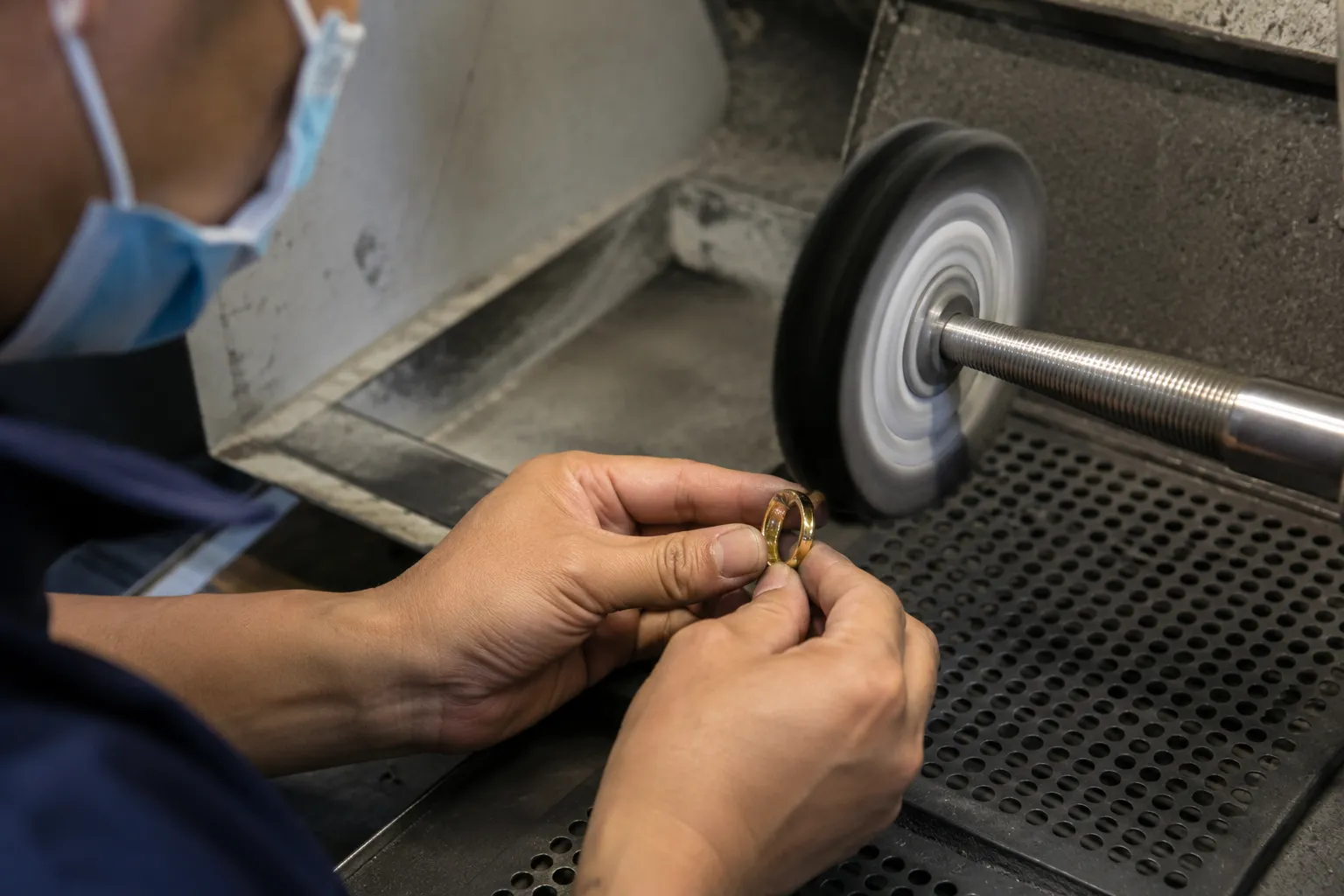
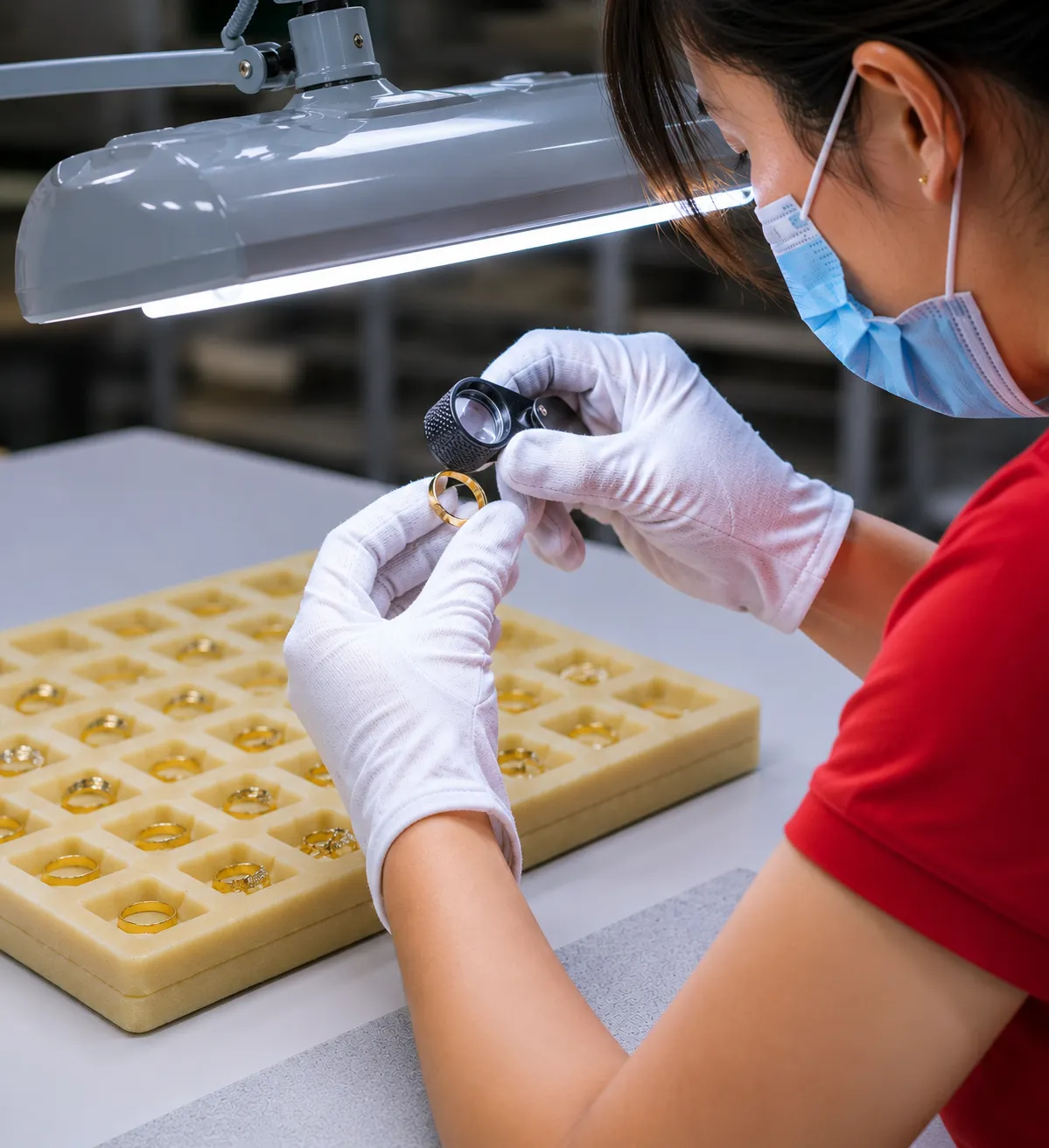
Polishing& Manual Inspection: Quality starts before the coating process. We begin with meticulous mechanical polishing to eliminate all micro-burrs and surface defects, achieving the precise, mirror-like finish required for industrial-grade plating.
Following this, every piece undergoes a 100% manual inspection to guarantee structural integrity before entering the coating stage.
Process 3: Rack Loading
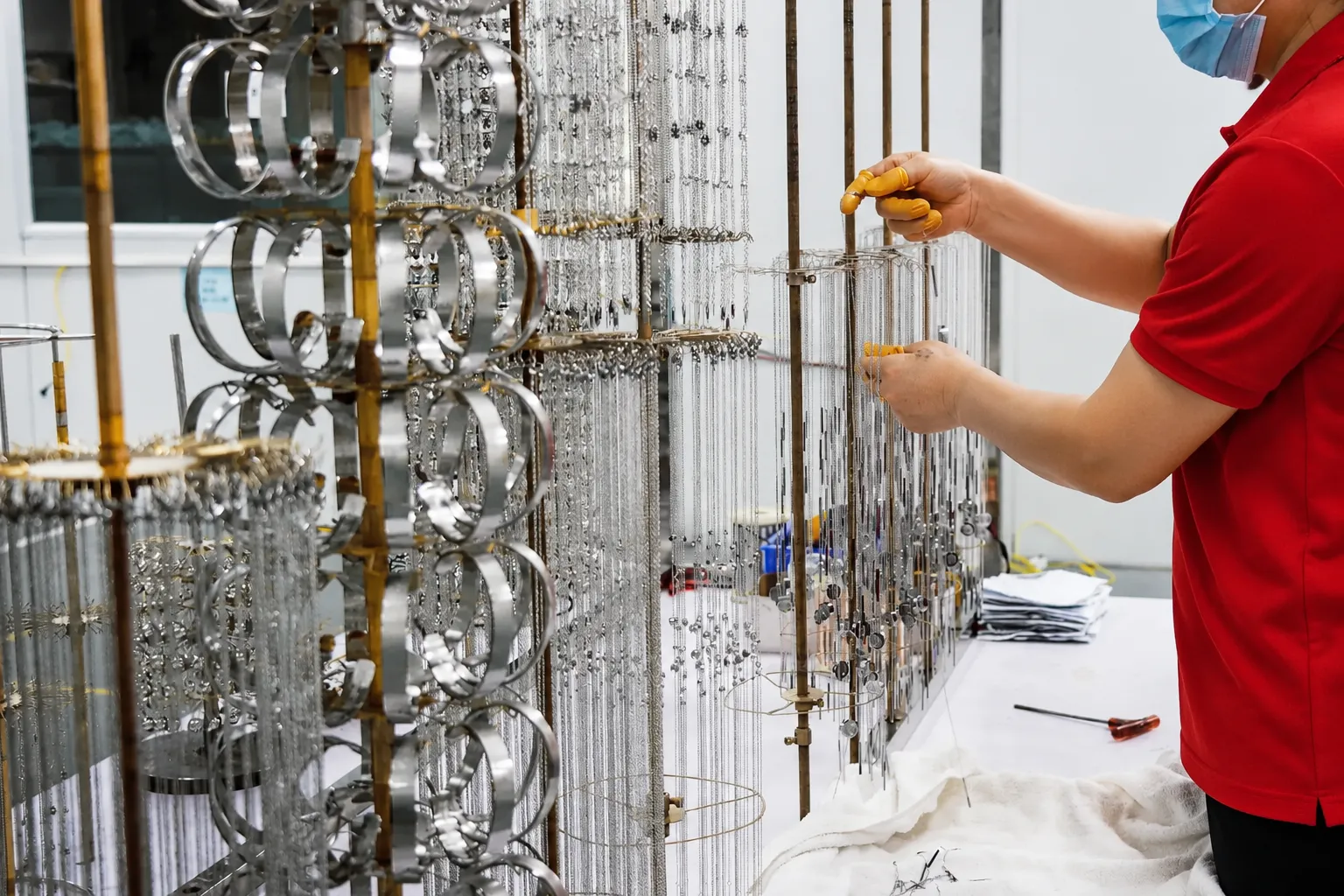
To achieve perfection in the vacuum chamber, each piece is securely mounted onto our specialized plating jigs. This vital, precision-driven step ensures that every angle of your jewelry receives uniform exposure, resulting in a flawless, consistent, and high-performance finish across your entire bulk order.
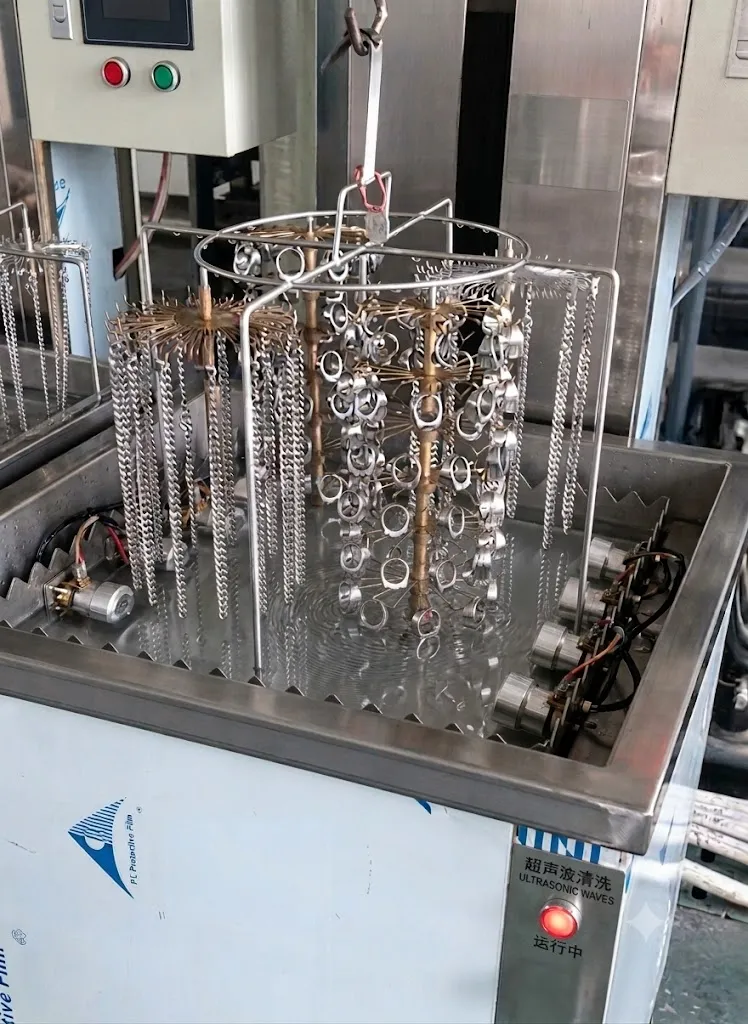
Surface Refinement: To ensure a flawless molecular bond, we subject every piece to a meticulous deep-cleanse using cavitation—a process where high-frequency sound waves create millions of imploding bubbles that act like microscopic scrub brushes, reaching into the most intricate engravings where manual cleaning fails.
We then eliminate invisible micro-contaminants, such as polishing compounds and metallic dust, using an alkaline detergent bath heated to 60°C–70°C to effectively “saponify” and break down heavy oils. Finally, a high-purity deionized (DI) water rinse optimizes the 316L stainless steel surface energy.
Without a perfectly clean surface, even the highest-quality PVD coating cannot achieve maximum adhesion.
Step 2: How Does PVD Vacuum Plating Create a Durable Finish?
Process 5: Vacuum Chamber Loading & Evacuation
We initiate the Vacuum & Heating stage by sealing the pieces within the chamber and typically between 1×10⁻² and 5×10⁻³ Pa. We heat the chamber to an optimal range of 80°C–150°C, this “wakes up” the steel’s atoms without altering its Vickers hardness, ensuring the base metal remains durable. Argon gas is then introduced to generate a high-energy plasma. Acting like millions of microscopic hammers, the plasma activates the stainless steel surface at the atomic level, preparing it for strong ion bonding and a uniform, durable PVD coating.
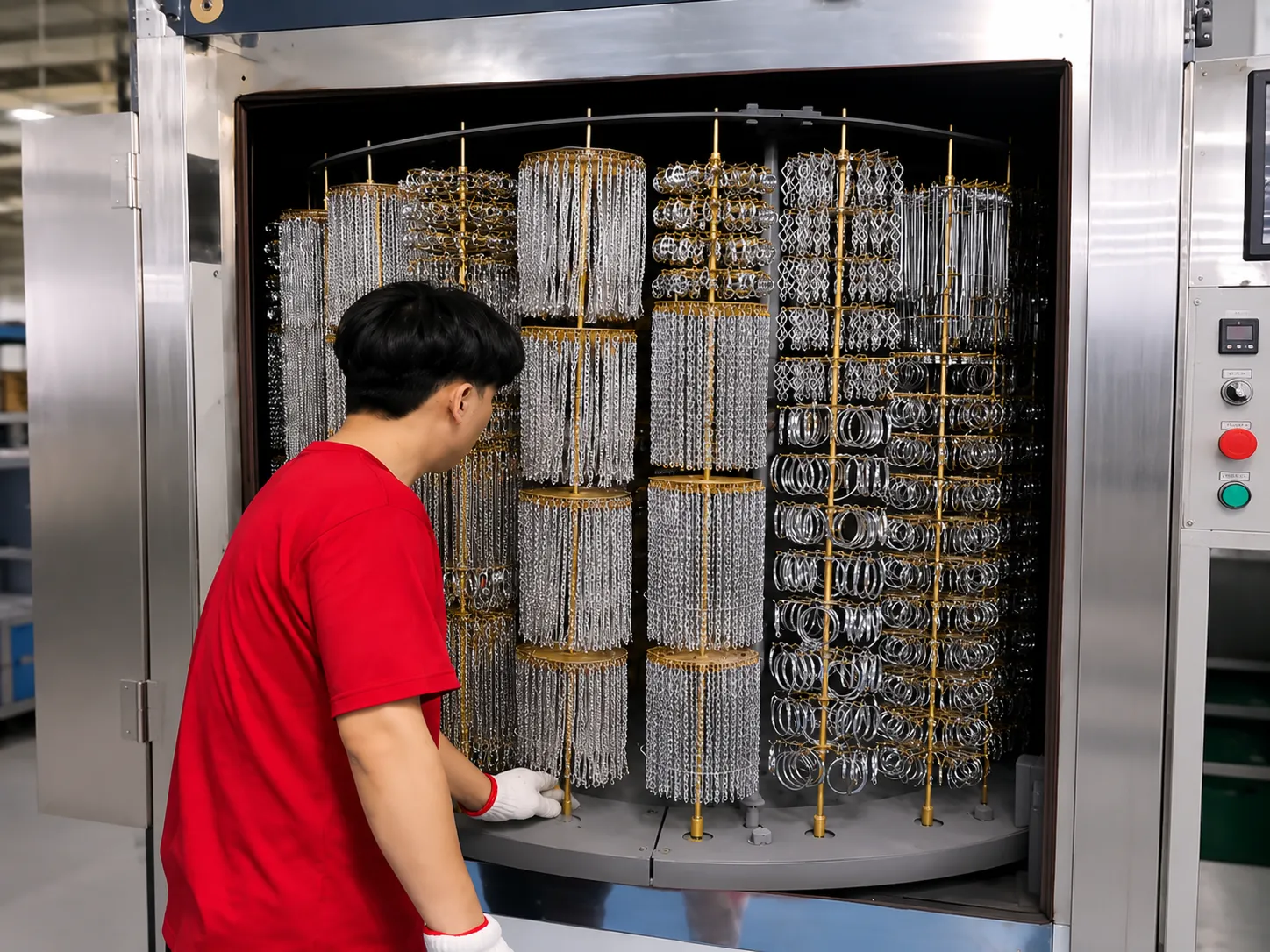
Process 6: Vaporizing High-Purity Source Targets
Titanium or zirconium targets are vaporized into a plasma cloud, and a negative bias voltage drives the metal ions into the 316L stainless steel surface, creating a strong and durable PVD bond.
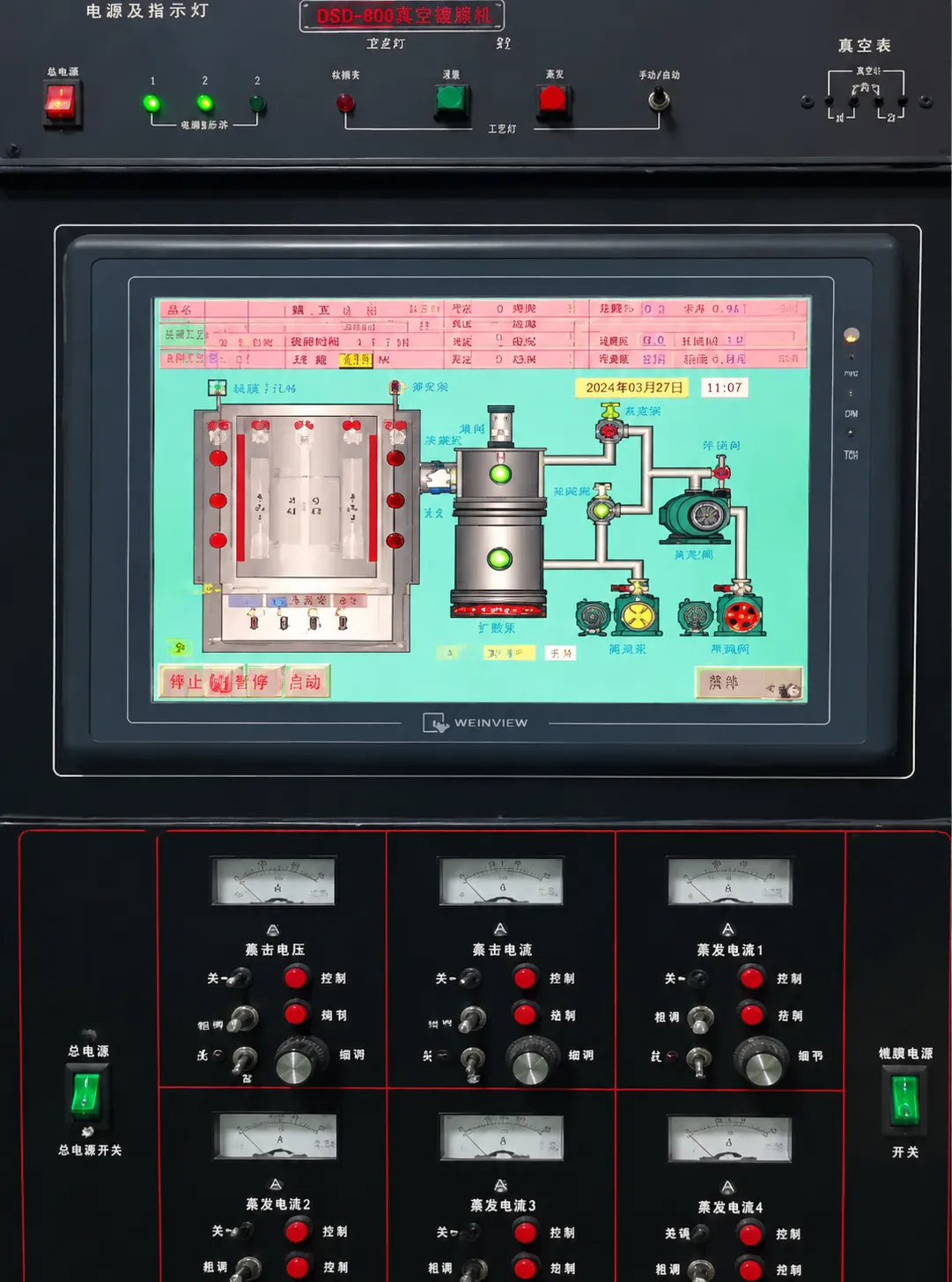
Process 7: Atomic Synthesis (The Color Mixologist)
As the metal ions travel toward the jewelry, precise amounts of nitrogen or acetylene gas are introduced to trigger a chemical reaction. Like a master mixologist crafting the perfect recipe, our engineers carefully control these gases to create titanium- or zirconium-based compounds that produce a wide range of luxury finishes, including 14K gold, oro de 18 quilates, y 24K gold. This process ensures exceptional color consistency across every production batch.
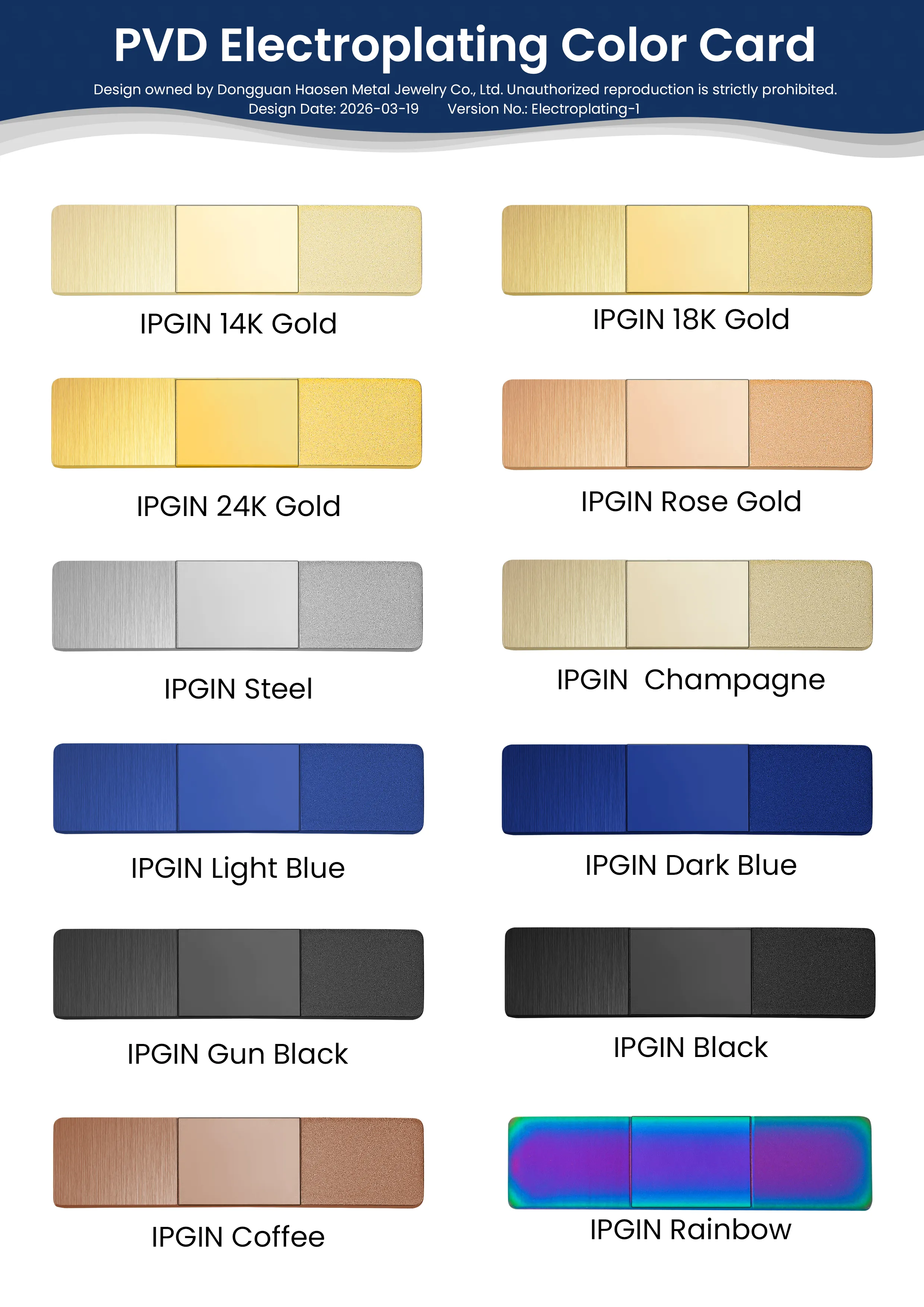
| PVD Finish | Visual Appearance | Typical Application |
|---|---|---|
Oro de 14K |
Soft, light gold tone |
Minimalist and everyday jewelry |
Oro de 18K |
Rich, classic gold color |
Premium fashion jewelry |
Oro de 24K |
Deep, vibrant yellow gold |
Luxury statement pieces |
Oro rosa |
Warm pink-gold tone |
Women’s jewelry collections |
Negro |
Deep metallic black |
Men’s jewelry and modern designs |
Step 3: Post-Processing & Comprehensive Quality Inspection
Process 8: Controlled Cooling Cycle
After the coating process is complete, the jewelry undergoes a controlled cooling cycle inside the vacuum chamber. This gradual temperature reduction prevents thermal shock and helps the newly formed PVD coating bond securely to the surface.
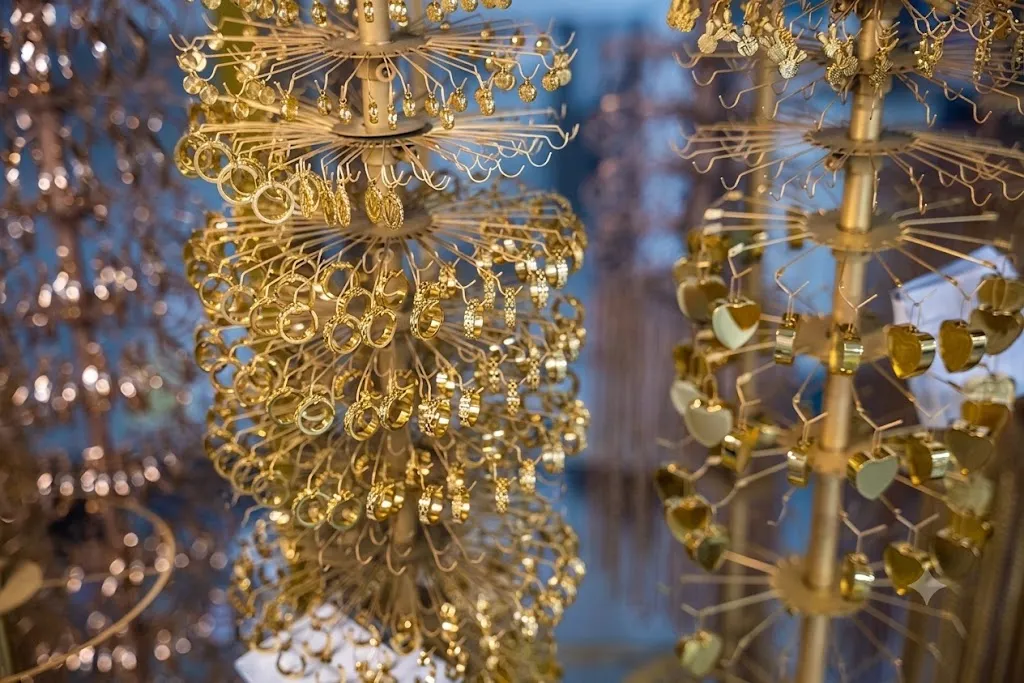
Process 9: Safe Removal & Post-Treatment
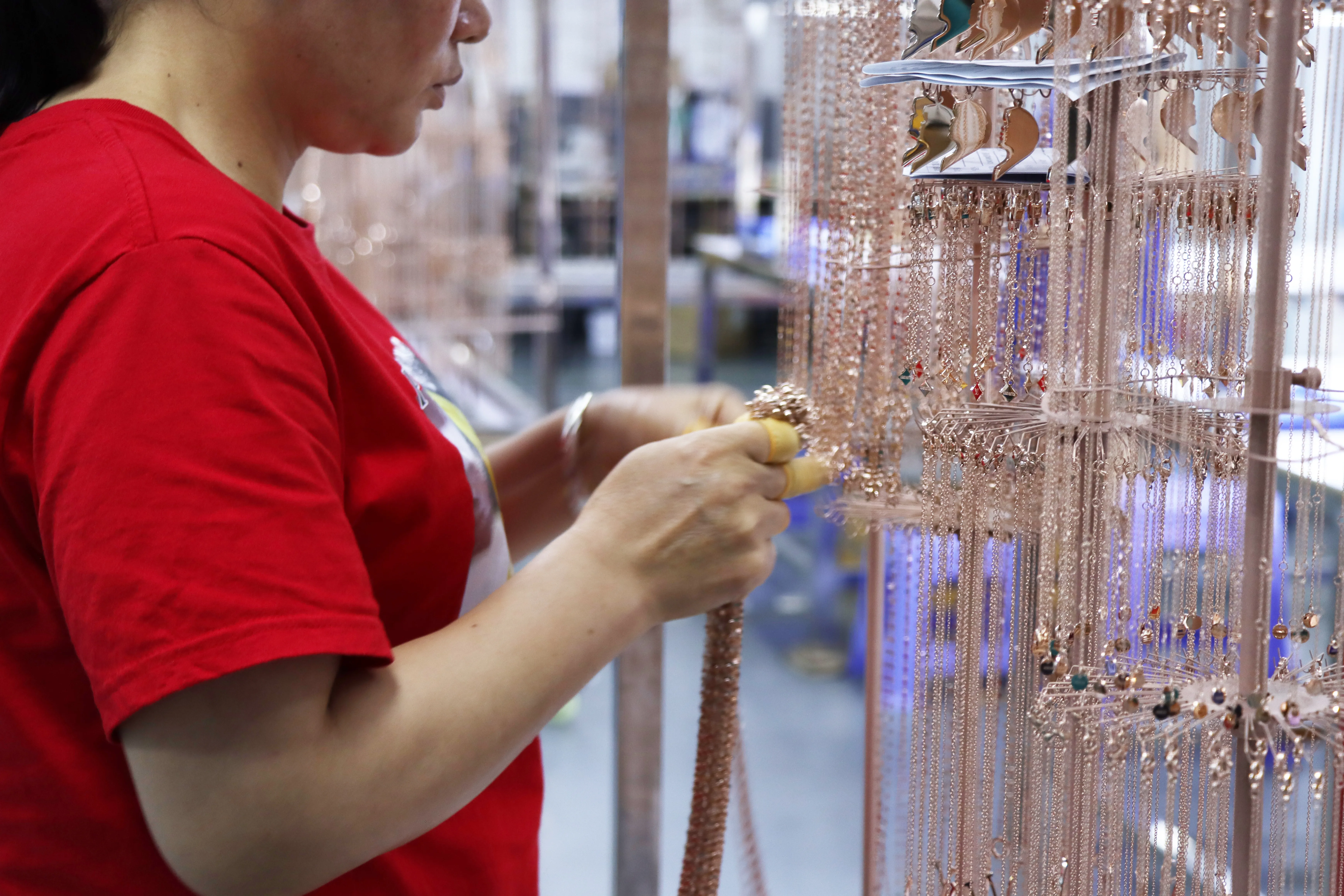
After reaching an optimal temperature, the pieces are carefully removed for final post-treatment processing. The pieces are systematically unloaded from the specialized plating jigs. Every piece is handled with precision to protect the newly formed PVD coating and ensure the finish remains flawless.
Step 4: Final Finishing & Inspection
Process 10: Color Consistency Check
Before packaging, our QC team compare production samples against the customer’s approved color standard under controlled lighting conditions. The team checks for variations in gold tone, brightness, and surface finish across the batch, ensuring consistent color matching from the first piece to the last.
Process 11: Surface Defect Inspection
Each piece is carefully inspected for visible defects, including scratches, dents, dust inclusions, coating irregularities, y cumplen con la surface contamination. Only jewelry that meets our appearance standards proceeds to the packaging stage.
Process 12: Surface Defect Inspection
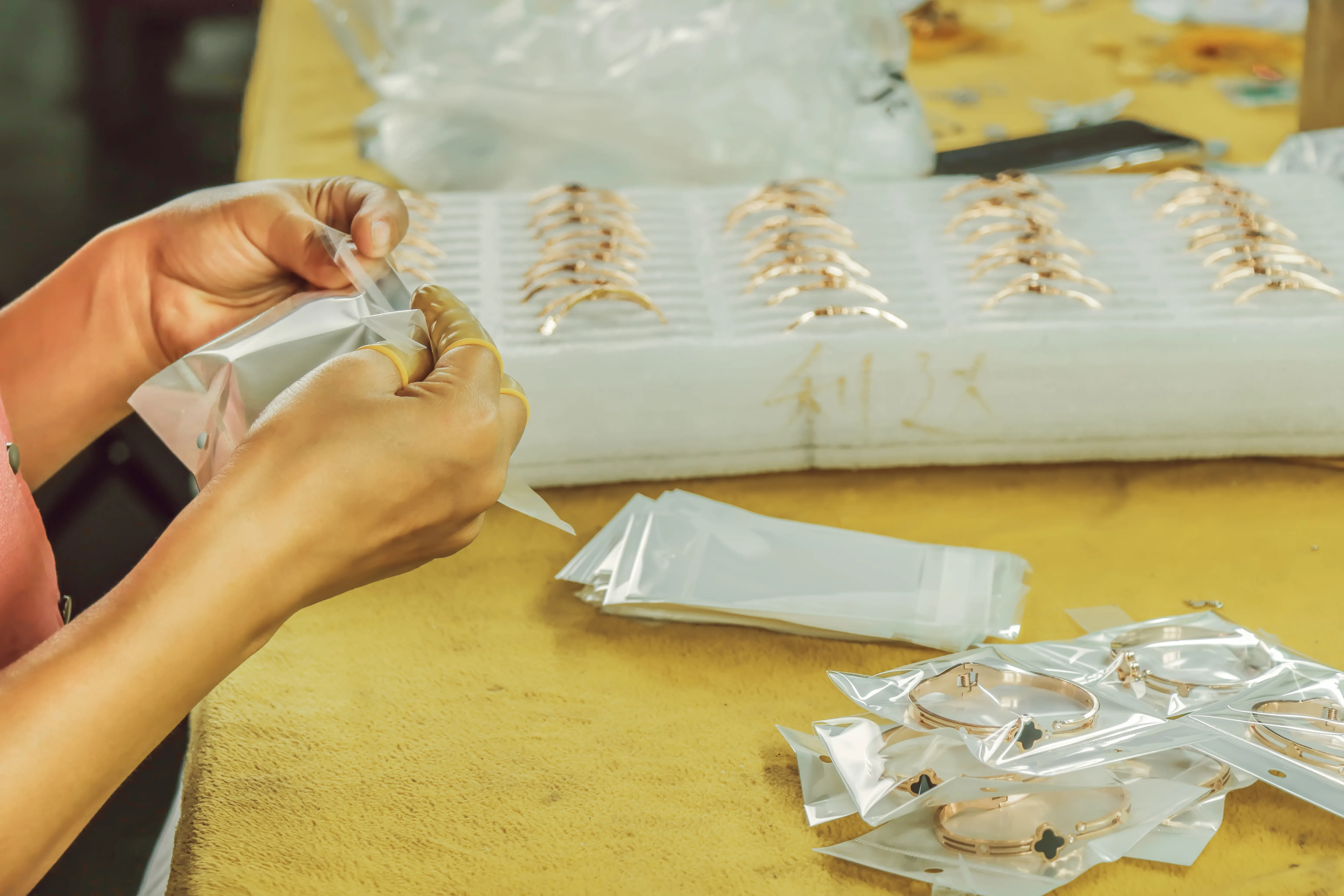
After inspection, each jewelry piece is individually protected using poly bags, pouches, o custom packaging specified by the customer. Products are then sorted by SKU, counted, labeled, and packed into export-grade cartons with protective separators. A final packing audit verifies quantities, product specifications, and packaging accuracy before shipment.
For a detailed breakdown of our pre-shipment inspection workflow, see our Jewelry Pre-Shipment QC Guide.
How to Verify PVD Coating Quality
Understanding how PVD coating works is only part of the equation. While the manufacturing process determines how a coating is created, long-term durability depends on how that coating is tested and verified before shipment.
In our next guide, we’ll take you inside the quality control process used for PVD-coated jewelry, including coating thickness verification, adhesion testing, artificial sweat testing (ISO 105-E04), and salt spray evaluation—helping you understand how professional manufacturers ensure consistent performance at scale.
👉 Read Next: How We Test PVD Coated Jewelry: Thickness, Adhesion & Durability Verification
Need help evaluating a PVD jewelry project? Contact our engineering team for material recommendations, color matching, y OEM/ODM manufacturing support.You can also explore our Centro de Recursos de la Marca de Joyería de Moda for additional guides on materials, manufacturing processes, and quality standards.
Preguntas frecuentes
Q1: How Long Does PVD Coating Last on Jewelry?
A: High-quality PVD-coated jewelry can maintain its color for 3–5 years or longer under normal wear conditions. The actual lifespan depends on the base material, coating quality, and daily exposure to chemicals, abrasion, and environmental factors. To understand what determines coating durability, explore our PVD Coating Manufacturing Process Guide.
Q2: Does PVD coated stainless steel jewelry tarnish or fade?
A: No, PVD coated stainless steel does not tarnish like silver or traditional gold plating. Because the PVD vacuum plating process creates a molecular bond with the 316L stainless steel, the finish is highly resistant to sweat, perfume, y seawater. Under professional manufacturing standards, our PVD jewelry maintains its original brilliance for 3 to 5 years of daily wear without fading or turning the skin green.
Q3: Is PVD Jewelry Waterproof?
A: Yes. PVD-coated stainless steel jewelry is highly resistant to water exposure y cumplen con la everyday moisture. However, prolonged contact with harsh chemicals, chlorine, or abrasive cleaners may gradually affect the coating over time.
Q4: Is PVD Coating Better Than Traditional Electroplating?
A: In most jewelry applications, PVD coating offers superior durability, scratch resistance, y color retention compared to traditional electroplating. It also produces less chemical waste, making it a more environmentally friendly finishing technology.
Q5: Why Is 316L Stainless Steel Used for PVD Jewelry?
A: 316L stainless steel provides excellent corrosion resistance, biocompatibility, y PVD coating adhesion, making it the preferred substrate for premium PVD-coated jewelry. Its stability helps ensure long-lasting color retention and coating performance.
Q6: Why PVD is Essential for Modern Industry
A: The PVD coating process delivers unique performance advantages that other coating methods simply cannot match. Because of this superior durability y cumplen con la precision, PVD technology now serves as an indispensable standard across a wide range of global industries.
Author

Ertian Jiang (Jasper) is the founder of Haosen Metal Jewelry. Since the age of 26, he has combined deep roots in traditional craftsmanship with a sharp vision for the market to build the foundation of the company’s excellence.
Ertian Jiang started on the ground floor as a craftsman, specializing in semi-precious stones (agate, mother of pearl, tiger’s eye) and manual inlaying—perfecting how to fit natural stones into metal bases without gaps or glue failure. He also worked on the front lines of sales, speaking face-to-face with buyers and listening to their frustrations about fallen stones and fading colors.