

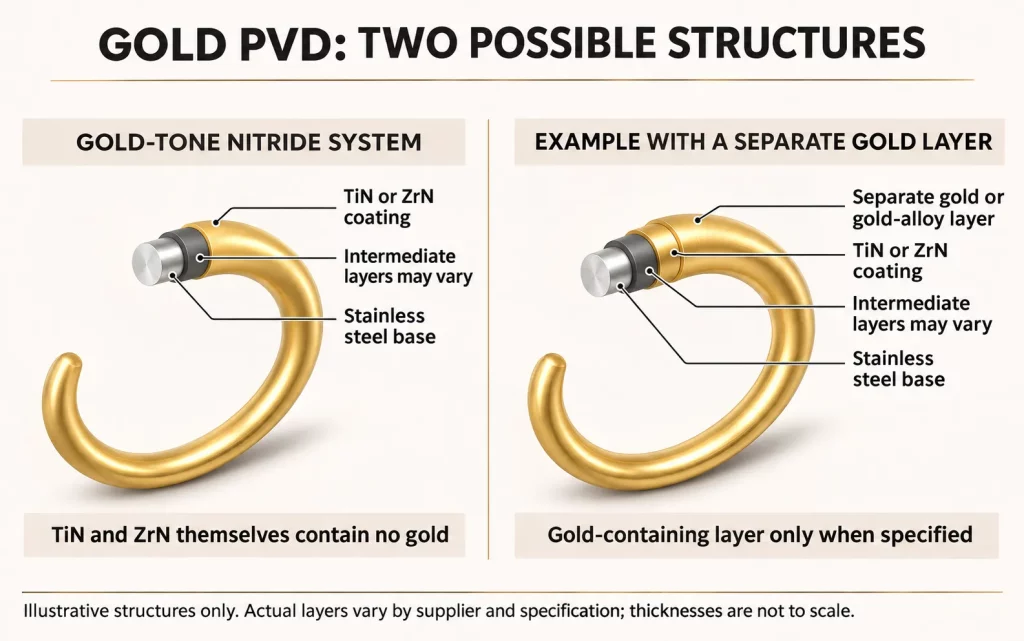
No. The term “gold PVD” alone does not confirm that a coating contains real gold. PVD—Physical Vapor Deposition—is a vacuum deposition process. A gold-colored finish may use compounds such as titanium nitride (TiN) or zirconium nitride (ZrN), while other coating systems include a separate gold or gold-alloy layer.
For jewelry buyers, the important question is not simply whether a supplier offers “gold PVD.” It is what coating structure the quotation actually includes—and how that specification will be verified.
Why Can Two "Gold PVD" Quotations Describe Different Products?
Imagine receiving two quotations for the same stainless steel pendant. Both specify “18K gold PVD,” and the samples look similar, but the prices differ.
One supplier may be quoting a gold-tone nitride coating. Another may include an additional gold-containing layer. Differences may also involve surface preparation, intermediate layers, coating thickness, testing, and quality control.
TiN and ZrN themselves do not contain gold. However, a coating system using either material may also include a separate gold layer.
Neither the appearance nor the presence of gold alone establishes overall quality. Compare the complete specification against your product requirements before comparing prices.
Does "14K" or "18K" Describe Color or Composition?
Supplier terminology can be ambiguous. A shade described as “18K gold color” does not, by itself, establish that the deposited layer is an 18K gold alloy.
Keep three things separate:
Color reference: the appearance the supplier intends to match.
Coating composition: the materials actually present in each layer.
Product description: the claim your brand will make about the finished jewelry.
Ask the supplier to clarify which meaning applies. If a gold-alloy layer is specified, request its composition separately from the color reference.
For a discussion of appearance, see our 14K vs 18K Gold PVD Plating guide. Color selection and material verification are separate purchasing decisions.
Which Specifications Should Jewelry Buyers Verify?
Before approving a quotation, request a written specification covering these points:
| Item | What to ask | What to document |
|---|---|---|
| Base materials | What are the body, posts, clasps, and other components made from? | Material grades by component |
| Coating structure | What layers are applied, in what order, and by which processes? | A layer-by-layer description |
| Gold content | Is there a gold-containing layer? What is its composition? | The specified composition and supporting verification |
| Grosor | Does the quoted figure refer to the total coating or an individual layer? | Relevant layer thicknesses, tolerances, and measurement method |
| Color | Which physical sample defines the approved shade? | An agreed reference sample and viewing conditions |
| Performance | What evidence supports the required wear and exposure resistance? | Test methods, conditions, acceptance criteria, and relevant results |
Do not treat total coating thickness as gold-layer thickness. A multilayer finish can contain a thin gold layer over other materials. One thickness figure without a layer definition is insufficient for a meaningful comparison.
Likewise, gold content alone does not establish suitability for skin contact. Ask for evidence relevant to the complete product and its intended use.
How Should Buyers Compare Samples and Quotations?
First, make the specifications comparable. Check that both suppliers are quoting the same base material, surface finish, coating requirements, and testing expectations.
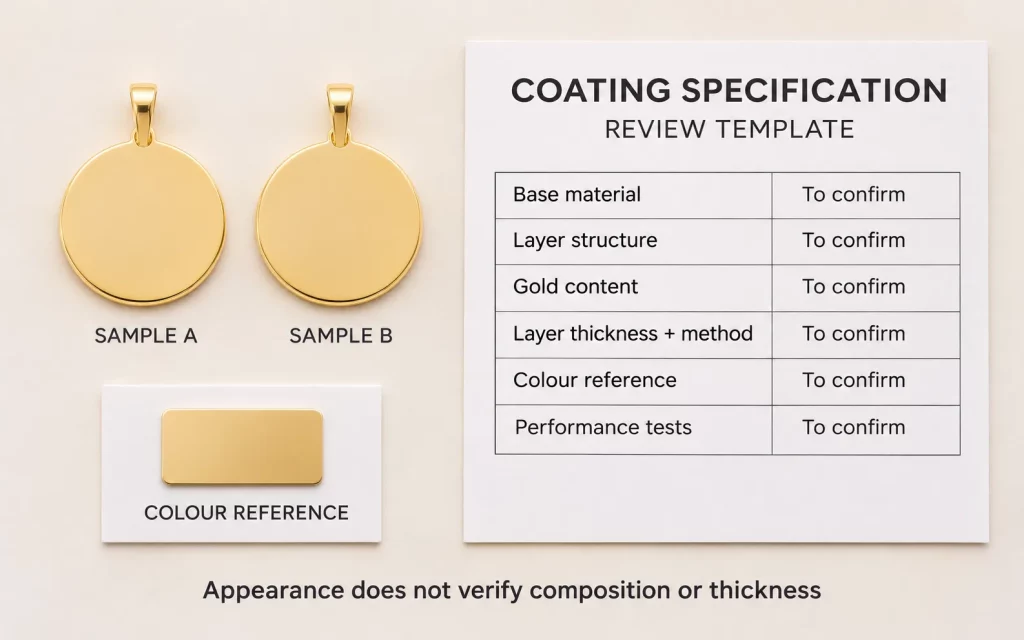
Then compare physical samples under consistent lighting. Photographs can help communicate a preference, but they should not be the only color reference.
A sample demonstrates appearance. It does not independently prove coating composition, thickness, or long-term performance. Those require appropriate documentation and verification.
If a supplier cannot provide sufficient detail, record the missing information before approving the order.
What Should Be Confirmed Before Bulk Production?
Turn the agreed requirements into an order specification linked to the approved sample. Record the coating structure, relevant thickness requirements, color reference, and acceptance tests. Require approval before the supplier changes the agreed materials or coating process.
The goal is not to demand real gold in every PVD finish. It is to purchase a clearly specified coating that matches your product requirements and supports accurate product descriptions.
Planning a gold-tone jewelry collection? Share your design, target color sample, intended use, and coating requirements with 96Jewelry so we can review the details that need confirmation before sampling and quotation.
Autor

Ertian Jiang (Jasper) es el fundador de Haosen Metal Jewelry. Desde los 26 años, ha combinado sus profundos conocimientos de la artesanía tradicional con una visión aguda del mercado para sentar las bases de la excelencia de la empresa.
Ertian Jiang comenzó desde cero como artesano, especializándose en piedras semipreciosas (ágata, nácar, ojo de tigre) y en la incrustación manual, perfeccionando la técnica para encajar piedras naturales en bases de metal sin que quedaran huecos ni fallara el pegamento. También trabajó en primera línea de ventas, hablando cara a cara con los compradores y escuchando sus quejas sobre piedras que se caían y colores que se desvanecían.