

Three quotations for the same ring image can look like three prices for the same product. Yet one quote may assume glass, another CZ, and each may include a different stone size or number of accent stones. Before choosing the lowest figure, a buyer needs to know what each supplier has actually priced.
This development example uses a brass ring brief with a clear round centre stone and a surrounding row of smaller stones. The starting description is “a 1-carat centre stone with a ring of small stones,” supported by a front-view image. It communicates an appearance, but leaves several cost-driving specifications open.
The decision is to agree the stone specifications and setting requirements before refining the quotation. For a brand, the useful outcome is a price that describes the ring it intends to approve—not simply the lowest number against the same photograph.
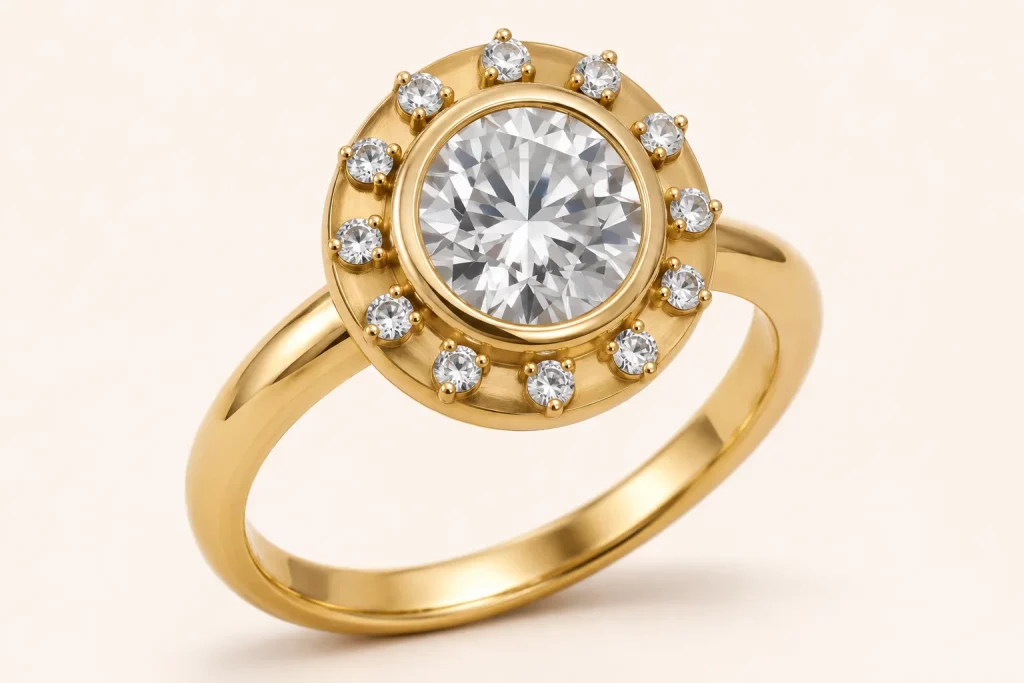
Why were the initial quotations not comparable?
The brief brings together several possible assumptions: CZ or glass for the centre stone, a 6 mm or 8 mm diameter, and 12 or 16 accent stones. These alternatives change the product being priced. The comparison below identifies the differences to resolve; it is not a reproduction of three supplier quotations.
| Quote variable | Possible assumptions to resolve | Proposed basis in this example |
|---|---|---|
| Centre material | CZ or glass | CZ |
| Centre dimensions | 6 mm or 8 mm diameter; height unclear | 8.0 mm diameter; 4.8 mm height |
| Accent stones | 12 or 16; full specification unclear | 12 × 1.5 mm; confirm material and tolerances |
| Setting methods | Not consistently defined | Centre bezel; accent prongs |
| Stone sourcing | Customer or factory supply | Factory sourcing; agree loss and replacement terms |
These were differences in product specification, not simply different margins for the same work. The front-view image did not establish the stone height, pavilion depth or how much metal should cover the centre stone. It also did not settle the amount of setting work required around it.
Carat describes weight, not the dimensions needed to design a setting. In this project, the original “1 carat” description was replaced by an agreed material and millimetre dimensions. The selected 8.0 mm CZ was not presented as a conversion of that earlier description.
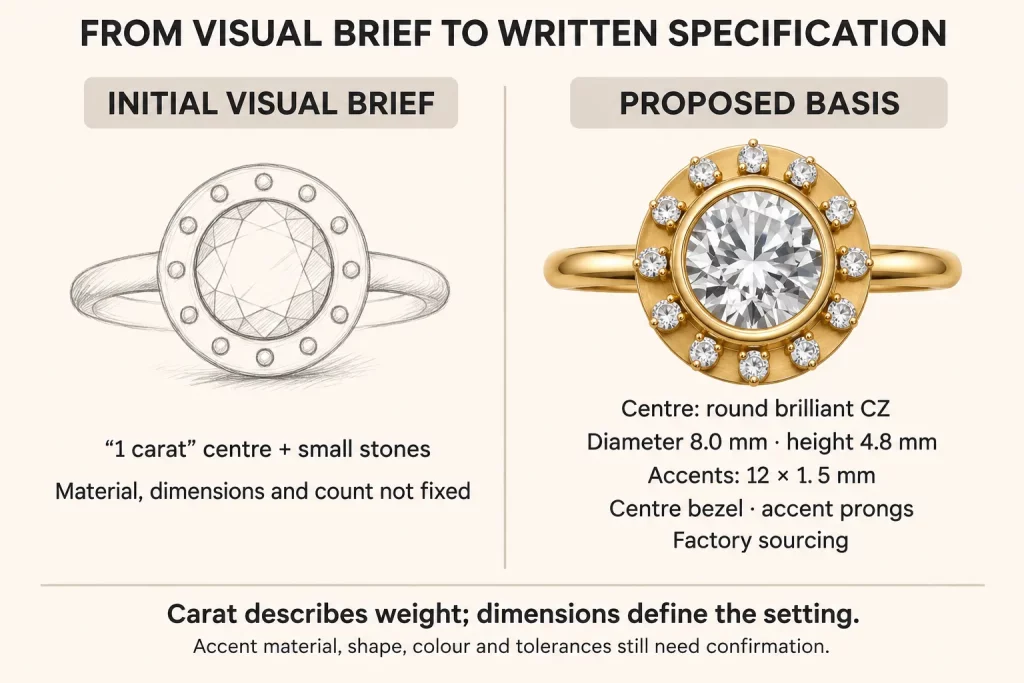
Which route did the brand choose before sampling?
| Route | What it offered | What still needed confirmation |
|---|---|---|
| Estimate from the image | A quick starting budget. | Stone and setting assumptions could change the price later. |
| Agree specifications first | A conditional quote based on named materials, sizes and setting methods. | Actual stones and sample fit still needed to be checked. |
| Review supplied stones | A physical reference for dimensions and setting fit. | Shipping could add time; future stone batches still needed matching specifications. |
For this example, the selected route is to define the specification first and assign stone procurement to the factory. The quotation can then use a written basis, while sourced stones still need inspection and a fit check against the metal structure.
For a similar enquiry, our custom brass ring manufacturing page explains the wider ring customization options and project information to prepare.
Which stone and setting details were agreed?
| Item | Specification supplied for this case |
|---|---|
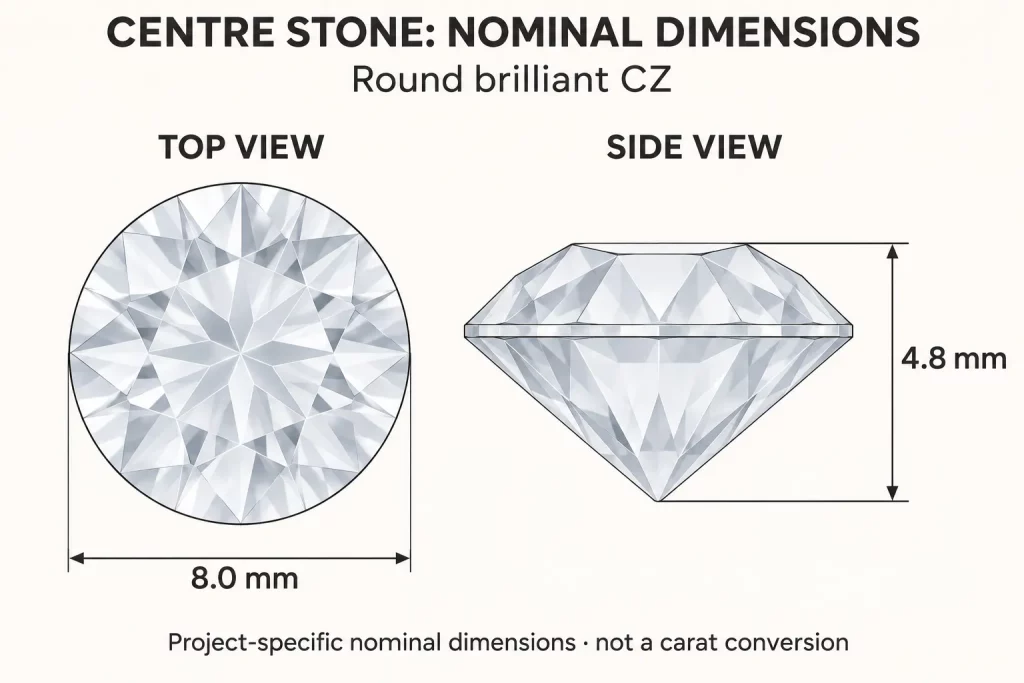
| Centre stone | Round brilliant-cut CZ, 8.0 mm diameter and 4.8 mm height. |
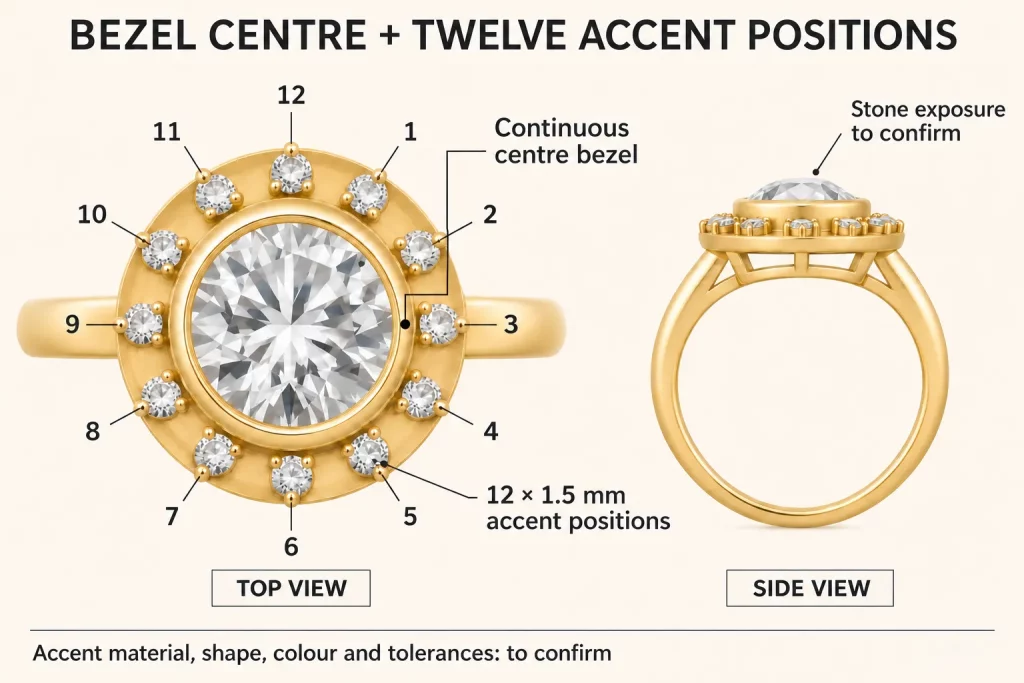
| Accent stones | Twelve stones, with a specified size of 1.5 mm. |
| Centre setting | Bezel setting. |
| Accent settings | Prong settings. |
| Visual reference | An annotated reference showing intended metal coverage and stone exposure. |
| Stone sourcing | Factory procurement. |
The proposed centre stone is an 8.0 mm round brilliant-cut CZ with a 4.8 mm height. These are project dimensions, not a universal diameter-to-height relationship or a conversion from the original "1 carat" request. The accent-stone material, shape, colour and tolerances must also be agreed before procurement.
At 96Jewelry, the design review can start with the centre-stone seat, accent-stone spacing and access for setting, including the proposed bezel wall. A front view alone cannot define the support beneath the stone or the amount of metal visible around it.
Bezel and prong settings were treated as design decisions requiring approval. A change of fixing method could alter both the appearance and the work involved, so it could not be introduced silently as an internal cost reduction.
How did the specification change the quotation?
A useful conditional quotation separates the centre stone, accent stones, setting work, loss allowance and finishing assumptions. This lets the buyer identify which items need review when a stone dimension, stone count or setting method changes.
Factory sourcing clarified who would purchase the stones, but it did not automatically settle every commercial detail. Material consistency, replacement arrangements and responsibility for rejects or setting losses still needed to be covered by the purchasing agreement.
For a like-for-like comparison, also align order quantity, size breakdown, plating, packaging and delivery terms. Keep tooling and sample charges separate from the unit price. Specification alignment makes a price explainable; it does not guarantee a particular saving.
What should be checked before sample approval?
Check the actual centre stone against the seat, the exposed height against the annotated reference, and the spacing of all twelve accent stones. Review bezel coverage, stone movement and snag points using the agreed inspection method. Approve the stones and metal structure together.
Record the sample version, stone specifications, inspection method and approval decision. A visual fit check is one part of approval; any required durability or stone-retention evaluation needs its own defined method and acceptance criteria.
| Review area | What the approval needed to cover |
|---|---|
| Centre stone and bezel | Dimensional fit, stone exposure and visible metal coverage. |
| Accent stones | Count, arrangement, spacing and security under the agreed inspection method. |
| Wear-related details | Exposed edges and any snagging found during the sample review. |
| Quotation consistency | Stone count and setting methods matching the quoted specification. |
Before accepting the quote, ask the supplier to identify the changes that would trigger repricing. A correction from twelve to sixteen accent stones, or from one setting method to another, should be a visible specification change rather than an unexplained extra charge during sampling.
Keep the approved stone specification, metal drawing and signed sample together for production checks. Our jewelry quality control process explains how inspection and corrective-action records support those references.
What can a brand learn from this case?
The most useful change was making the quotation describe one defined product. A supplier could then explain the price against the same centre stone, accent-stone count, setting methods and sourcing responsibility that would be reviewed on the sample.
A reference image remains useful for appearance. Written dimensions and specifications make that image actionable. Together, they reduce the risk of discovering during sampling that two people were pricing different rings.
Request a review of your brass CZ ring project
Send 96Jewelry the stone material, dimensions in millimetres, shape or cut, quantity per ring and a setting reference. Tell us whether you will supply the stones or need factory sourcing, and include ring sizes, order quantity, plating requirements and your target purchase price.
If some details are undecided, identify them in the enquiry. We can review the open points and explain the assumptions needed for an initial quotation before the sample specification is finalized.
Autor

Ertian Jiang (Jasper) es el fundador de Haosen Metal Jewelry. Desde los 26 años, ha combinado sus profundos conocimientos de la artesanía tradicional con una visión aguda del mercado para sentar las bases de la excelencia de la empresa.
Ertian Jiang comenzó desde cero como artesano, especializándose en piedras semipreciosas (ágata, nácar, ojo de tigre) y en la incrustación manual, perfeccionando la técnica para encajar piedras naturales en bases de metal sin que quedaran huecos ni fallara el pegamento. También trabajó en primera línea de ventas, hablando cara a cara con los compradores y escuchando sus quejas sobre piedras que se caían y colores que se desvanecían.